You’ve probably never seen anyone break down travel planning quite like this.
Most people travel, but few plan meticulously. Accommodation, food, transport, tickets - it’s all interconnected. One change can throw everything off. This complexity discourages many from detailed planning. They book flights and hotels and wing it. But beneath the apparent spontaneity lies potential chaos.
As summer turns to fall, the weather’s perfect for travel. I’ve been deep in trip planning lately, which got me thinking: how do you systematically plan a trip? With a solid framework, travel planning becomes straightforward, turning a jumbled mess into a smooth process. Follow this, and you can create travel plans quickly and easily, without losing flexibility.
Breaking Down the Elements
Before I share the method, let’s start with the underlying logic.
Travel aims for enjoyment, but it’s still physical. Real-world needs apply. Coordinating these needs is the reason for a travel plan. The key to simplifying it all is almost too simple:
You can only be in one place at a time.
We’re bound by 3D space and 1D time. Your body must be somewhere, and you can’t be in two places at once. Time, too, marches on.
Therefore, planning a trip boils down to filling each moment with a location.
Obvious so far, but here’s where it gets useful:
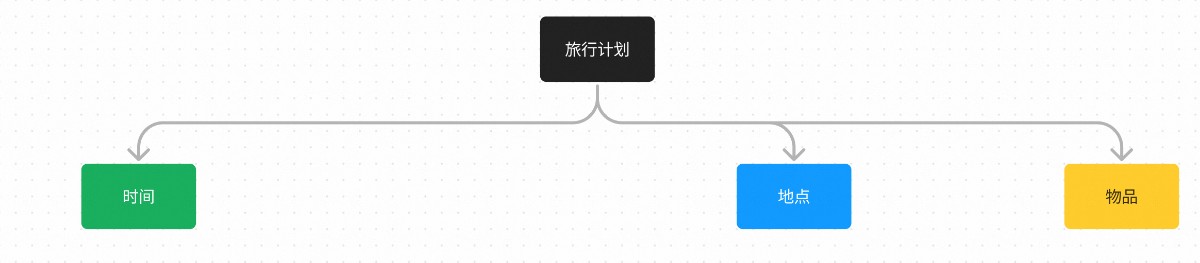
Travel elements break down into time, location, and items. Time and location define your environment. You are the trip’s subject. You know you; what needs planning are your extensions (your stuff) - items.
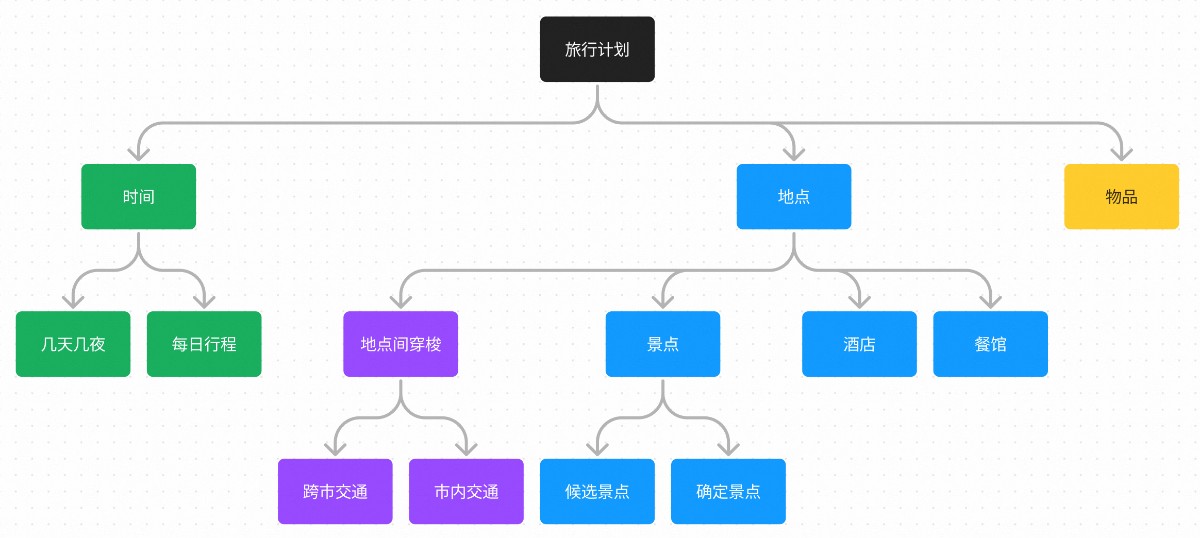
We further break down time and location, laying out all the trip’s elements. I’ve separated “potential destinations” and “confirmed destinations” because sometimes destinations are limited by other factors, requiring choices. It’s not crucial, but it helps.

With the elements atomized, the question is: which ones do you decide first, and in what order?
Reassembling the Elements
The breakdown is fixed, but reassembly needs your input. What’s the trip’s purpose? To see something you’ve dreamed of, even if it’s a hassle? Or to simply relax and enjoy? Even with the same goal, focusing on efficiency versus total enjoyment leads to different travel styles.
I’ve identified two planning models based on my experience. I use different approaches depending on the situation.
A. Sightseeing Mode
Sightseeing mode prioritizes efficiency.
Efficiency = Total Happiness / Total Time = (Happiness at Destinations + Happiness in Transit) / Total Time
Here, destinations provide the most happiness per unit of time, while transit provides less, or even negative, happiness. If you enjoy transit equally, you likely prefer the other mode, discussed later.
“Destinations” aren’t just tourist spots. In Sightseeing Mode, an enjoyable journey, like a scenic coastal drive, is a destination, not transit. Typical “transit” is things like city subways or waiting in lines.
Minimizing transit time boosts efficiency. If teleportation existed, you’d skip the commute. High efficiency means the trip was “worth it.”
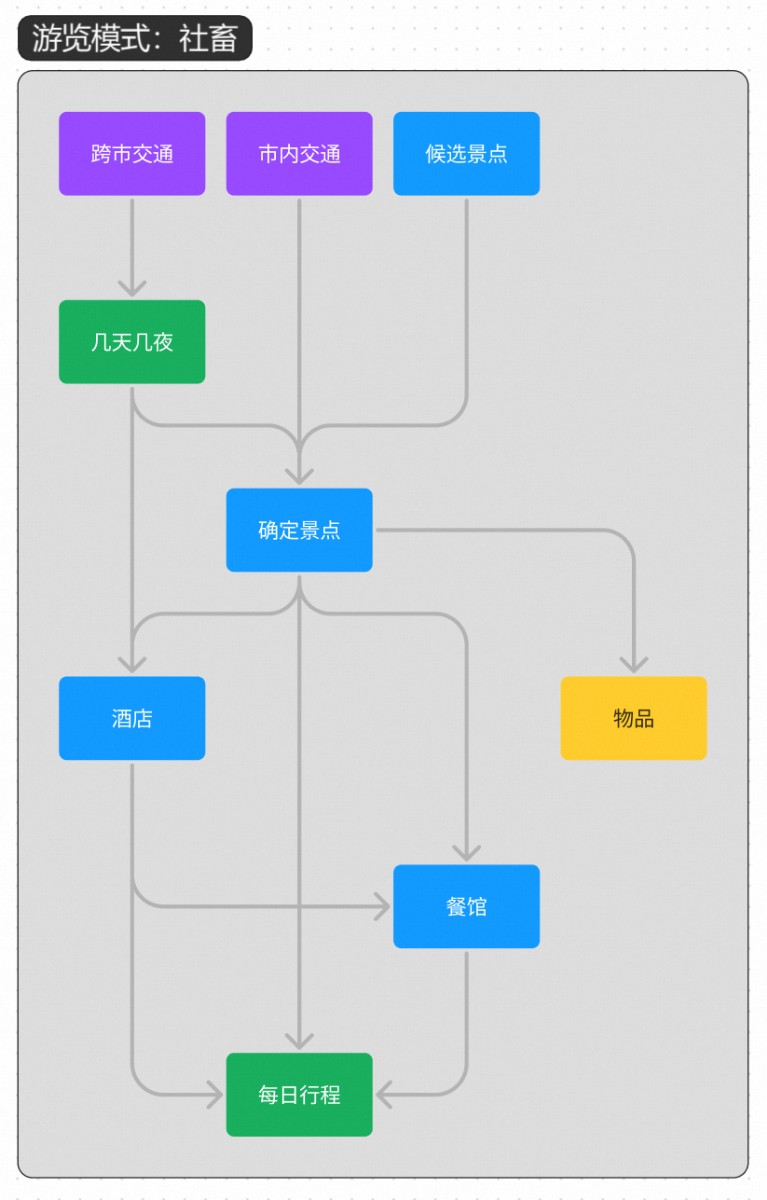
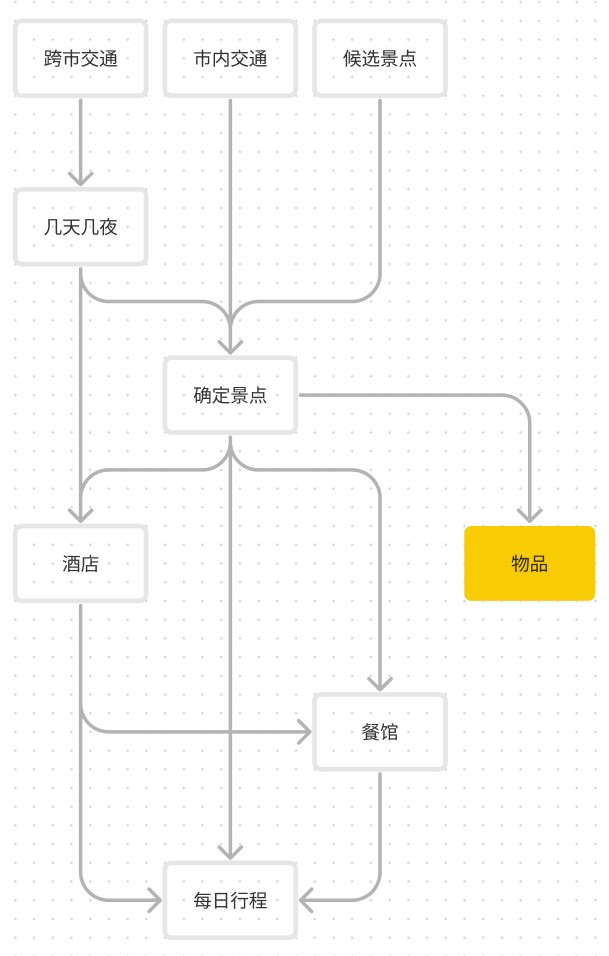
Planning order for Sightseeing Mode:
- Consider getting to and from the destination city, in-city transport, and places worth seeing.
- Decide how many days and nights to spend. This is limited by transport (train/flight schedules) and your vacation time.
- Confirm destinations. Based on trip duration, decide if you can visit all potential destinations or need to prioritize. City transport is a constraint; some spots might be inaccessible or too time-consuming without suitable transport.
- Book hotels and create a packing list. Research to find a conveniently located hotel. Trip length is crucial for hotel booking. Your packing list depends on destinations; hiking gear differs from beach gear.
- Find restaurants or commercial areas. This can be skipped in big cities or if you’re not a foodie. It’s necessary when traveling with my toddler, who needs regular, specific meals. If there are busy areas near destinations (for lunch/dinner) or the hotel (for dinner), focus on those. If it’s remote, you need a concrete dining plan, like takeout or packed food.
- Plan the daily itinerary: It’s almost done by now. This step is about adjusting the order, balancing morning and afternoon time, and ensuring a good overall pace.
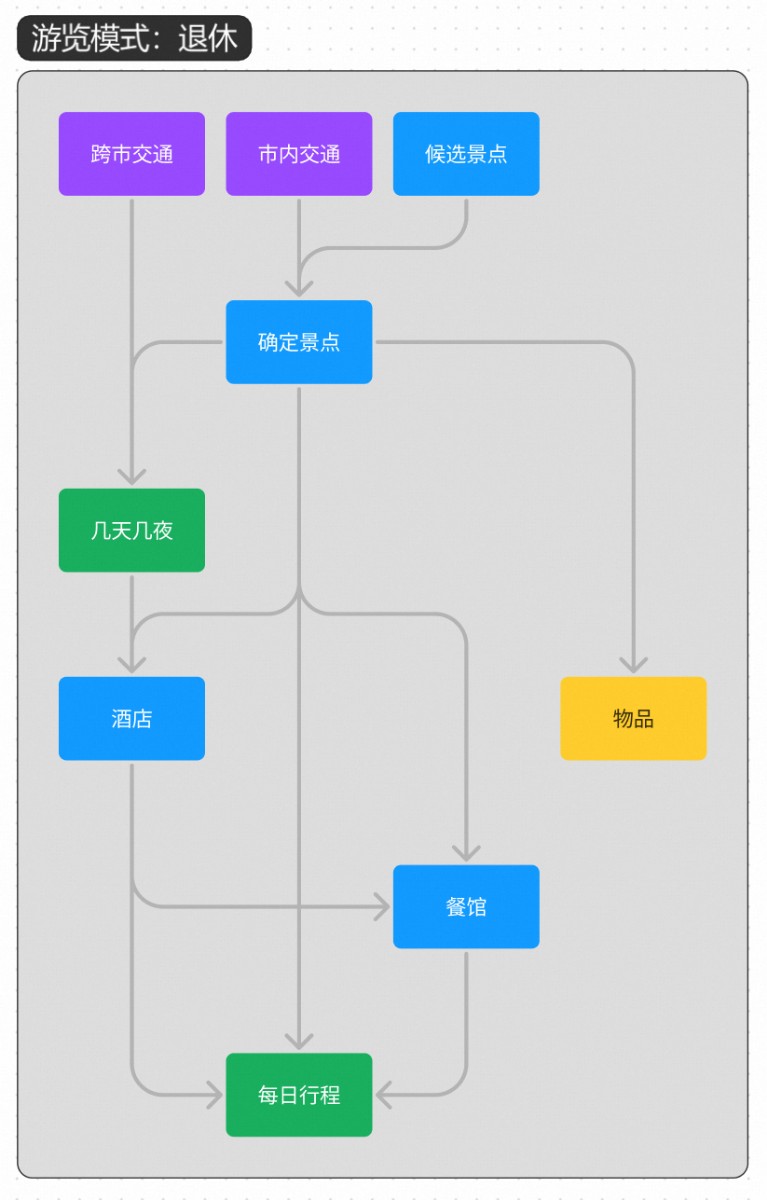
There’s a Sightseeing Mode variation. Unlike the “9-to-5” version, those with ample time needn’t choose destinations due to time. They can visit everywhere, simply extending the trip. Other aspects are similar.
B. Vacation Mode
Vacation Mode prioritizes total enjoyment.
Total Happiness = Efficiency x Total Time
Here, you first maximize efficiency, minimizing unpleasantness. With constant happiness ensured, only time affects the total. If 3 days aren’t enough, try 5; if 5 aren’t enough, try 7, until you’re content.
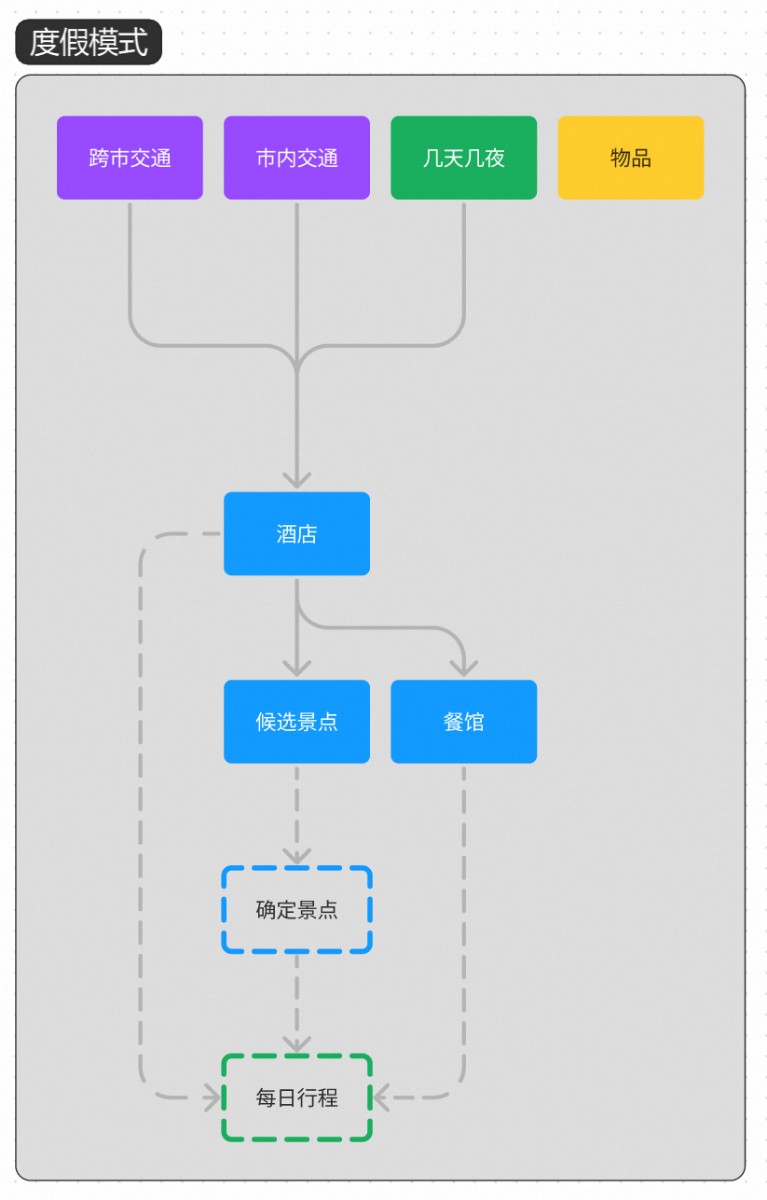
Planning order for Vacation Mode:
- Consider getting to and from the destination city, in-city transport, and how many days and nights to spend.
- Book hotels. Find a hotel with great views or amenities, considering distance to transport hubs and in-city transport options. Public transport versus driving greatly impacts hotel choice.
- List potential destinations and research local restaurants. Which easily accessible destinations are worth visiting? Any local delicacies you’re keen on? Research those.
- Create a packing list. Items have no constraints, so consider this anytime.
- Planning is essentially done. Just await departure.
- For a more detailed plan, select destinations and combine them with preferred restaurants and areas to create a daily itinerary.
Differences Between the Two Modes
The modes seem distinct, but there are blurry areas. You might not be a “special forces” traveler or someone who just enjoys sleeping in a new city. Where do you fit?
The modes can produce identical itineraries, but the source of happiness differs:
- Sightseeing Mode’s happiness comes from the physical world: locations. The more you explore, the greater the happiness. This mode accepts some transit unhappiness, compensated by destination happiness.
- Vacation Mode’s happiness comes from the mental world: time. As fatigue and boredom build, marginal happiness decreases. To maintain happiness, this mode allows changing activities and destinations anytime.
Here’s an analogy: Imagine a day at Disneyland. How would the modes differ? It’s not hard.
If a trip offers great destination happiness (for Sightseeing Mode) and a well-paced itinerary keeps Vacation Mode constantly happy, both are satisfied, but their reasons differ.
If there are two attractions, one hard to reach but immensely joyful, the other easily accessible but mildly amusing, Sightseeing Mode chooses the former, Vacation Mode the latter.
Where does your happiness mainly come from? Or, where do you want it to come from on this trip?
These modes aren’t definitive. Everyone has preferences. The key is to lay out the elements, connect them, and draw your own travel planning flowchart. Use it repeatedly. You’ll find travel planning isn’t so hard. As you get better, you’ll travel more, increasing your overall happiness.
Putting It into Practice
Theory’s fine, but let’s apply this framework to a real trip, using the more involved Sightseeing Mode.
In April 2021, during the Qingming Festival, I road-tripped to Dunhuang with family and friends - four of us in total. I handled the itinerary, and everyone enjoyed it. Even two years later, we all consider it our most memorable trip. Here’s the travelogue: https://victor42.eth.limo/post-en/3596/
The travelogue shows the result. I’m sharing the planning process, which used the “9-to-5” Sightseeing Mode.
Prerequisites and Potential Destinations
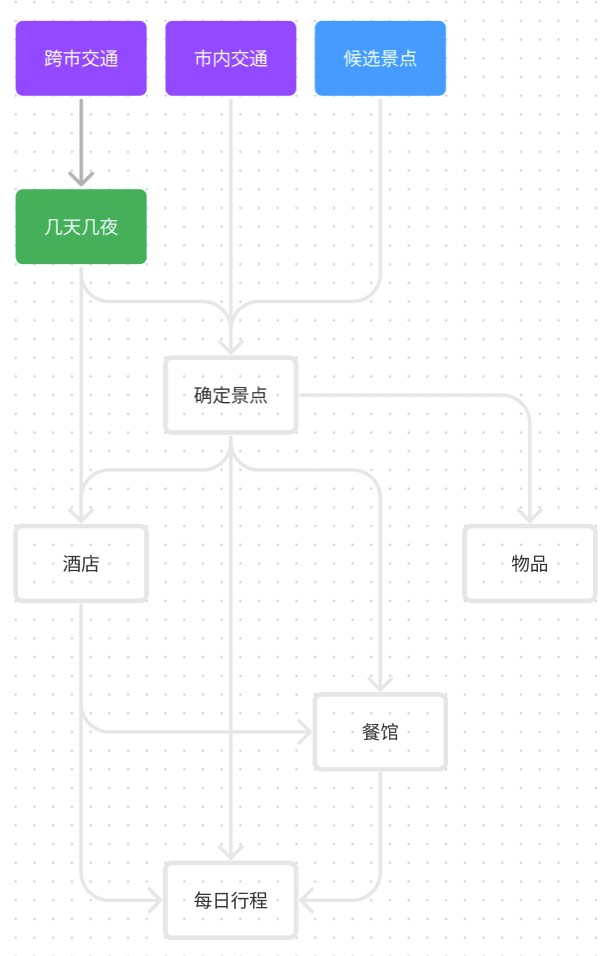
Flying round-trip from Hangzhou to Dunhuang, with a 3-day Qingming holiday and 2 days of annual leave, flying was the only viable intercity option. So, I booked flights immediately.
The best I could manage, even using all 5 days, was a 5-day, 4-night itinerary. We’d leave early on day one, have half a day for sightseeing; sleep in on day five, and head straight back, arriving home at night. That left 3.5 days for actual exploration.
Dunhuang, a desert city, is susceptible to sandstorms, and many attractions are outside the city. Renting a car locally made sense, so I arranged that too.
For potential destinations, I quickly researched online and listed these:
Recommended Destinations
- Yumen Pass
- Yangguan Pass
- Mogao Caves
- Encore Dunhuang performance
- Singing Sands Mountain and Crescent Spring
- Yardang National Geopark (temporarily closed)
Other Destinations
- Leiyin Temple (near Singing Sands Mountain and Crescent Spring)
- Dunhuang Museum
- White Horse Pagoda (near Dunhuang Museum)
- Western Thousand Buddha Caves
- Dunhuang Film City
- Dunhuang Grand Show (near Singing Sands Mountain and Crescent Spring)
- Silk Road Flower Rain performance
- Yulin Caves
- Suoyang City
Finalizing the Destinations
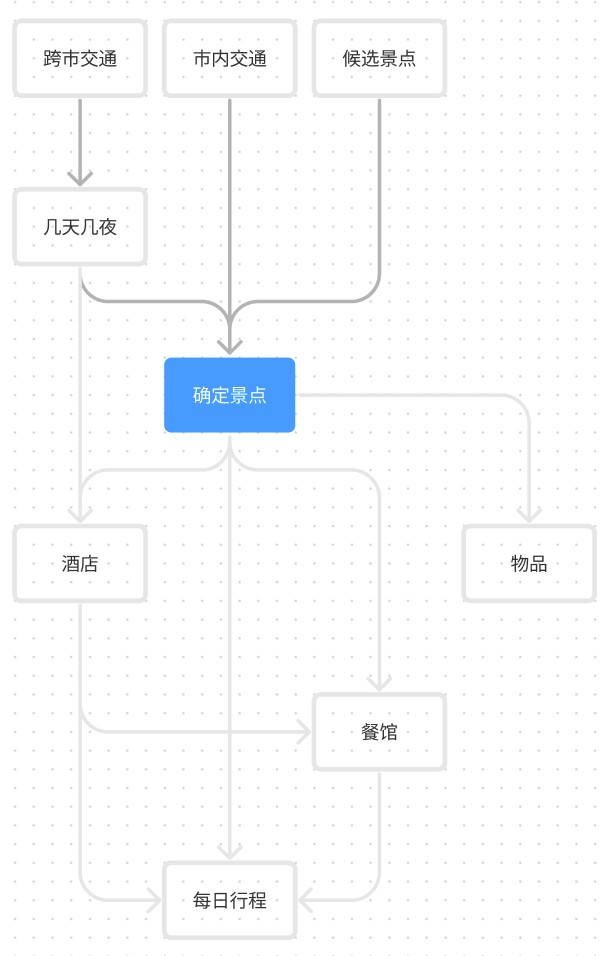
I checked the map and grouped potential destinations geographically. A useful tip: search for each on a map app and add it to your favorites. Zooming out shows a cluster of stars, clarifying how to group them. Just select the ones you want.
East Line
- Mogao Caves
- Encore Dunhuang performance
West Line
- Yumen Pass
- Yangguan Pass
- Western Thousand Buddha Caves
- Yardang National Geopark (temporarily closed)
- Dunhuang Film City
South of the City
- Singing Sands Mountain and Crescent Spring
- Leiyin Temple
- Dunhuang Grand Show
Guazhou Line
- Yulin Caves
- Suoyang City
Downtown
- Dunhuang Museum
- White Horse Pagoda
- Shazhou Ancient City
- Silk Road Flower Rain performance
Grouping helps significantly with the daily itinerary, essentially one group per day. But I held off on the itinerary, needing a crucial element: the hotel.
Hotel and Detailed Itinerary
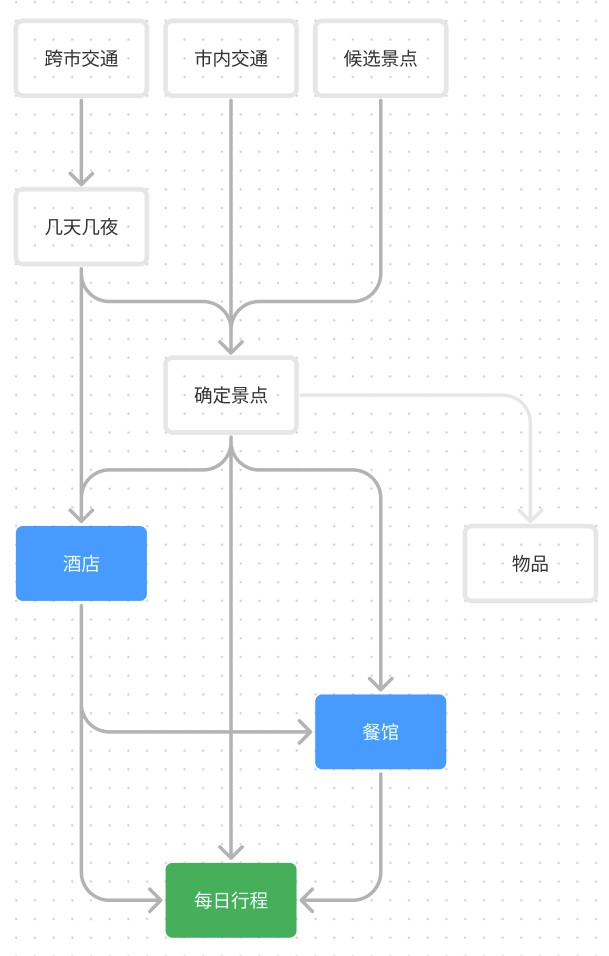
Hotel
Hotels should be central, near attractions, downtown, or transport hubs. Within that area, I weighed facilities and value. I chose a hotel in downtown Dunhuang, close to the night market and shopping, and was very pleased.
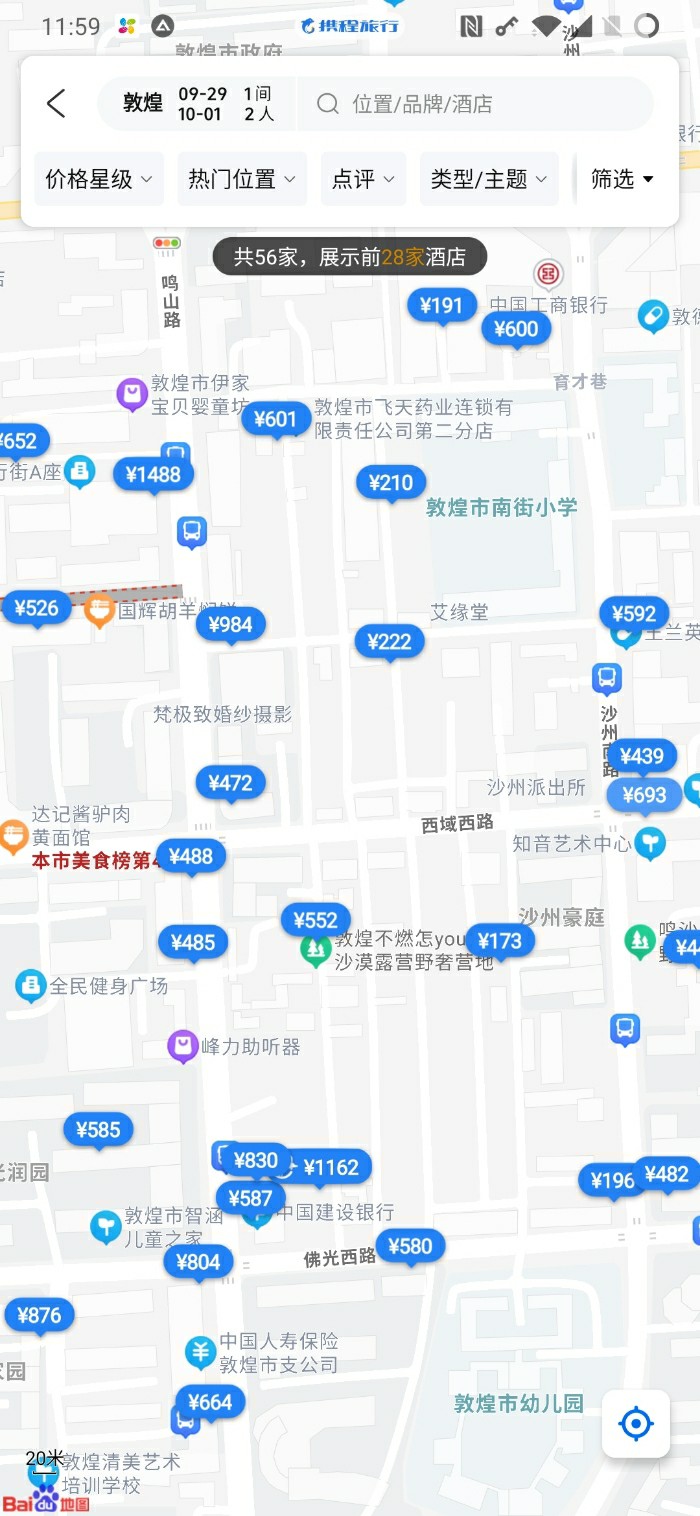
Tip for finding hotels: use the map mode in the Ctrip app. It displays Dunhuang hotels, showing the cheapest room’s price.
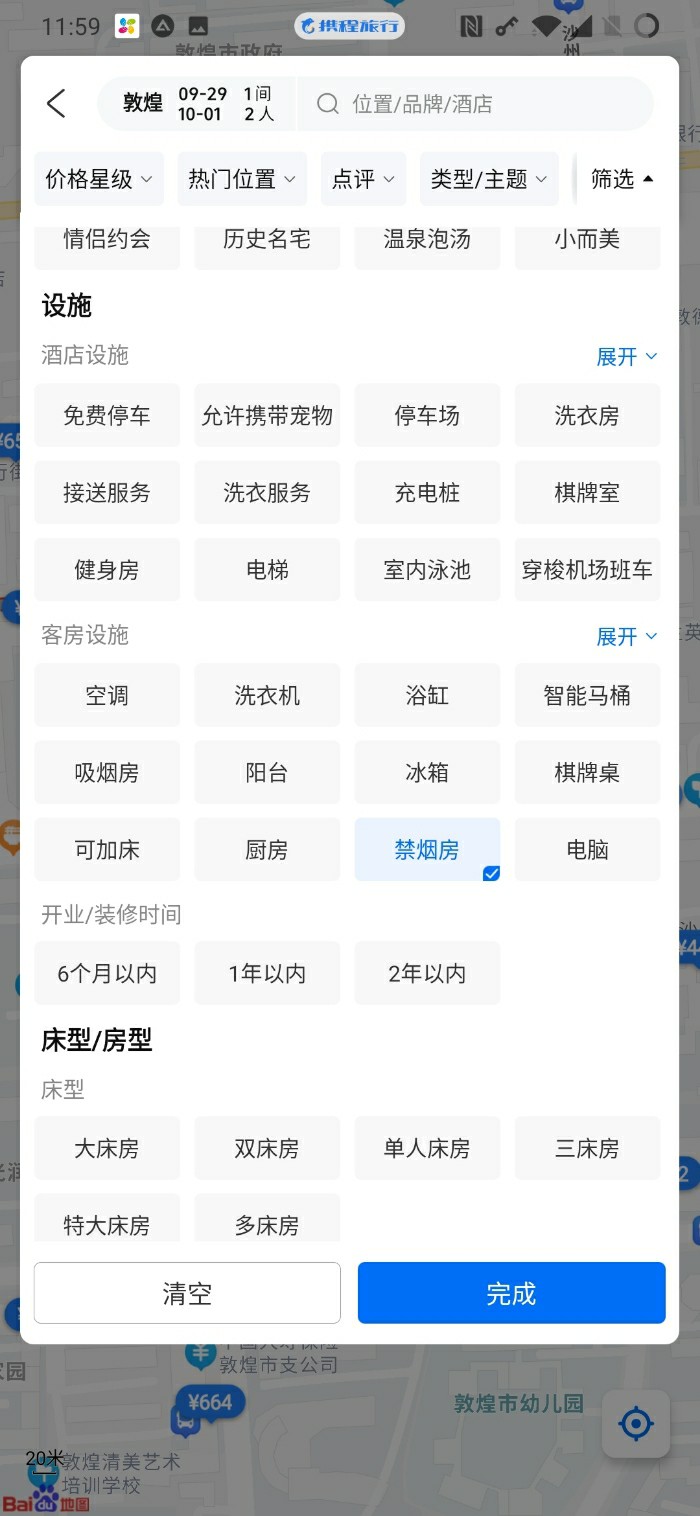
The filter function is key. Hotel details are standardized, so filtering quickly narrows options. For instance, with kids, I’d select a non-smoking room. Applying the filter removes many irrelevant hotels from the map.
If you’re using a computer, it’s even easier. I’ve developed a browser extension that lets you compare multiple Ctrip hotels side-by-side. It gathers ratings, negative review rates, room types, floor area, window details, bed sizes, and smoking policies into a single Excel sheet, allowing you to compare everything at a glance and make your choice quickly.
Feel free to use it: https://github.com/greenzorro/hotel-comparer
The hotel was now booked.
Restaurants
I scouted restaurants near attractions or the hotel. That’s how I handled it for Dunhuang. I didn’t have kids then, and adults are flexible with food, so I skipped a detailed food guide.

Like finding hotels, use the map search in the Dianping app. It shows Dunhuang’s food scene. Locate yourself, zoom in, and you’ll see nearby restaurants. Note: use the app; the mini-program lacks this. Meituan’s app works, but it’s slower.
Without a food guide, distance is crucial when finding food on the go. Map mode is very efficient.
Daily Itinerary
The daily itinerary simply combines the hotel, attractions, and restaurants/shops, considering time. No new work here. The key is estimating visit durations to avoid over- or under-scheduling.
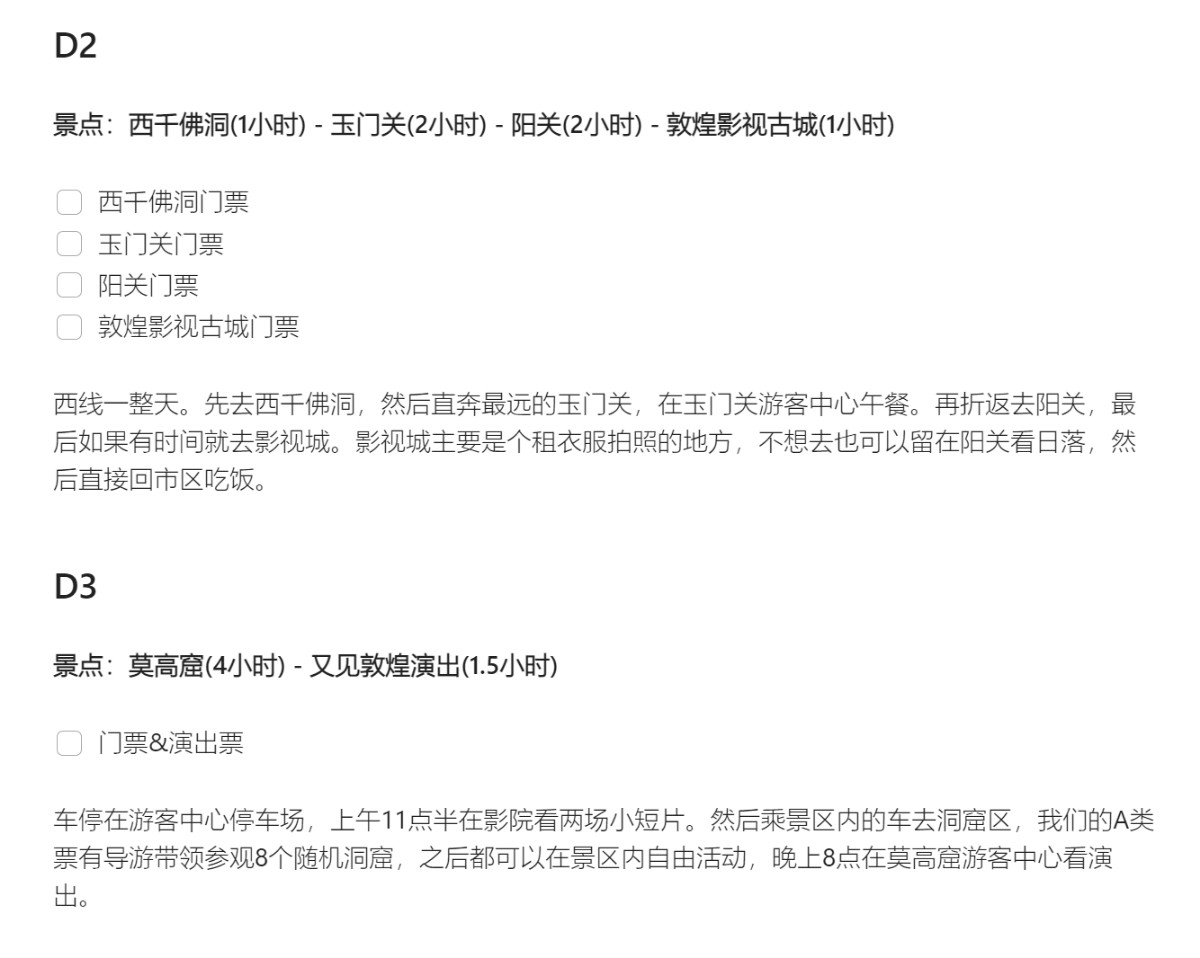
Note: for popular attractions, like the Forbidden City, book tickets in advance.
Packing List
The packing list is separate, not tied to time or place. Once attractions are set, consider it anytime. I usually do it last.
I love Excel. Anything data-related, I use Excel, including travel items. It’s overkill for solo adult travel, but forgetting one baby item can be disastrous, so careful checking is essential.

Why 4 columns? It’s a thorough checking system, from left to right:
- To Bring: This spreadsheet is reusable, accumulating over time. It includes items for all seasons and activities. Before each trip, I select from this column.
- To Pack: Items are either carry-on or checked. Leaving carry-ons at the hotel defeats their purpose (like diapers - I’ve learned the hard way). Use Excel’s filter on the first column, select items for this trip, then decide which are carry-on, checking them in the second column.
- Packed: Start packing, prioritizing carry-ons. Refer to the second column and check this one for packed items.
- Brought: With carry-ons mostly packed, filter the third column, showing unpacked items. These are either unpacked carry-ons or checked luggage items. Continue packing. You can skip checking columns 3 and 4 if you’re organized.
Packing List: https://my.feishu.cn/wiki/R7EAwcYX1ikNlukteCdcVhdinhb?from=from_copylink
Travel Plan Document
By following this workflow, your trip is planned out clearly - it’s not rocket science. However, up to this point, it’s all just mental planning. You need a proper “container” for this web of information, both for your own review and to share with your travel companions.
I have a travel itinerary template I’ve used for years. It’s essentially a series of fill-in-the-blank questions; once you plug the information into the right spots, your guidebook is complete.

The document is divided into several modules: Itinerary, Packing List, Tips, Candidate Attractions, and References. The first three are for you and your group; the last two are backend notes for your own use while planning. There’s a divider between them - once the plan is finalized, just delete the bottom half and share it with your group.
Time: Month/Day - Month/Day (X Days, X Nights)
Inter-city Transport: Mode of transport. Local Transport: Mode of transport. Accommodation: Hotel name & nearby attractions/districts (if any).
First, the itinerary starts with an overview - this is the core foundation of the entire plan. The critical constraints - inter-city transport, local transport, trip duration, and accommodation - are all condensed into this short paragraph. Once these are nailed down, you won’t drop the ball on the basics, even if you haven’t planned the specific daily sightseeing yet.
For multi-city trips, I expand it like this for better visibility:
Time: Month/Day - Month/Day (X Days, X Nights)
Inter-city Transport: Day X fly to [Place], Day X fly to [Place]… Local Transport: [City] Metro + Taxi, [City] Walk… Accommodation:
- Dates (X Nights) at [City, Hotel]. Notes on location/attractions.
- Dates (X Nights) at [City, Hotel]. Notes on location/attractions.
- Dates (X Nights) at [City, Hotel]. Notes on location/attractions.
However, expanding it this way requires extreme caution because the dates are all interconnected. If you miss an edit and book tickets or hotels based on a typo, it’s a recipe for disaster. The cost of changing flights or overseas hotel bookings can be painful.

For tasks like this, the human brain isn’t as reliable as code. So, I built a spreadsheet tool. You fill in the table, and it auto-generates the itinerary overview, ensuring zero errors. You can simply copy it from the spreadsheet and paste it into your document:
Inter-city Transport: 17th fly to Bangkok, 19th fly to Phuket, 22nd ferry to Phi Phi Don, 27th ferry to Phuket, 28th fly to Hong Kong, 31st fly home. Local Transport: Bangkok Metro + Taxi, Phuket Bus + Taxi, Phi Phi Walk, Hong Kong Walk + Metro. Accommodation:
- 17-19 (2 Nights) at Bangkok Asia Hotel. Near Siam Center, convenient location.
- 19-22 (3 Nights) at Phuket Sugar Marina Hotel -POP- Kata Beach. Near Kata Beach.
- 22-27 (5 Nights) at Phi Phi The Cliff at PP. Tonsai Pier area, convenient but quiet.
- 27-28 (1 Night) at Phuket Nai Yang Beach Resort & Spa. Near Nai Yang Beach, close to airport.
- 28-31 (3 Nights) at Hong Kong Metropark Hotel Mongkok. Mongkok area, bustling commercial district.
Transport & Accommodation Planning Tool: https://my.feishu.cn/wiki/IbkAwYIi6ieFcbkuIjuckpJlnQb?from=from_copylink
Back to the template. I’ve already covered the Packing List. Tips and References are sections I haven’t mentioned yet. These are basically notes - valuable info recorded for the group (Tips) and for your own research (References).
The blank template and filled-out examples both live on the public travel-guide site. Blank template entry below; for a filled-out example, see the Dunhuang road-trip guide (compare it against the template structure). If you’re planning a trip to Dunhuang this spring, you can use that guide as a reference.
Travel Template: https://travel.victor42.work/
Dunhuang Road Trip Guide: https://travel.victor42.work/trip/dunhuang-self-drive/
My Travel Guides Collection: https://travel.victor42.work/
Planning Flights for Complex Trips
Ever get stuck right at the beginning trying to sort out travel between multiple cities? It can be a real headache. This is especially true when you’re trying to find the best deals for a complex itinerary during peak holidays, like National Day or Spring Festival, when flight prices go wild.
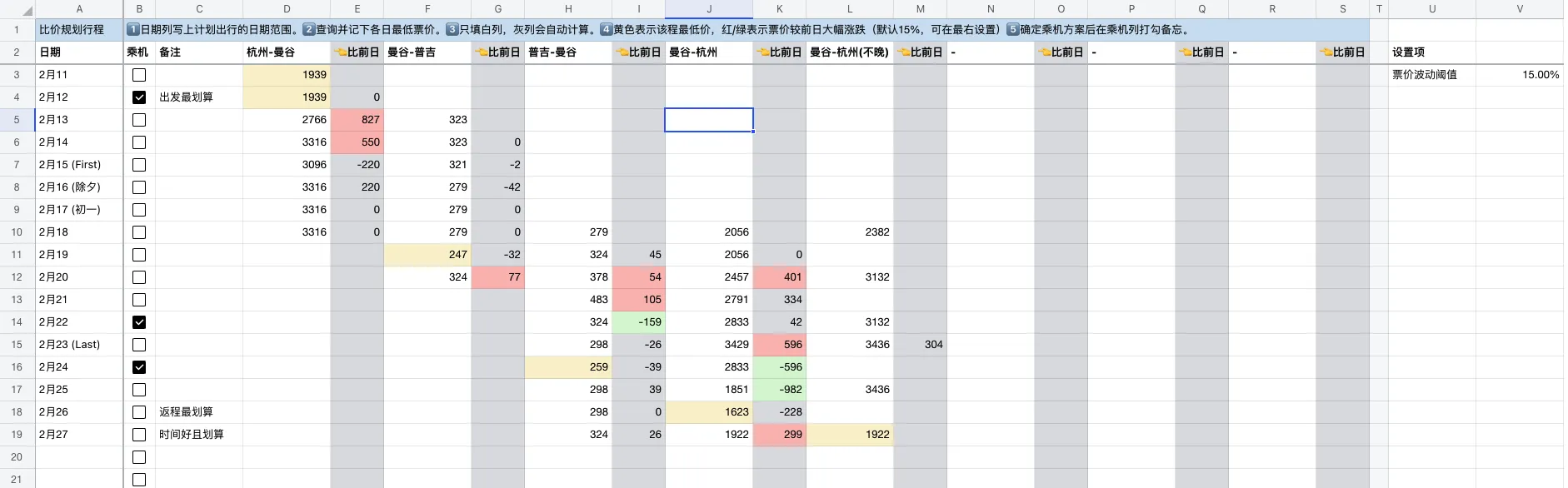
I built a spreadsheet tool to tackle this. Here’s how it works:
- Dates: List your potential travel dates.
- Fares: Look up and record the lowest fare for each day.
- Fill: Just fill in the white columns; the gray ones will auto-calculate.
- Indicators: Yellow marks the cheapest fare for a leg. Red or green shows a big price swing from the day before (defaults to 15%, but you can change it).
- Confirm: When you’ve picked a flight, check its box to keep track.
Step 2 takes the most time, but AI can speed it up. AI browsers like Comet and Atlas or AI agents like Manus and Minimax can handle it, but your standard chatbot can’t. You’ll need some decent prompting skills, or you might get incomplete or no data at all. Honestly, since this is something you only do a couple of times a year, doing it manually is still the most reliable approach.
The sheet supports up to 8 flight legs, plenty even for a multi-city European tour. Then again, if you have enough time for a month-long, multi-city journey, you probably aren’t too worried about penny-pinching on flights, haha.
Flight Planning Sheet: https://my.feishu.cn/wiki/SIbUw5N3ci79d2kySNqcItRHnYd?from=from_copylink
Travel Expense Tracking
Finally, expense tracking. Skip this if you don’t track expenses.
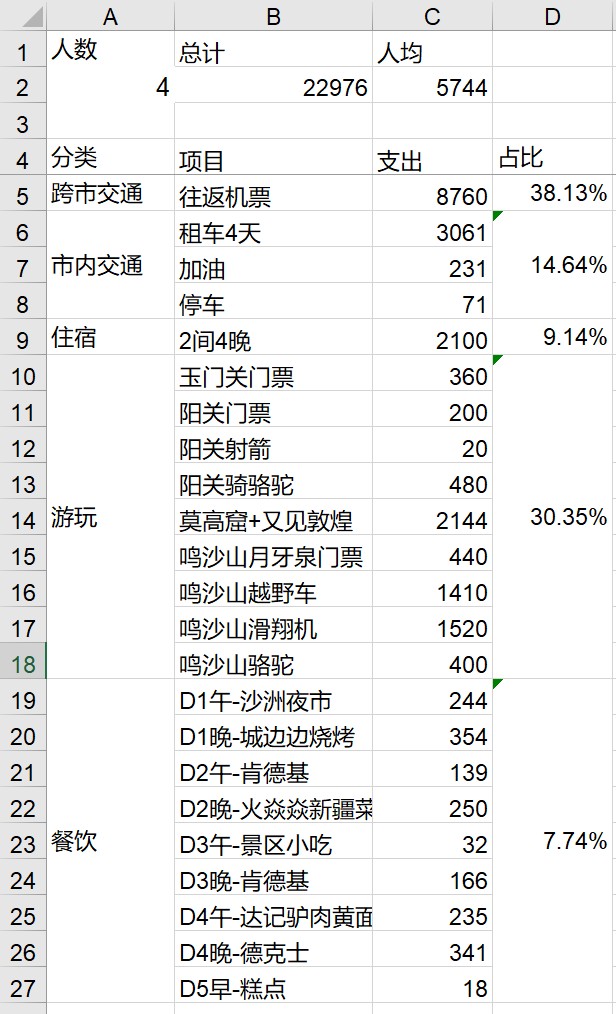
I’m sharing an Excel spreadsheet that calculates expense percentages and per capita costs, useful for splitting bills with friends.
Travel Expense Tracking Template: https://my.feishu.cn/wiki/Q76ywiamqiBKeTkTxhrcBW4MnVd?from=from_copylink