Dunhuang a captivating blend of history and desert fun for the family
Photo Album: View the album for this trip
Travel Guide: Get the itinerary
It’s been four years since my last visit, and my daughter is finally old enough for a proper long-distance trip. The goal was to introduce her to the desert and Gobi, a landscape starkly different from the lush mountains and rivers of southern China.
Traveling with a kid raises the bar for transport and lodging. We narrowed it down to three well-established desert destinations: Mingsha Mountain in Dunhuang, Shapotou in Ningxia, and Xiangshawan in Inner Mongolia.
- I’d been to Dunhuang before and written a detailed travelogue about it: Dunhuang Self-Drive 5 Days 4 Nights, covering all the main attractions.
- Shapotou in Ningxia offers a unique combination of desert and the Yellow River.
- Xiangshawan in Inner Mongolia is less scenic and more of a desert resort, but it’s commercially well-developed with plenty of attractions, including a water park.
After much discussion, my wife and I decided on a return trip to Dunhuang. Familiarity meant fewer potential pitfalls, plus we had a chance to visit the Yadan Geopark, which we missed last time. Having only been to the great Northwest once before, our decision to revisit the same city speaks volumes about its charm.
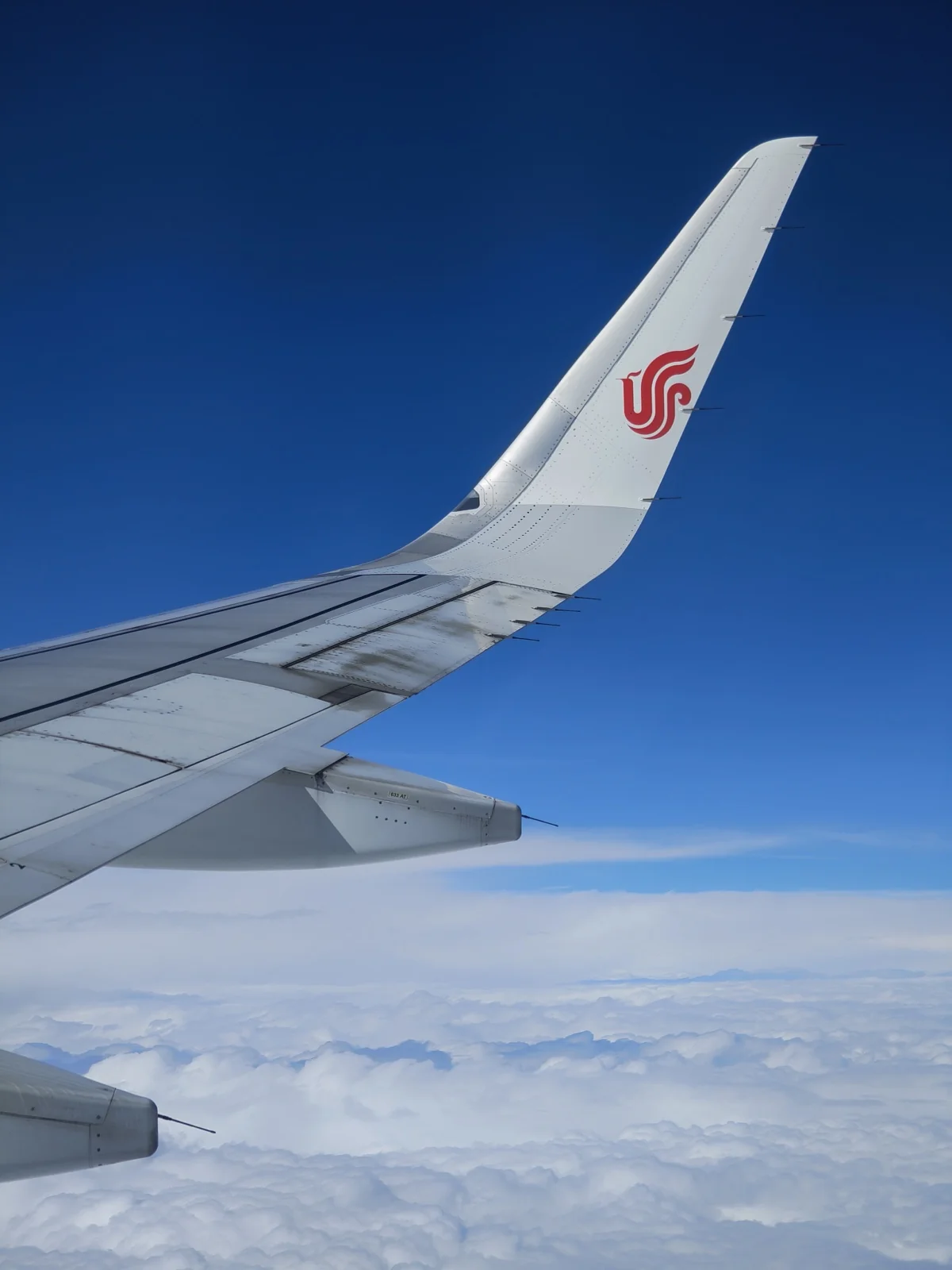
As of 2025, there’s a single direct flight from Hangzhou to Dunhuang, which departs in the afternoon and arrives in the evening. It was my daughter’s first flight, and she was thrilled.
Our itinerary dedicated the first and last days to travel, leaving us with three full days for exploring. We tackled the West Route to Yadan on day one, saving the next two for Mingsha Mountain and Crescent Lake.
West Thousand Buddha Caves
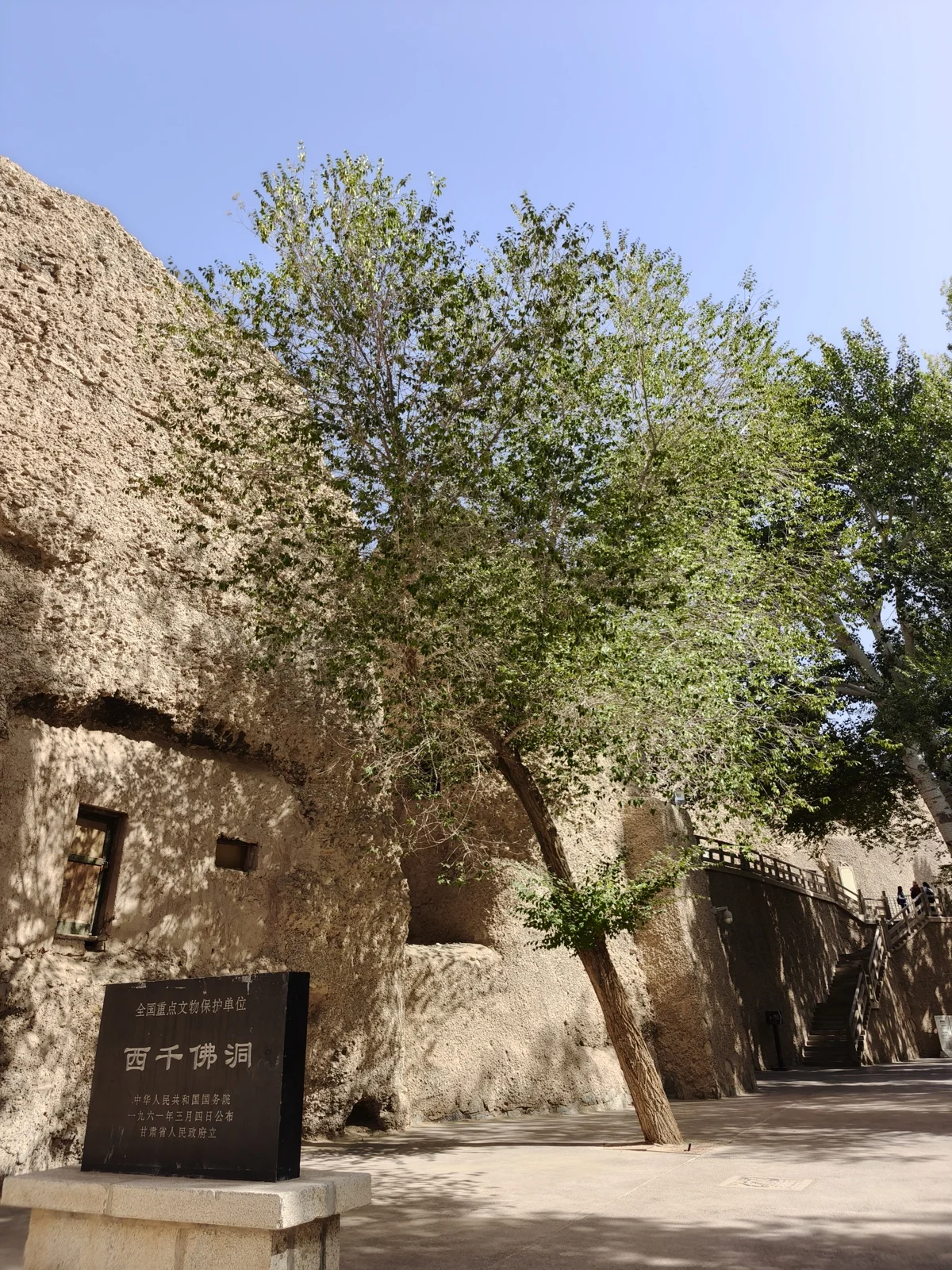
This was a stop along the West Route on our way to Yadan.
The famous Mogao Grottoes are also known as the Thousand Buddha Caves and are located east of Dunhuang. To the west lies a similar, smaller complex: the West Thousand Buddha Caves. For the average tourist who has already seen Mogao, a visit here isn’t essential, which explains the tranquility and lack of crowds.
We’ve visited Mogao before, and while our daughter is likely too young to appreciate the grottoes fully, giving her a quick glimpse was a good introduction. This place was perfect for that.
We joined a guided tour of four caves, where photography was forbidden. The statues here are more heavily damaged, but the murals are on par with those at Mogao. A few details were particularly striking and unique to this site:
- The only tent-style grotto ceiling in all of Dunhuang, sloping down from a central beam in a nod to nomadic culture.
- Partially restored statues from the Republic of China era, offering a rare look at their inner construction: a wooden core wrapped in straw and coated with mud.
- A layered mural created by the Shazhou Uyghur regime. They whitewashed over original Sui and Tang dynasty frescoes to paint their own. Over the centuries, the whitewash has faded, allowing the older artwork to peek through, creating a fascinating overlap of two distinct artistic periods on a single wall.
Other features, like the predominantly male-like appearance of Sui dynasty Buddhas and the distinct representations of disciples Ananda and Kasyapa, are also seen at Mogao and serve as valuable resources for studying ancient history and fashion.
Yadan Geopark
Yadan is the final destination on the West Route, a road that literally ends there.
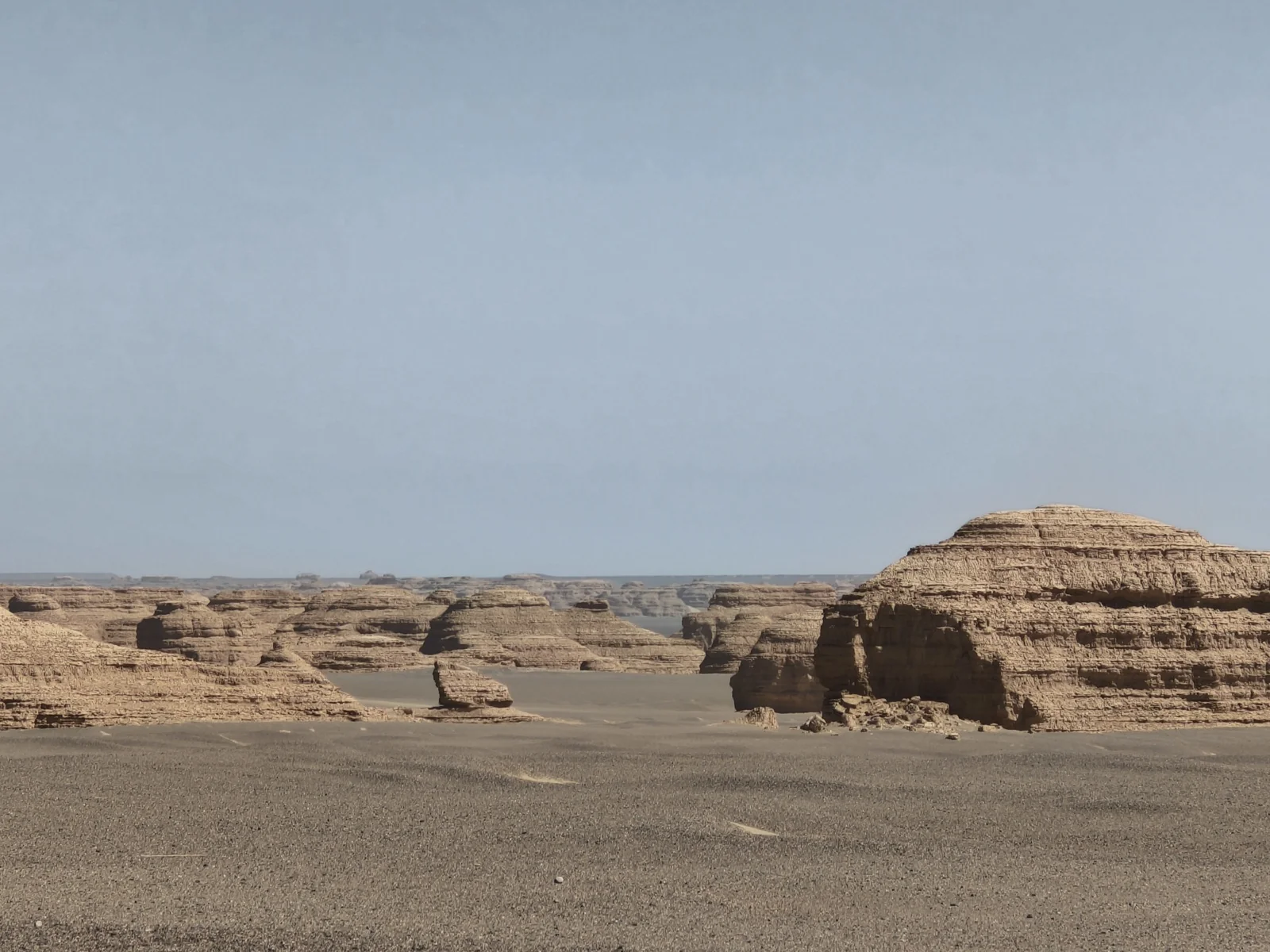
The first sight of Yadan is guaranteed to be awe-inspiring. Even for desert veterans, it’s an entirely new experience.
The perfectly flat terrain, the uniform horizontal textures of the yardang formations, and the vast, distant horizon combine to stretch one’s sense of space to the absolute limit. It’s a stunning display of order emerging from the chaos of nature.
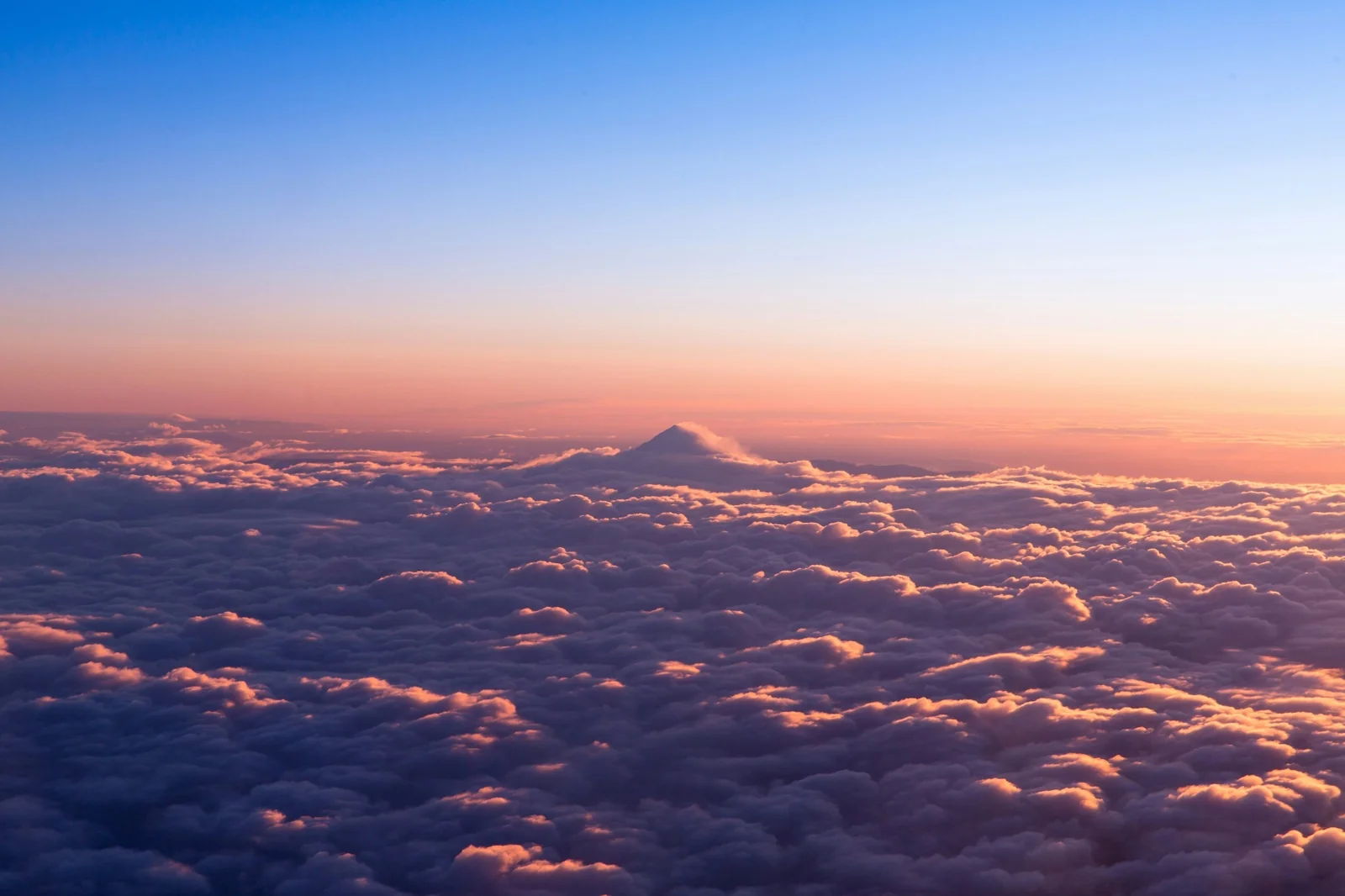
The feeling is akin to gazing upon a sea of clouds from an airplane window.
The landscape’s formation is a story of natural order.
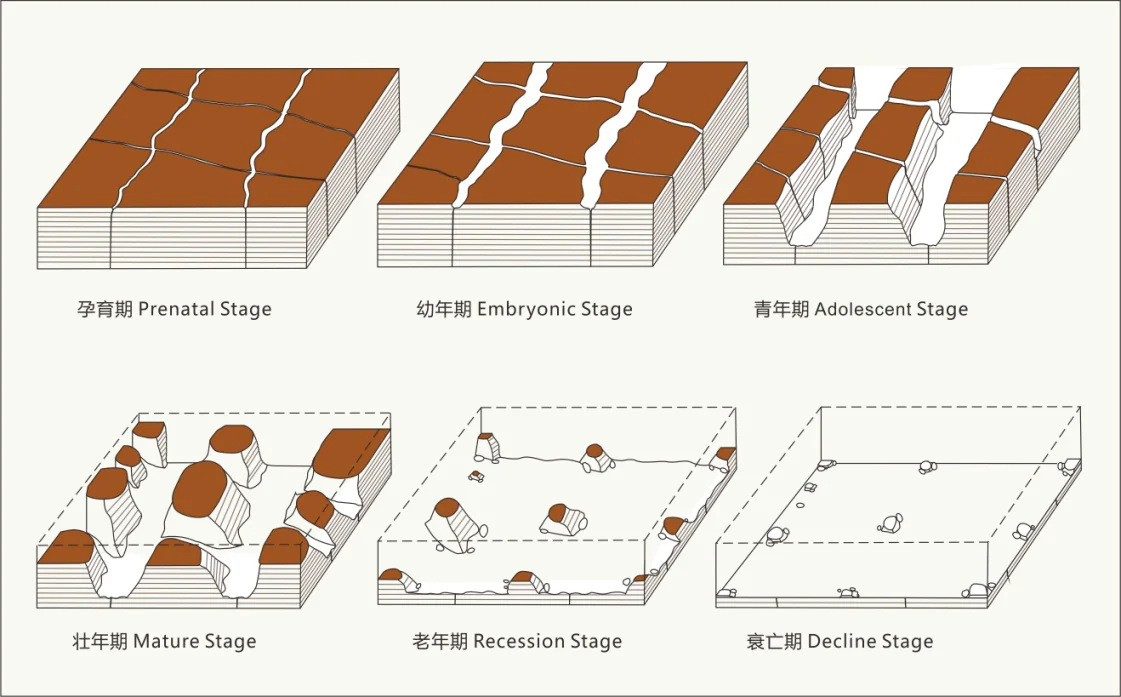
A diagram from Yadan’s official website clearly illustrates its geological evolution.
During the Middle Pleistocene (c. 300,000-100,000 years ago), this area was a freshwater lake that deposited perfectly level layers of soil. In the Late Pleistocene (c. 100,000-10,000 years ago), the land rose, the lake dried up, and the exposed layers were subjected to extreme temperature shifts. This, combined with persistent, powerful winds, began to carve the landscape much like water carves a canyon. The wind sculpted long, ridge-like yardangs, which were then further eroded into walls, towers, and pillars, destined to one day crumble back into dust.
The Yadan landscape is in a constant state of flux. What we see today is its geological prime. In tens of thousands of years, these magnificent structures will be gone.
Sightseeing Bus
The first leg of the tour is a bus ride with stops at designated viewpoints.
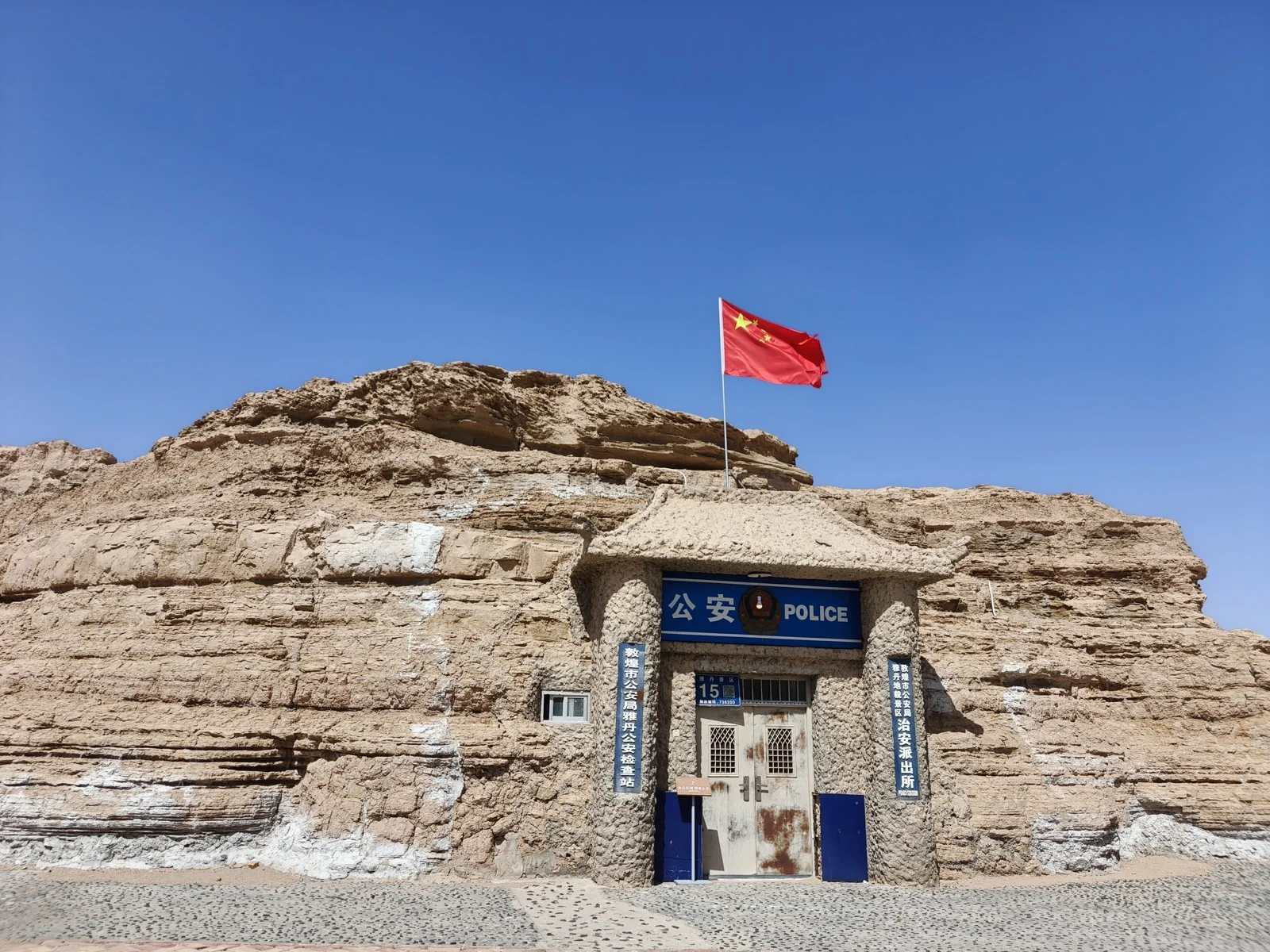
Our first stop was a police station built right into a yardang - a relic from the area’s initial development.
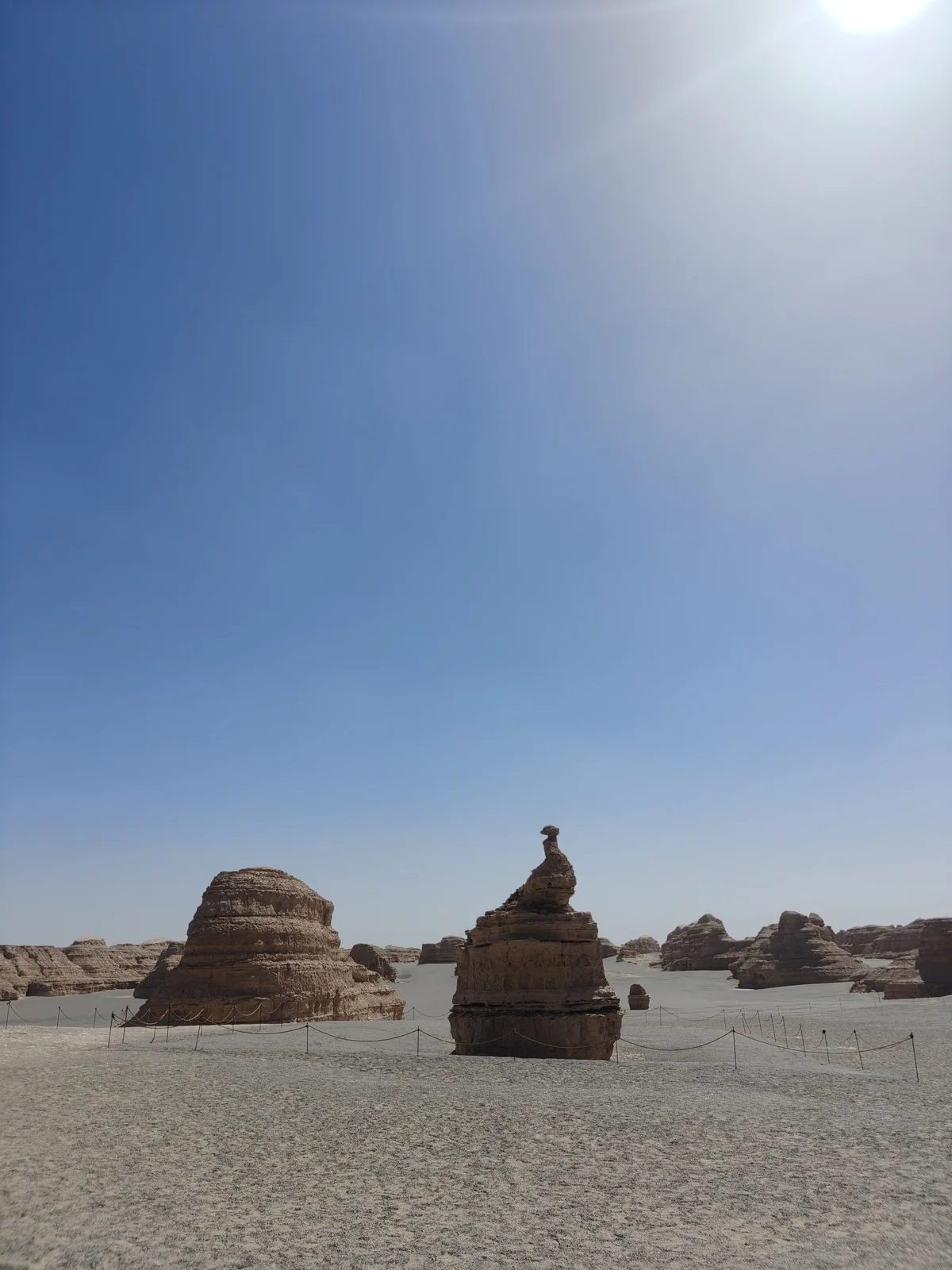
Many of the park’s yardangs have been named for things they resemble, the most striking being the “Peacock Standing Gracefully.” It’s remarkably lifelike. My daughter, however, was far more impressed by the swings at the rest stop, where we happily passed the time.
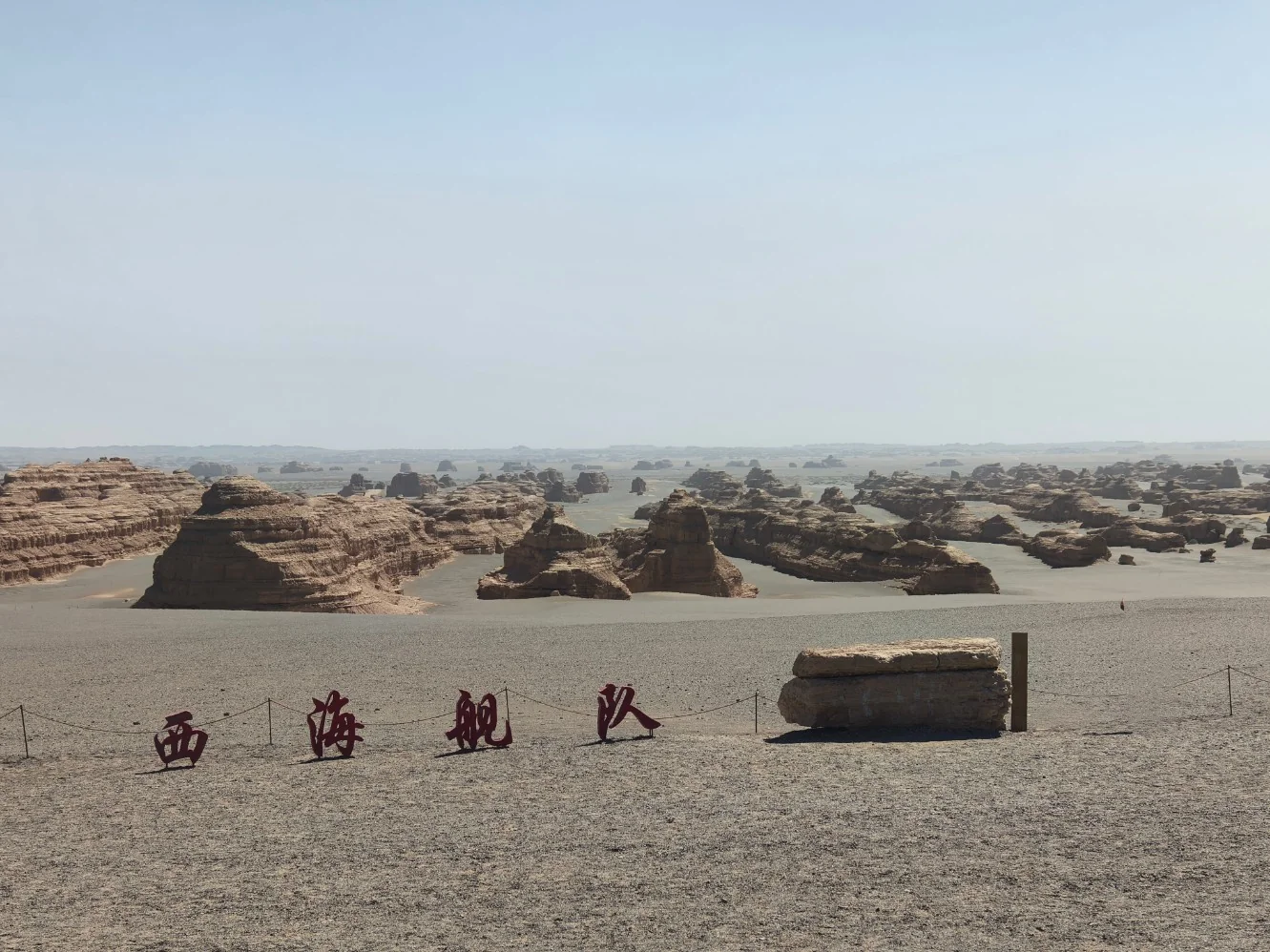
Of all the formations we saw, the most spectacular has to be the “West Sea Fleet,” a vast and rare collection of massive, ridge-like yardangs.
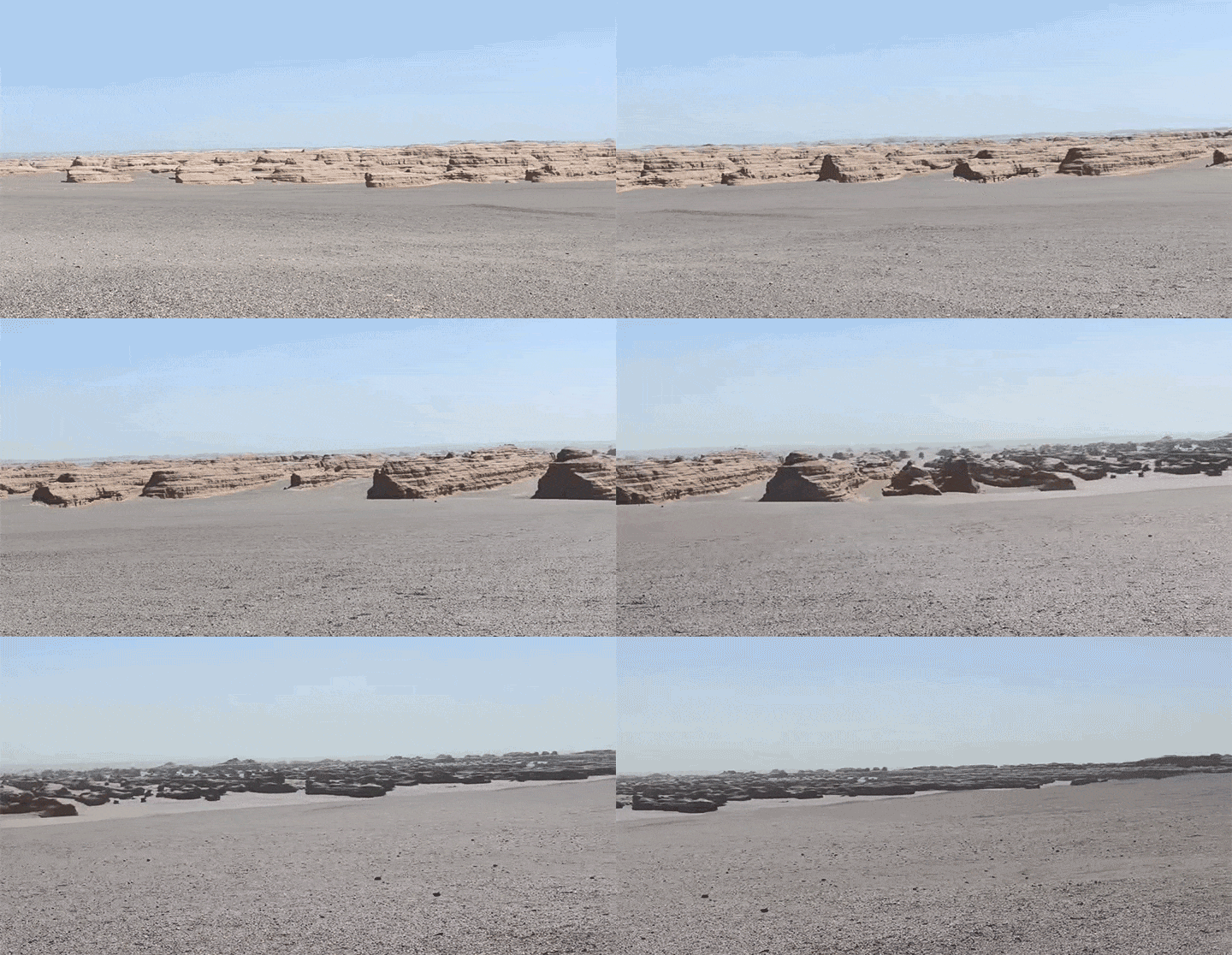
Here’s a GIF to give you a sense of the scale.
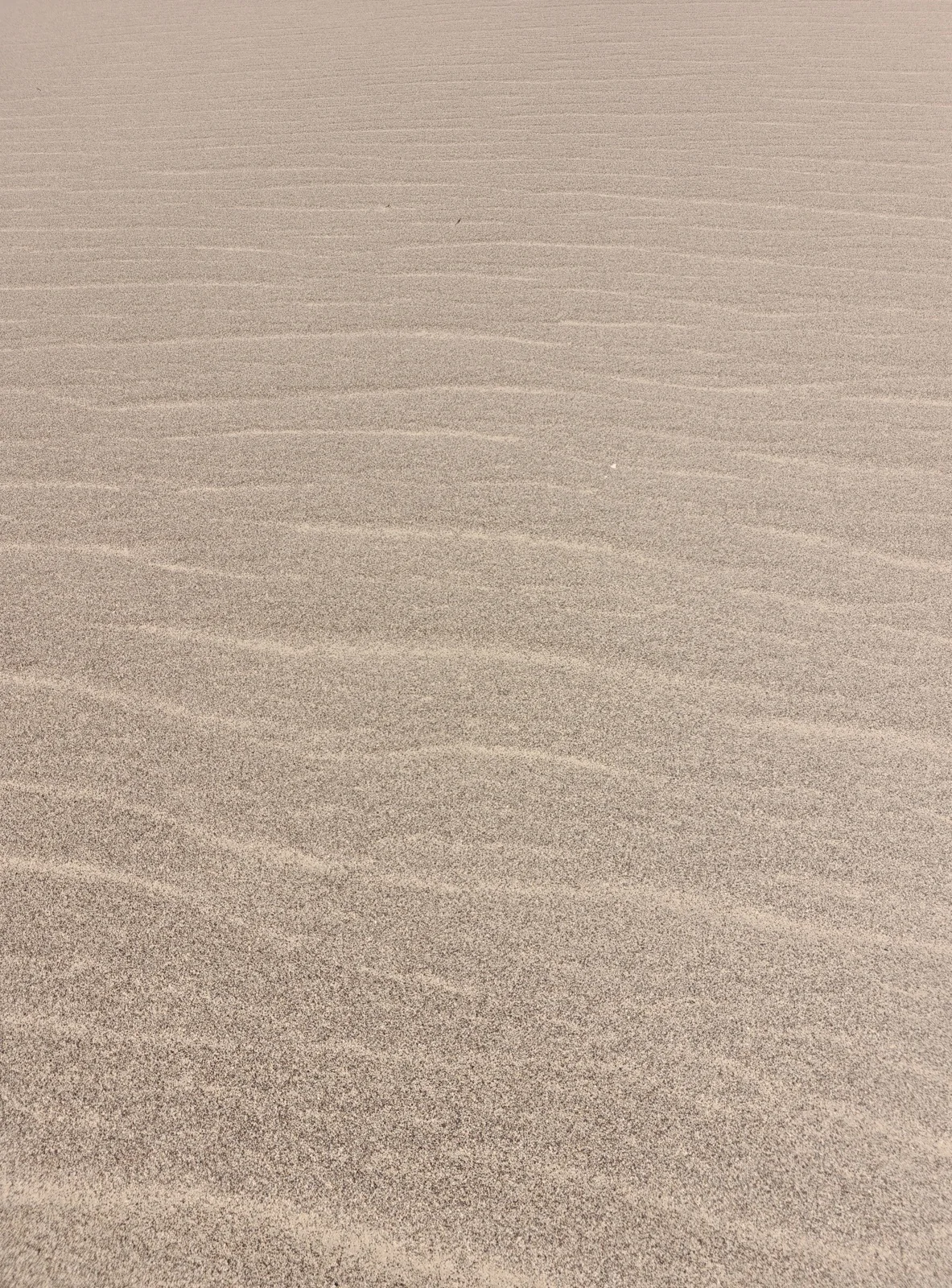
Vegetation is sparse here. Instead, black gravel acts as an anchor, securing the soil and protecting the landforms from wind erosion.
Electric Off-Road Vehicle
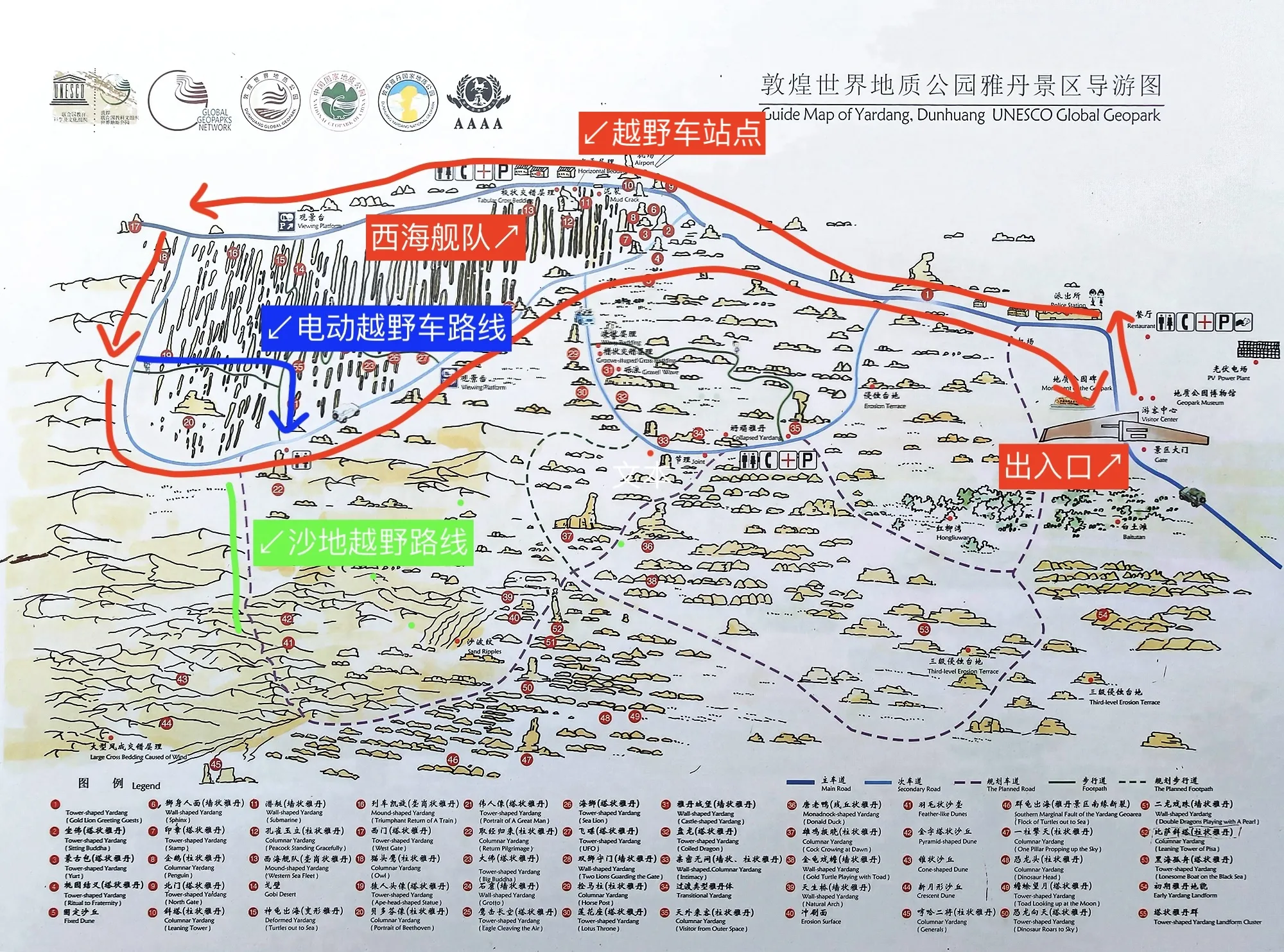
I’ve sketched a rough map; the red line is the bus route. It’s high-res enough to save. Based on my observations, there are at least three types of off-road vehicle experiences:
- At the “Peacock” stop, there’s an “Off-Road Vehicle Station.” We skipped this one. Staff explained it follows the main road but allows you to stop anywhere. I suspect it takes the small blue loop on the map during the return journey.
- At the start of the blue route, there’s another station where we rented a self-drive vehicle for ¥298. You can stop whenever you like but must stick to a designated gravel path. It’s a low-speed electric cart; the route takes about 20 minutes non-stop.
- The electric cart route ends at the park’s prime sunset spot. Here, you’ll find more powerful off-roaders and boat-shaped “desert assault buses.” Staff said these could take you deep into the Gobi along the green route and back. I’m not sure how far in they go.
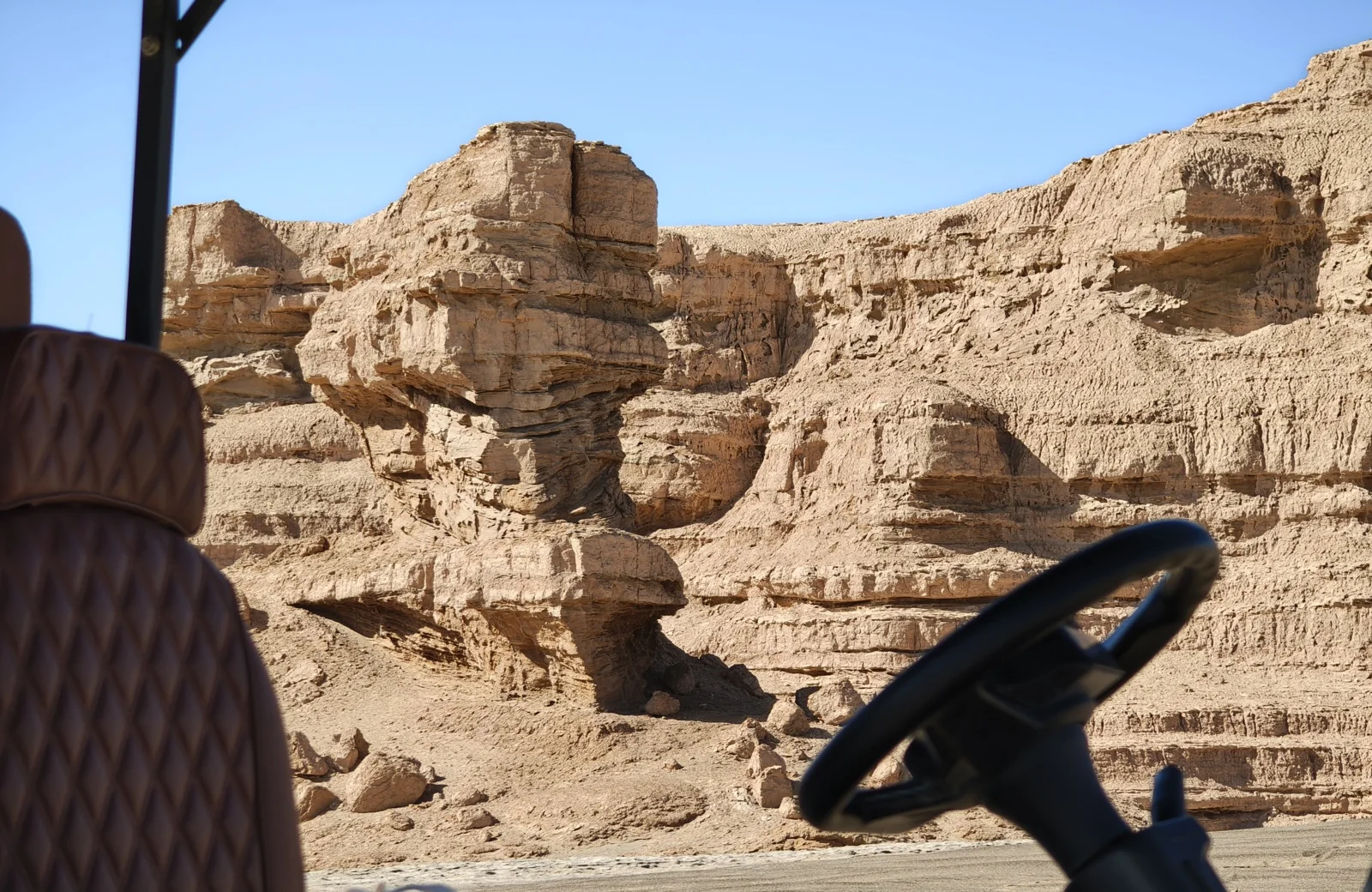
We took our time on the electric vehicle route, stopping frequently for photos and a Hami melon snack on the Gobi, turning a 20-minute ride into a nearly two-hour adventure.
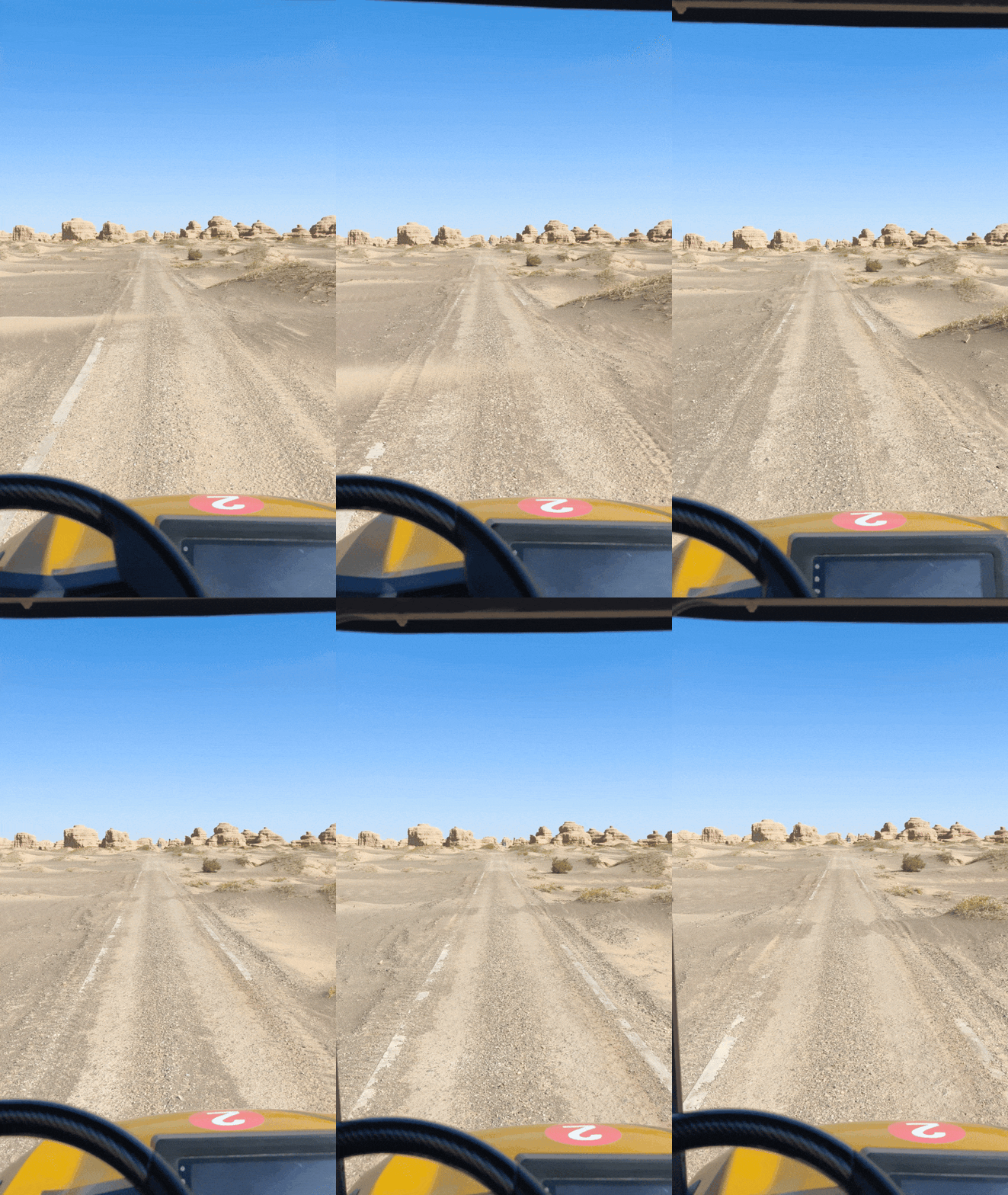
A gallery to showcase the beauty of Yadan:
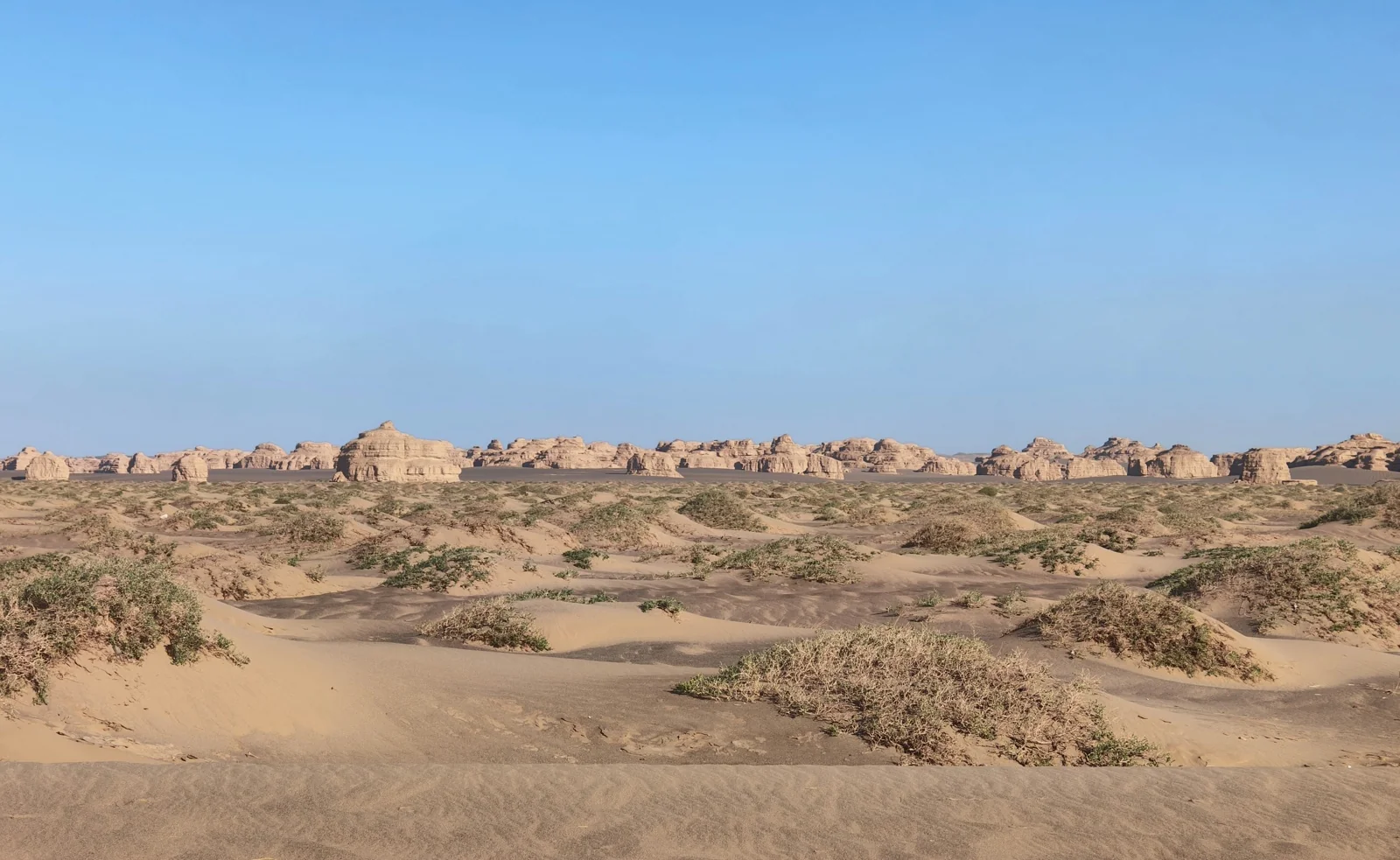
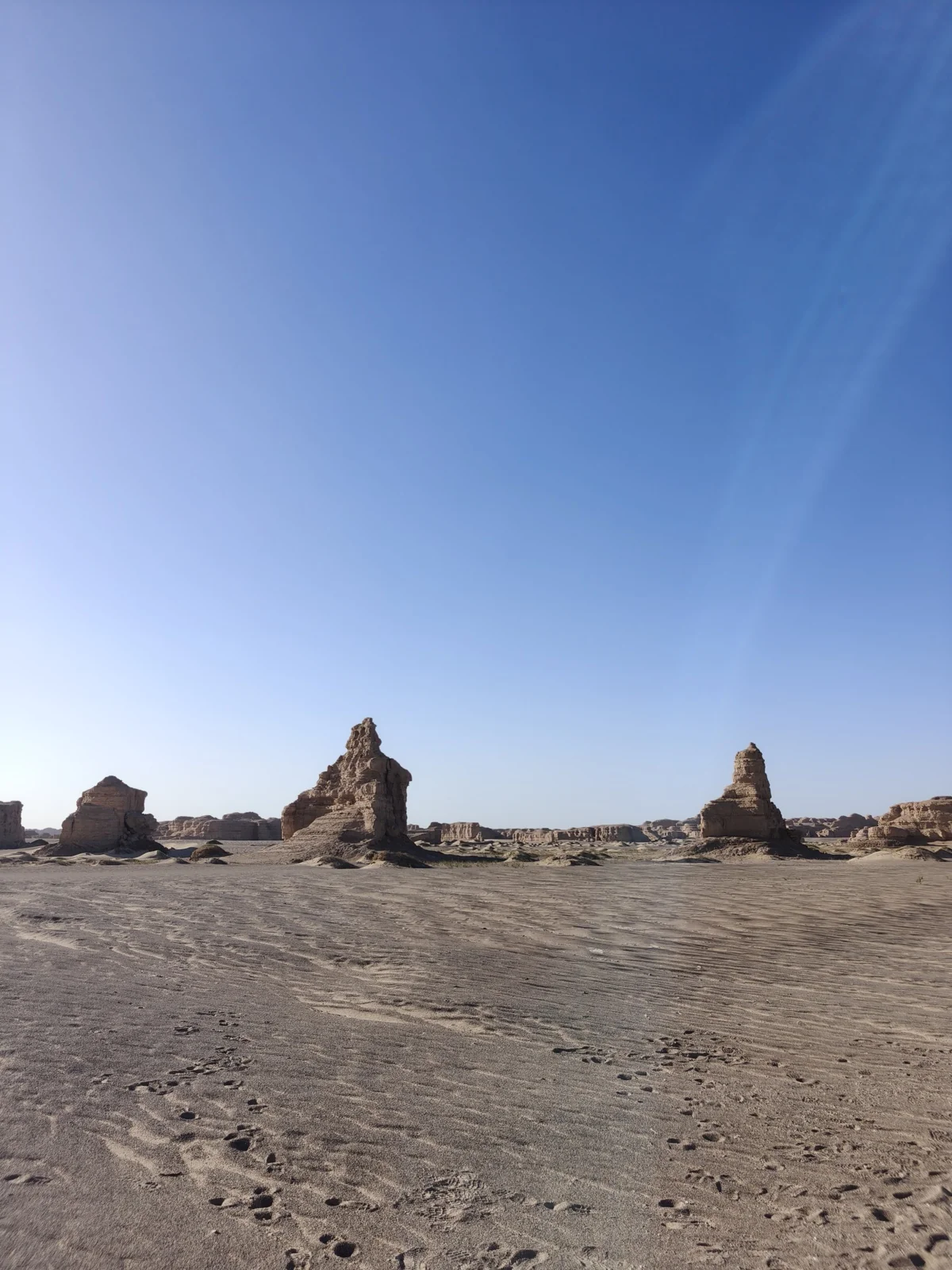
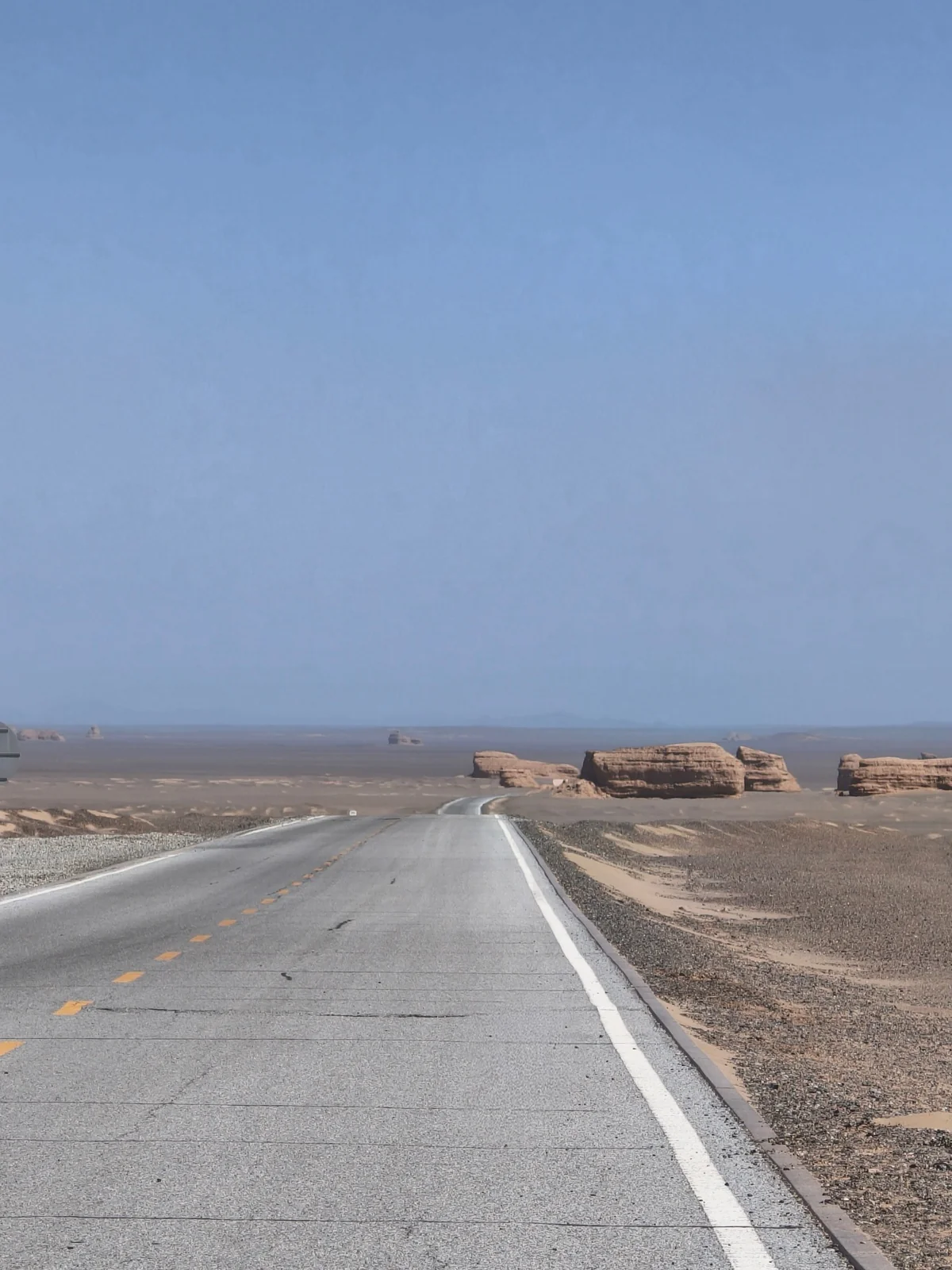
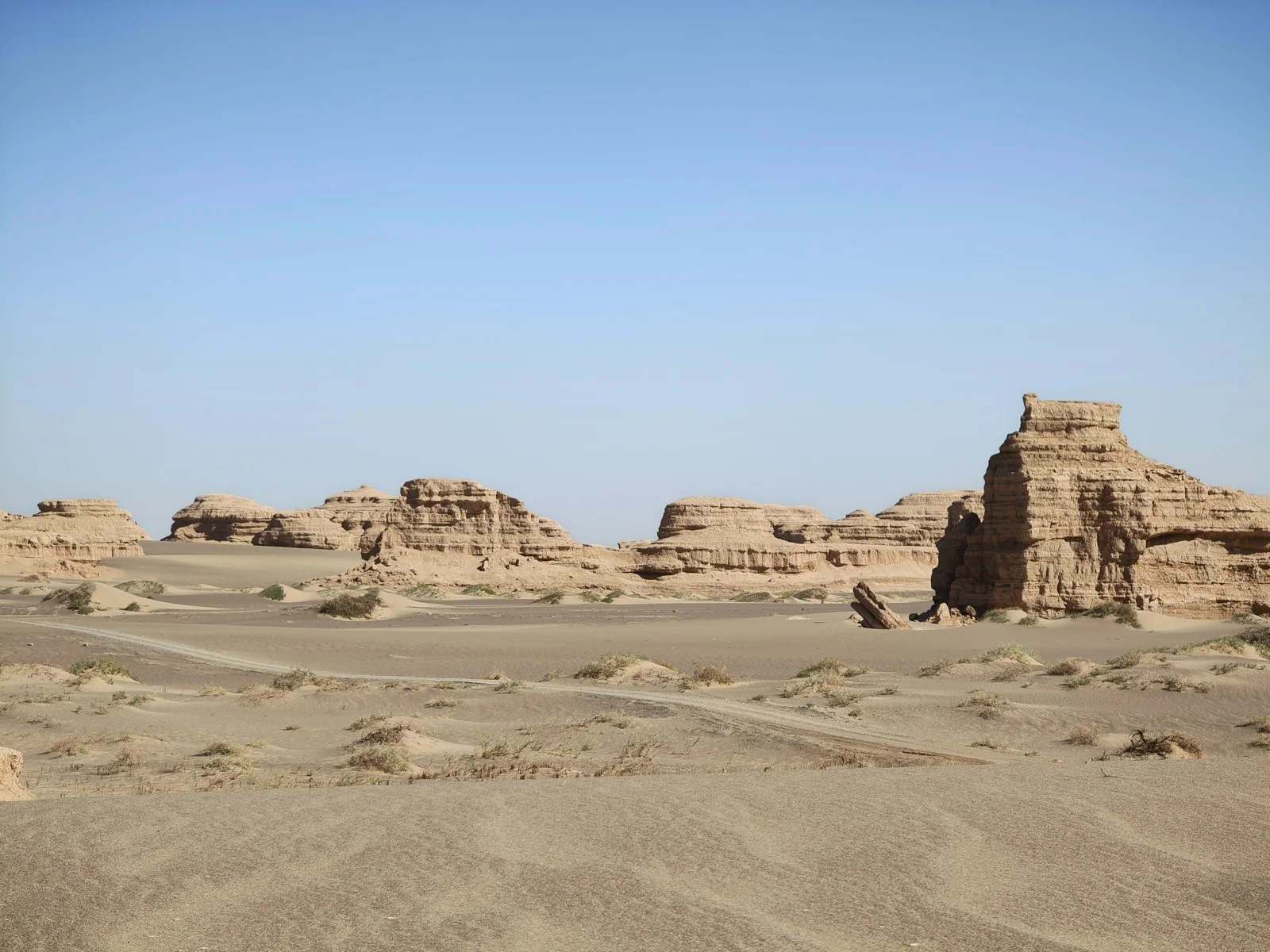
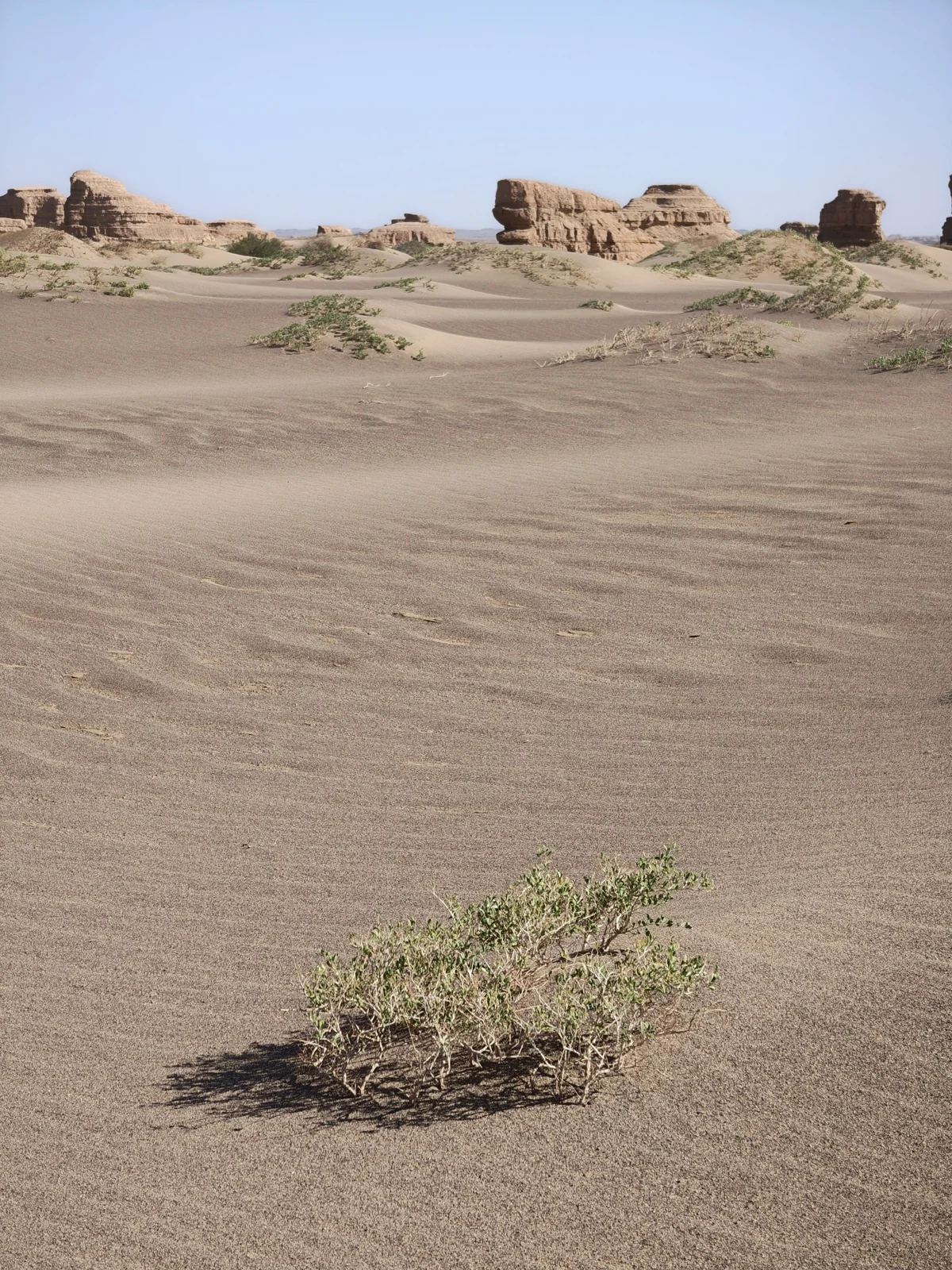
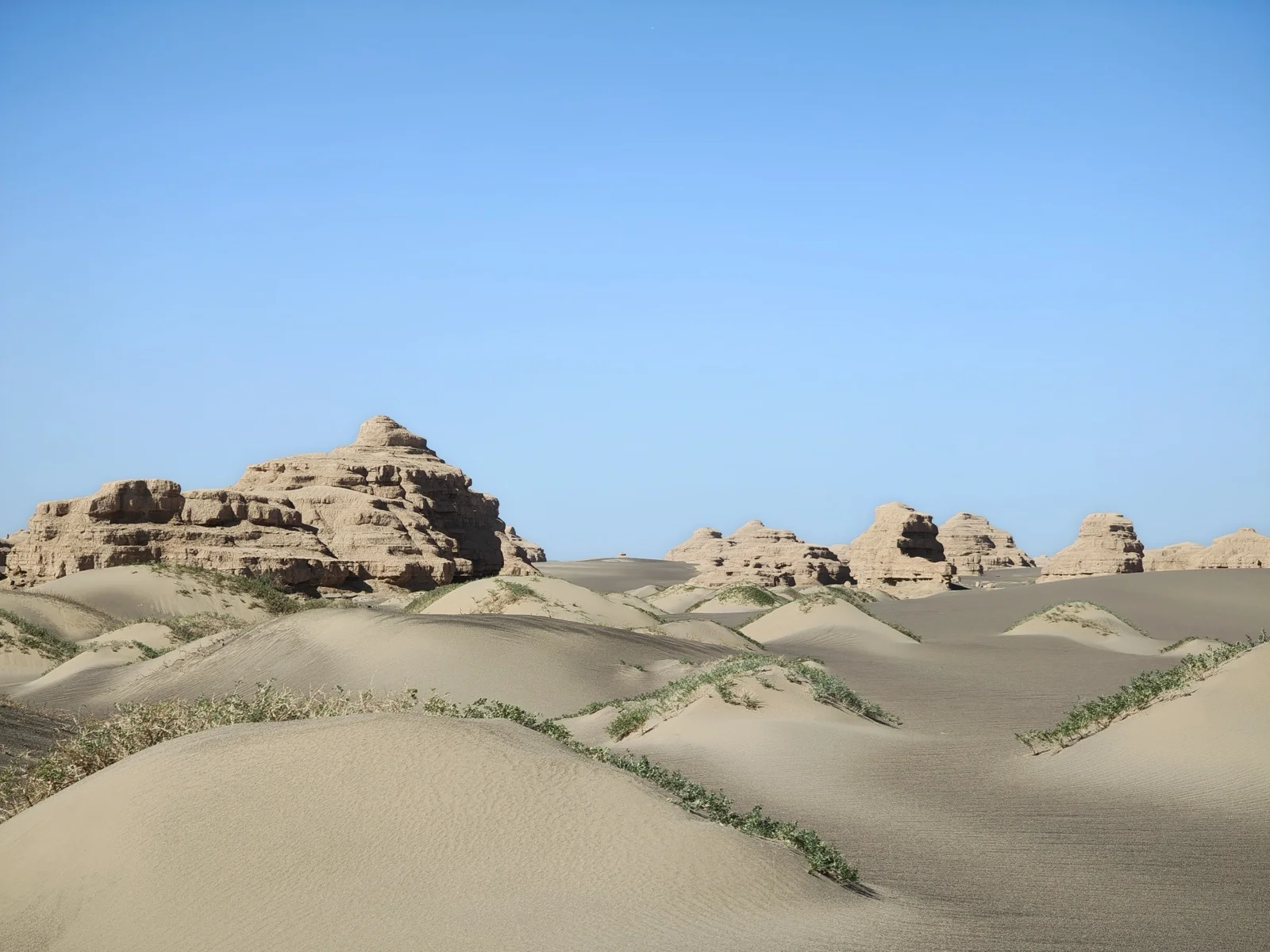
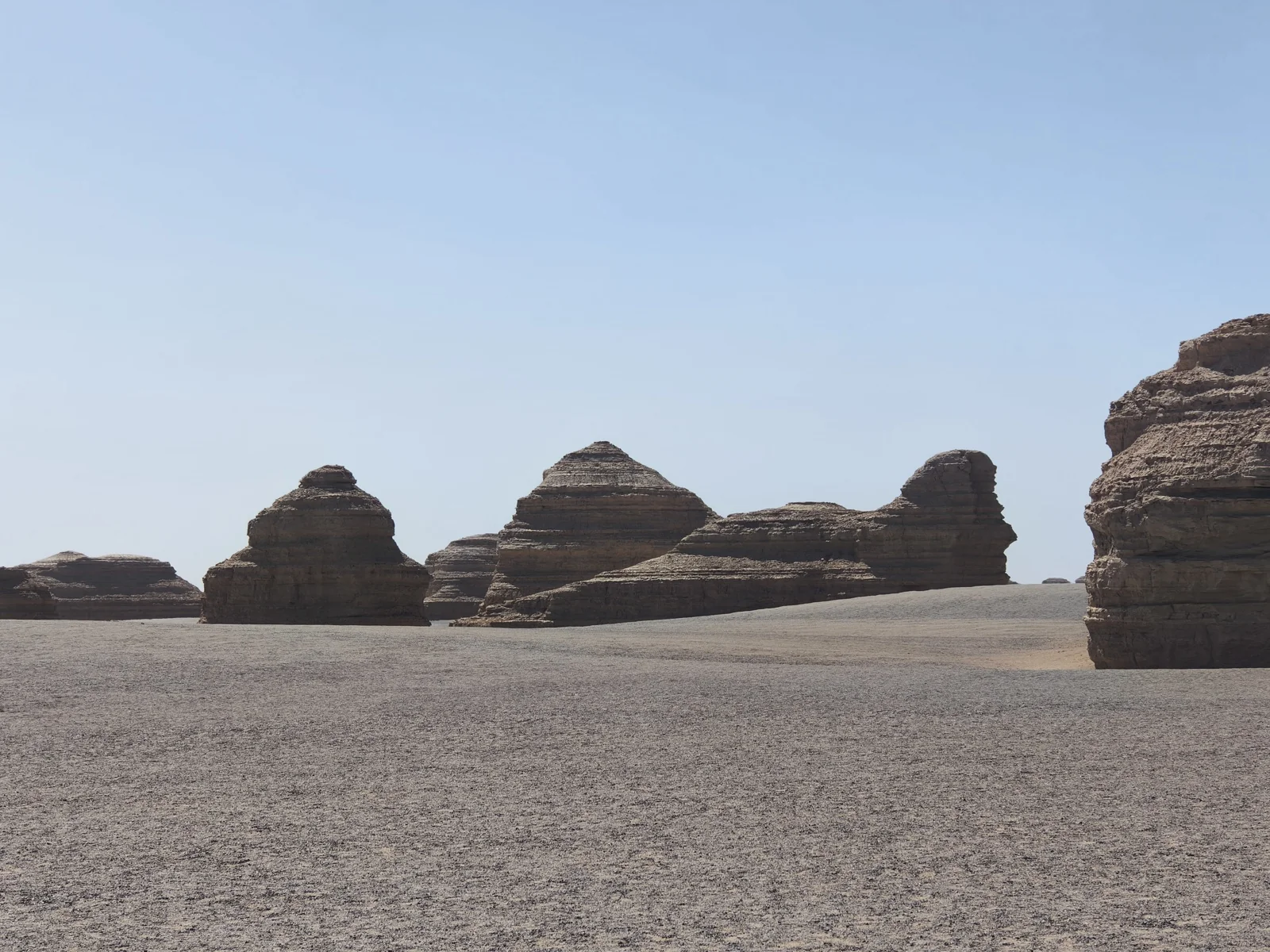
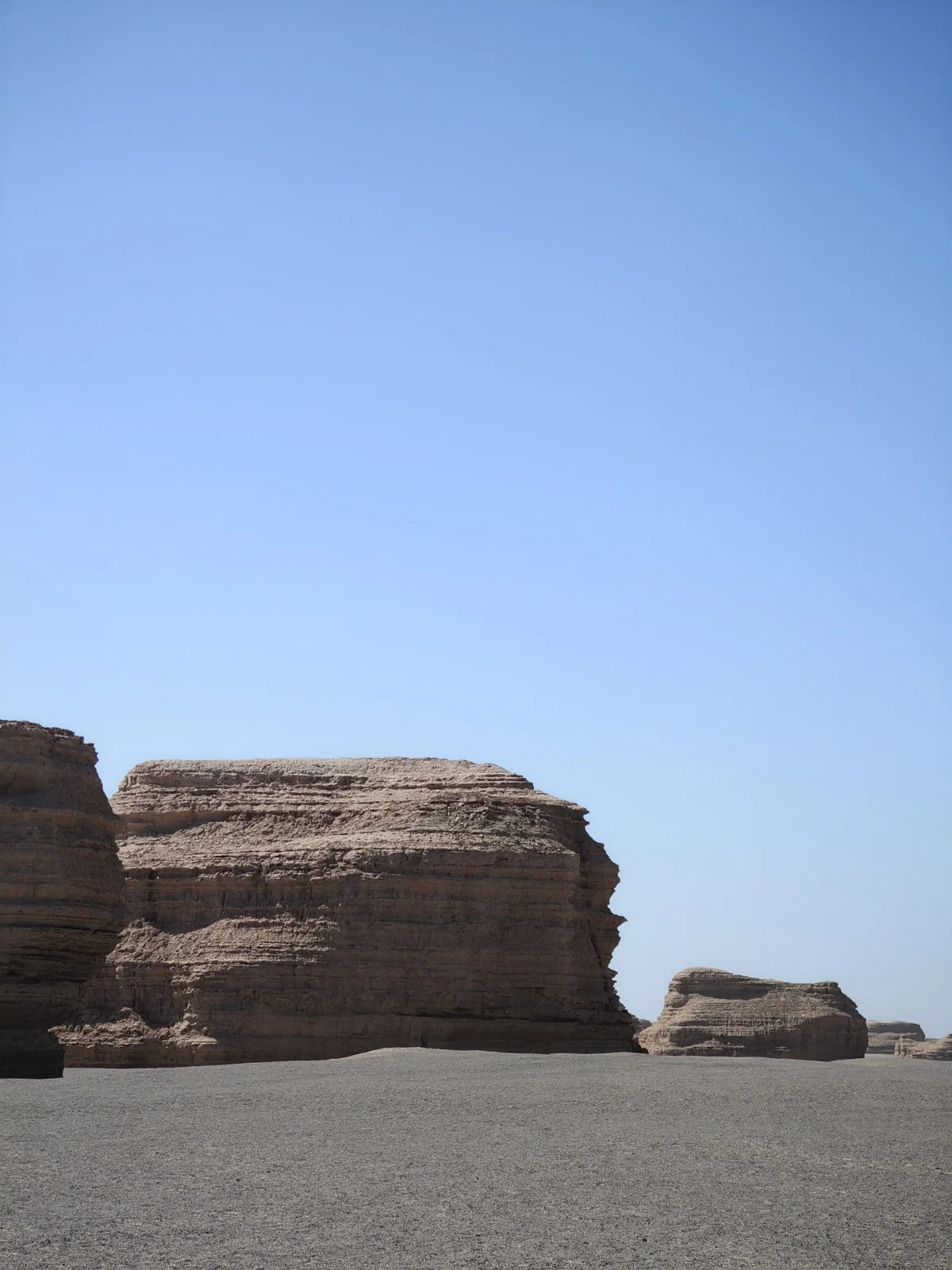
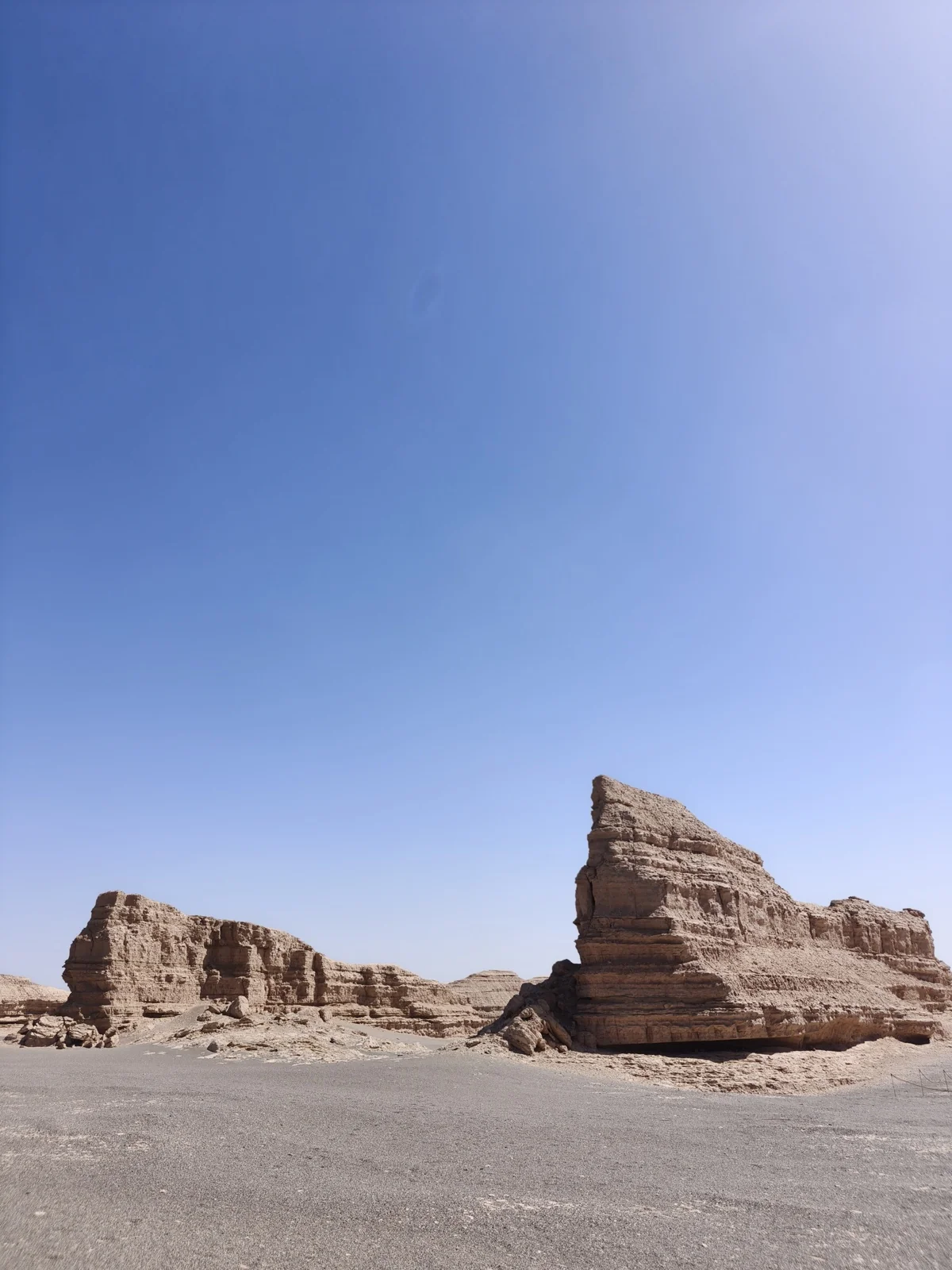
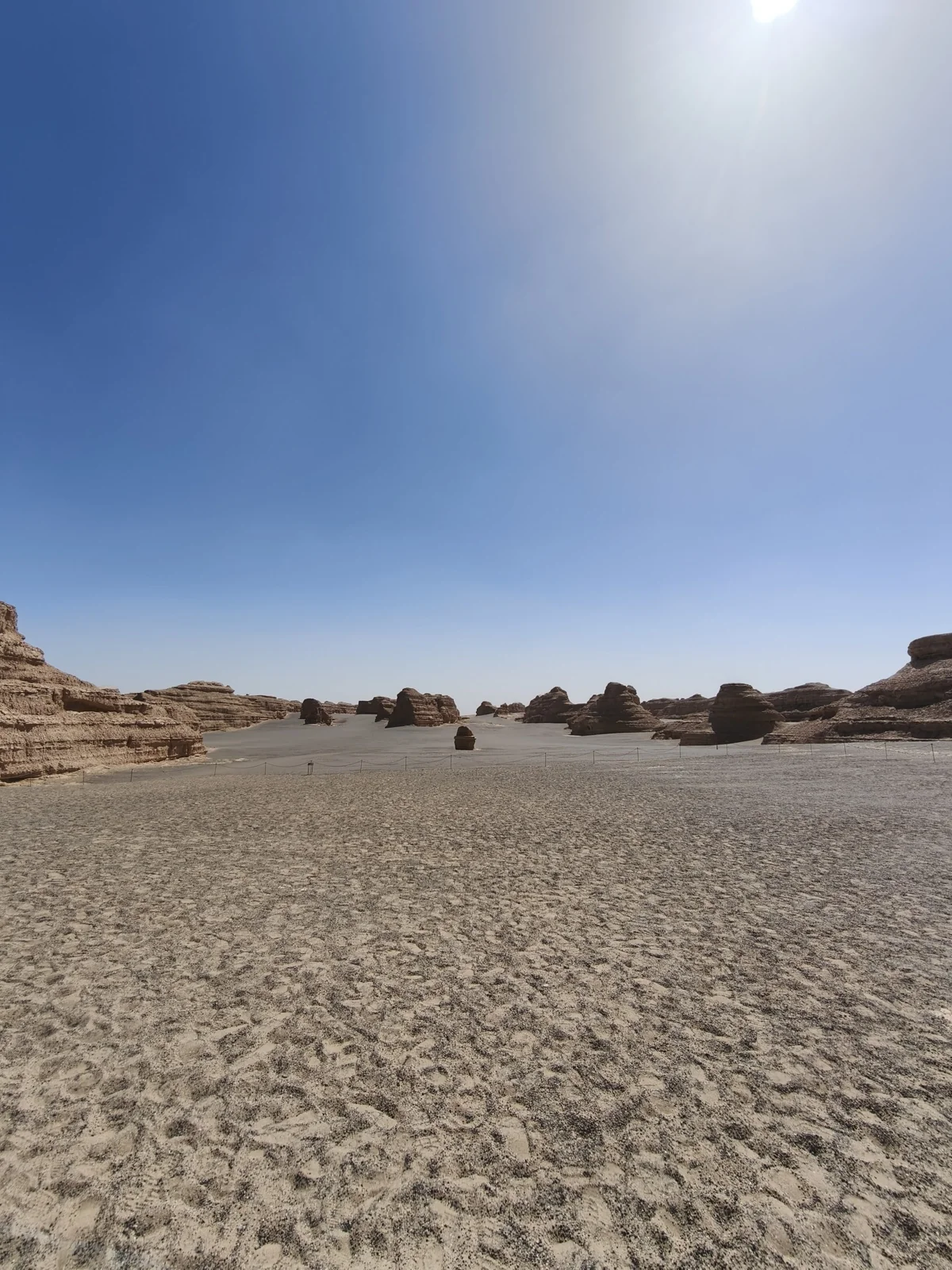
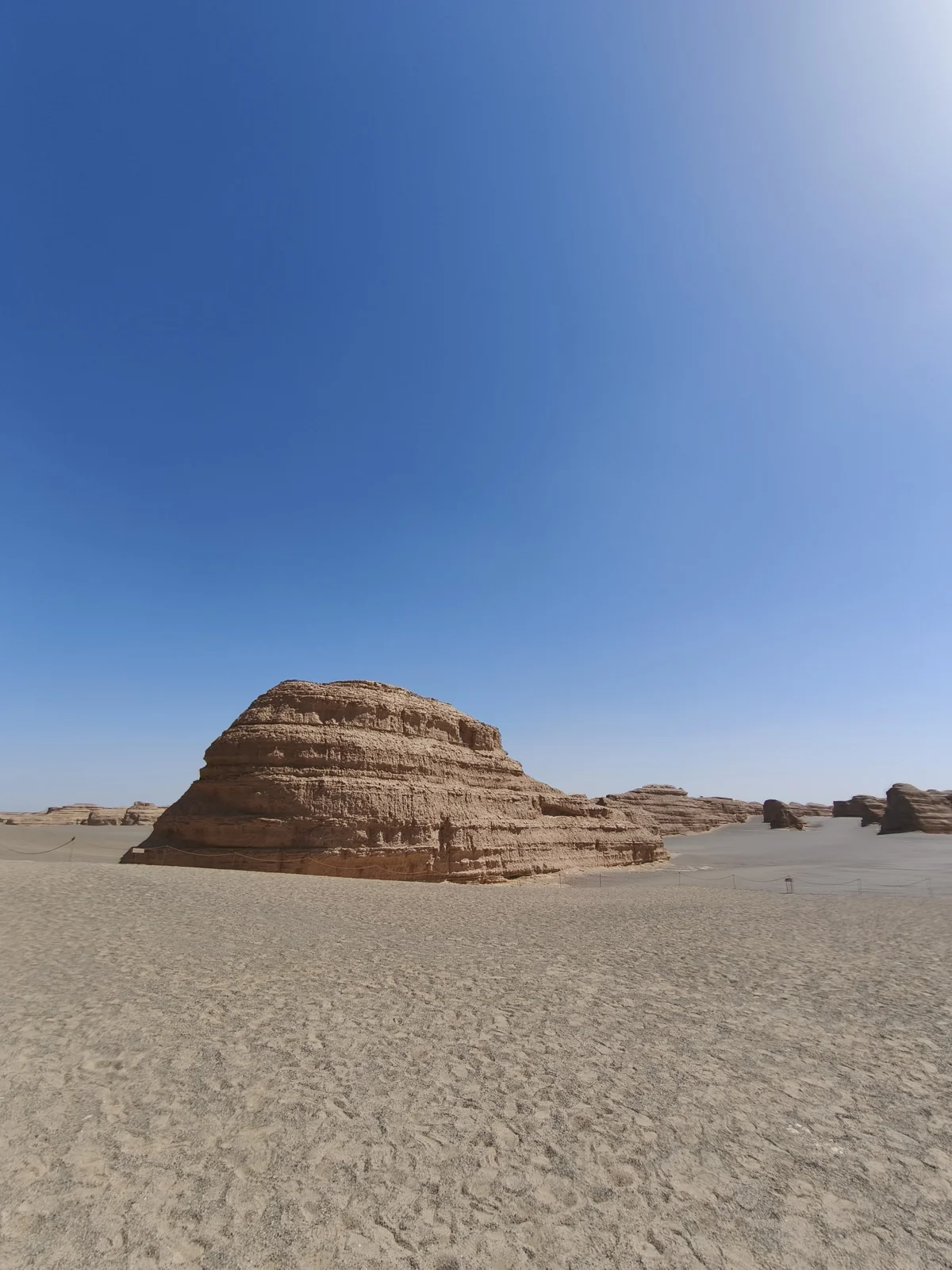
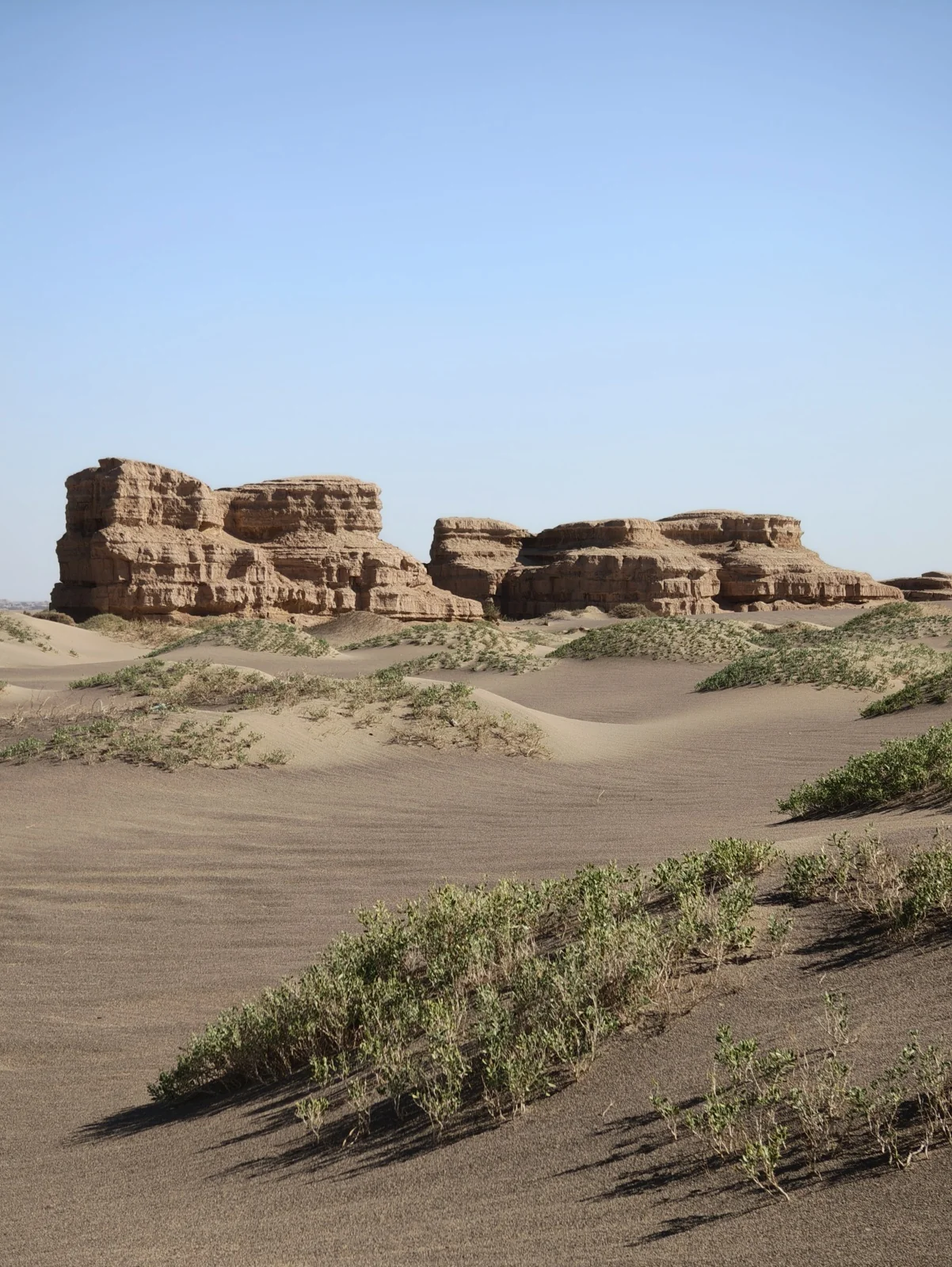
Former World of Warcraft players would surely appreciate my excitement, seeing landscapes reminiscent of The Barrens, Thousand Needles, and Shimmering Flats come to life. I felt an undeniable urge to just walk off into the deep Gobi alone.
While the park names these formations after familiar objects - some fitting, some a stretch - I believe that if you strip away human projections, its raw, natural form is a masterpiece of pure beauty.
Mingsha Mountain & Crescent Lake
We spent the next two days at Mingsha Mountain and Crescent Lake, an ideal desert playground for kids.
It’s rare to find a desert attraction so conveniently close to a city in China. It offers all the wildness and romance of the desert, yet it’s only a ten-minute taxi ride from our hotel. The ticket is valid for three consecutive days of unlimited entry, and it’s even free for residents of nearby cities like Jiuquan and Jiayuguan (check the official account for current policies).
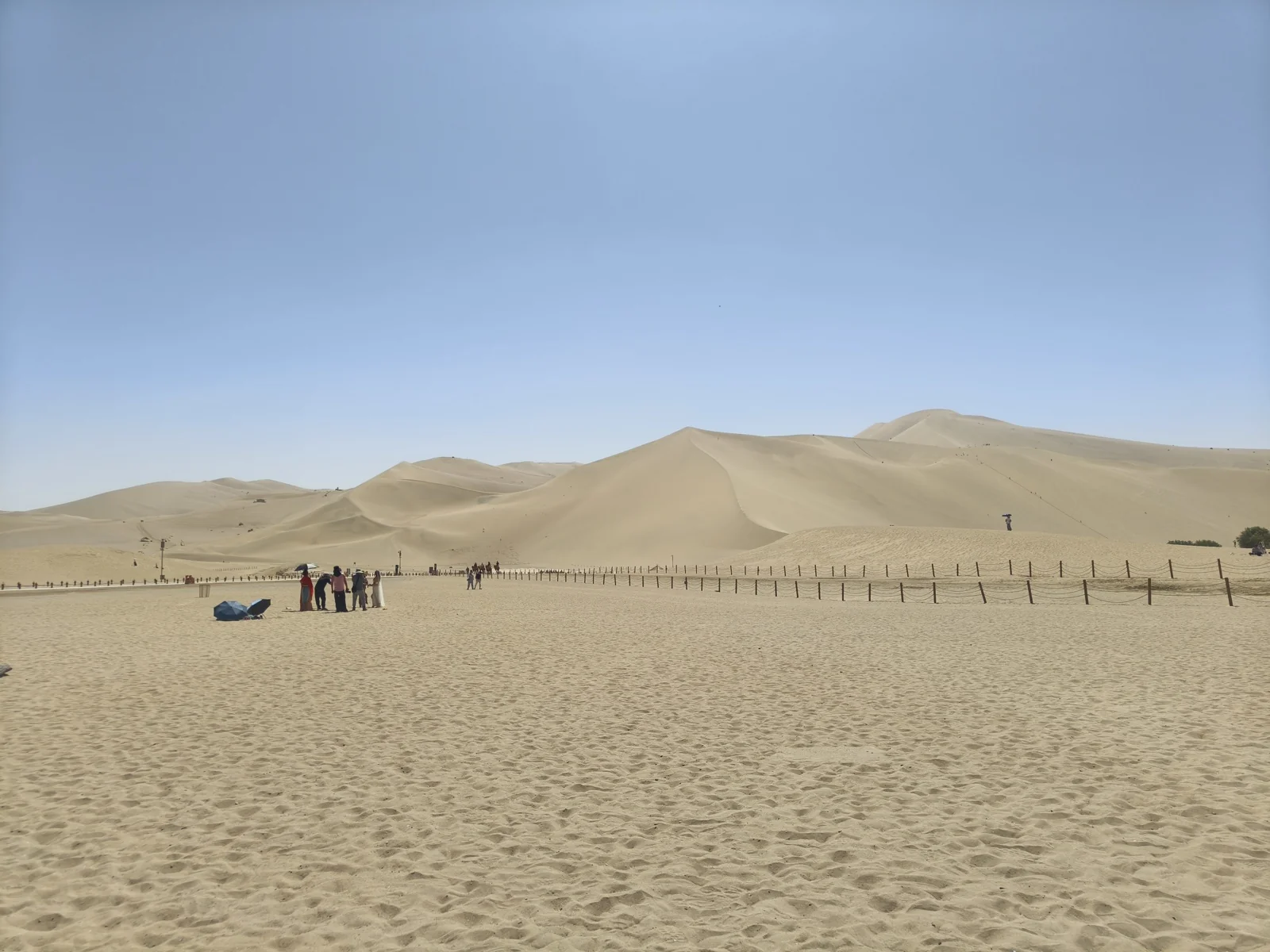
The park has several gates, but the central one is the main entrance where taxis drop you off. The view upon entering is shown above, but it’s even more stunning at sunset. The interplay of light and shadow gives the dunes a dramatic, three-dimensional quality. I have more photos in my previous Dunhuang travelogue.
The park is split into two zones. The East Zone is geared towards adventure and “conquering nature,” with paid activities like hot air balloons, off-roading, and paragliding. The West Zone evokes the romance of the ancient Western Regions, featuring the camel camp, Crescent Lake, and sightseeing carts.
We had done the East Zone activities on our last trip, and they’re mostly unsuitable for young children, so we headed straight for the west. Under the midday sun, we found a shaded spot by Crescent Lake for our daughter to play freely in the sand.
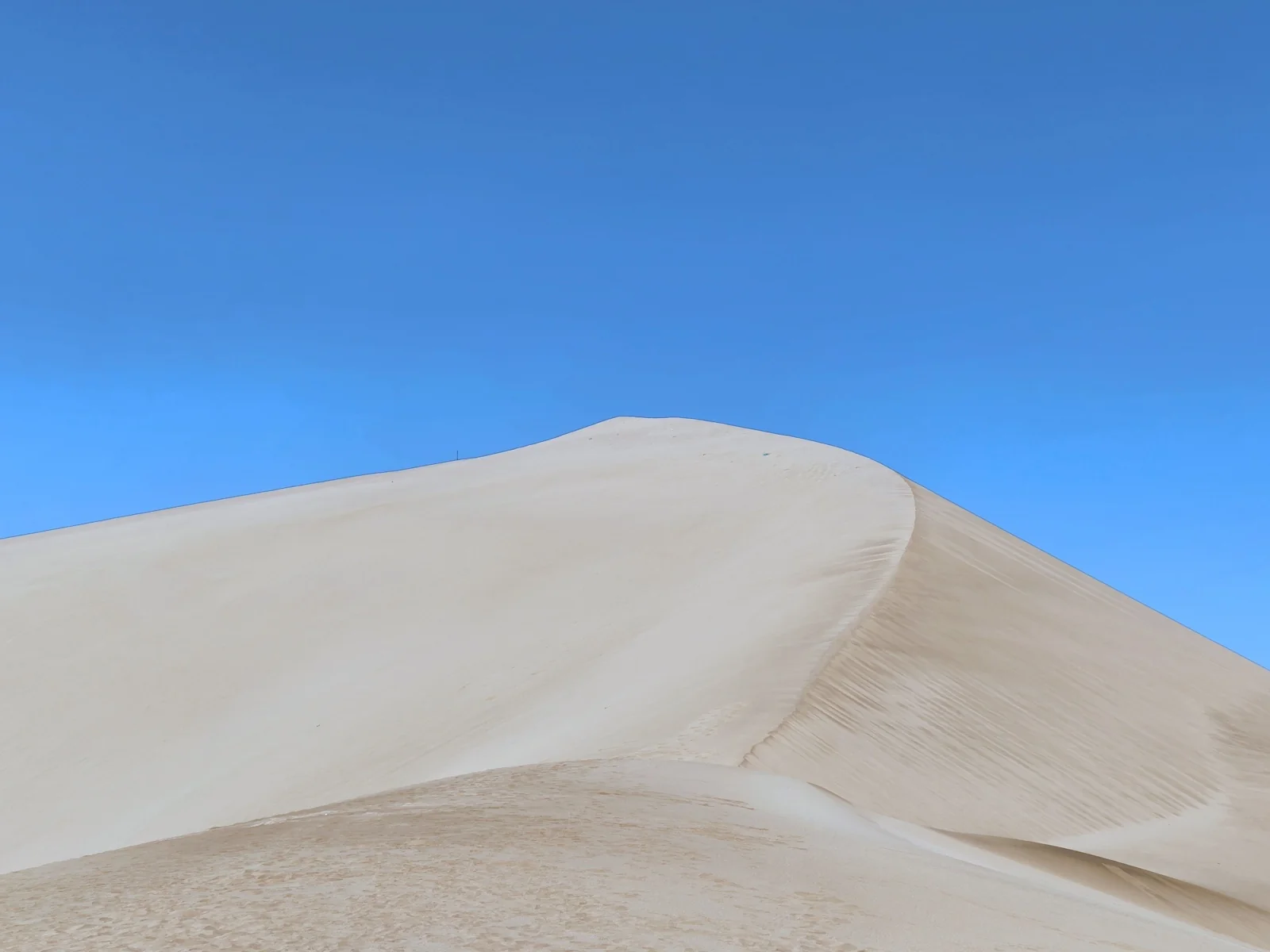
This is one of my favorite spots in the park. Just out of frame to the lower left is Crescent Lake. The shape, layers, and curving ridge of this particular dune are perfect, projecting a sense of solitary power.
As the sun began to dip, we started exploring. My daughter absolutely loved the camels and rode one each day. Time was the only thing stopping her from going for another round.
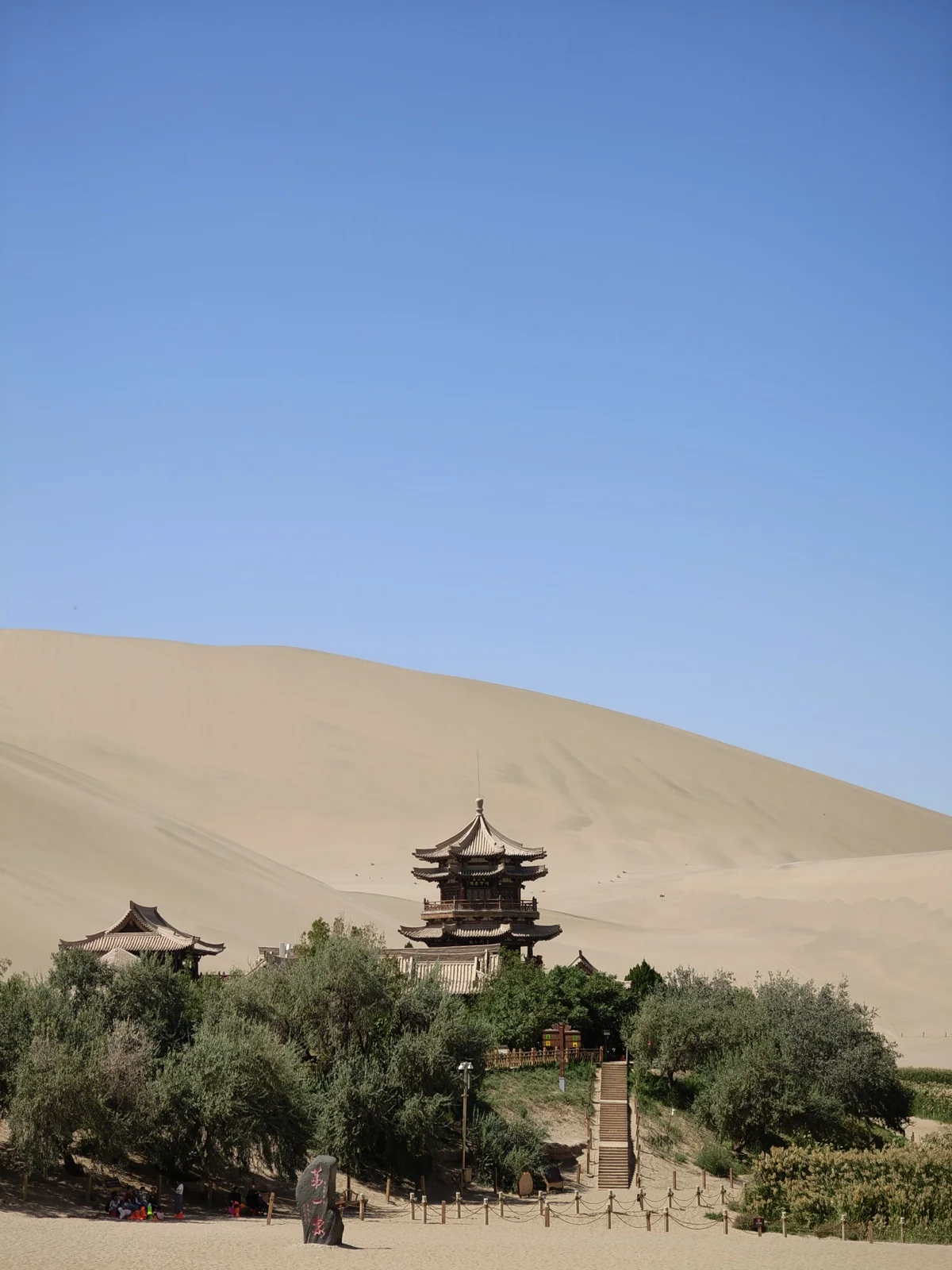
We visited Crescent Lake and the Yuequan Pavilion on its shore. The small, lush courtyard feels wonderfully surreal set against the vast expanse of sand.
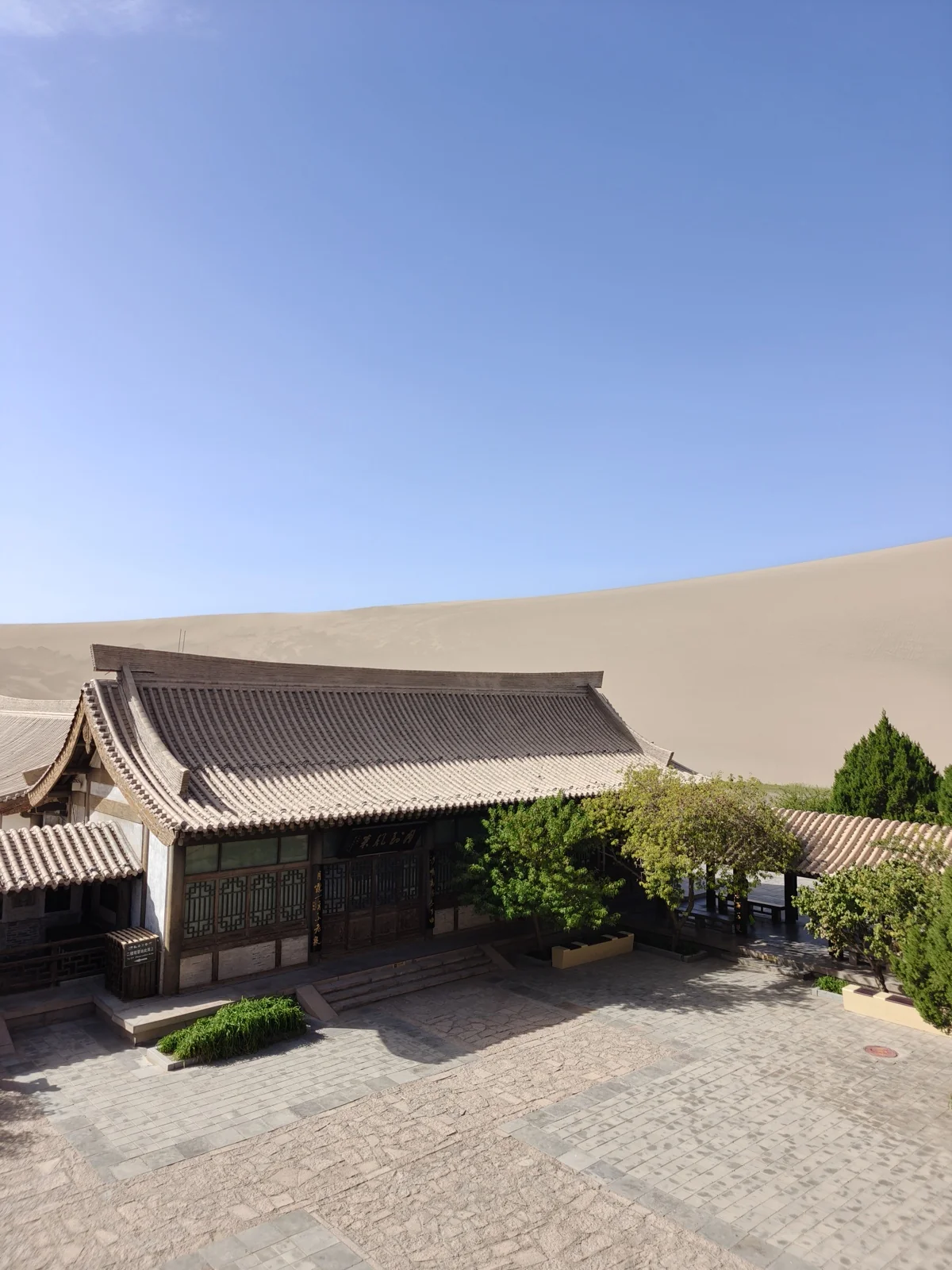
In the middle of the endless desert, this pristine little courtyard feels almost like a mirage.
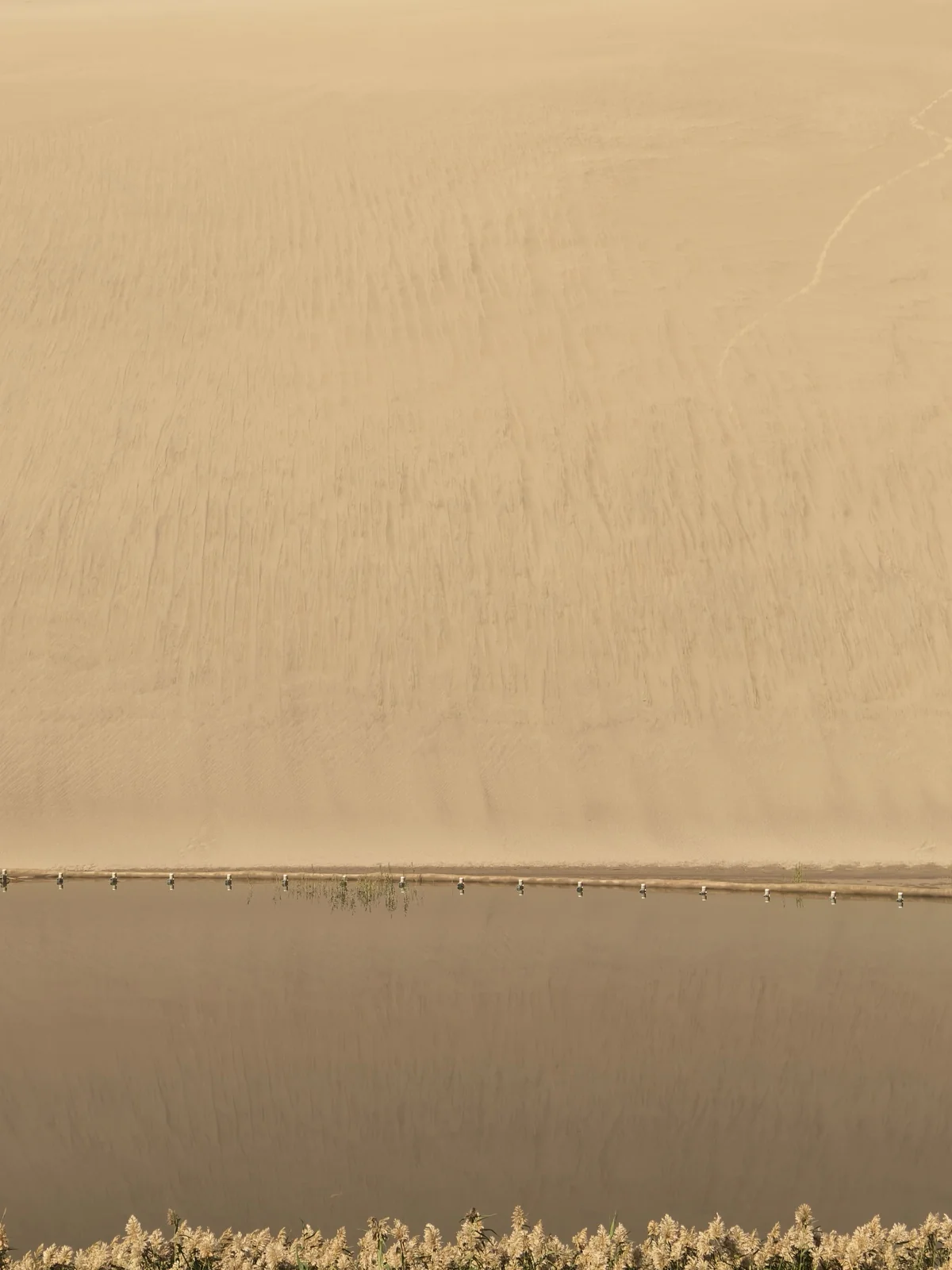
From a vantage point above, the reflection of the towering dune in the water creates a stunning optical illusion, like a deep abyss.
For centuries, Crescent Lake has been sustained by natural groundwater. However, with the water table declining in recent years, the city of Dunhuang now artificially replenishes its groundwater to maintain the lake’s water level.
This small body of water supports a surprisingly vibrant ecosystem. We saw flocks of sparrows, a resident magpie, and even a stray cat.
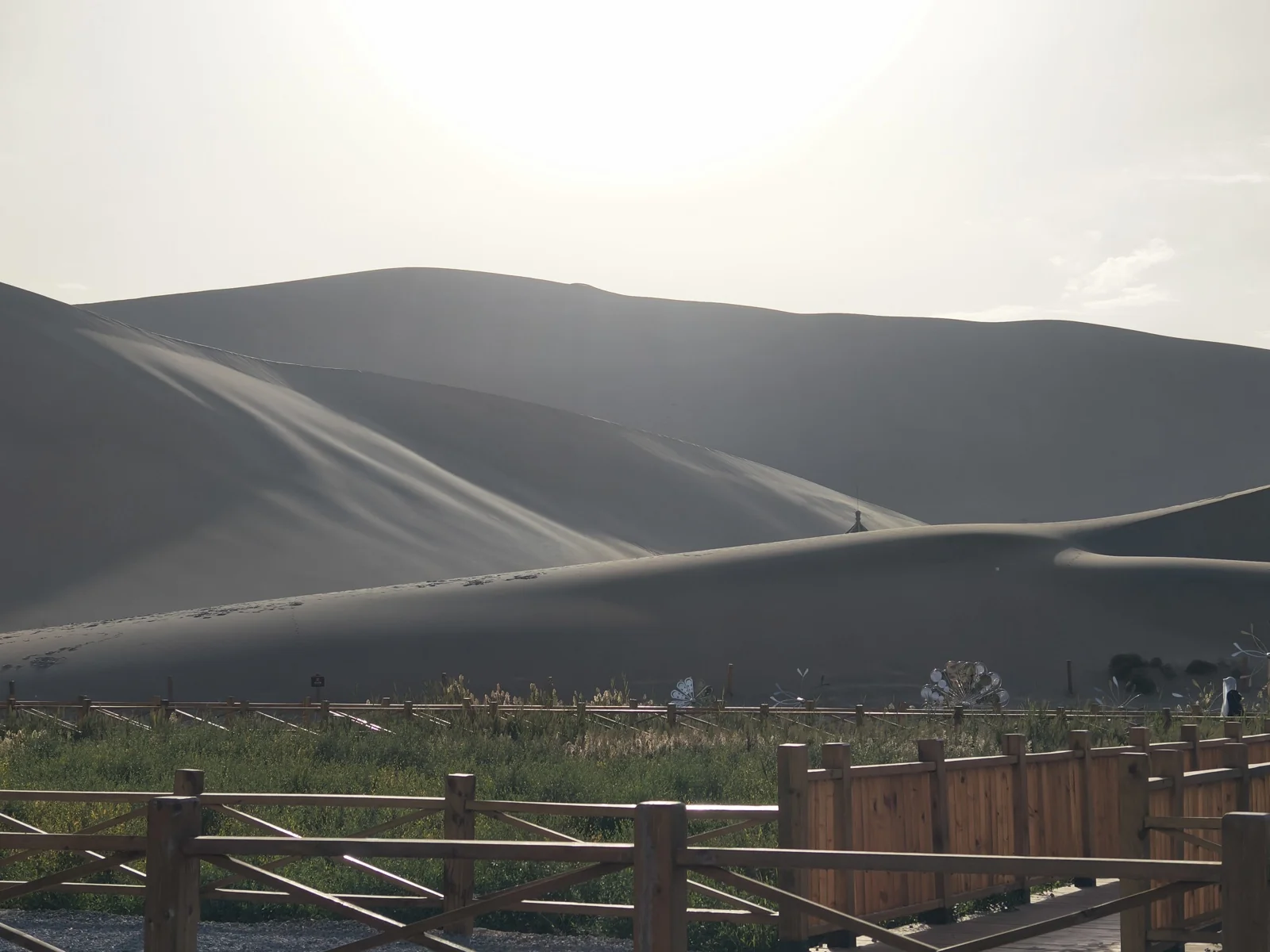
As evening approached, the dunes began to take on a dramatic, three-dimensional texture. We decided to climb the nearest peak to watch night fall over the lake.
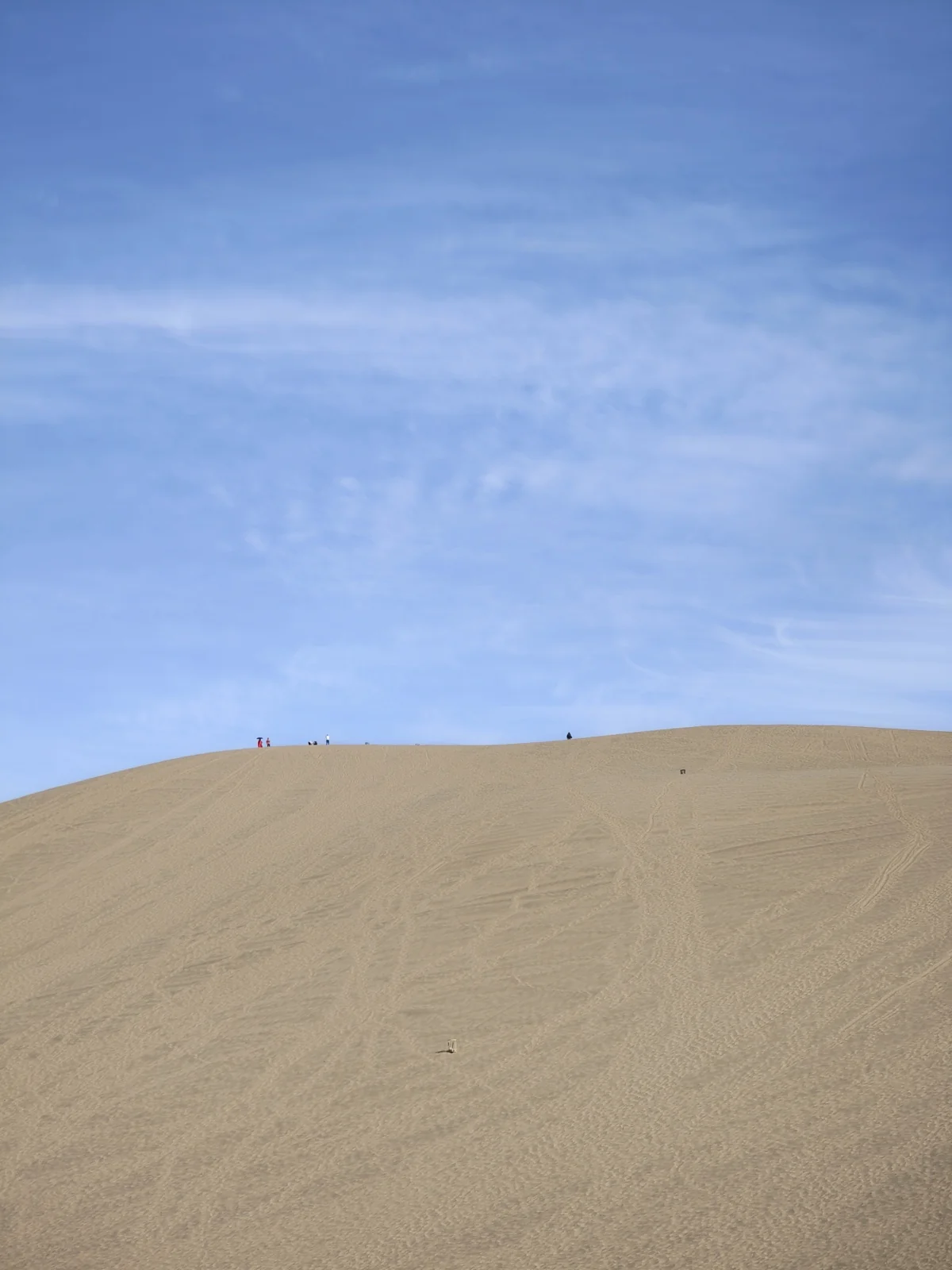
The dunes appear deceptively close. It’s only when you see the tiny silhouettes of people on the summit that you grasp their true scale.

We reached the top just in time to see the lights around Crescent Lake switch on, their glow complementing the fading sunset.
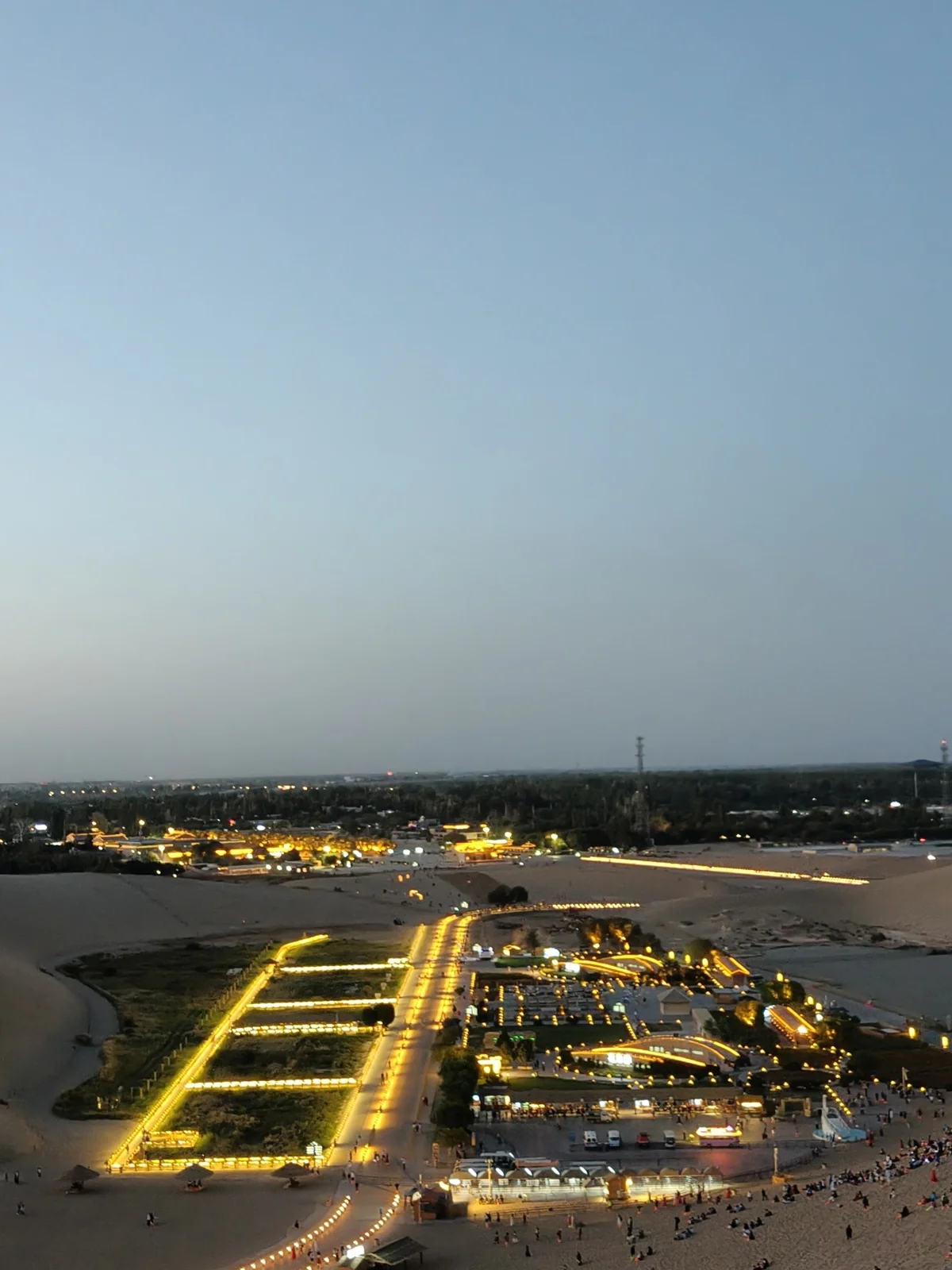
The nearby Crescent Lake Town is a new addition since our last visit. The park has added several new shows, which was a welcome surprise.
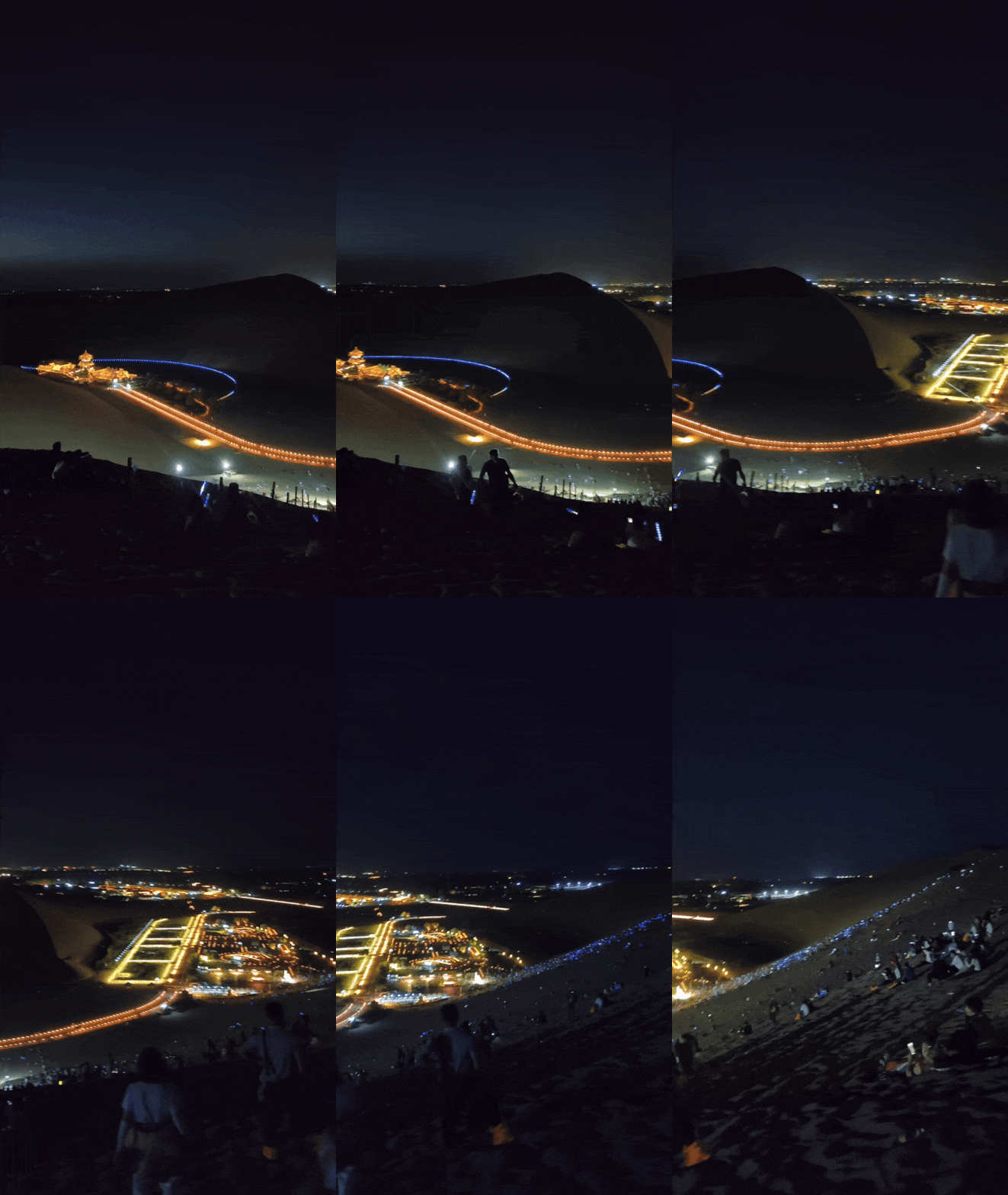
At 8:30 PM, the Starry Sky Concert kicked off in the town. There were no live singers, just a DJ playing a setlist over powerful speakers aimed at the dunes, with a host pumping up the energy. Tourists, glow sticks in hand, covered the entire hillside. The younger crowd belted out Power Station’s “Dang” with infectious enthusiasm during the mass singalong. I even saw a woman in her twenties, there by herself, spontaneously break into a street dance. Everyone was completely immersed, and the energy was contagious.
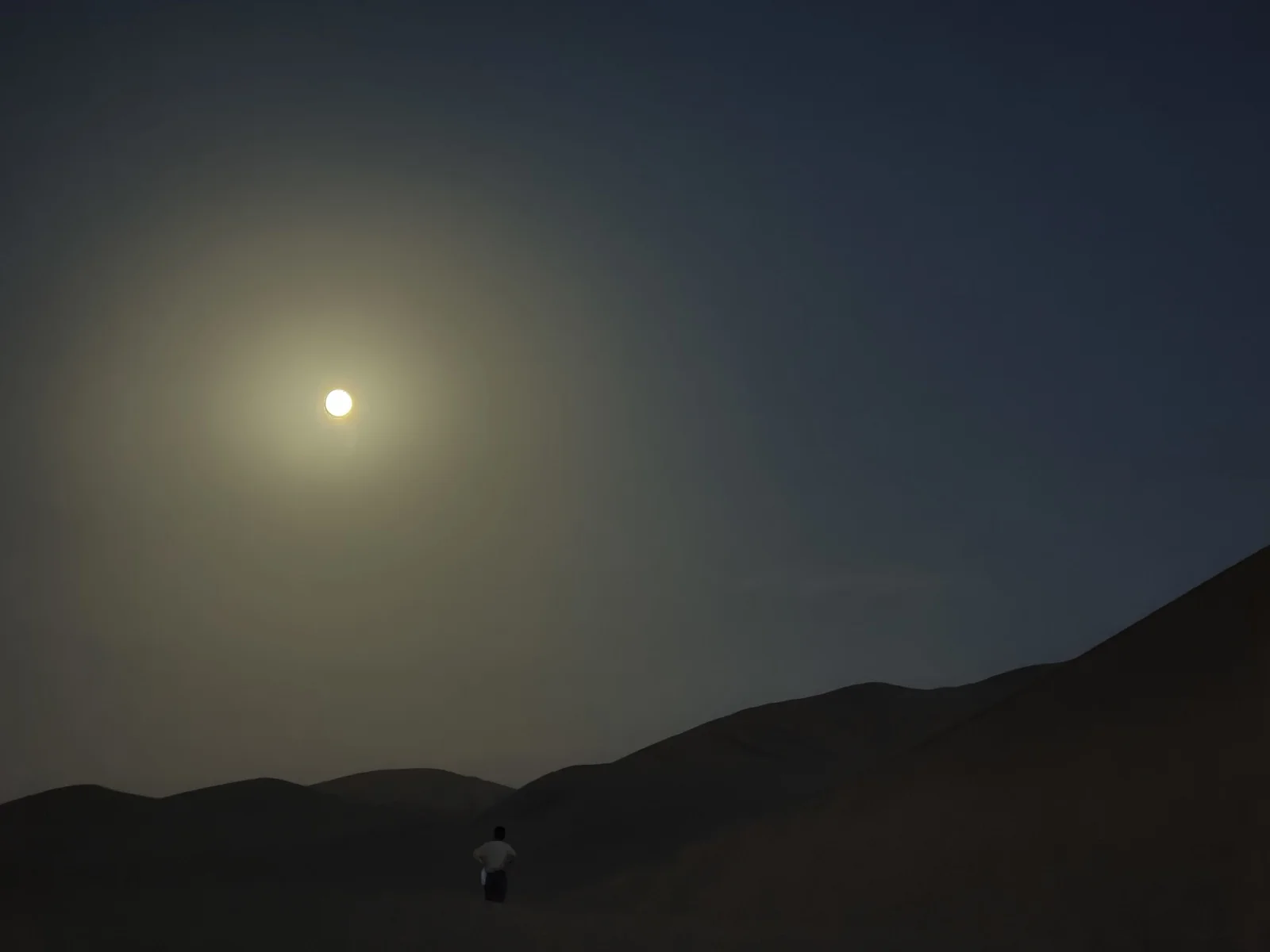
The concert was a surprise, as we had only intended to climb the dune for the view. On the other side, the rising moon illuminated a completely different world - one of perfect tranquility.
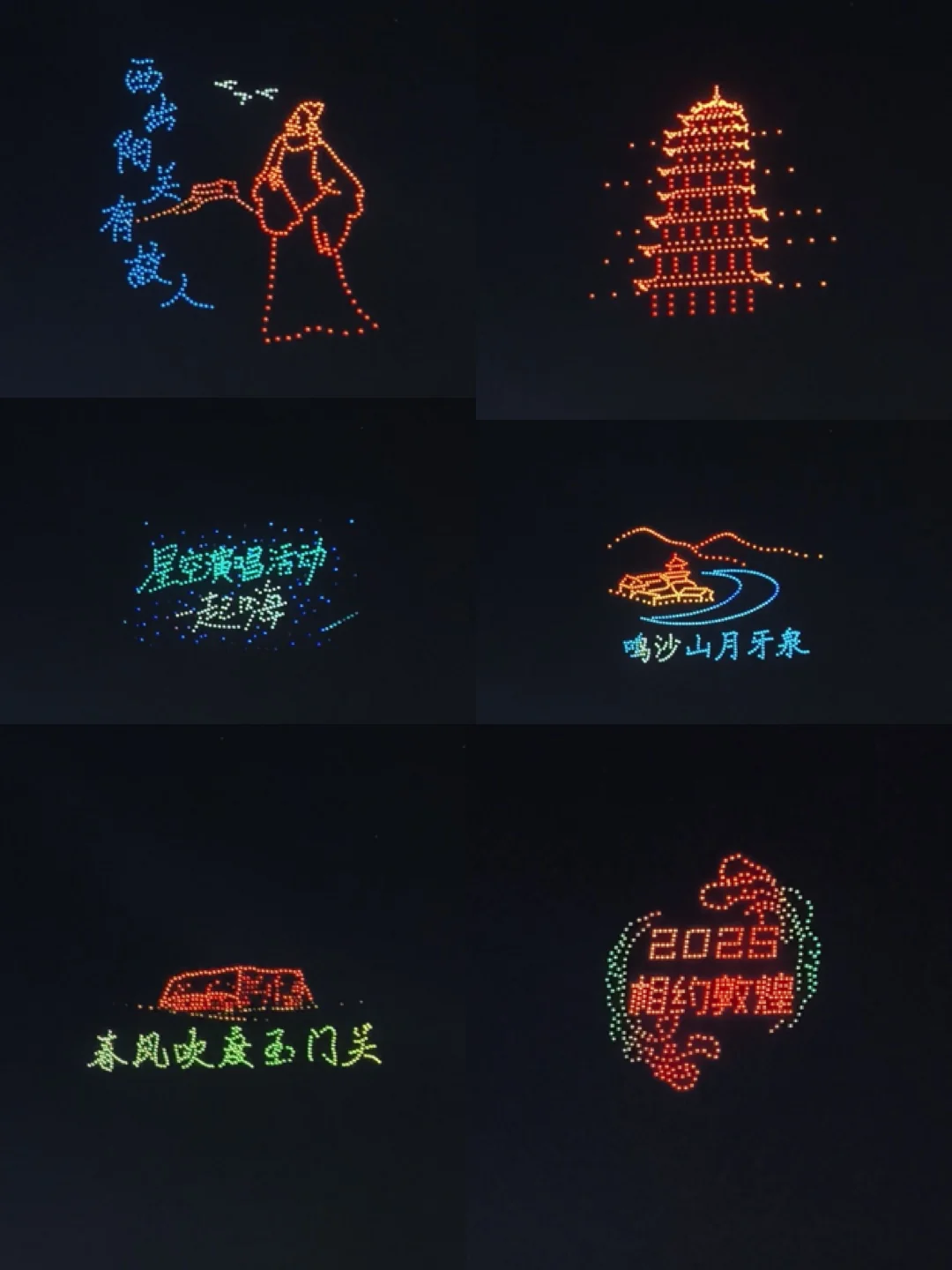
As the concert neared its end, a swarm of lights appeared from behind a distant dune. My first time seeing a drone show in person was here, in the middle of the desert.
The next day at the park was for more sand play and camel riding, but we had a “secret mission.” In the afternoon, we visited a photo studio outside the park where my wife and daughter got a “Feitian” (flying Apsara) makeover, transforming into an ethereal mother-daughter duo. These studios are everywhere and offer full photo packages, but we opted for just the costumes and makeup, with yours truly behind the lens.
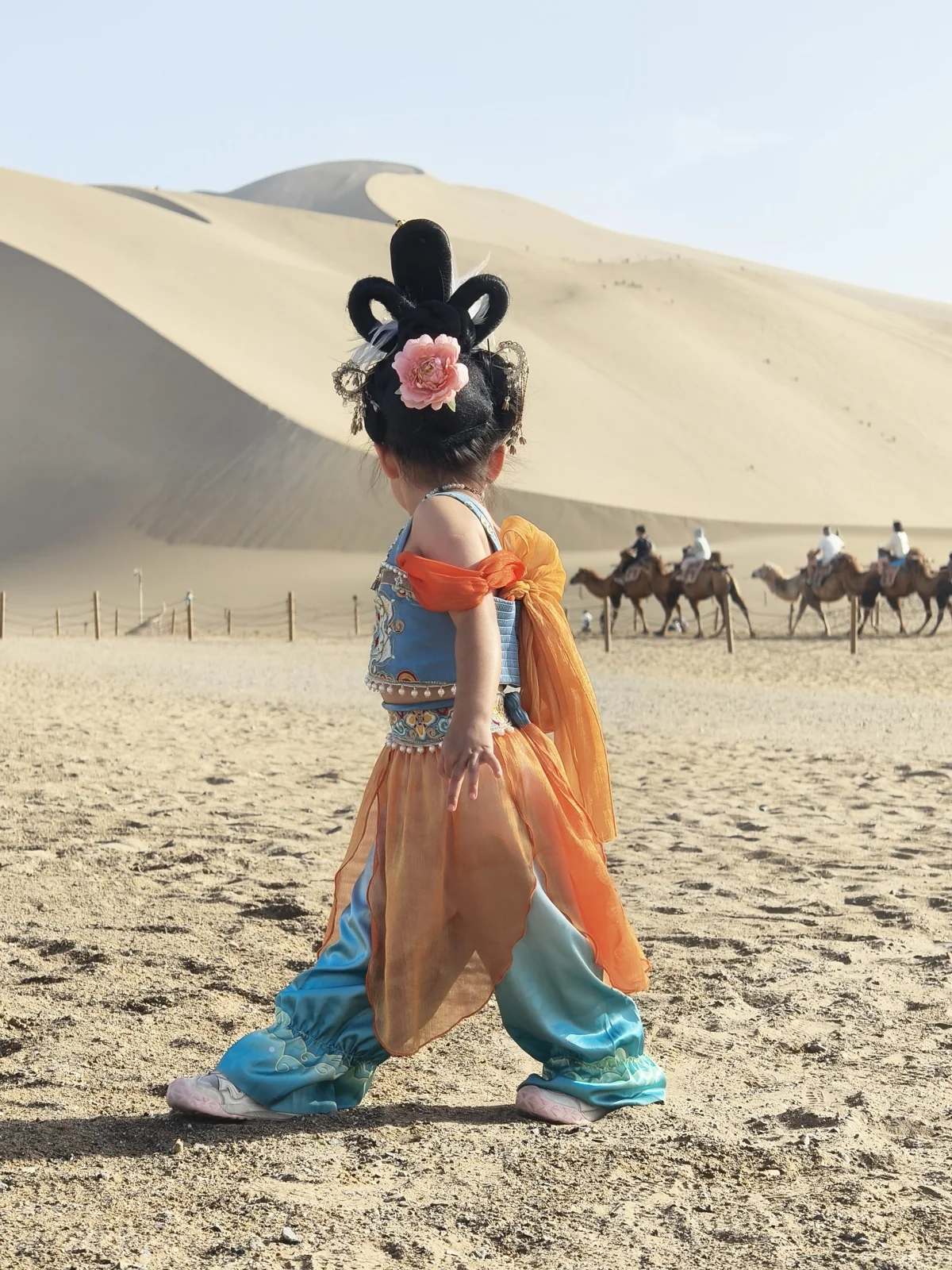
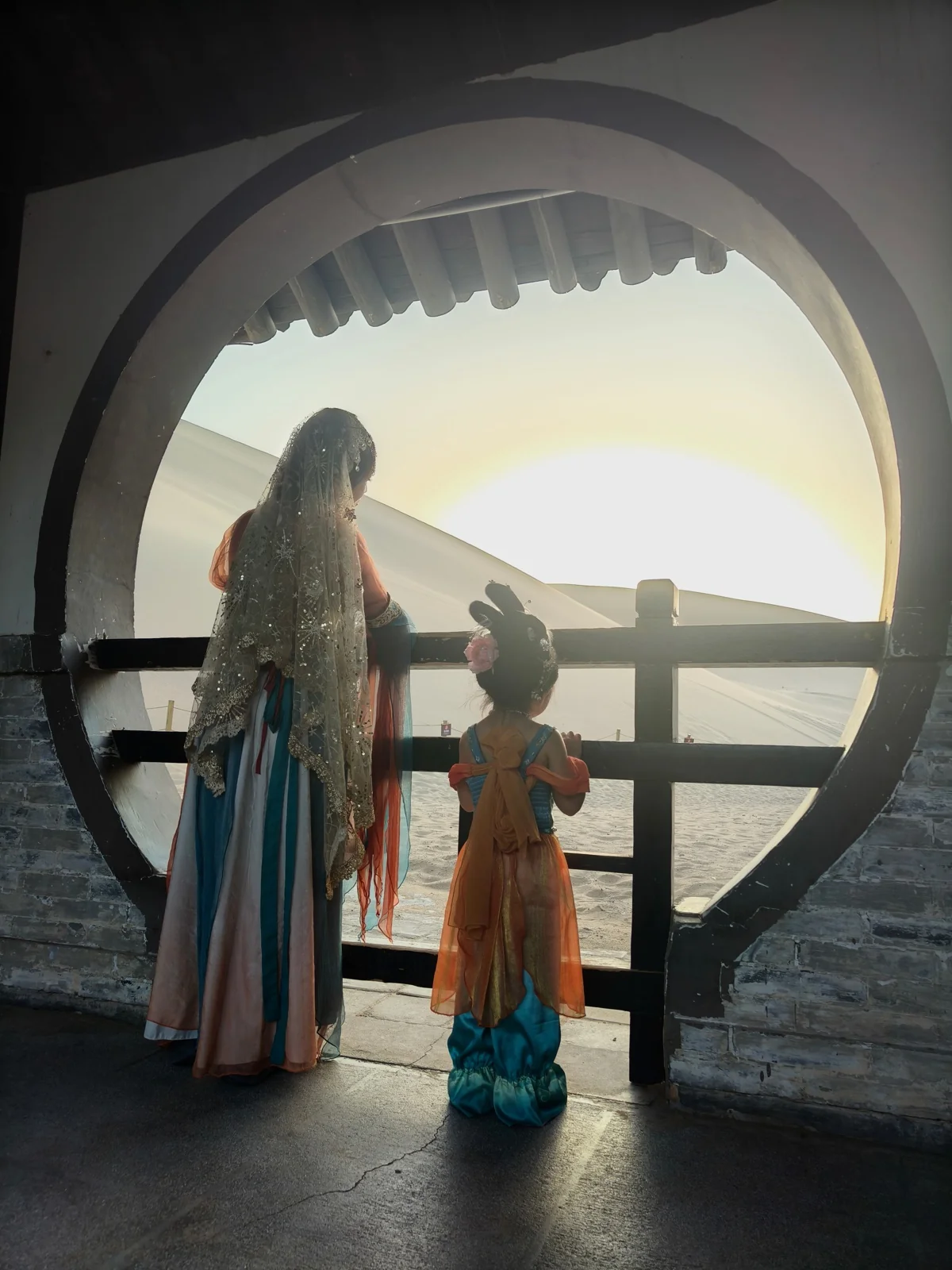
We focused on portraits that day, so I didn’t take many landscape shots. After the photoshoot, we skipped the concert and headed back to the city for a celebratory dinner.
A Turbulent Return
On our last day, we had a flight back to Hangzhou. We chose a connecting flight through Lanzhou to avoid the early morning direct one. While the trip out was smooth, the return flights were uncomfortable. My daughter started feeling dizzy as we approached Lanzhou.
After a 30-minute rest in Lanzhou, we boarded the next plane. The descent into Hangzhou was turbulent, and my daughter succumbed to motion sickness.
To complicate matters, a thunderstorm was raging in Hangzhou. Our plane aborted its landing attempt at Xiaoshan Airport and had to divert to Wenzhou to wait for clearance. The Wenzhou airport was packed with other diverted flights, all queued up. After a long wait, the weather in Hangzhou finally cleared, and a 40-minute flight later, we landed.
By the time we got a taxi home, it was past 1 AM. We had spent over 10 hours on planes - as long as an international flight - leaving everyone drained. But my daughter’s motion sickness lingered. Halfway home, she got sick again all over the taxi, followed by several more episodes. We finally got home, cleaned up, and fell into bed after 2 AM.
She probably won’t want to get on a plane for a few years. But it was a test, and it was a clear sign that we’re not quite ready for long-haul international travel just yet.
Travel Notes
Visiting Dunhuang in early September is far more pleasant than in April, as you avoid the risk of sandstorms. Temperatures are about 10°C warmer, and a short-sleeved shirt with a light, long-sleeved sun-shirt is perfect for both day and night.
The West Route is a long haul. There are no public buses, and taxis won’t go that far, so your options are a tour, a chartered car, or self-driving. Yadan is a two-hour drive one-way from the city, and the basic park tour takes another two hours. If you go to Yadan, you’ll have time for at most one other stop on the route. It’s an incredible place for sunset, but with a young child’s bedtime and Dunhuang’s sunset being two hours later than Beijing time, we had to pass.
We chartered a car for the day and had a great chat with our local driver. I was surprised to learn that Dunhuang has hydropower; he used to work at one of the local stations. Despite the flat terrain, it plays a supporting role in Dunhuang’s energy mix.
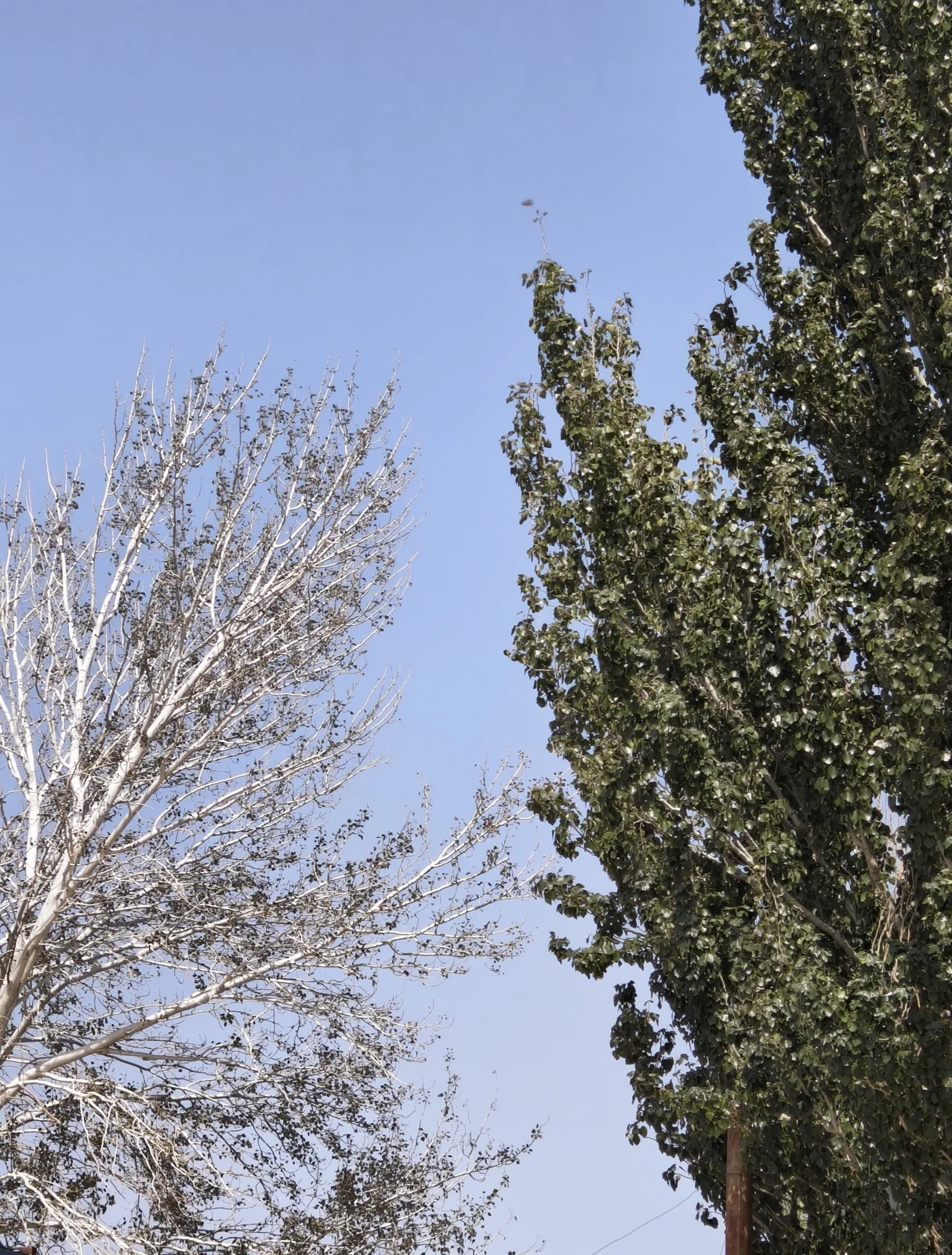
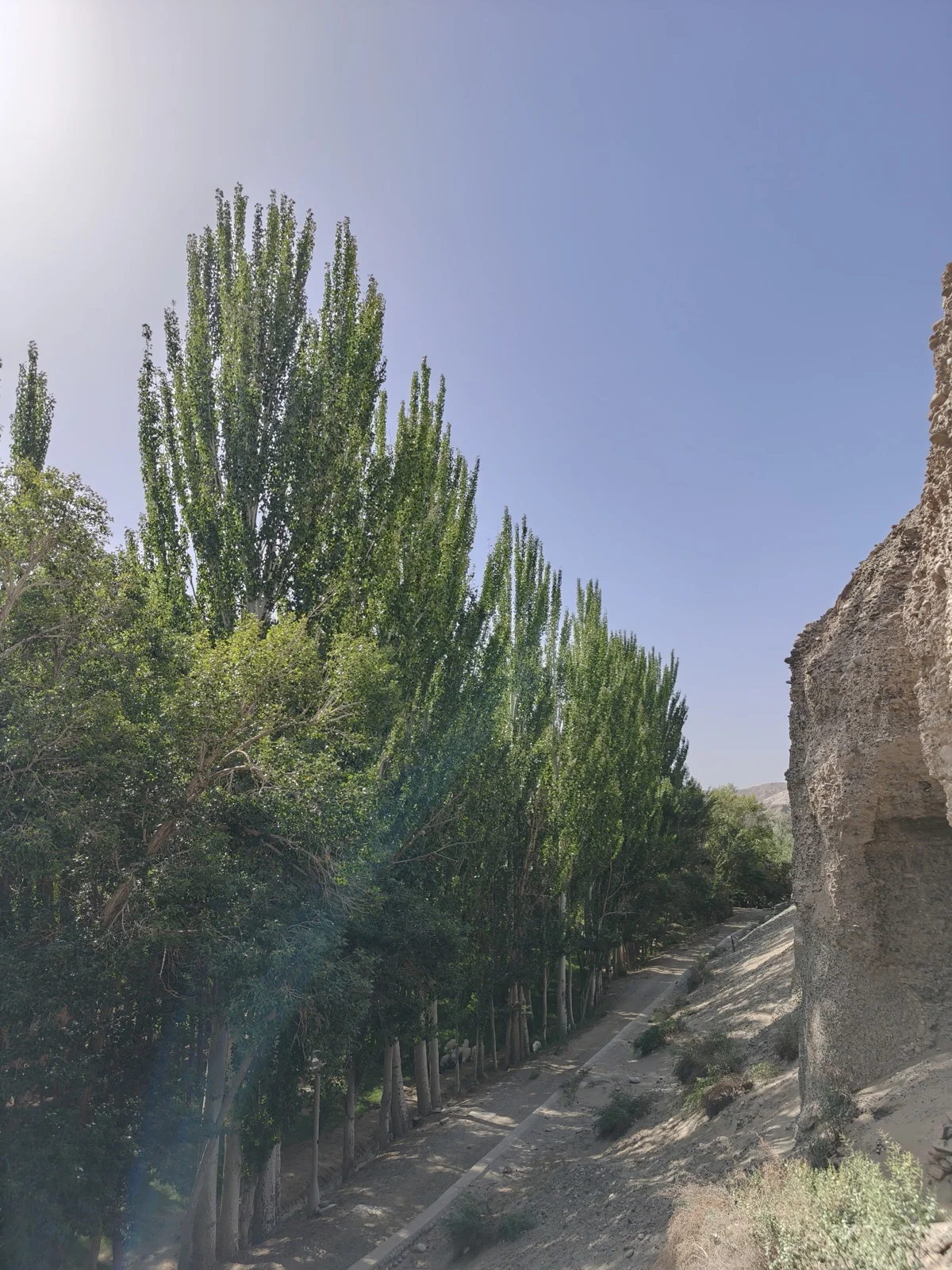
The driver pointed out two common types of trees in the area: poplar and Lombardy poplar. The photo above was taken at the West Thousand Buddha Caves, so I’m not sure if these are the same. He explained that all the roadside trees are irrigated through underground pipes every 20 days or so. With maybe only five rainy days a year and rarely more than a drizzle, it’s a testament to the immense, unseen effort required to maintain greenery in a desert city.

Commercially, the Shazhou Night Market in downtown Dunhuang has grown exponentially in the last four years. What was once a single short food street is now a sprawling network of six or seven alleys filled with restaurants, souvenir shops, and photo studios.
Across from the market’s south gate, we stumbled upon a restaurant called “Chen Lao Ba Mutton Fen Tang.” We loved it so much we went twice, and our daughter ate heartily. The owner was incredibly passionate, coming over to explain the different cuts of lamb on our plate. Seeing us trim the fat off, he looked genuinely shocked and exclaimed, “But that’s the best part! What are you even eating?!”
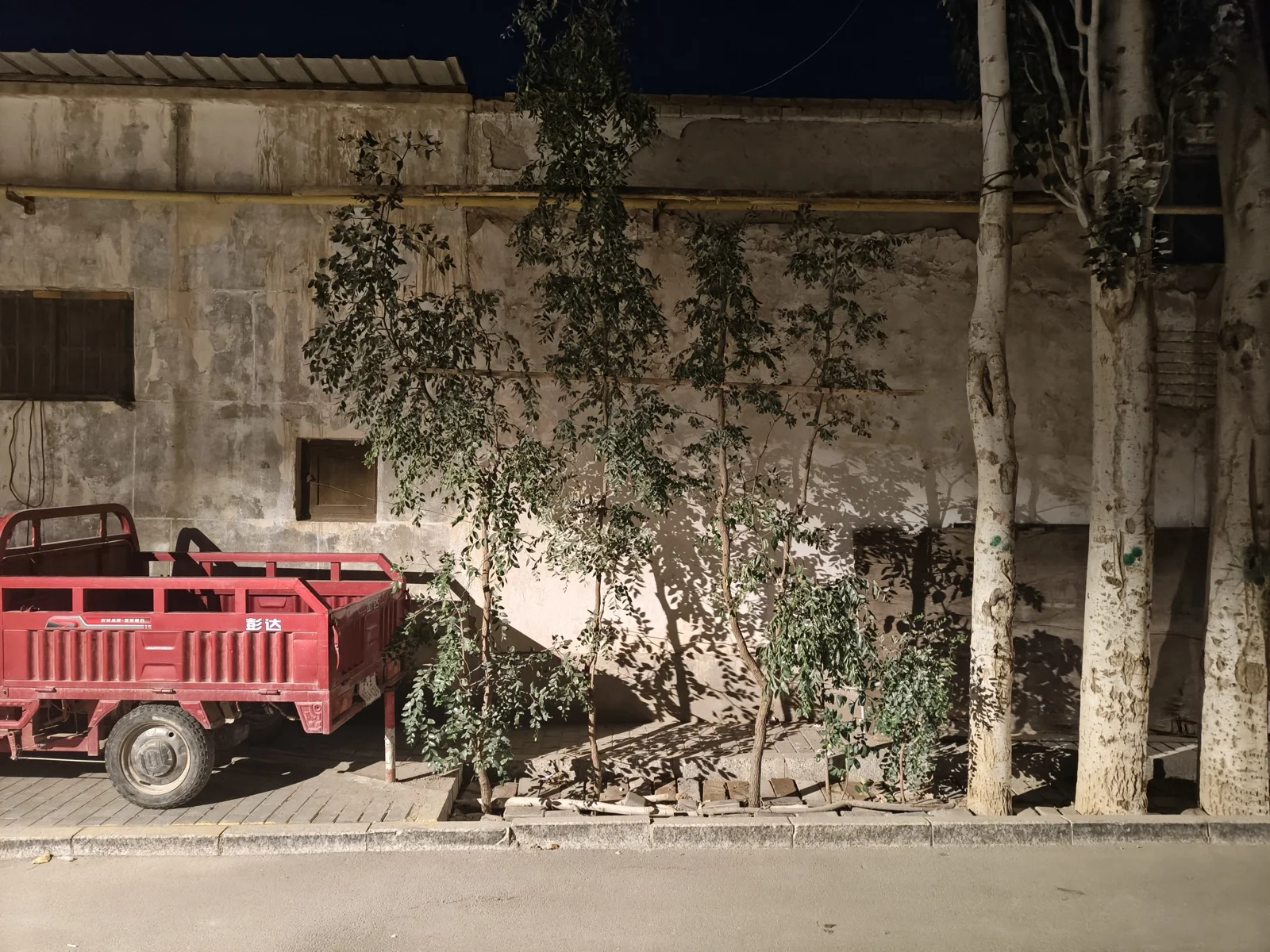
An after-dinner stroll through the quiet local streets outside the market offered a novel and atmospheric experience, with their khaki-colored walls, warm yellow lamplight, and distinctly desert-like poplar trees.
A breakdown of our trip expenses:
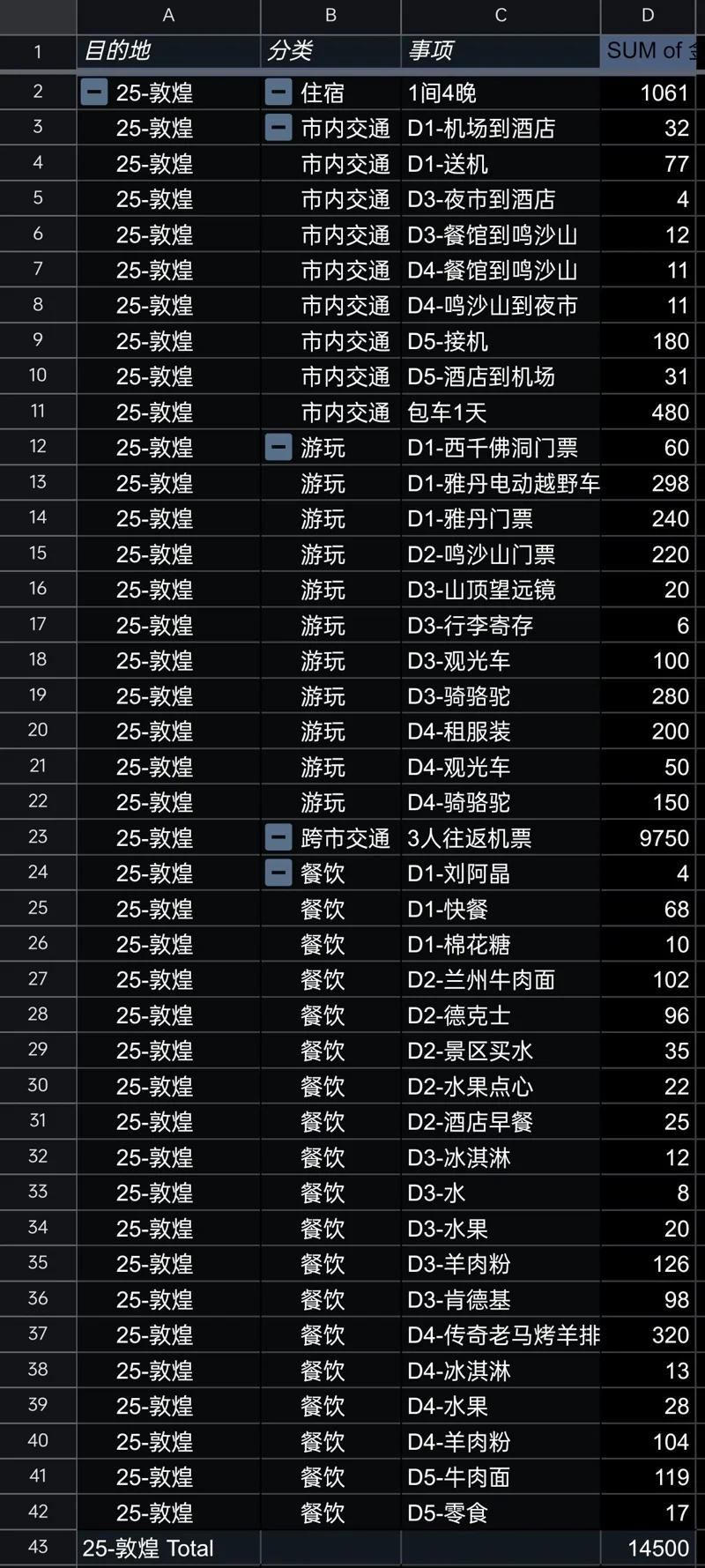
After two trips, we feel we’ve now checked off all the major highlights of Dunhuang. Perhaps our next visit will be a stop on a grander Qinghai-Gansu loop tour - an adventure we’re already looking forward to.
When it comes to travel planning: honestly, there’s a simple, repeatable process. Once you string all the key elements together in the right sequence, the itinerary practically writes itself.
For the full breakdown, you can check out this article: A Step-by-Step Guide to Travel Planning.