Fresh off a trip to Xishuangbanna, I couldn’t wait to plan my next adventure. The destination—Xinjiang.
The furthest west I’d ever been was Dunhuang. I was completely clueless about traveling in Xinjiang, knowing only that the Tianshan Mountains split it into North and South. I had a very fuzzy idea of what each region offered or what to expect.
Xinjiang is massive. To narrow down my options, I spent two nights heavily researching, organizing, and verifying info with AI to build this conceptual travel guide. It breaks down the travel experience across Xinjiang’s prefectures through two lenses: natural scenery and ethnic culture. Pairing this with a deep dive into Xinjiang’s administrative and topographical maps helped me form a solid baseline understanding of the region. It was a game-changer.
Of course, this is just a starting point. This guide is far from exhaustive, paints in broad strokes, and likely contains a few blind spots. I’ll have to rely on my own eyes and feet to fill in the blanks and make corrections.
Part 1: Natural Scenery
A breakdown of signature landscapes across Xinjiang’s 14 prefectures.
Overview: The Geographic Logic of Xinjiang
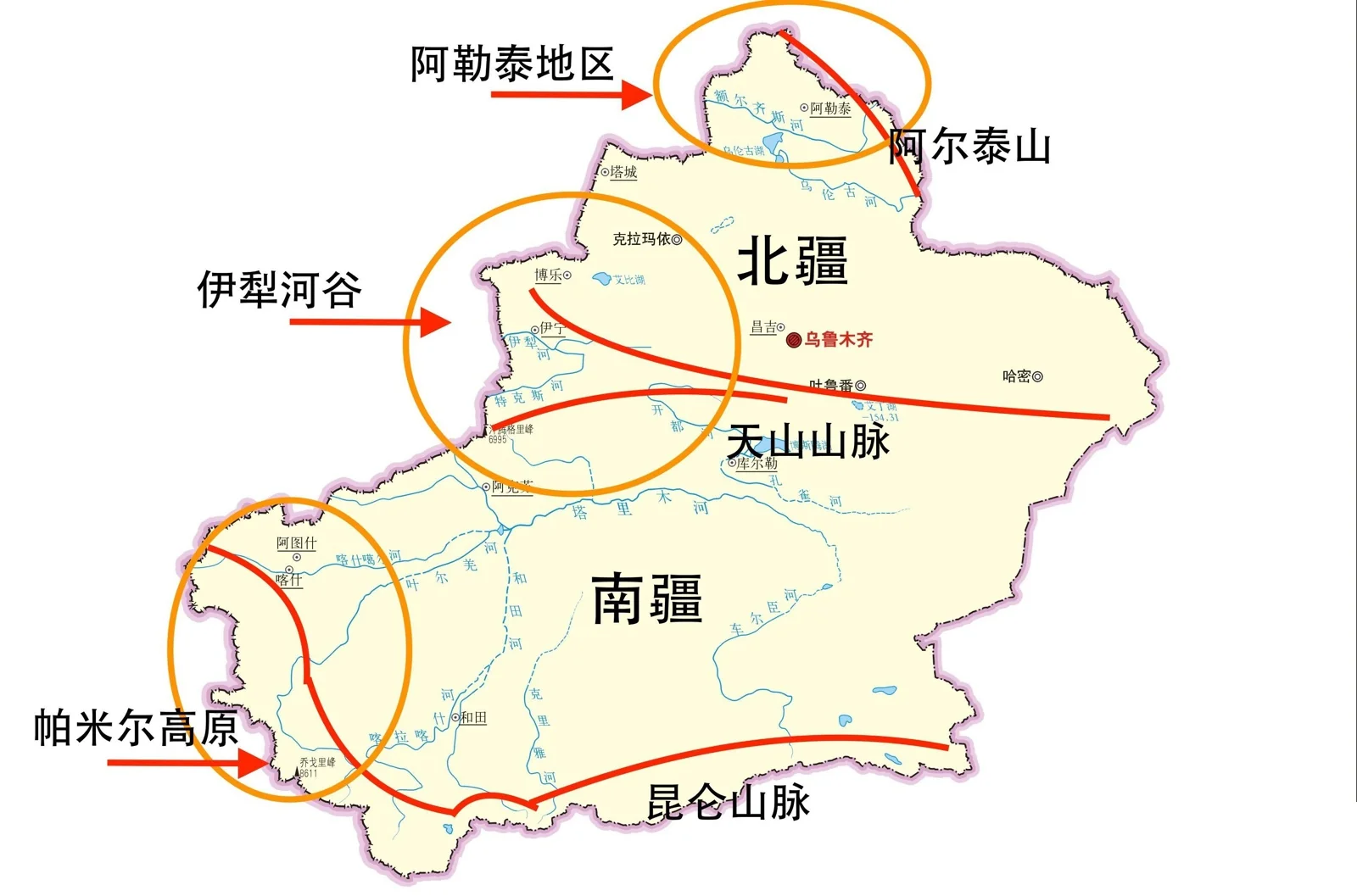
You can sum up Xinjiang’s geography in one phrase: Three mountains sandwiching two basins.
- Altai Mountains — Northern grasslands, forests, and lakes
- Junggar Basin — Northern Gobi, deserts, and oases
- Tianshan Mountains — Grasslands, snow peaks, and canyons (The North/South divide)
- Tarim Basin — Deserts, Gobi, oases, and desert poplars
- Kunlun Mountains & Pamir Plateau — Ultra-high peaks, glaciers, and alpine lakes
Northern Xinjiang vibe: Grasslands, lakes, forests, snow mountains — lush, abundant, scenic. Southern Xinjiang vibe: Deserts, Gobi, canyons, desert poplars — vast, epic, rugged. Eastern Xinjiang vibe: Flaming Mountains, Yardang formations, extreme heat — harsh, unique.
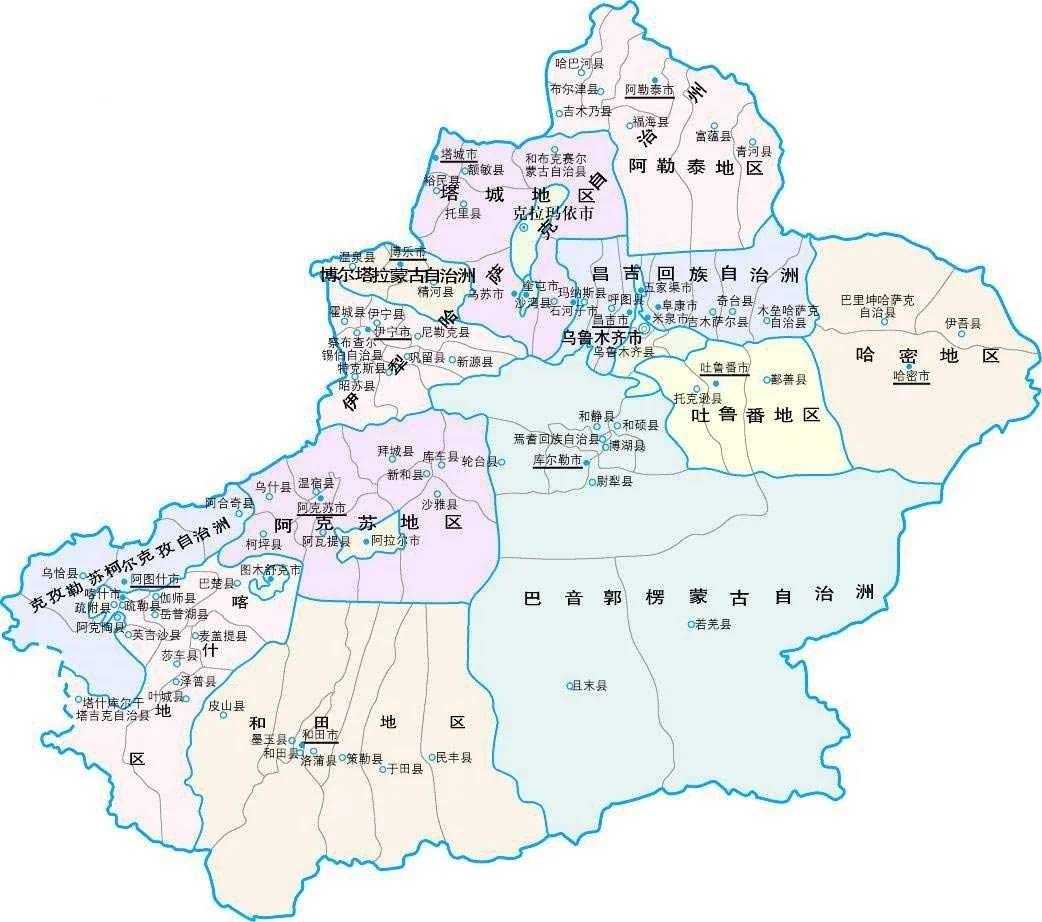
Northern Xinjiang (7 Prefectures & Cities)
1. Ili Kazakh Autonomous Prefecture — The Jiangnan Beyond the Great Wall
The Ili River Valley opens westward, catching moist Atlantic currents. It boasts the highest rainfall and lushest vegetation in Xinjiang, earning the nickname “Wet Island of Central Asia.”
| Landscape | Highlights | Tags |
|---|---|---|
| Kalajun Grassland | A “3D Grassland” and World Natural Heritage site with distinct vertical layers | World Heritage, 3D Grassland |
| Kuerdening | World Natural Heritage, the most intact reserve of Tianshan Schrenk’s spruce | World Heritage, Spruce Forest |
| Nalati Grassland | One of China’s top six grasslands, famous for its “sky meadow” landscape | 5A Scenic Area, Sky Grassland |
| Tangbula Grassland | A “Hundred-Mile Gallery” featuring endless flower fields along highway S315 | Scenic Gallery, Road Trip |
| Sayram Lake | Xinjiang’s highest and largest alpine cold-water lake; the “last tear of the Atlantic” | Alpine Lake, Deep Blue |
| Guozigou Bridge | A spectacular suspension bridge cutting through Tianshan | Engineering Marvel |
| Zhaosu Grassland | Hometown of heavenly horses, massive July rapeseed fields, gateway to glaciers | Horse Culture, Glaciers |
| Xiata Ancient Trail | Historic pass crossing Tianshan to the Muzart Glacier; a hiker’s paradise | Glacier Hiking, Ancient Trail |
| Qiaxi Forest Park | Virgin spruce forests, Ili’s hidden gem with fewer crowds | Primeval Forest, Niche |
Summary: Alpine grasslands + spruce forests + glacier trails + alpine lakes. This area offers the most concentrated and diverse natural beauty in Xinjiang.
2. Altay Prefecture — The Oriental Switzerland
Located at the southern foot of the Altai Mountains. Its forest-lake-snow-mountain scenery, centered around Kanas Lake, peaks in autumn.
| Landscape | Highlights | Tags |
|---|---|---|
| Kanas Lake | Deep alpine lake famous for color-changing water and “lake monster” legends | 5A Area, Photography |
| Hemu Village | Tuva settlement with rustic cabins, birch forests, and morning mist | Tuva Village, Autumn Colors |
| Baihaba | The “Northwest’s First Village” on the border, mixing Kazakh and Tuva cultures | Border Village, Rustic |
| Koktokay | Global Geopark featuring the granite Shenzhong Mountain at the Irtysh River source | Global Geopark |
| Wucaitan (Rainbow Beach) | Yardang landforms by the Irtysh River with stunning sunset views | Yardang, Sunsets |
| Ulungur Lake | Xinjiang’s second-largest freshwater lake; great for winter ice fishing | Lake, Fishing |
Summary: Alpine lakes + primeval forests + Yardang landforms + border villages. Mid-September to early October is the golden window.
3. Bortala Mongol Autonomous Prefecture — Gateway to Sayram Lake
| Landscape | Highlights | Tags |
|---|---|---|
| Sayram Lake | Xinjiang’s highest (2071m) alpine cold-water lake with a scenic ring road | Alpine Lake, 5A Area |
| Hariturege | Primeval forest canyon at the source of the Bortala River | Forest Canyon, Niche |
Bortala is small, but Sayram Lake is its crown jewel. It sits perfectly on the route from Urumqi to Ili, making it a must-pass destination.
4. Tacheng Prefecture — Grasslands and Borders
| Landscape | Highlights | Tags |
|---|---|---|
| Ganjiahu Forest | The world’s largest primeval Haloxylon forest reserve | Desert Forest, Ecology |
| Lujiaowan | Summer alpine meadows in the Barluk Mountains | Alpine Pastures |
| Baketu Port | Border crossing offering views into Kazakhstan | Border Port |
Tacheng’s scenery is scattered and less commercially developed, making it ideal for deep, niche exploration.
5. Changji Hui Autonomous Prefecture — Tianshan’s Northern Gateway
| Landscape | Highlights | Tags |
|---|---|---|
| Heavenly Lake (Tianchi) | Xinjiang’s most iconic attraction; an alpine lake beneath Bogda Peak | 5A Area, Iconic Landmark |
| Jiangbulake | Alpine meadows blending with rolling seas of golden wheat (July-Aug) | Meadows, Wheat Fields |
| S101 Highway | The “Tianshan Geographic Gallery” featuring Danxia landforms and canyons | Road Trip, Danxia |
Right next to Urumqi, Changji is home to the postcard-perfect Tianchi (a half-day trip) and the increasingly popular S101 road trip route.
6. Urumqi City — The Metropolis
| Landscape | Highlights | Tags |
|---|---|---|
| Nanshan Scenic Area | Pastures and forests on the northern Tianshan slopes; a quick 1.5h drive away | Suburban Pasture |
| Bogda Peak | Eastern Tianshan’s highest peak (5445m); visible in the distance | Snow Mountain |
Urumqi is primarily a transport hub. While nature isn’t its main draw, Nanshan is a great weekend escape.
7. Karamay City — Yardangs and Gobi
| Landscape | Highlights | Tags |
|---|---|---|
| Urho Ghost City | One of China’s top three Yardang landscapes; features wind-eroded castles | Yardang Landforms, 5A |
| Ailik Lake | Karamay’s only natural freshwater lake; an oasis in the Gobi | Lake, Niche |
Karamay is defined by its Yardang landscapes. The Ghost City is a classic pitstop on the drive to Kanas.
Southern Xinjiang (5 Prefectures)
8. Bayingolin Mongol Autonomous Prefecture — Xinjiang’s Largest
Covering a quarter of Xinjiang, Bayingolin spans across Tianshan, featuring both the lush north and the arid south.
| Landscape | Highlights | Tags |
|---|---|---|
| Bayinbuluke Grassland | China’s second-largest grassland; famous for Swan Lake and sunset river bends | Alpine Grassland, Sunsets |
| Bosten Lake | China’s largest inland freshwater lake, bordered by vast reed marshes | Large Lake, Reeds |
| Luntai Poplar Forest | World’s largest primeval desert poplar forest; turns golden in late autumn | Poplar Forest, Desert |
| Luobu Village | Desert oasis home to descendants of the Lop Nur people | Desert Oasis, Culture |
| Tianshan Stone Forest | A rare high-altitude geological marvel near Bayinbuluke | Stone Forest, Niche |
| Kumtag Desert | The closest desert to any urban area in the world | Desert, Hiking |
Summary: Incredible geographic diversity. From Bayinbuluke in the north to the Tarim poplars in the south, it’s the only prefecture containing grasslands, massive lakes, and deserts.
9. Aksu Prefecture — The Canyon Kingdom
| Landscape | Highlights | Tags |
|---|---|---|
| Tianshan Grand Canyon | Giant reddish-brown canyons often called “China’s Colorado” | Red Canyon, 5A Area |
| Wensu Grand Canyon | Even larger than Tianshan Canyon; a massive mix of Danxia and Yardang | Grand Canyon, Danxia |
| Tomur Peak | The absolute highest peak in the Tianshan range (7443m) | Ultra-High Peak |
| Tarim River Source | Headwaters of China’s longest inland river | River Source |
| Shaya Poplar Forest | Primeval forests along the middle reaches of the Tarim River | Poplar Forest |
Summary: Canyons are the main event. Keziliya and Wensu are jaw-dropping geological wonders.
10. Kizilsu Kyrgyz Autonomous Prefecture (Kezhou) — Gateway to the Pamirs
| Landscape | Highlights | Tags |
|---|---|---|
| Oytak Red Mountain | Volcanic landforms meeting glaciers; an “ice and fire” spectacle | Volcano & Glacier |
| Muji Crater | The “Eye of the Pamirs,” 1500-year-old craters amid plateau wetlands | Crater, Wetlands |
| Karakul Lake | Glacial lake at 3600m offering stunning mountain reflections | Plateau Lake |
Kezhou’s scenery clusters at the Pamir Plateau entrance. Oytak and Muji are brilliant niche spots for photographers.
11. Kashgar Prefecture — The Pamirs
| Landscape | Highlights | Tags |
|---|---|---|
| Pamir Plateau | The “Roof of the World” (4000m+); core stretch of the Karakoram Highway | Plateau, Epic Road |
| Muztagh Ata | The “Father of Ice Mountains” (7546m); a landmark of the Pamirs | Ultra-High Peak |
| Baisha Lake | Half white sand, half turquoise water; the Pamirs’ most beautiful lake | Plateau Lake, White Sand |
| Karakul Lake | Famous for its flawless reflections of Muztagh Ata | Plateau Lake |
| Panlong Ancient Road | A winding road with over 600 hairpin turns | Highway Landscape |
| Tashkurgan | Plateau town housing the Stone City ruins and the gateway to Pakistan | Ancient Town, Border |
Summary: The Pamirs are the crown jewel here. This is the highest and most “extreme” landscape zone in Xinjiang.
12. Hotan Prefecture — Heart of the Taklamakan
| Landscape | Highlights | Tags |
|---|---|---|
| Taklamakan Desert | The world’s second-largest shifting sand desert; the “Sea of Death” | Shifting Desert |
| Desert Highway | Cuts straight through the Taklamakan; an incredibly isolating drive | Extreme Highway |
| Niya Ruins | The “Pompeii of the East” hidden deep in the desert | Ruins, Exploration |
Hotan is all about the desert. It is the driest place in Xinjiang, defined by desolate, vast beauty.
Eastern Xinjiang (2 Cities)
13. Turpan City — Fire and Extreme Heat
| Landscape | Highlights | Tags |
|---|---|---|
| Flaming Mountains | Red mountains known from Journey to the West; summer temps hit 80°C | Extreme Heat, Landmark |
| Grape Valley | An oasis canyon entirely shaded by grape trellises | Oasis Canyon, Orchard |
| Kumtag Desert | Urban desert walkable from Shanshan county | Urban Desert |
| Karez System | Ancient underground irrigation system | Water Conservancy |
| Tuyugou | Oldest Uyghur village featuring ancient Thousand Buddha Caves | Canyon Village, Culture |
At -154m, Turpan is the lowest and hottest place in China. The landscape contrasts extreme heat with cool oases.
14. Hami City — Eastern Gateway
| Landscape | Highlights | Tags |
|---|---|---|
| Dahaidao | Spectacular Yardang formations; a Mars-like no-man’s land | Yardang, No-Man’s Land |
| Barkol Lake | Transition zone between Tianshan grasslands and the Gobi | Alpine Lake |
| Hami Ghost City | Massive Yardang landforms second only to Urho | Yardang Landforms |
Dahaidao is a recently hyped destination, perfect for off-roaders and serious photographers.
Cross-Regional Landscape Comparisons
High-Altitude Lakes
| Lake | Location | Elevation | Vibe |
|---|---|---|---|
| Sayram Lake | Bortala | 2071m | Deep blue, highest alpine lake |
| Kanas Lake | Altay | 1374m | Color-changing water, forests |
| Tianchi | Changji | 1910m | Iconic landmark |
| Karakul Lake | Kezhou/Kashgar | 3600m | Mountain reflections |
| Bayinbuluke | Bayingolin | 2500m | Swan habitat, winding rivers |
| Baisha Lake | Kashgar | 3300m | The most beautiful Pamir lake |
Deserts & Gobi
| Landscape | Location | Vibe |
|---|---|---|
| Taklamakan | Hotan/Bayingolin/Aksu | Shifting sands, massive scale |
| Kumtag | Turpan/Qiemo | Deserts touching the city |
| Urho Ghost City | Karamay | Premier Yardang landforms |
| Dahaidao | Hami | Mars-like no-man’s land |
(Condensed for brevity while maintaining utility).
Travel Planning Guide (Nature)
Northern Xinjiang (Nature Focus)
- Top Pick: Ili (5-7 days): Grasslands, forests, lakes, and glaciers. Highest density of scenery.
- Add-on: Altay (3-4 days): Unbeatable autumn colors at Kanas and Hemu (Best in Sept-Oct, contrasting Ili’s June-Aug peak).
- Pitstops: Sayram Lake, Tianchi, Urho Ghost City.
Southern Xinjiang (Geography Focus)
- Pamir Plateau (2-3 days): Muztagh Ata and plateau lakes.
- Canyon Route (Aksu): Tianshan and Wensu Grand Canyons.
- Desert & Poplars (Bayingolin/Hotan): Taklamakan Highway and Luntai poplars (late October).
Eastern Xinjiang (Extremes)
- Turpan (1-2 days): Flaming Mountains, Grape Valley, and extreme heat.
- Hami (1 day): Dahaidao off-roading.
Part 2: Ethnic Culture
Based on data from the 2020 Seventh National Population Census.
I. Overall Demographics
Xinjiang is a highly diverse region with a resident population of 25.85 million:
- Uyghur: 11.62 million (44.96%)
- Han: 10.92 million (42.24%)
- Other Minorities (Kazakh, Hui, Mongol, etc.): 3.31 million (12.80%)
Core Insight: While Uyghurs are the largest single ethnic group, they do not hold an absolute majority. The Han-to-Uyghur ratio is nearly 1:1, with over a dozen other minorities spread across the region.
II. Spatial Layout at a Glance
Northern Xinjiang
- Urumqi, Karamay, Changji, Bortala, Tacheng: Han majority, modern urban vibe.
- Ili River Valley: A multi-ethnic melting pot.
- Altay: Kazakh majority (The only prefecture where a non-Han group exceeds 50%).
Southern Xinjiang
- Kashgar & Hotan: The cultural core of the south, heavily Uyghur (~97% and ~93% respectively).
- Aksu & Kezhou: Uyghur majority.
- Bayingolin (Korla): An outlier in the south with a Han majority (~59%).
III. Two Distinct Cultural Experiences
Xinjiang has many minorities, but Uyghur and Kazakh cultures offer the most distinct and tourism-ready experiences.
The Uyghur — Oasis Agricultural Civilization
- Geography: South of Tianshan, oasis towns around the Tarim Basin.
- Lifestyle: Settled agriculture and vibrant bazaar trading.
- Experiences: Exploring massive bazaars in Kashgar, walking through ancient labyrinthine streets, visiting mosques, and enjoying oasis orchards.
- Food: Polo (pilaf), baked samsa, naan-pit meat, and hand-pulled noodles.
- Top Destination: Kashgar. It is the absolute heart of Southern Xinjiang and the most perfectly preserved “living” city on the Silk Road.
The Kazakh — Steppe Nomadic Civilization
- Geography: North of Tianshan, from the Ili Valley to the Altai Mountains.
- Lifestyle: Seasonal nomadic herding, transitioning between summer and winter pastures.
- Experiences: Staying in white yurts, witnessing grand seasonal migrations, and experiencing equestrian culture (horse racing, sheep tossing).
- Food: Boiled mutton, Naryn (noodles with meat), mare’s milk, and baursak (fried dough).
- Top Destination: Ili. It offers the most mature combination of stunning grassland scenery and accessible Kazakh herder culture.
Part 3: Travel Logistics
Flights from Hangzhou to Xinjiang
- Urumqi: Direct flights available. The universal hub with the most options.
- Kashgar: Direct flights available. Ideal for heading straight to the Southern core.
- Altay: Direct flights available. Perfect for chasing Northern autumn colors without layovers. Note: Other cities require layovers in Urumqi or stopover flights.
North vs. South Quick Comparison
| Vibe | South Xinjiang (Uyghur) | North Xinjiang (Kazakh) |
|---|---|---|
| Core Hubs | Kashgar, Hotan | Yining, Altay |
| Best Seasons | Spring/Autumn (Avoid summer heat) | Summer (Grasslands), Autumn (Altay) |
| Pace | Slow, cultural, wandering bazaars | Long drives, hiking, massive landscapes |
| Language | Uyghur dominant; Mandarin limited | Mandarin widely spoken |
Final Itinerary Tips
- First-Timers: Go North (Ili). The visual impact of grasslands and lakes is unbeatable, and the infrastructure is very forgiving.
- Plenty of Time (10+ days): Fly direct to Kashgar for 3-4 days in the South, fly back to Urumqi, then spend 5-6 days in Ili to experience both worlds.
- Autumn Chasers: Fly direct to Altay in late September to catch Kanas at its golden peak.
- Southern Xinjiang Notes: Keep a translation app handy, expect security checkpoints, and prepare for intense summer heat.