Pure bliss for nature lovers, total satisfaction for slow-travelers.
Photo Album: View Photo Album
Travel Guide: Get the itinerary
Visiting Xishuangbanna in late March was a brilliant decision; our family of three returned completely fulfilled.
You might not believe it, but I actually ran a dedicated statistical analysis on historical flight prices from Hangzhou to Xishuangbanna. The findings were straightforward: there are four major price peaks throughout the year - Spring Festival, the Water Splashing Festival, summer vacation, and the National Day holiday. The window between Spring Festival and the Water Splashing Festival represents a pronounced trough, quite possibly the lowest pricing of the entire year. Taking time off to travel during this off-peak window is exceptionally cost-effective.
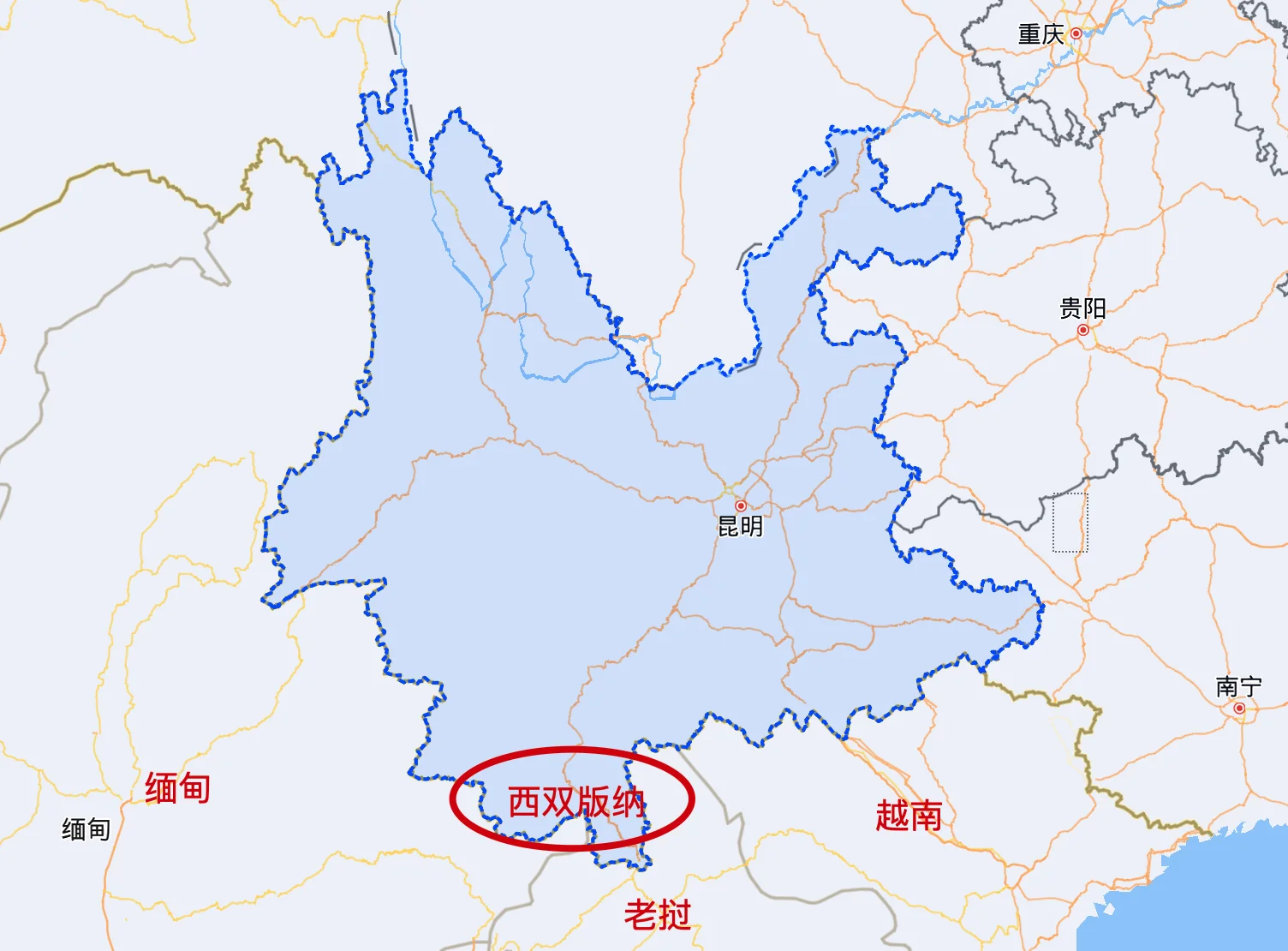
I have always felt the map of Yunnan Province resembles a short-legged camel. Xishuangbanna sits at the very southern tip - right on the camel’s hind leg - directly bordering Myanmar and Laos.
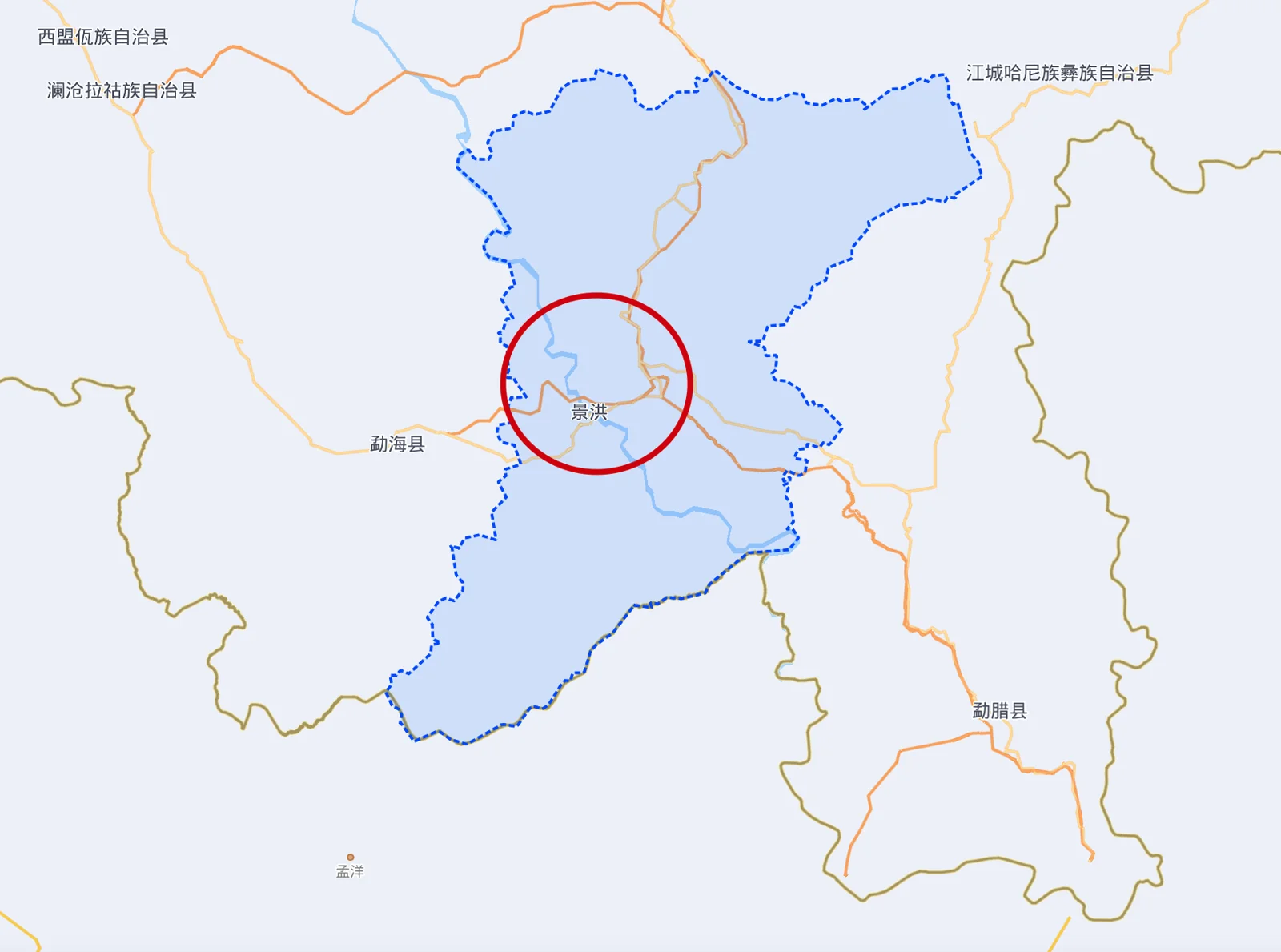
The entire Xishuangbanna Dai Autonomous Prefecture is a prefecture-level administrative division covering a vast geographical area. It administers three county-level divisions, with the capital being Jinghong City, which also hosts the prefecture’s sole airport. The neighboring Menghai and Mengla counties offer Pu’er tea culture, botanical research gardens, tropical landscapes, and border tours. However, as ours was a relaxed family leisure trip with a young child, we confined our activities entirely within the red circle around Jinghong City. The furthest destination, Wild Elephant Valley, was only an hour’s drive away. For first-time visitors to Banna, the red circle area alone provides more than enough to explore for an entire week.
We arrived in Banna on the evening of Day 1 with no sightseeing planned. Near our hotel, we enjoyed a bowl of Dai rice noodles; the combination of fresh mint leaves and Sichuan peppercorns was delightfully refreshing. Strolling through city streets lined with palms and coconut trees, the vibrant tropical atmosphere instantly washed over us.
Day 2: Primeval Forest Park & Gaozhuang
Primeval Forest Park
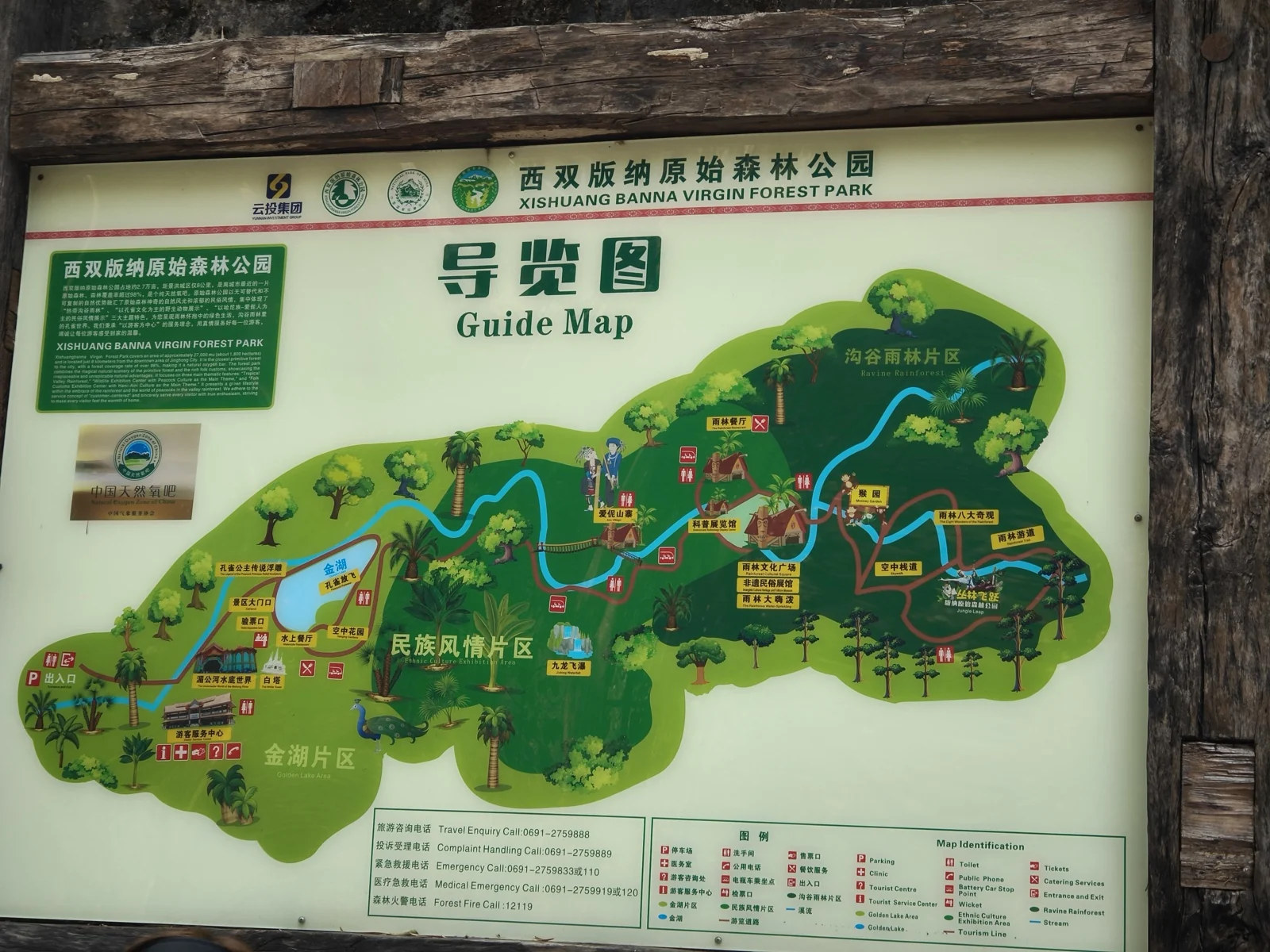
Located just outside Jinghong, this scenic area occupies a long, narrow strip of land. It follows a single dead-end route: you travel all the way to the deepest point, explore, and then return along the same path. From the entrance to the interior, it is divided into three distinct zones: Golden Lake, Aini Mountain Village, and the Tropical Rainforest, which also correspond to the three stops of the sightseeing shuttle.
In addition to self-guided exploration, each zone features scheduled shows and activities. Golden Lake hosts peacock releases, the park’s signature spectacle; Aini Village offers interactive folk dances; and the Tropical Rainforest puts on a mini water-splashing party.
We took the sightseeing shuttle straight to the furthest Tropical Rainforest zone. Stepping off the bus and passing through the food court and shopping area, we arrived at the monkey garden.
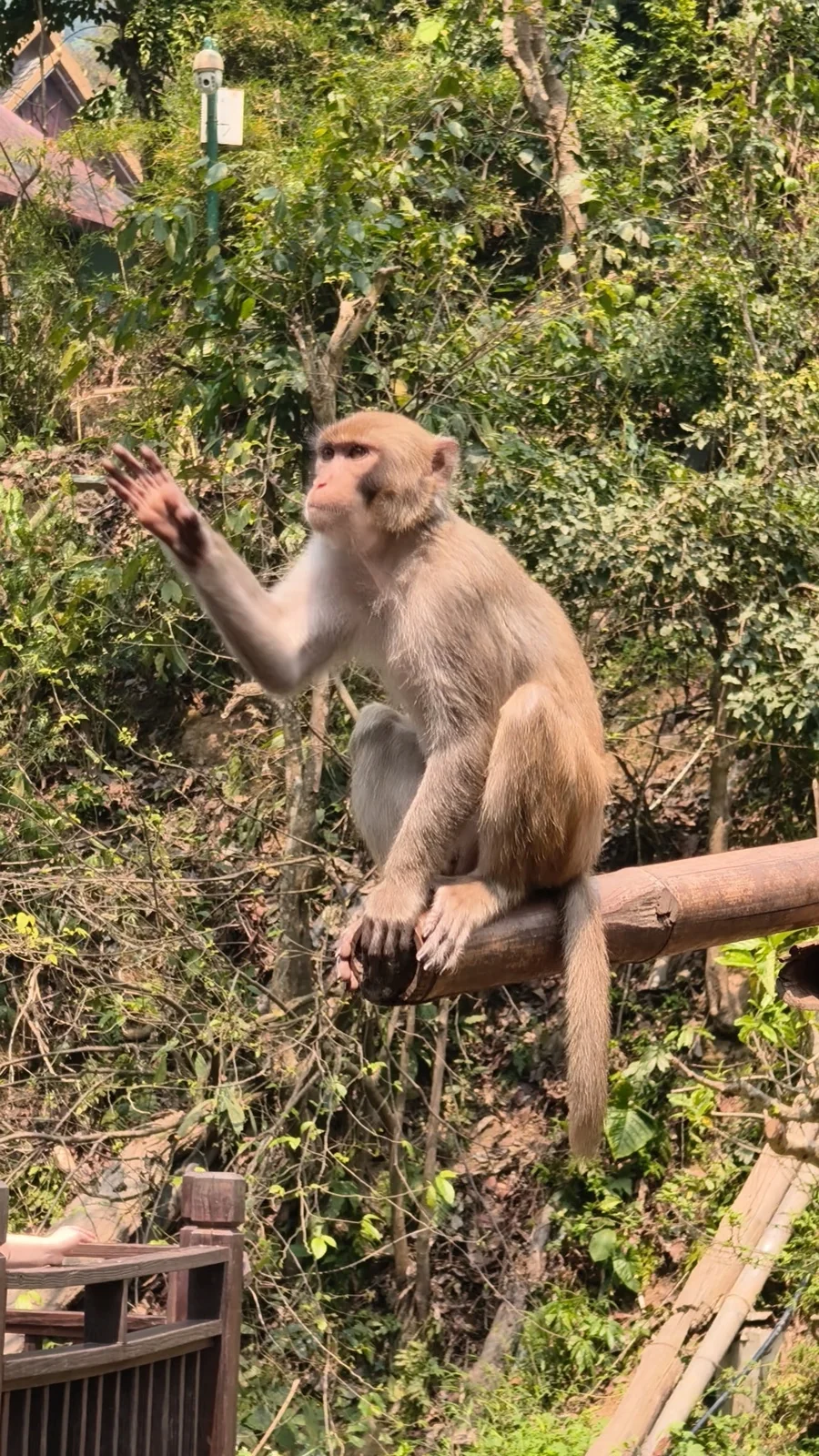
Unlike ordinary zoos, there were no visible cages or fences; it felt as though wild rhesus macaques had simply congregated here over time due to consistent feeding.
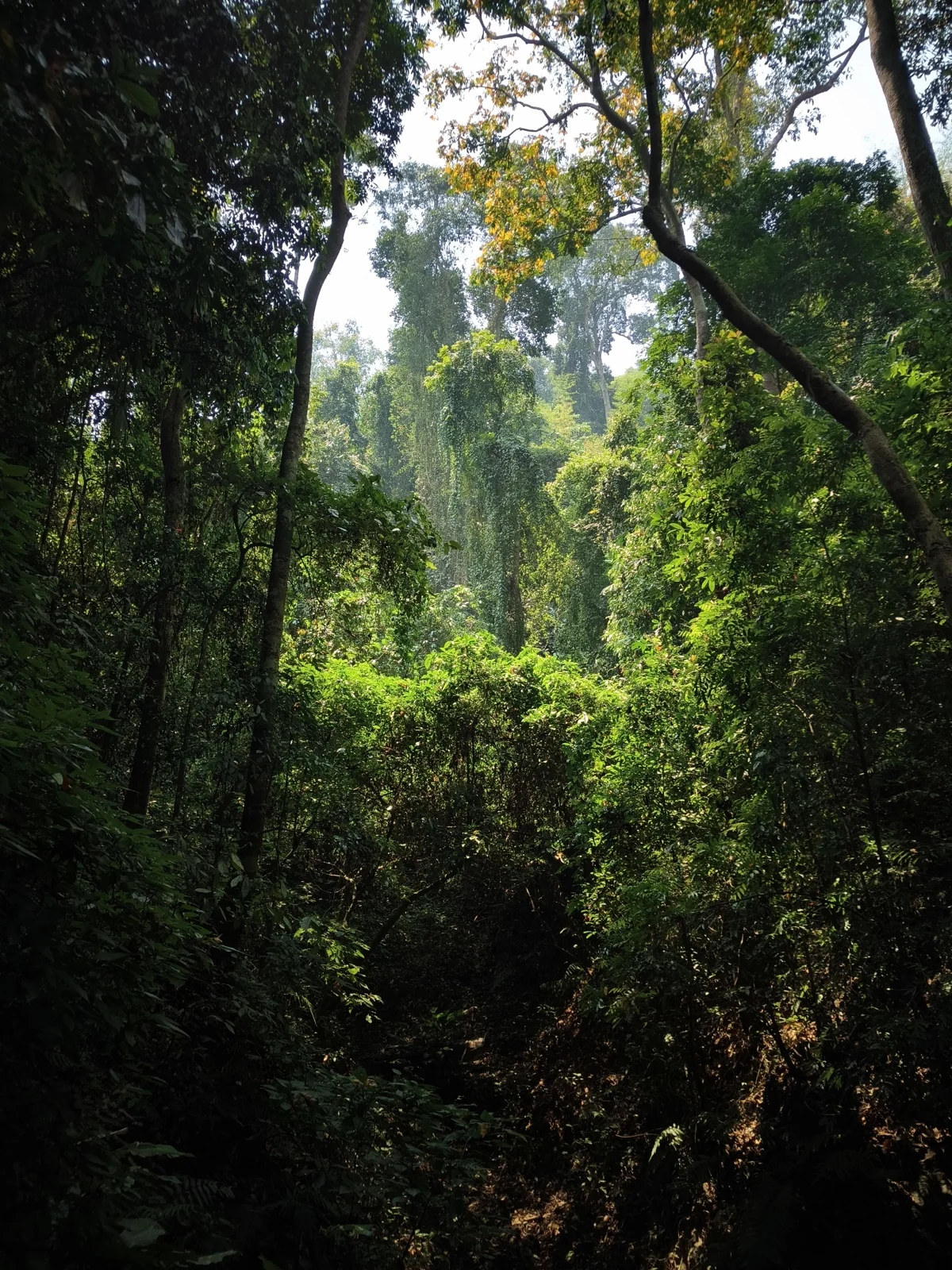
Venturing further inside leads to the primary rainforest loop trail, which eventually circles back to the monkey garden.
There is also a paid treetop obstacle course inside, which requires participants to be at least 6 years old, so my daughter was not yet able to participate.
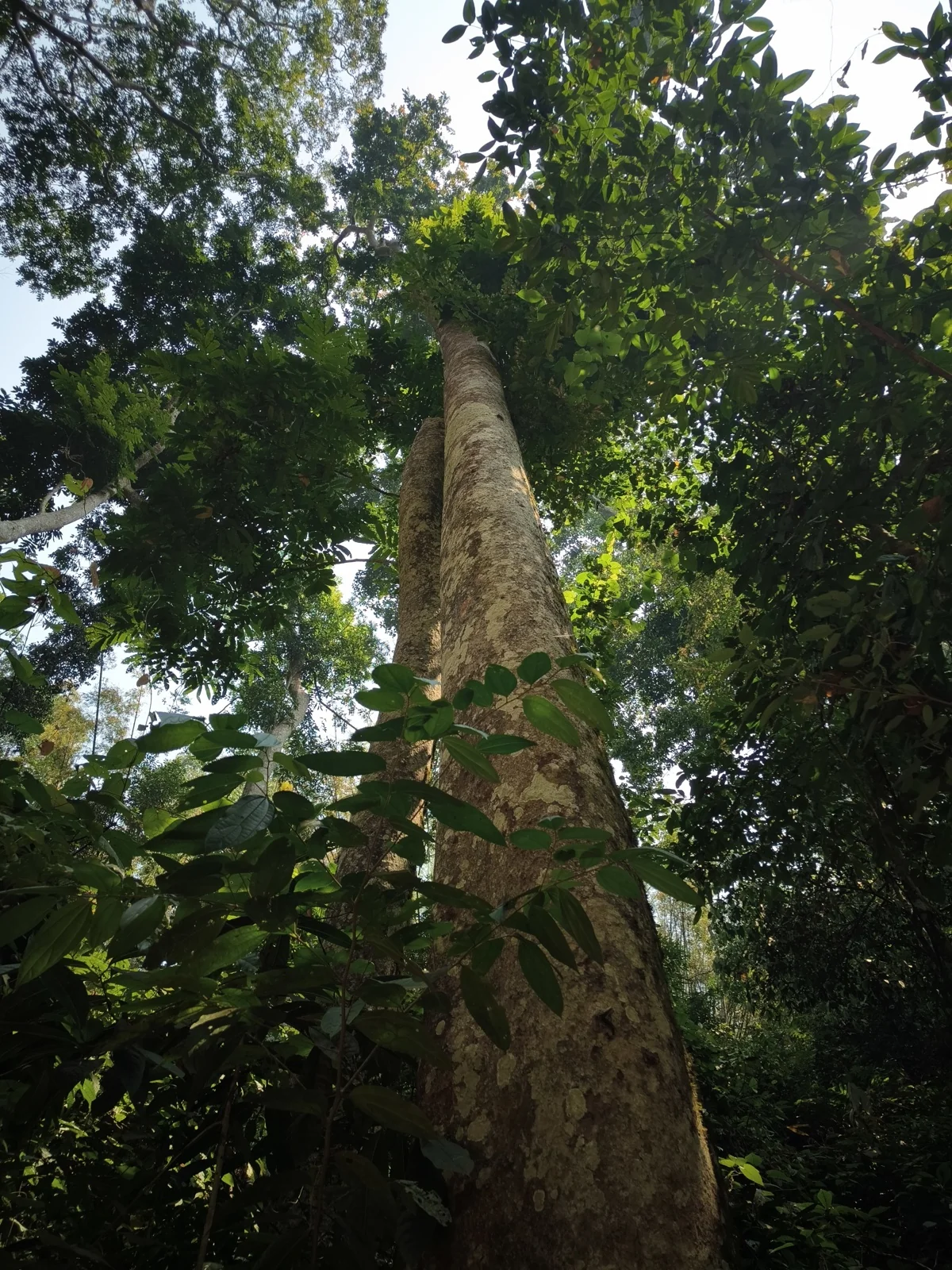
The tropical rainforest presents an ecosystem completely different from the temperate woodlands of Zhejiang. With abundant tropical sunshine and precipitation, vegetation is extraordinarily dense. Intense competition for survival forces canopy trees to surge skyward: tree crowns sit high above the ground, trunks remain bare, and foliage is heavily concentrated at the very top.
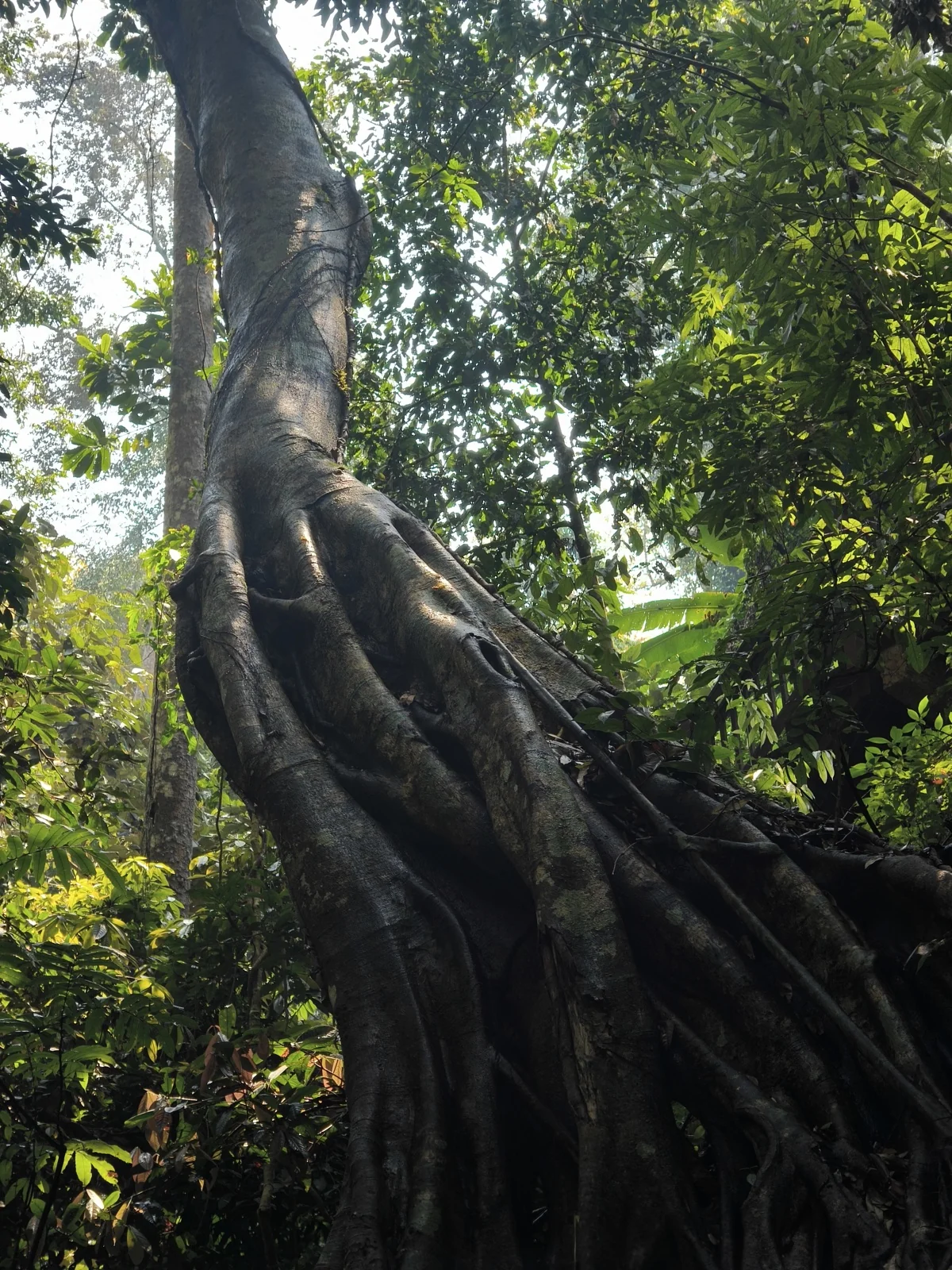
Simultaneously, these towering trees require expansive root systems to bear their immense weight and draw moisture. The roots spread across the soil with complete abandon; one particular tree’s buttress root uncannily resembled the sweeping skirt of a Dai peacock dance.
Low-lying undergrowth has developed its own survival strategies, often growing enormous leaves to maximize sunlight capture. A single wild plantain leaf was larger than my daughter’s entire body.
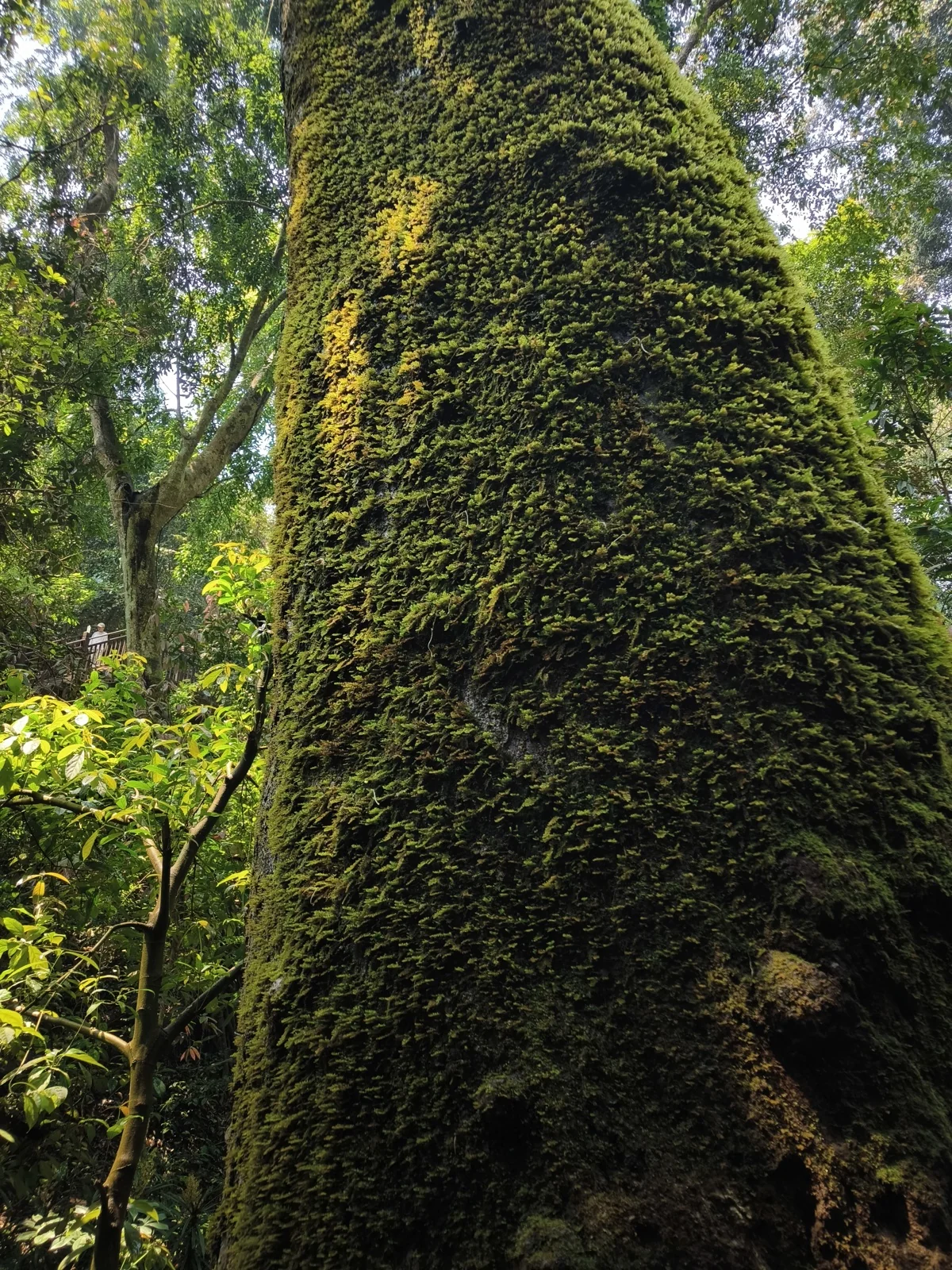
On trees with rough bark, the trunks are completely blanketed with moss, wasting not a single millimeter of surface area. Even on clear sunny days, internal rainforest humidity remains sky-high; at midday, you can watch moisture steadily dripping from these moss mats.
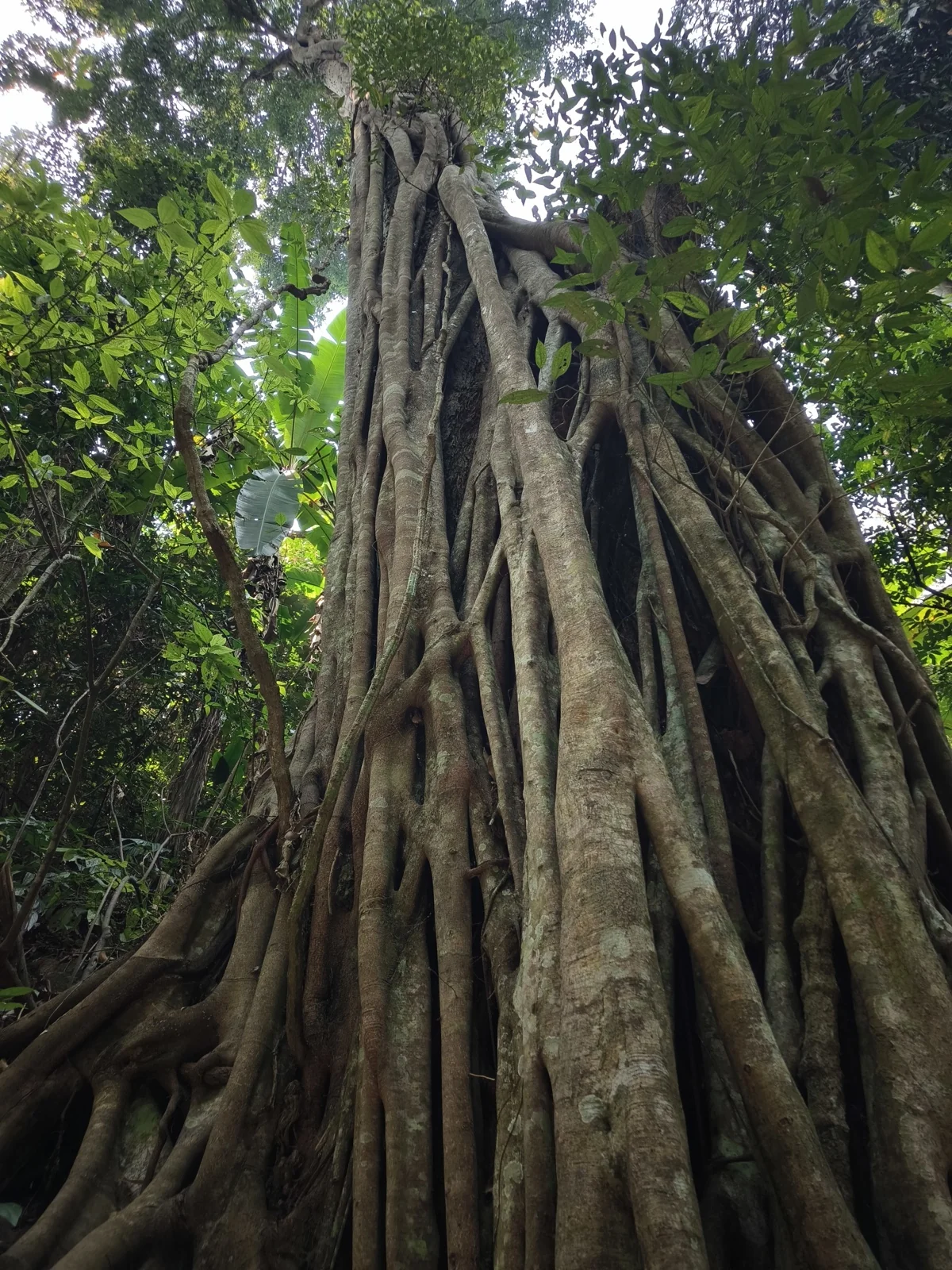
The strangler fig (Ficus) represents one of Xishuangbanna’s most characteristic rainforest phenomena - a ruthless survival strategy where a guest plant usurps and replaces its host.
As is well known, banyan trees can form entire groves from a single trunk. Their crowns sprout aerial roots that dangle down to touch the soil, thickening into new supporting trunks and expanding outward in an ongoing cycle. But have you ever considered: do aerial roots serve any biological function before they reach the ground?
I previously assumed they were inert filaments reliant solely on the parent tree’s nourishment. However, strangler fig aerial roots must operate autonomously: their seeds are deposited onto other tree branches via bird droppings, germinating in the thin humus of branch crevices. These aerial roots can absorb moisture directly from the humid air as they creep steadily downward toward the forest floor. Once an aerial root penetrates the soil, it switches into explosive growth mode, rapidly transforming into a full-fledged terrestrial root system while the exposed portion thickens into a robust woody trunk in record time.
Multiple strangler fig individuals often colonize a single host tree, encircling it from top to bottom, choking its growth, and seizing its access to sunlight and water. When these multiple strangler figs press and rub against one another during expansion, their inner cambium layers make contact and fuse into a single interconnected organism, sharing nutrients and water - a phenomenon known as “natural grafting.” Eventually, the host tree rots and dies within the hollow cage, leaving a massive, self-supporting, hollow cylinder tree behind.
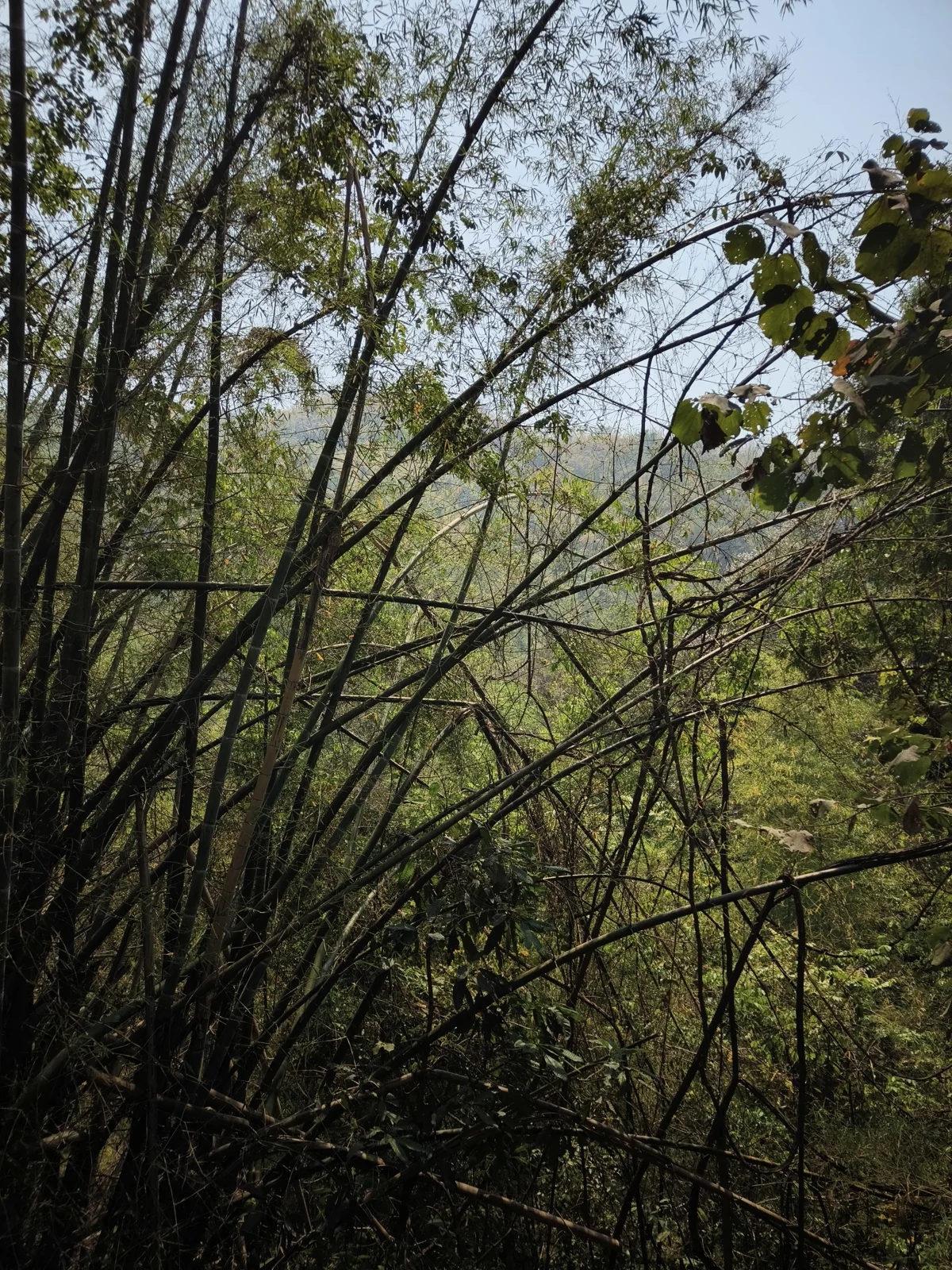
It is not just strangler figs; countless other woody lianas climb in every direction, snapping thick bamboo stalks with effortless ease. Rainforest plants deploy every ruthless tactic to crowd each other out, where only the strongest prevail.
The next time you hear the phrase “law of the jungle,” do not envision a polite, cooperative temperate forest - let the vivid imagery of a tropical rainforest fill your mind.
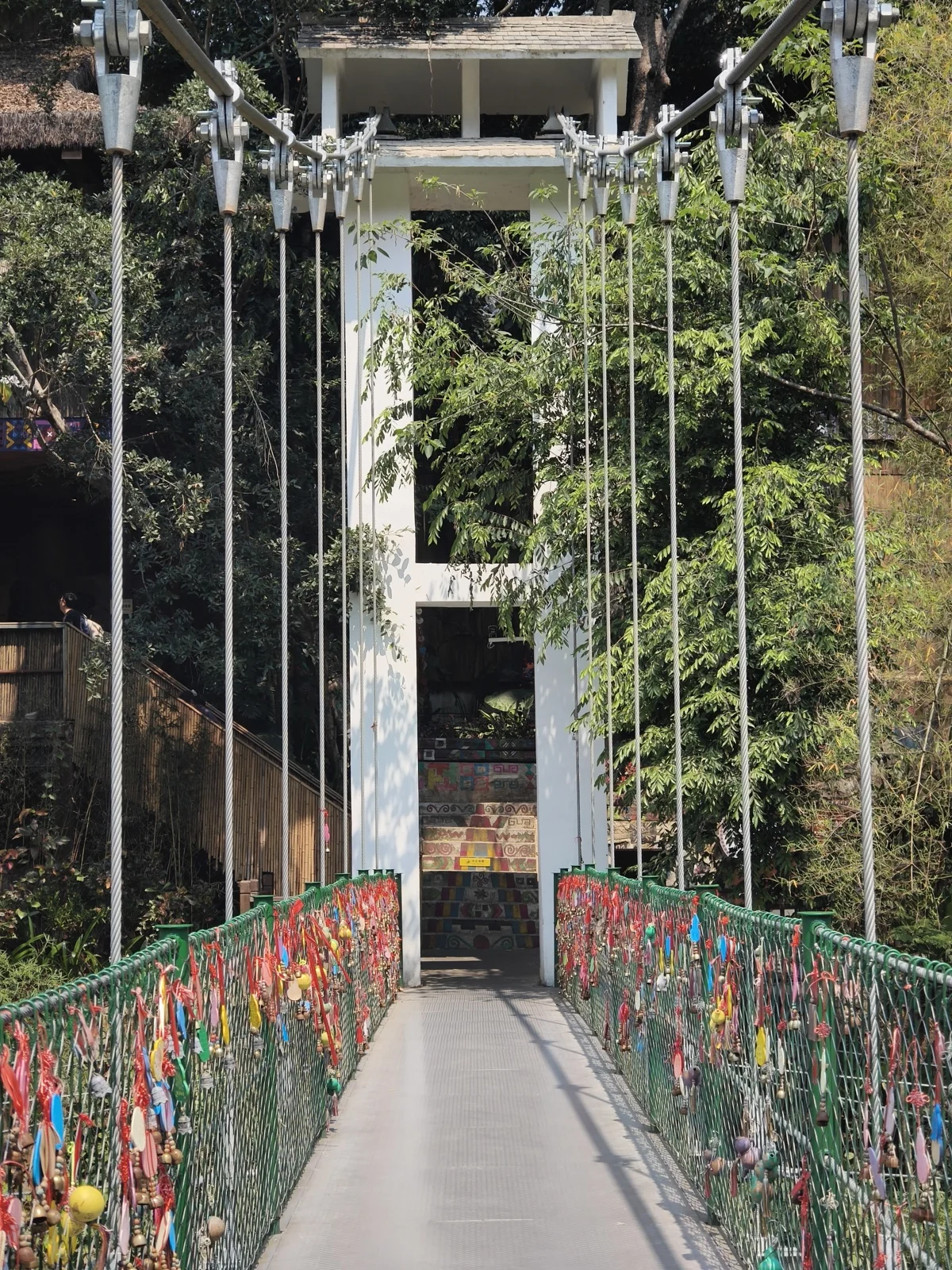
Leaving the rainforest zone, we crossed a suspension bridge to enter Aini Mountain Village.
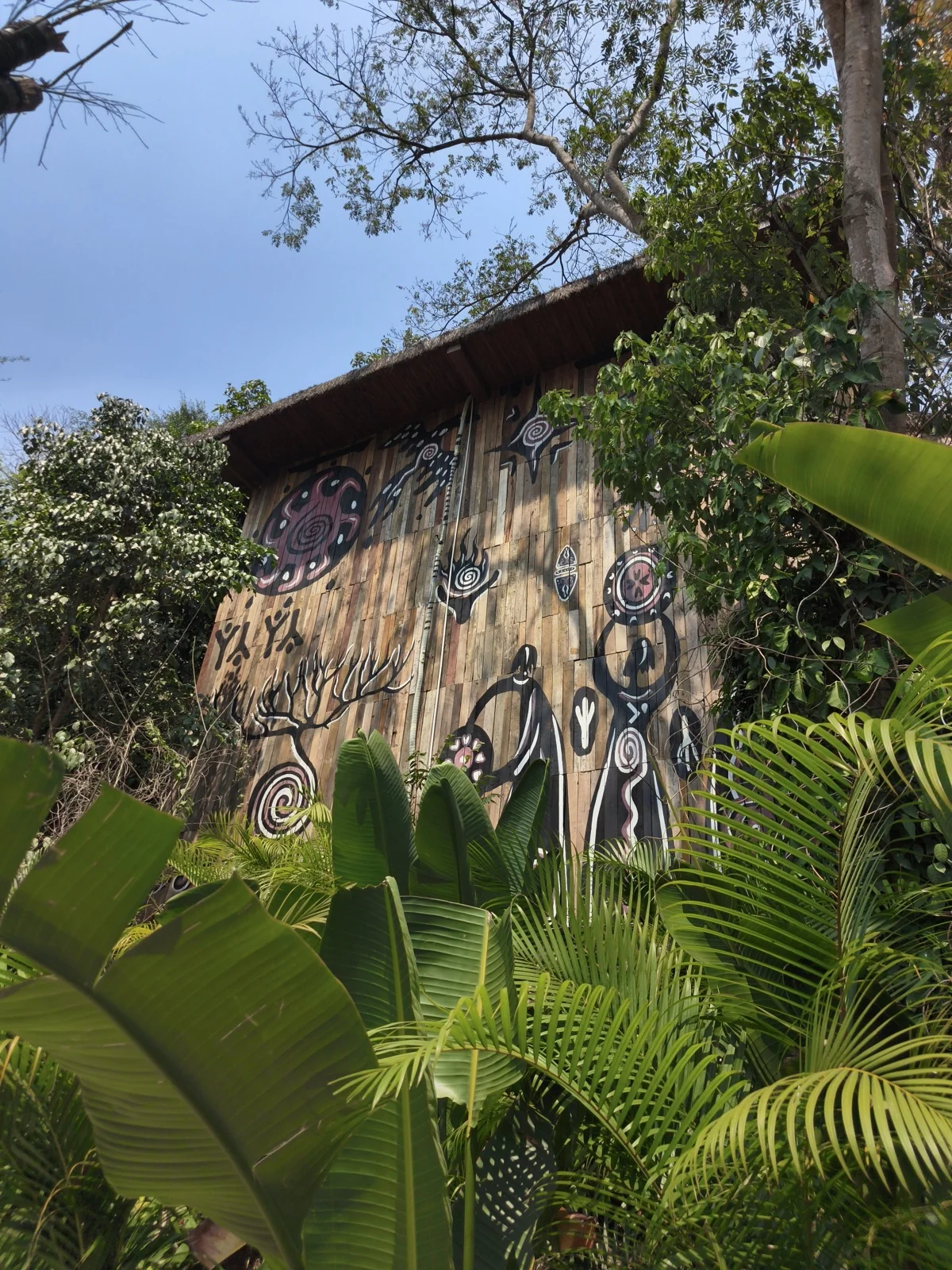
The Hani people refer to themselves locally as the Aini. This is a compact folk culture exhibition area featuring cultural display boards, traditional tool exhibits, and folk dance interactions, alongside an adjacent Dendrobium orchid pavilion.
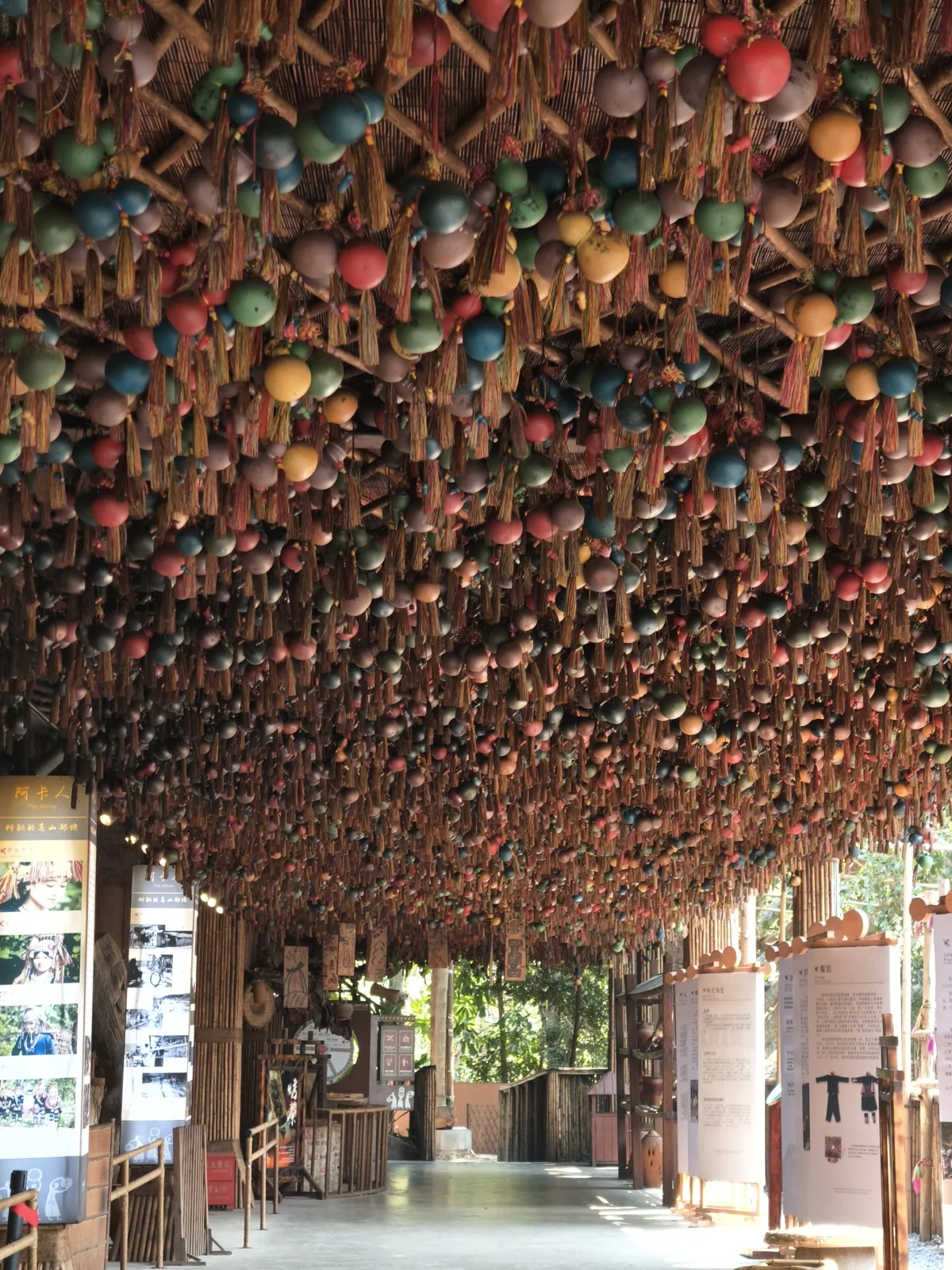
Pausing before the cultural panels, I made an intriguing discovery: for the first time, I encountered a calendar system based on a 13-day cycle - a prime number!
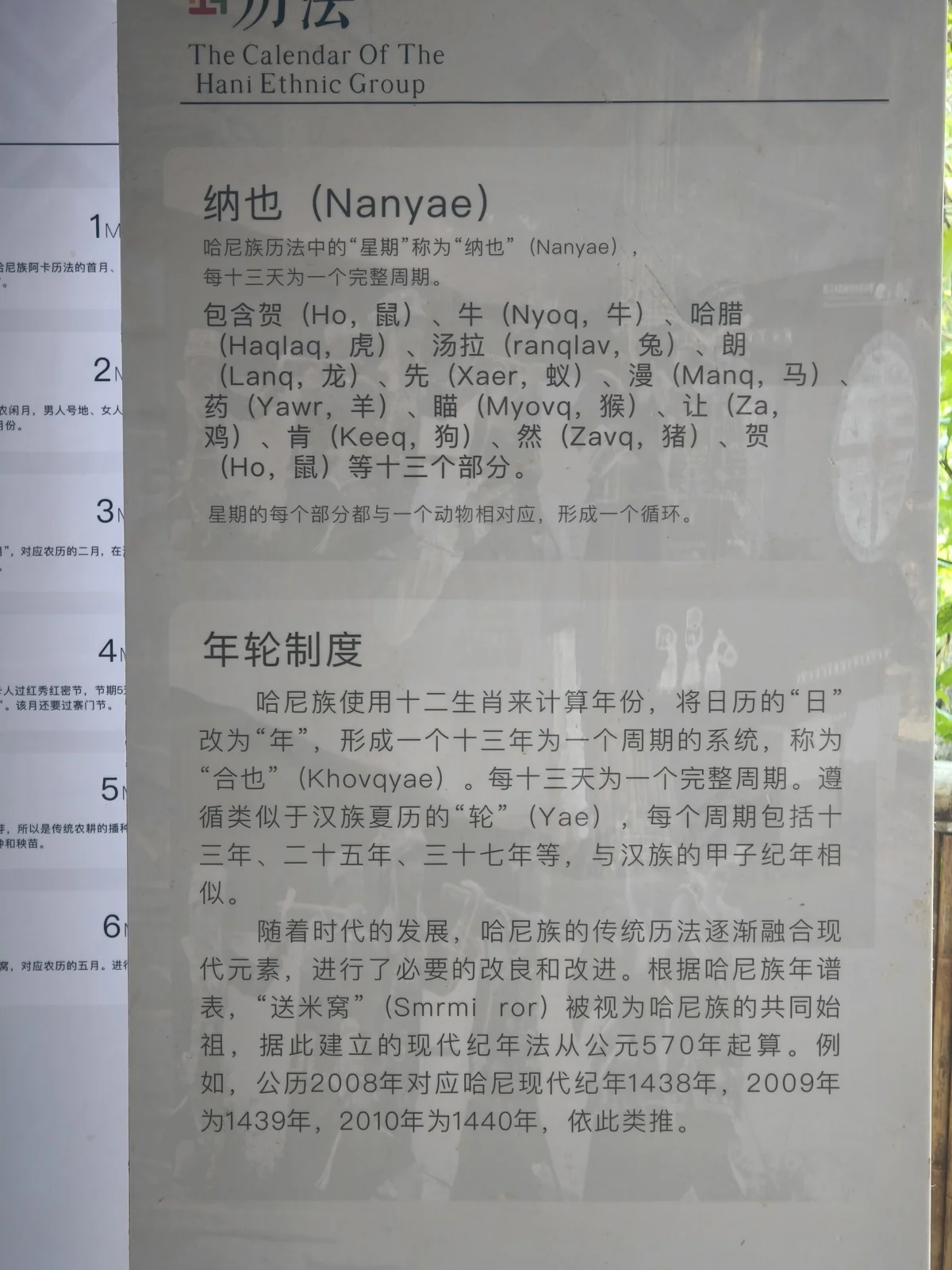
Standard modern civil calendars trace their lineage back to ancient Babylonian duodecimal and sexagesimal (base-12 / base-60) counting systems. When counting on our fingers, we naturally reach base-10. The Babylonians also used their fingers, but with an ingenious technique.
You can try it right now: take your right hand and use your thumb to count the three phalanges (knuckle segments) on each of your other four fingers. Just like a palmist chanting formulas, four fingers with three knuckles each allow you to count up to 12 on a single hand.
Next, bring out your left hand. Every time your right hand completes a count of 12, extend one finger on your left hand to track the carry, exactly like modern positional notation. With five fingers on the left hand, 5 × 12 = 60 - this is how the Babylonian base-60 system originated.
Our modern 60-minute hour, 60-second minute, and 12 signs of the zodiac all stem from this 12/60 system. You can imagine my shock at seeing a 13-day cycle, as 13 lacks any anatomical counting foundation.
Researching deeper afterward revealed that 13 was not a mathematical base-13 system. As the display explained, a full cycle spanned 13 days, but both the first and thirteenth days were assigned to the “Rat” sign. This reflects the Hani philosophical worldview of cyclical continuity: a complete cycle must encompass the beginning of the subsequent cycle to signify renewal and seamless continuation. Much like our musical scale - Do, Re, Mi, Fa, Sol, La, Ti - which contains 7 notes, yet beginners always sing through to the octave’s high Do to complete the phrase.
The Hani daily cycle still fundamentally revolves around the 12 zodiac animals; their cultural framing of “a complete loop” simply differed. Further anthropological research indicates the primary traditional Hani calendar was actually a 10-month solar calendar inherited from the ancient Qiang people: an annual year divided into 10 months of 36 days each (exactly 3 rounds of the 12 zodiacs per month), with the remaining 5 (or 6) leap days inserted as festival celebration days. It remains a sophisticated base-10/12 hybrid calendar.
Leaving the exhibition corridor and ascending to a terrace brought us to the central plaza of Aini Village.
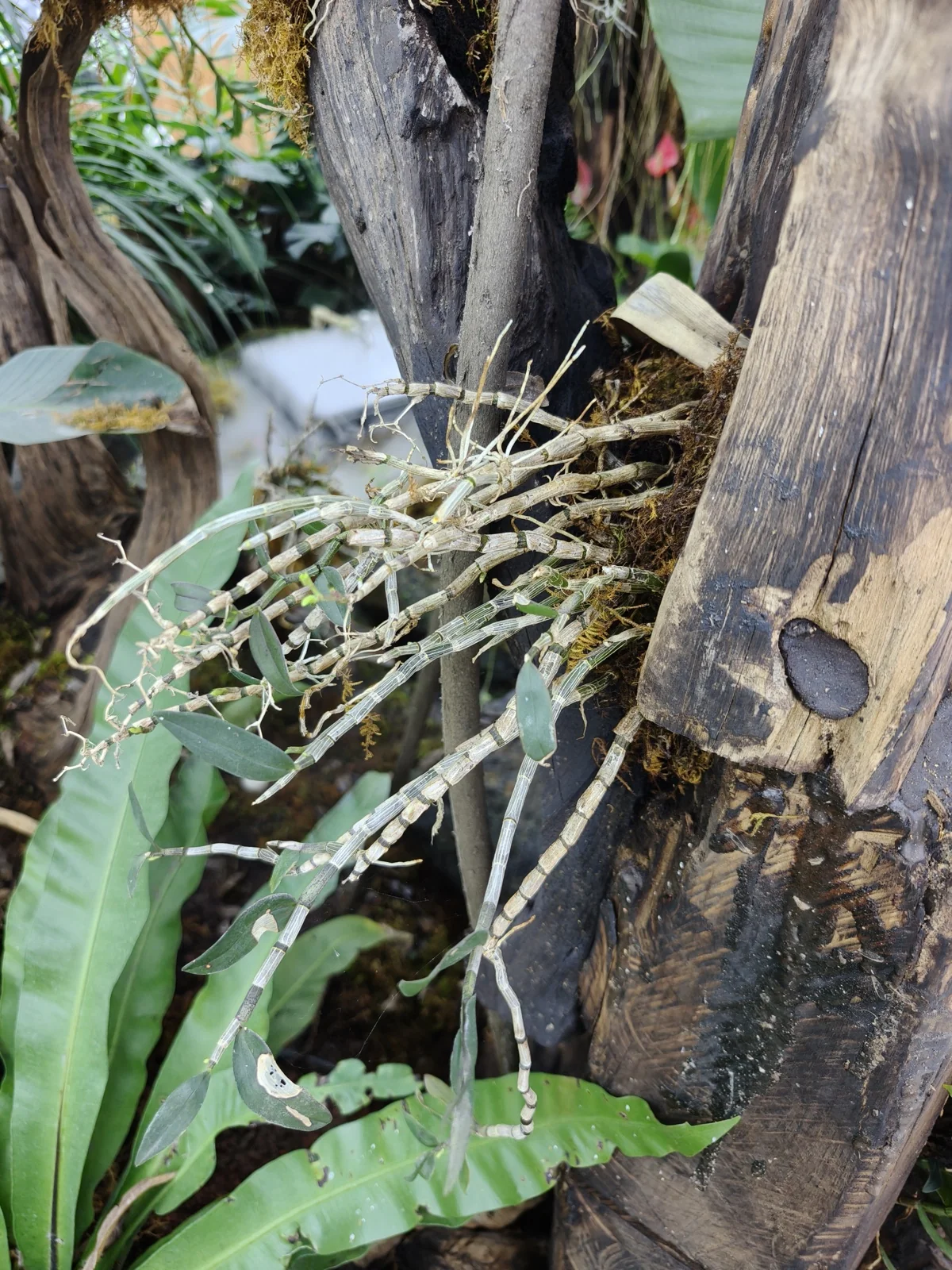
At one end of the plaza stood the Dendrobium orchid pavilion, where I saw orchids growing directly on tree trunks for the first time.
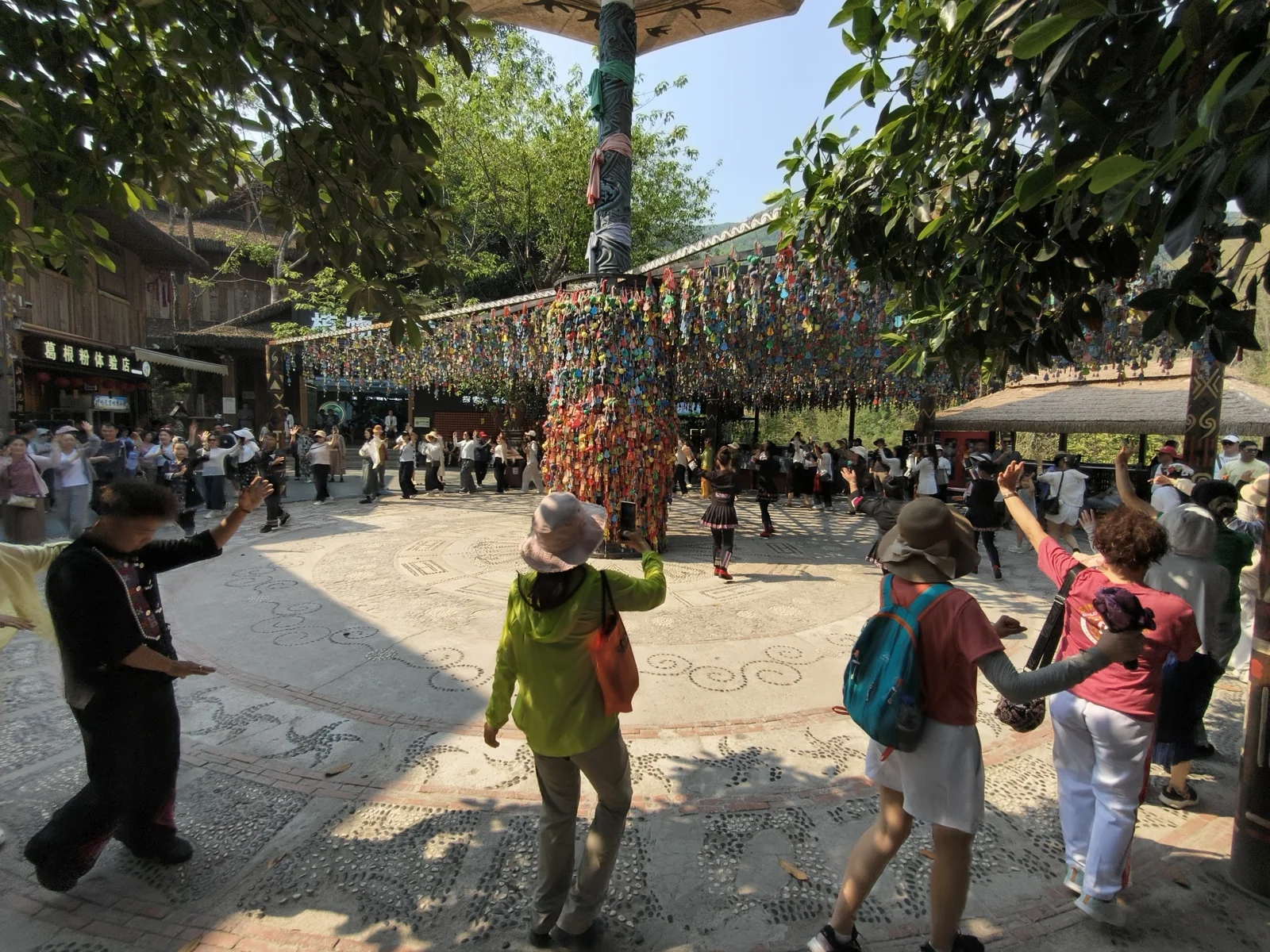
Nearby, bamboo pole dances and circle dances were underway, with visitors invited to join in. Many ethnic minority groups across Southwestern China share ancestral roots, resulting in widespread cultural overlap; similar interactive dance formats appear across numerous folk tourism sites in Yunnan and Guizhou.
We rode the shuttle back to Golden Lake to wait for the peacock release. The Golden Lake area is dedicated exclusively to performance shows without additional walking trails.
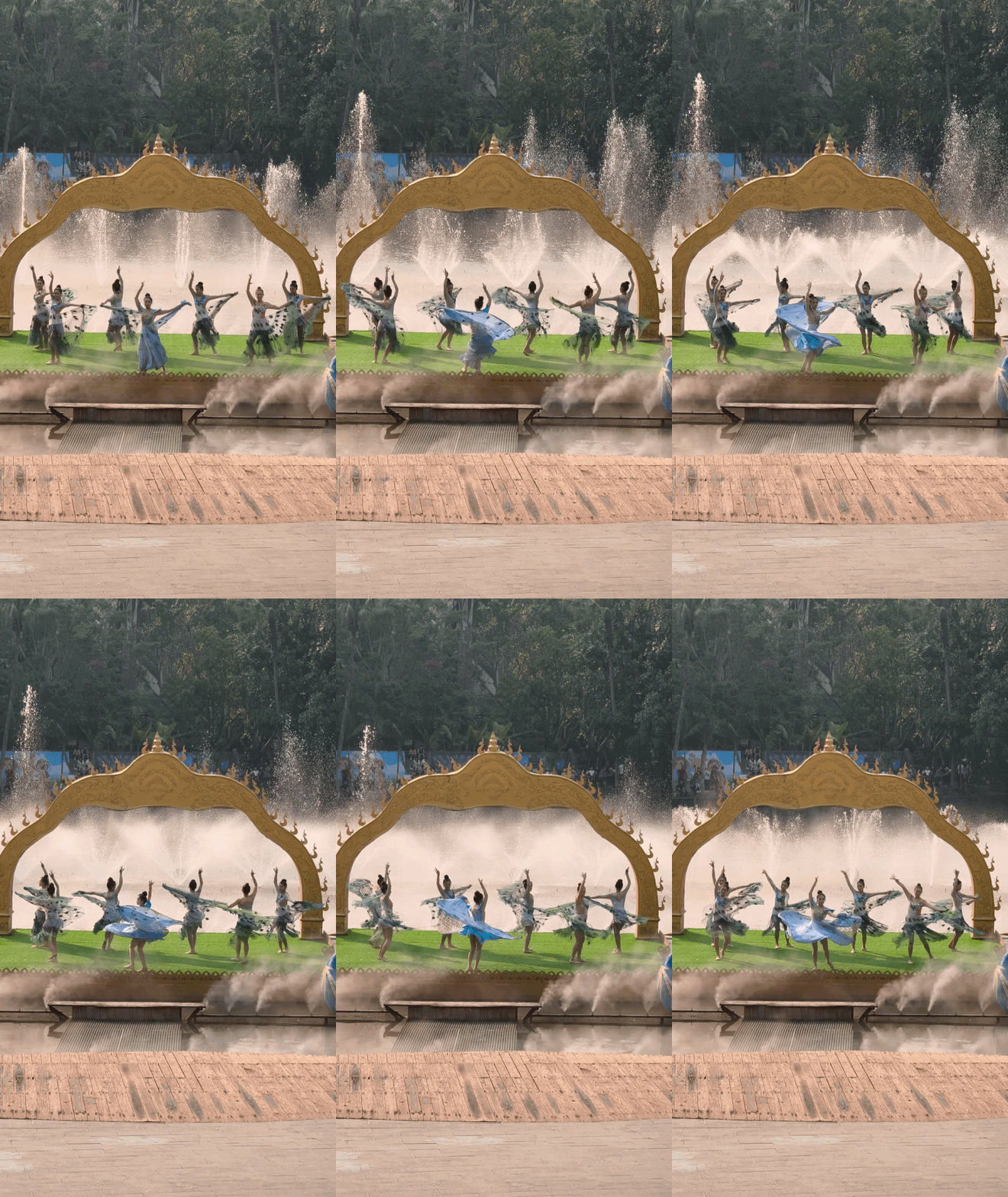
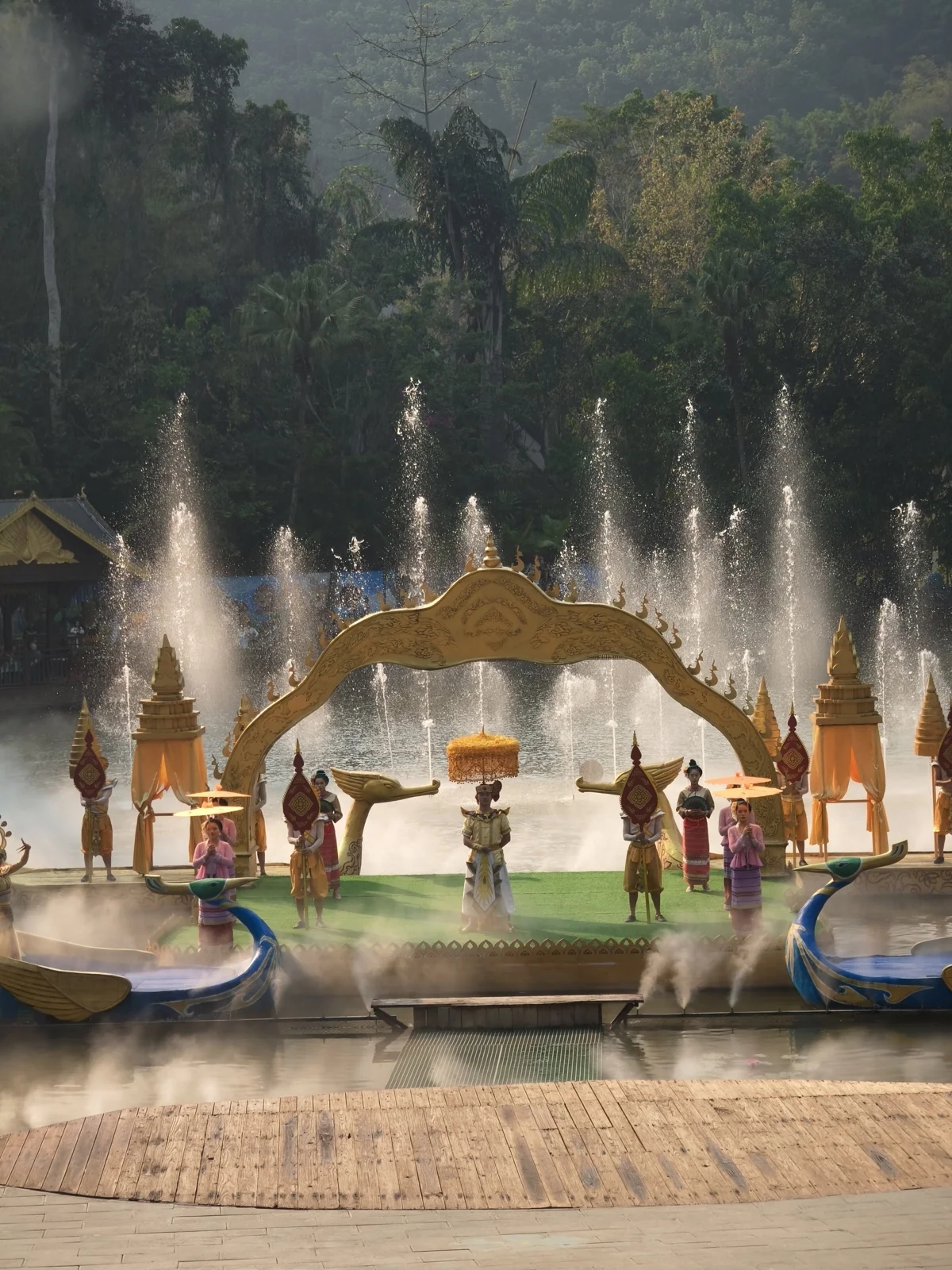
Prior to the peacock release, an extensive water-stage dance performance took place, themed around Dai royal processions and traditional folklore.
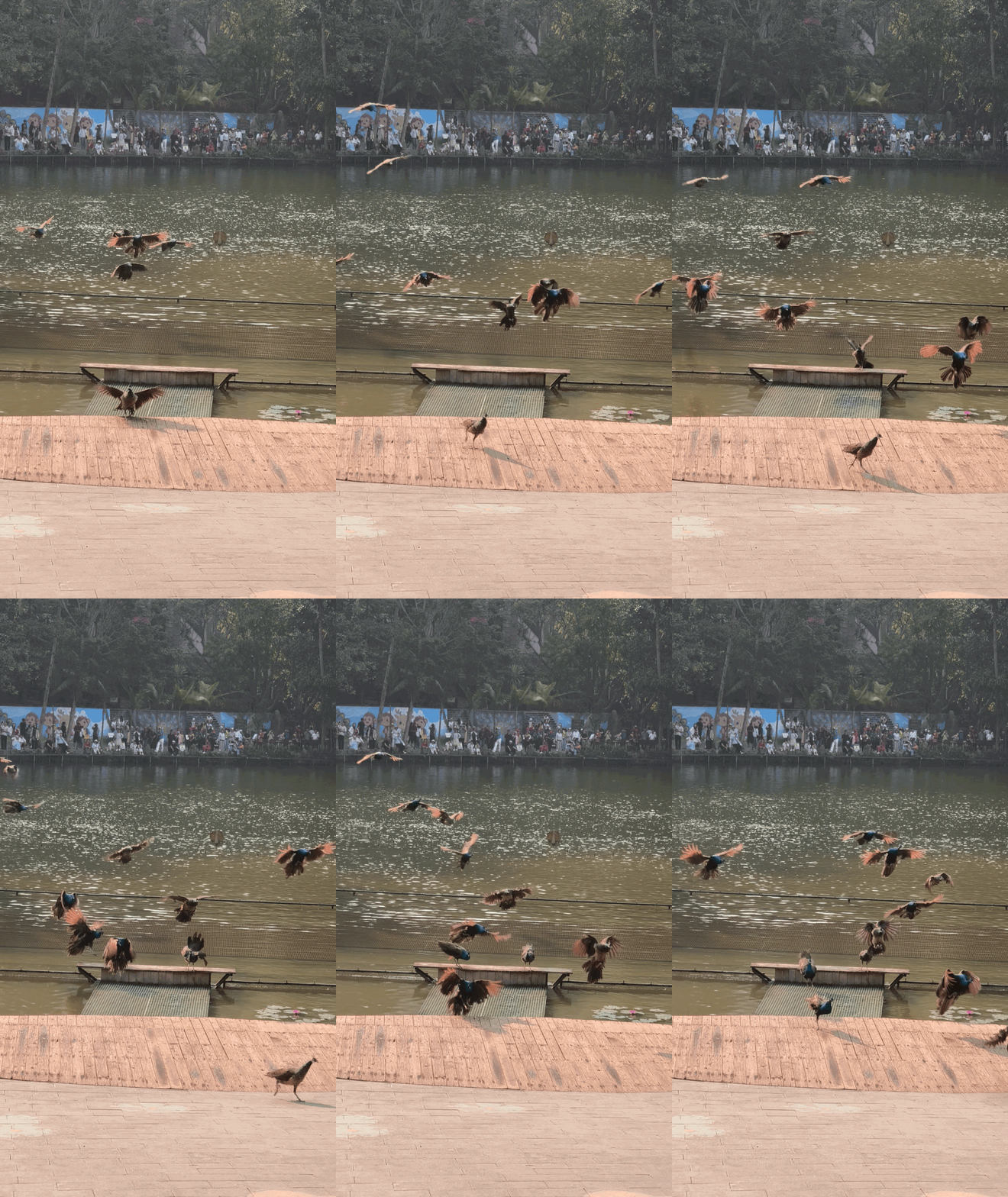
When hundreds of peacocks swooped down simultaneously from high hillside perches toward the viewing stands across the lake, the visual spectacle was genuinely breathtaking.
Animal flight falls broadly into three biomechanical modes: flapping flight, soaring, and gliding. Birds, bats, and insects that cover long distances possess true flapping flight, beating their wings to generate thrust and lift that fully counteracts their body weight. Soaring is a high-tier mastery practiced by eagles and albatrosses, who precisely exploit thermal updrafts and terrain winds to stay aloft or circle indefinitely without flapping. Gliding involves holding wings rigid to generate a modest lift-to-drag ratio insufficient for sustained climb, but capable of crossing significant horizontal ground distances - a trait shared not only by certain birds and insects, but also various mammals and reptiles.
Peacocks cannot sustain true flapping flight; they are specialized gliders. They can glide downward from elevated perches with great momentum, but must walk back up on foot.
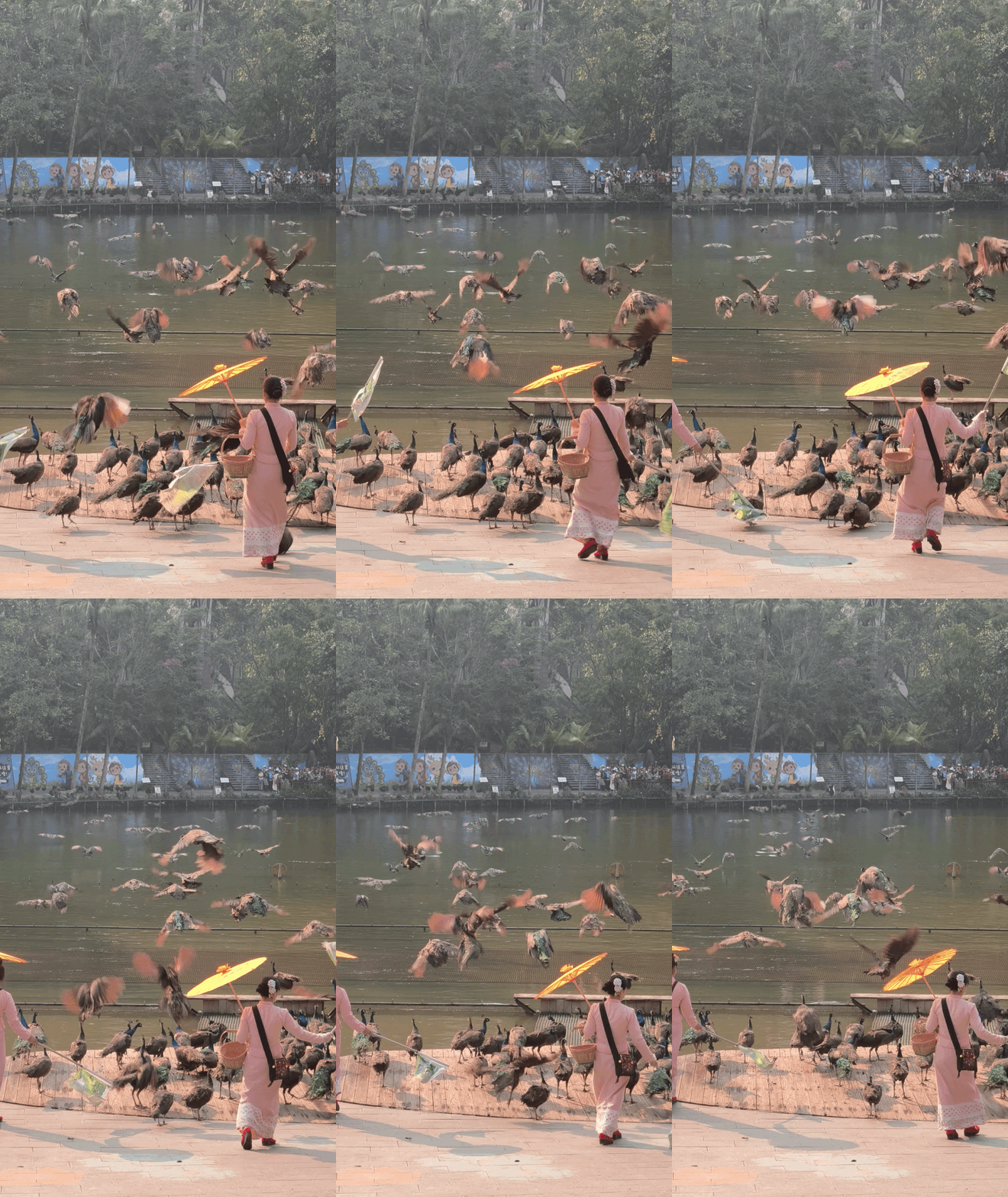
Of course, when they build up initial speed, gliding cleanly across the lake surface is effortless. In this regard, they far outclass domestic chickens.
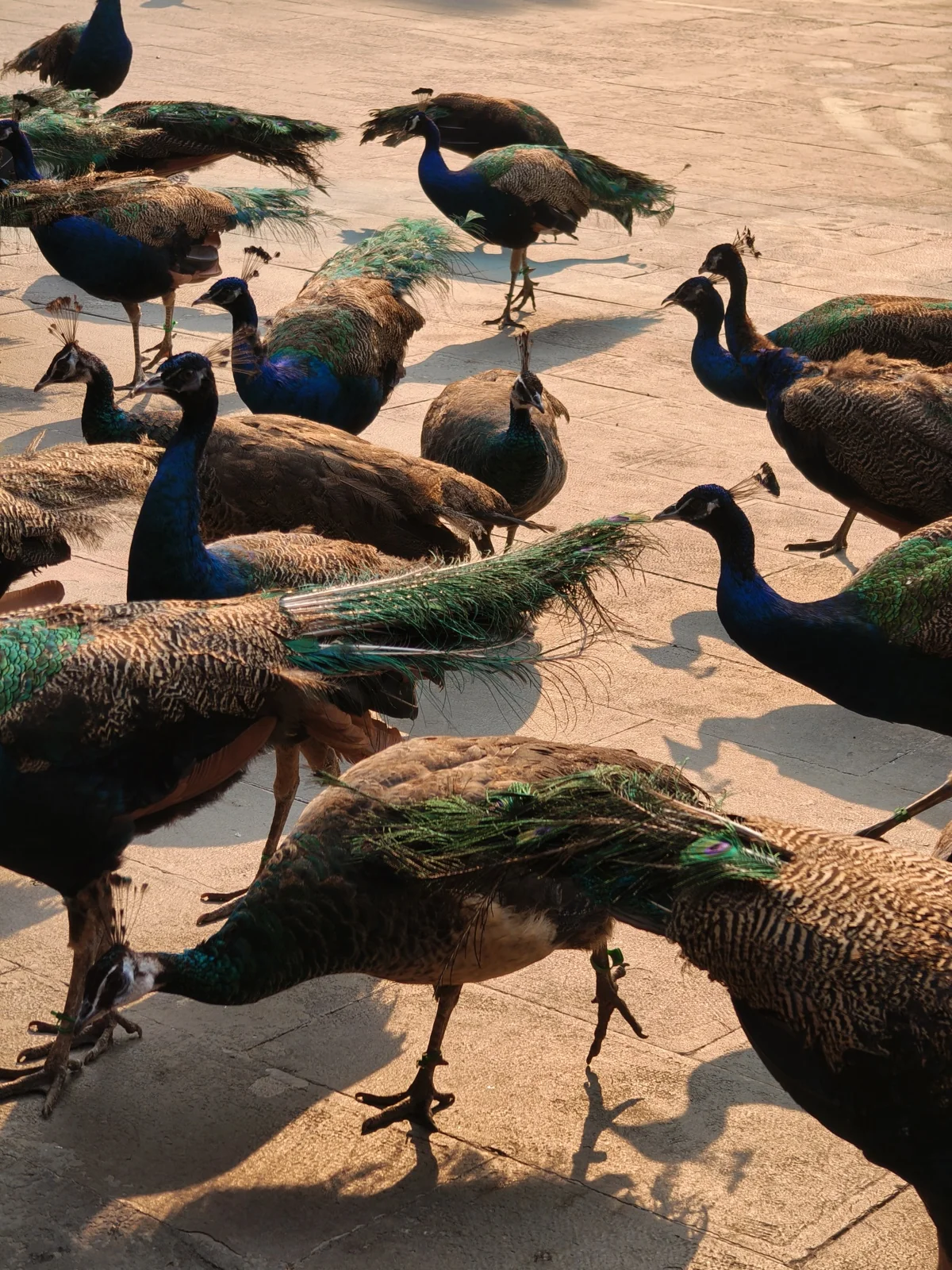
Following the show, visitors could purchase feed for hands-on feeding, which my daughter thoroughly enjoyed. The peacock’s teal and sapphire plumage shimmered brilliantly under the golden late afternoon sun. Peacocks and elephants are undeniably the two animal ambassadors of Xishuangbanna.
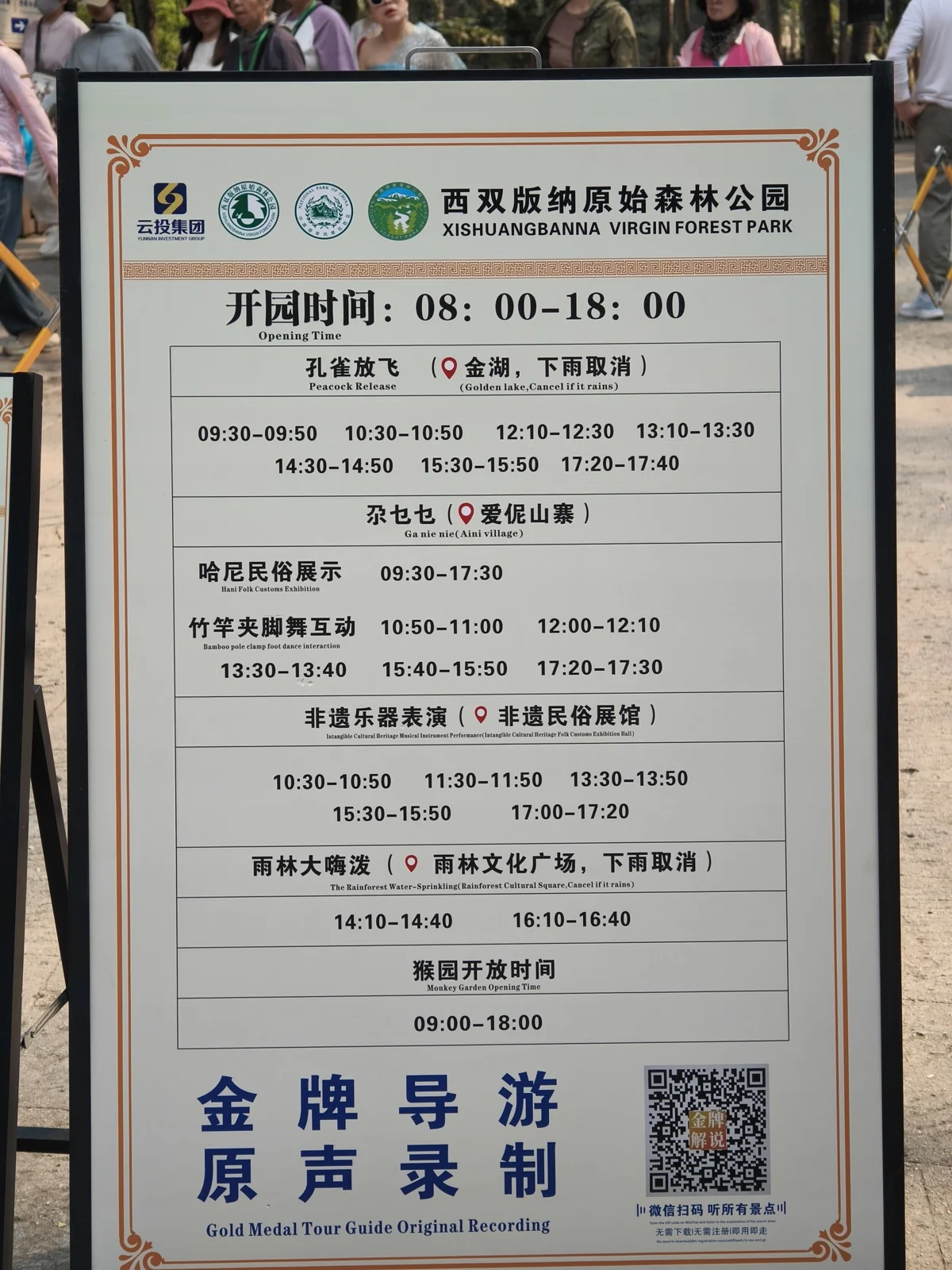
In retrospect, our routing through the park that day was suboptimal. I had only glanced at what shows were offered without cross-referencing their exact times. A closer look reveals that showtimes across the three zones heavily overlap rather than alternate. Catching a show in one zone guarantees missing the simultaneous shows in the other two. This scheduling bottleneck forced us to spend over an hour and a half simply waiting around, having already finished exploring the walking paths.
A far more efficient strategy: watch the early peacock release immediately upon entering, take the shuttle directly to the Tropical Rainforest (joining the water-splashing party if interested), then explore Aini Village on the return leg before exiting. The Aini Village performances are fairly standard; if your itinerary already includes the Dai Ethnic Garden, Aini Village can be safely skipped.
Gaozhuang & The Night Market
We hailed a taxi to Gaozhuang, enjoyed dinner, and visited the Grand Golden Pagoda Temple after nightfall.
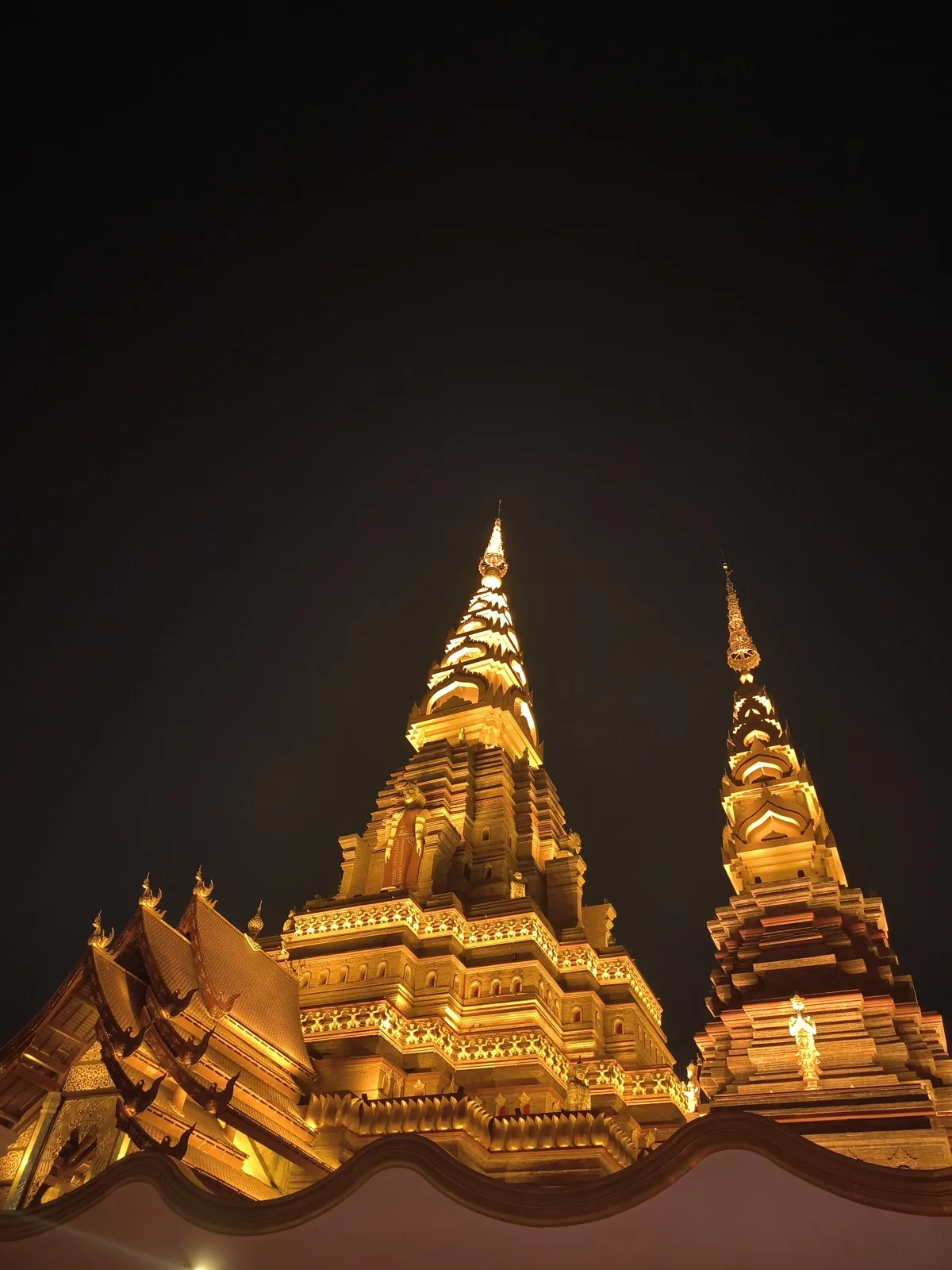
Completed in 2013, this is a modern Buddhist temple that undergoes regular maintenance and repainting each year.
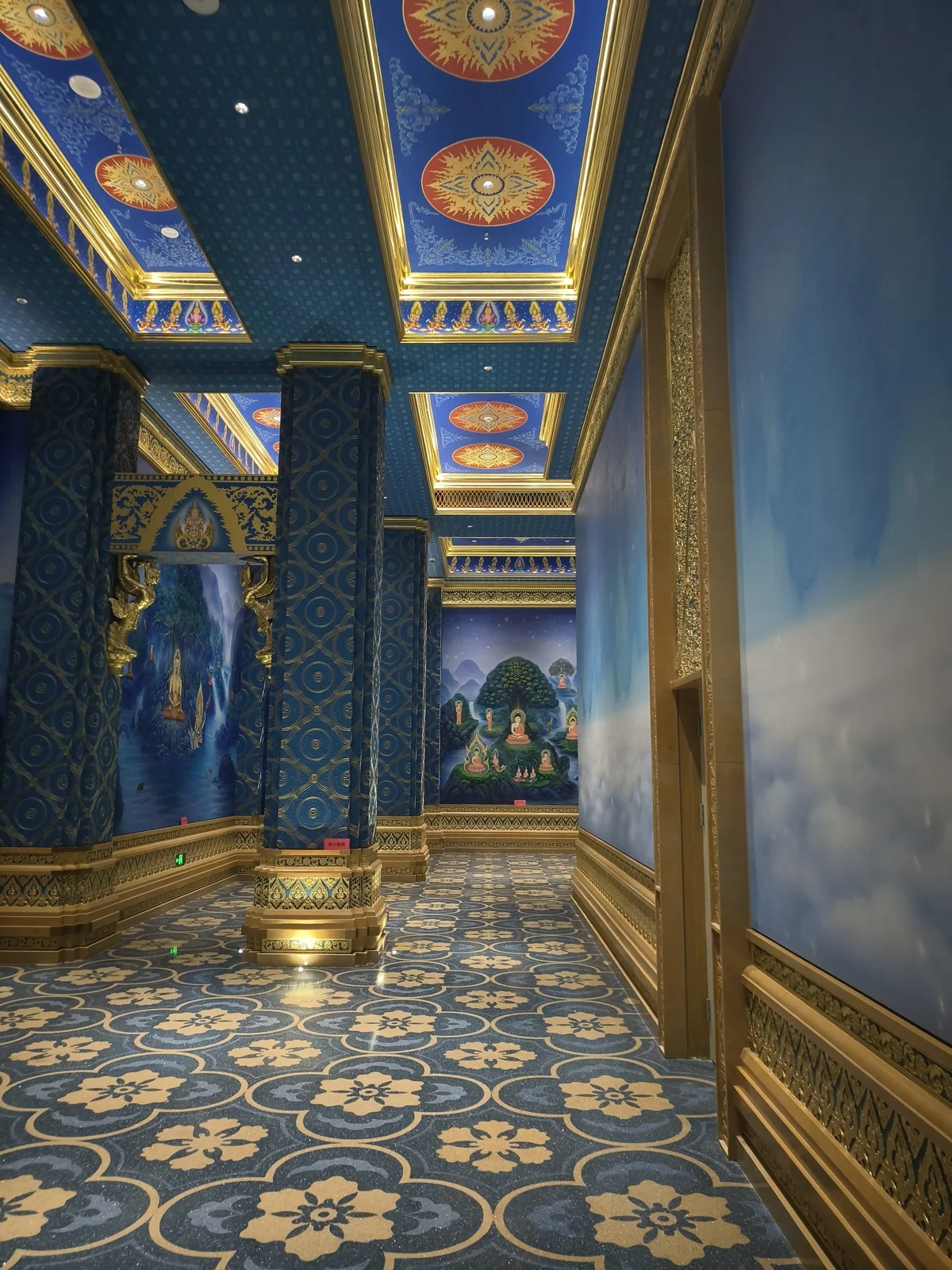
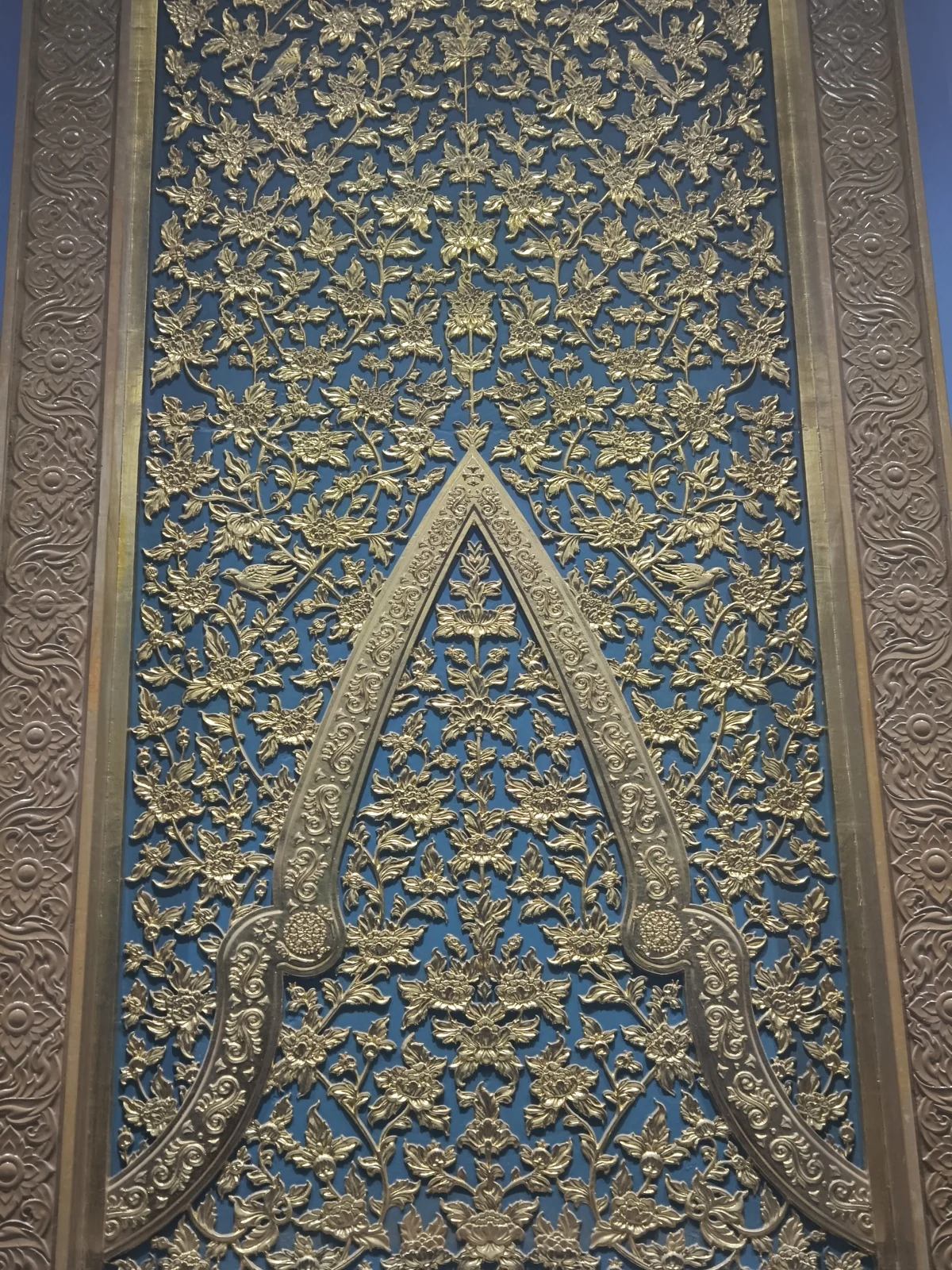
Unburdened by historical heritage constraints, it feels remarkably distinct from the ancient temples we visited in subsequent days. Designers freely integrated contemporary architectural and lighting techniques into Theravada temple aesthetics, creating an interior reminiscent of an opulent luxury resort.
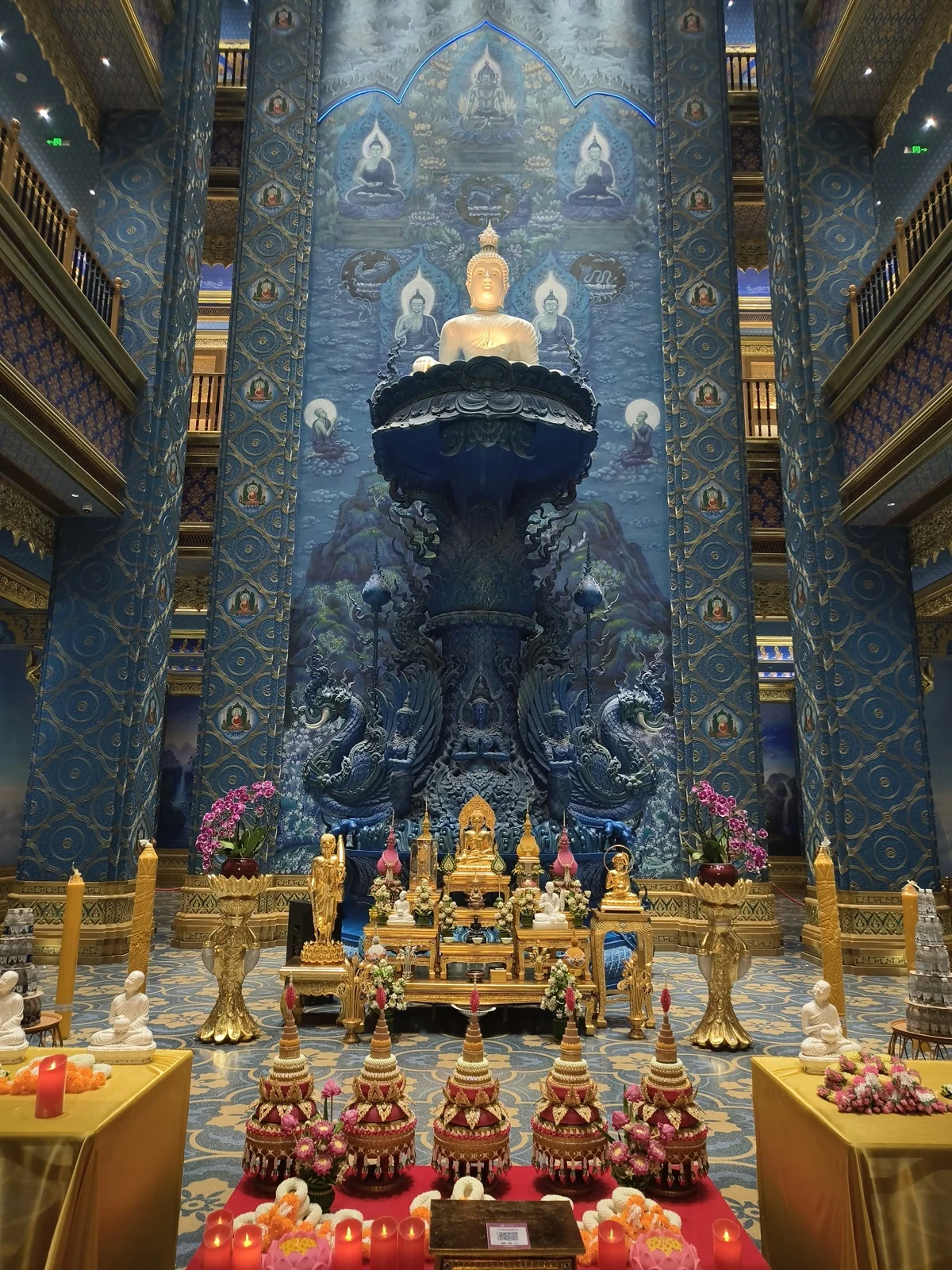
The extensive use of deep sapphire blues evokes a serene, celestial atmosphere - the Buddhist concept of a “tranquil, pure realm.”
Because it was designed in the modern era, architectural illumination was engineered into the structure from day one. Its nighttime appearance is by far its most impressive state; we were glad to have scheduled our visit after dark. Here are additional detail shots:
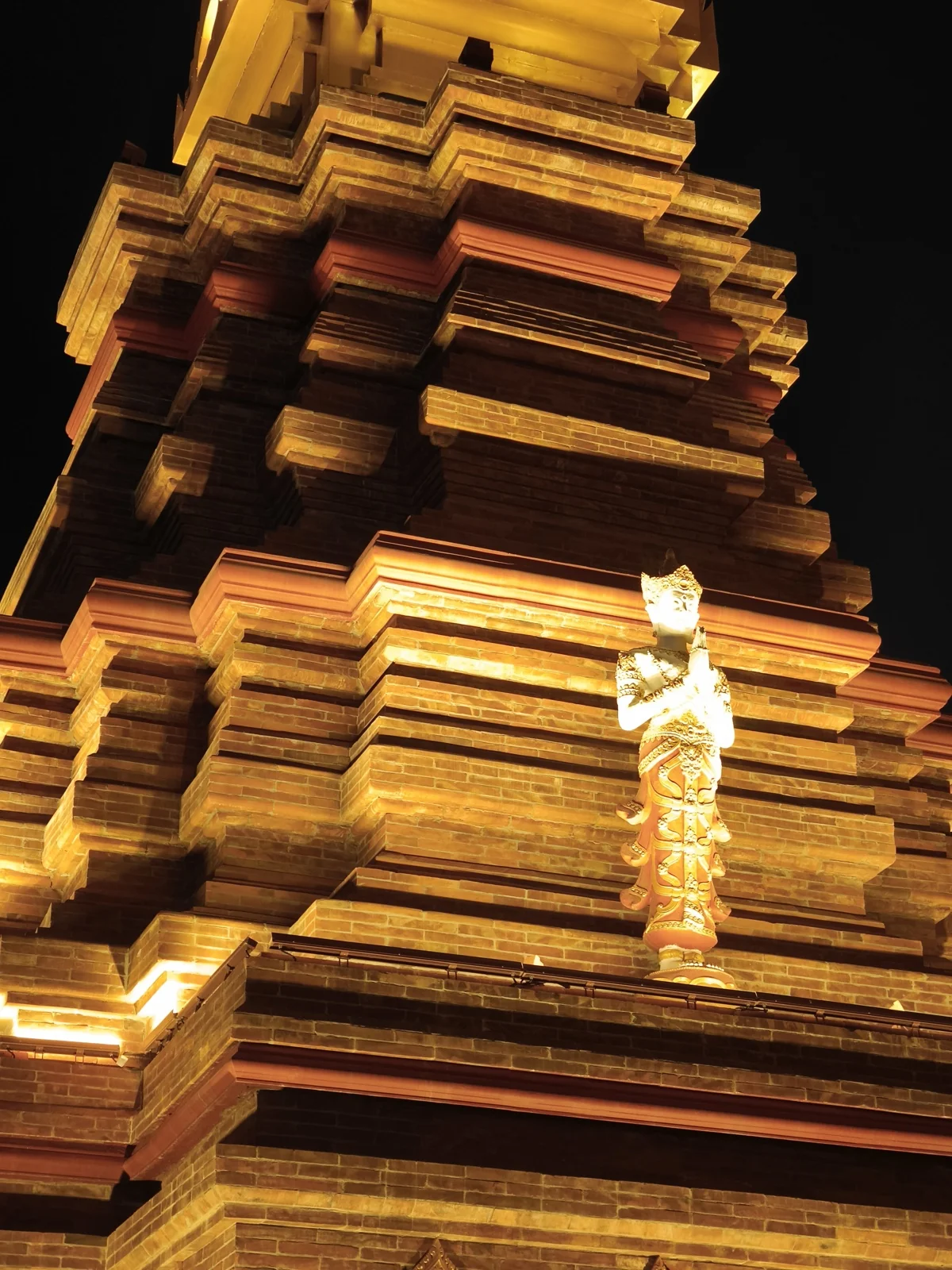
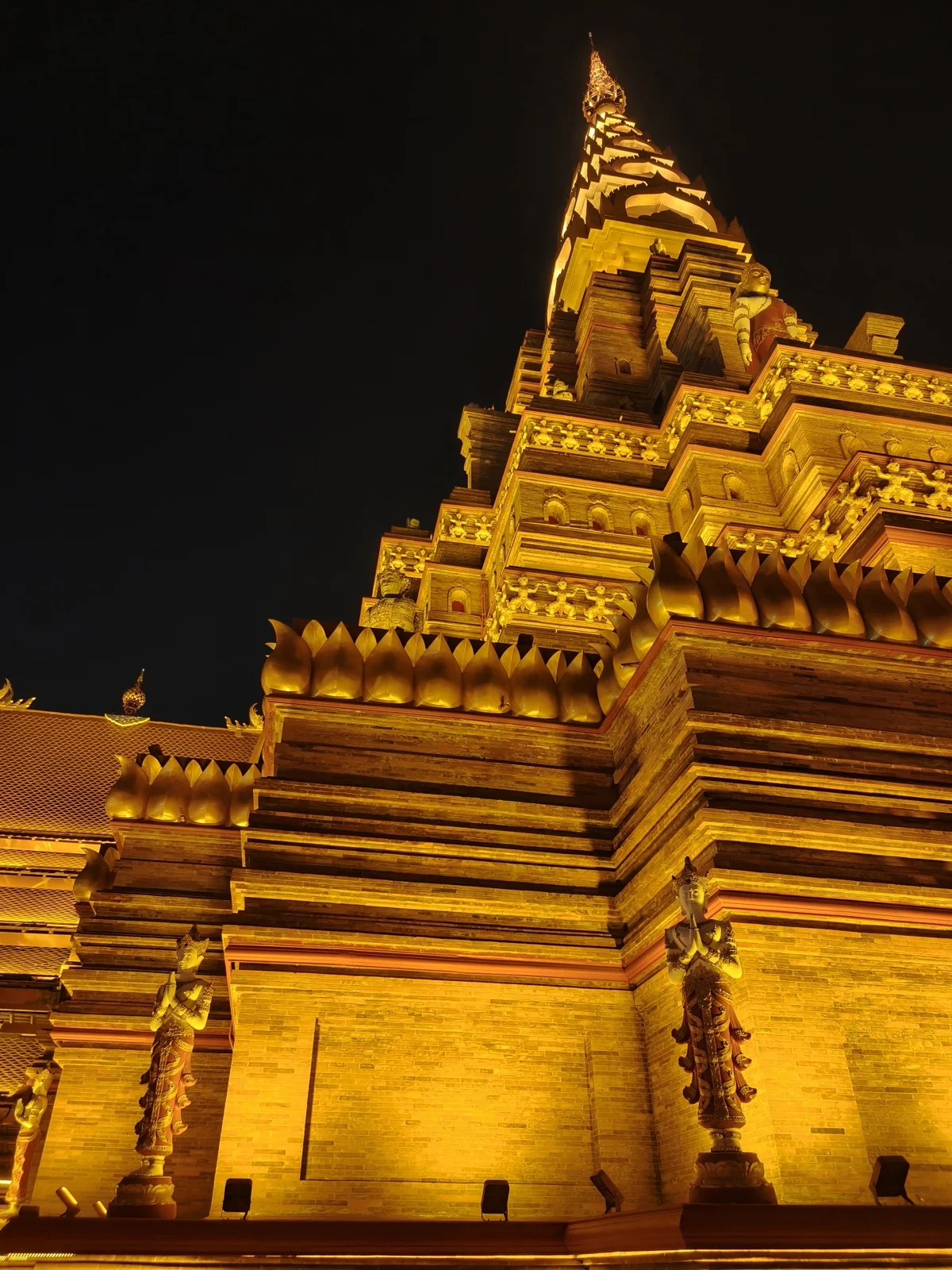
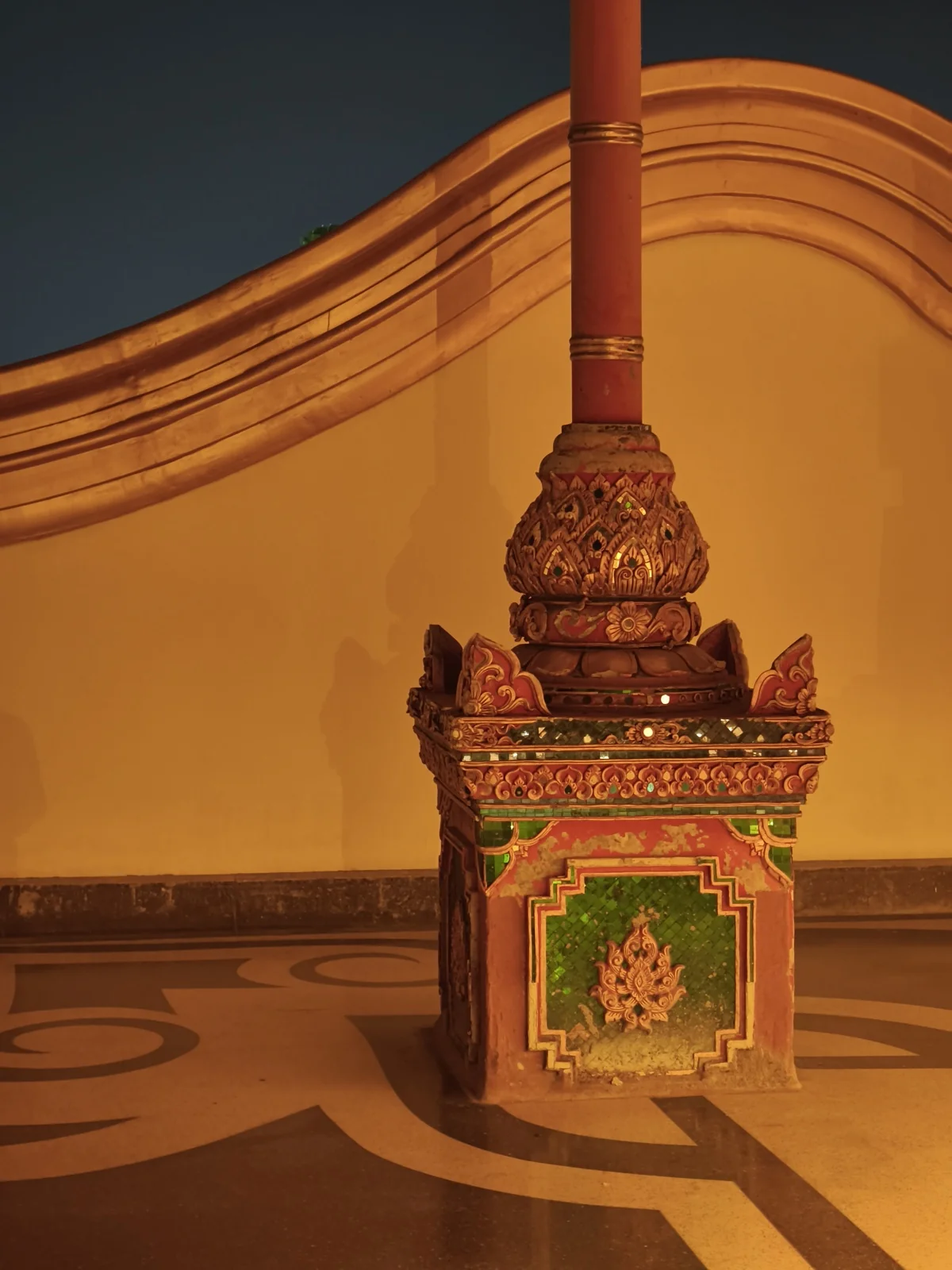
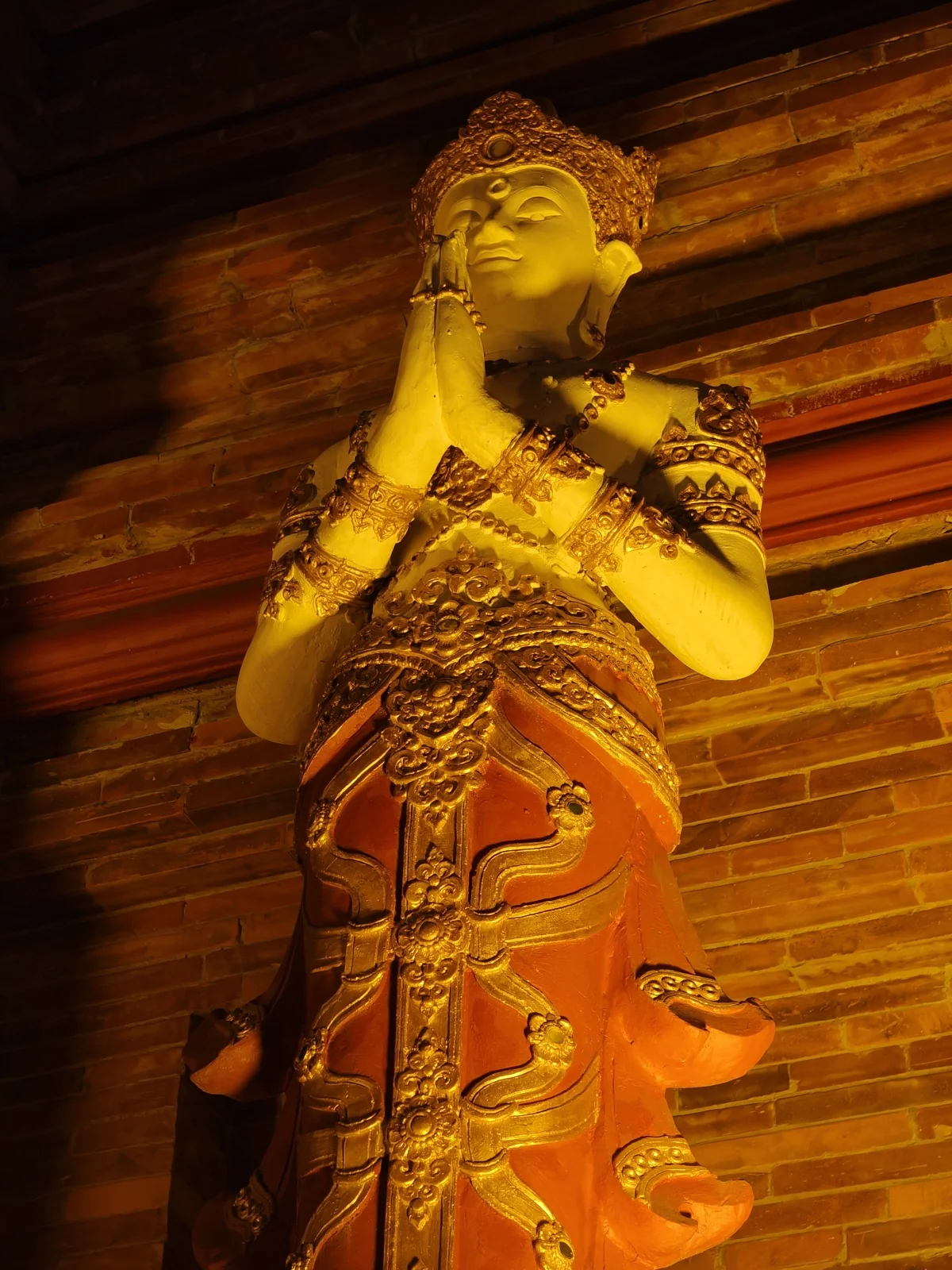
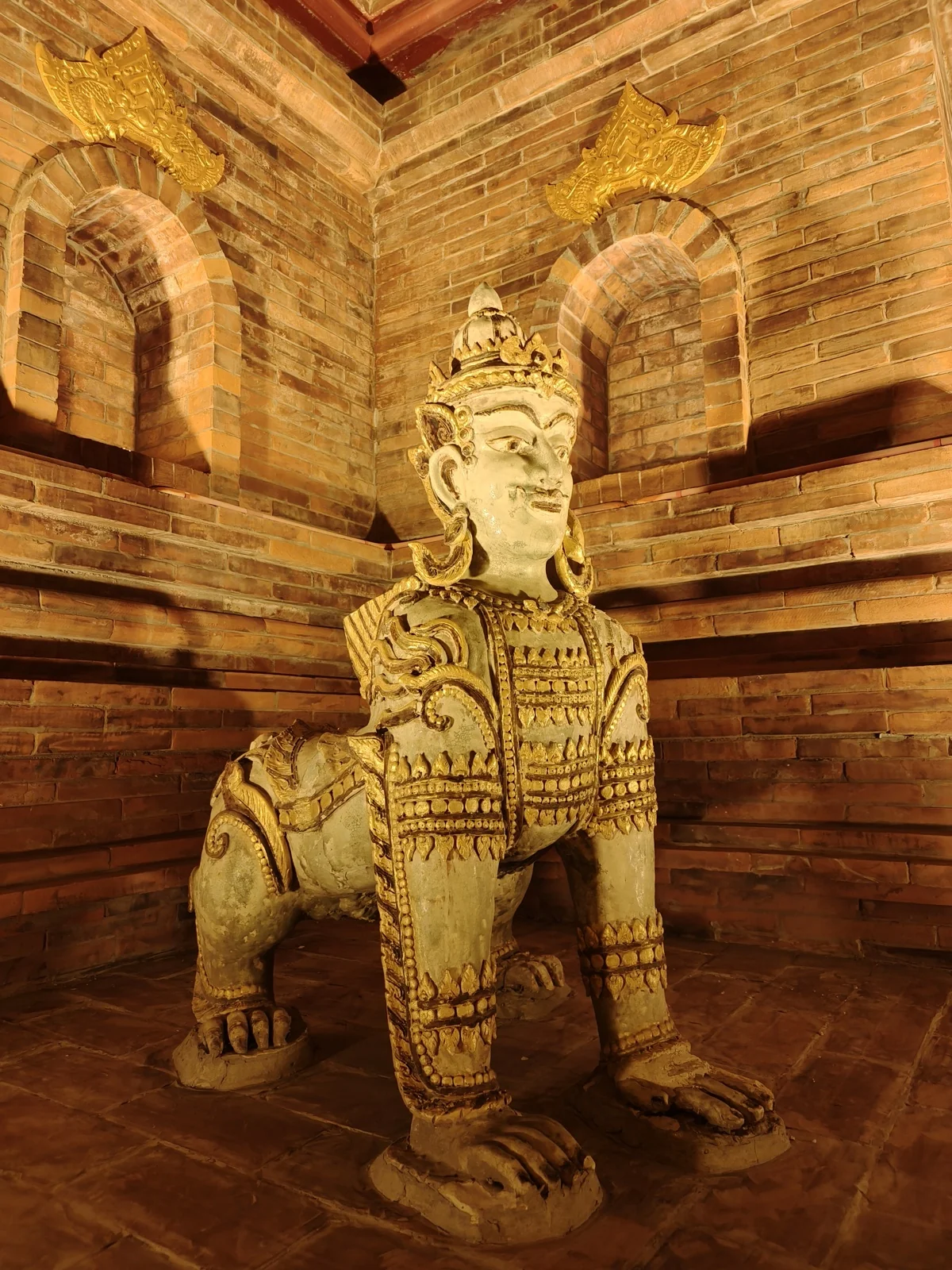
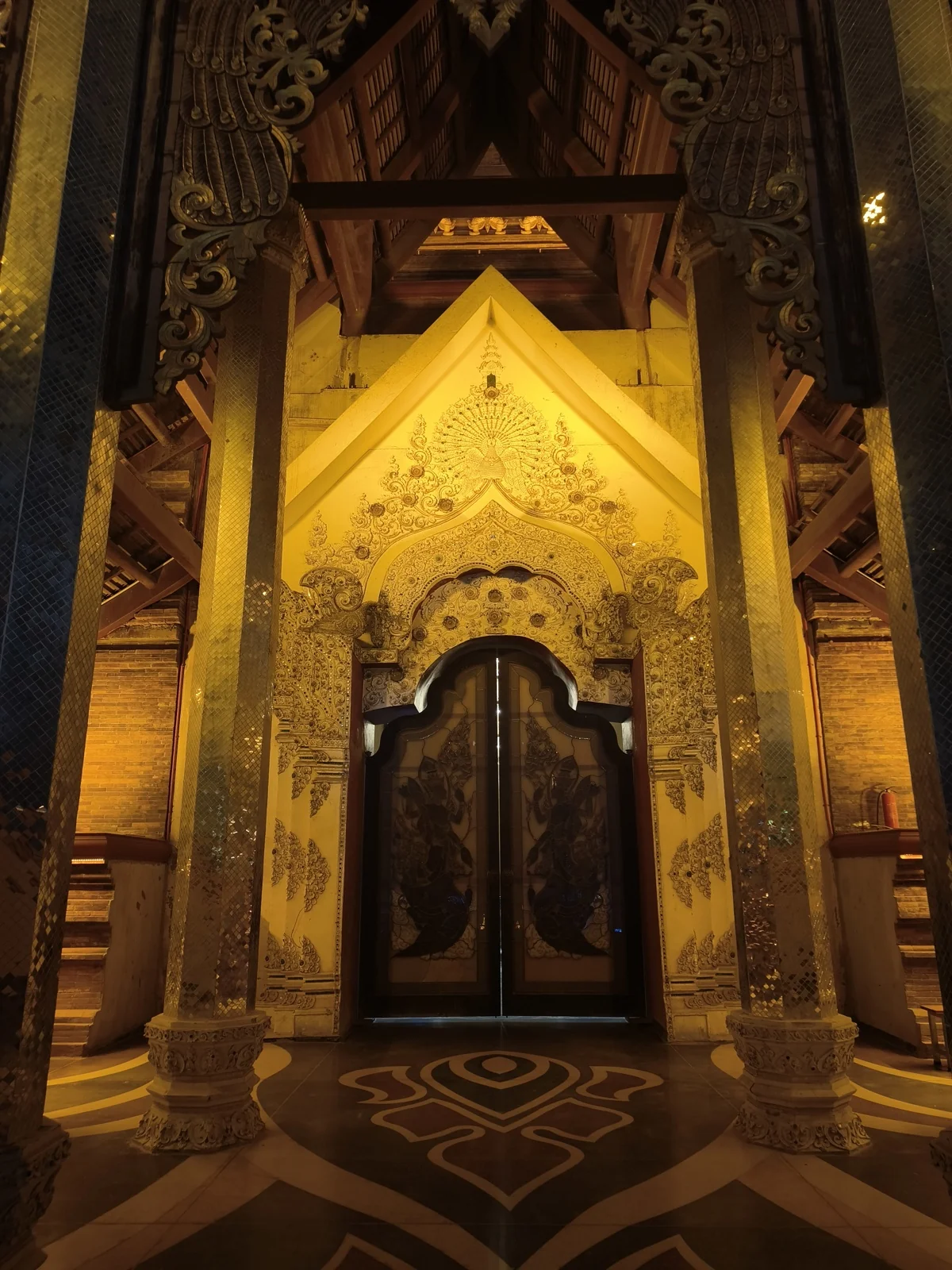
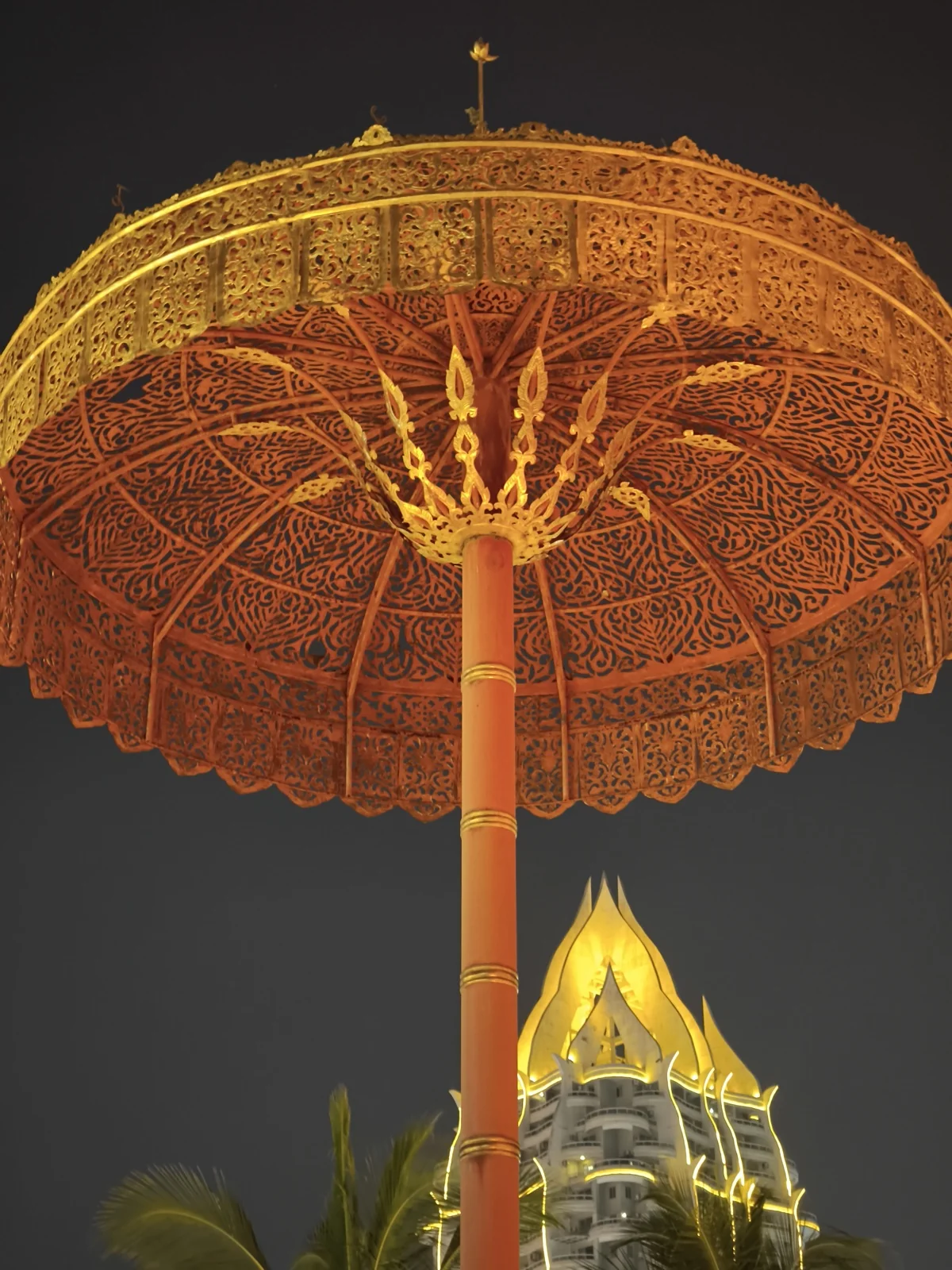
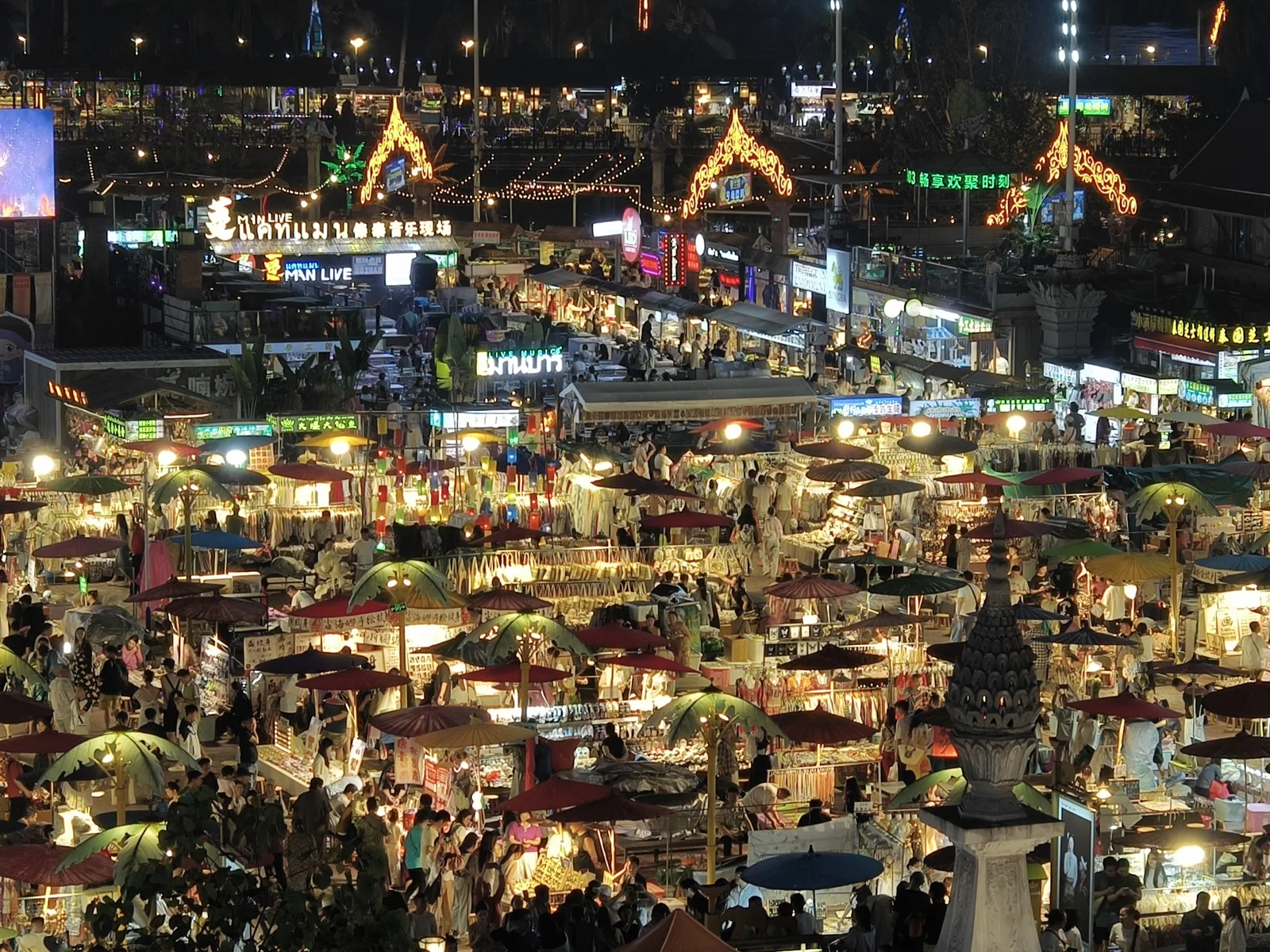
The Grand Golden Pagoda serves as the commanding vantage point of central Gaozhuang, looking out over the sprawling Starlight Night Market packed with bustling energy.
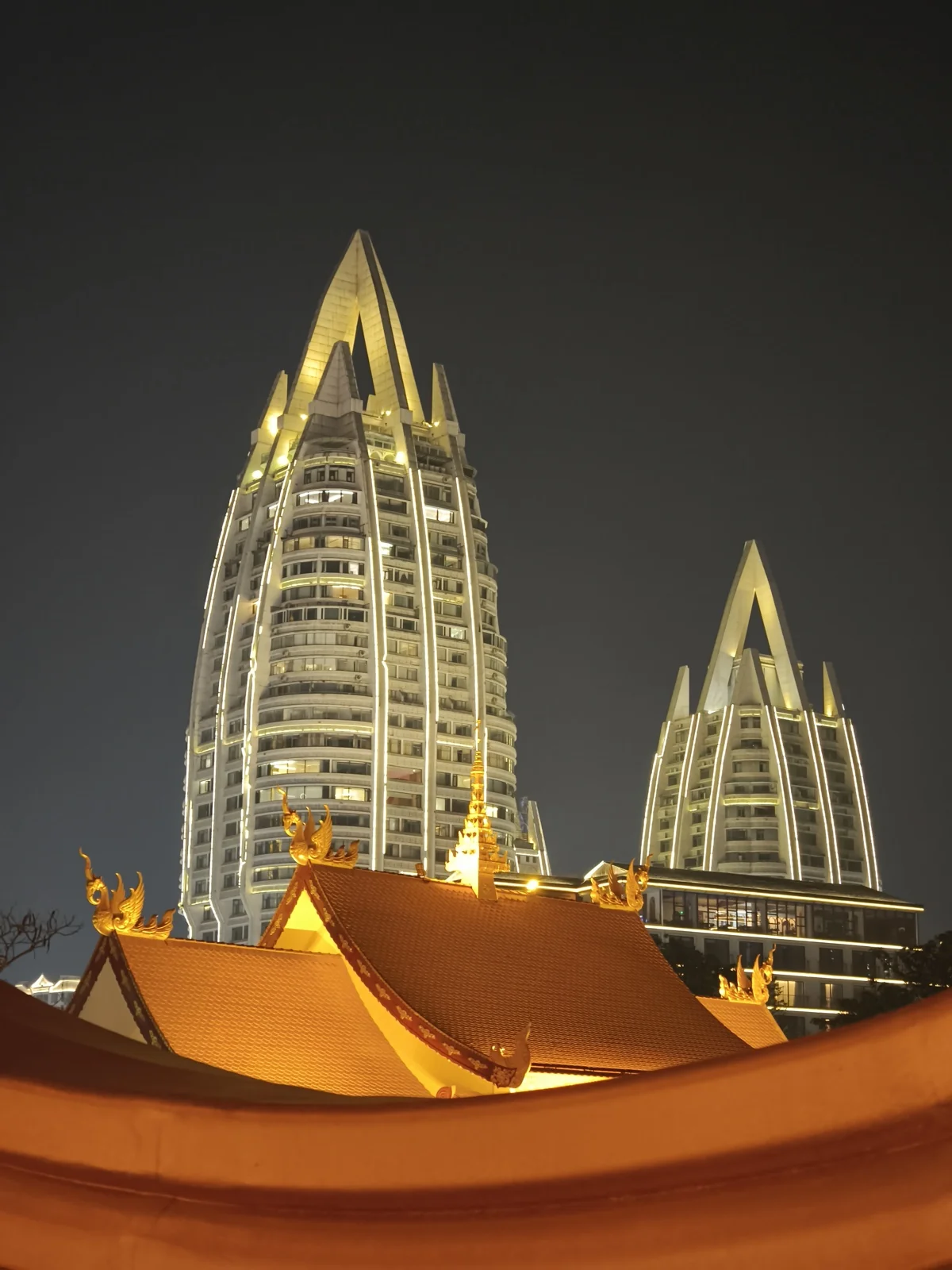
Around Gaozhuang’s perimeter stand clusters of strikingly designed luxury hotel towers, which frequently serve as iconic visual landmarks for Xishuangbanna tourism.
Day 3: Ancient Villages & Buddhist Temples
Mandiu Ancient Village
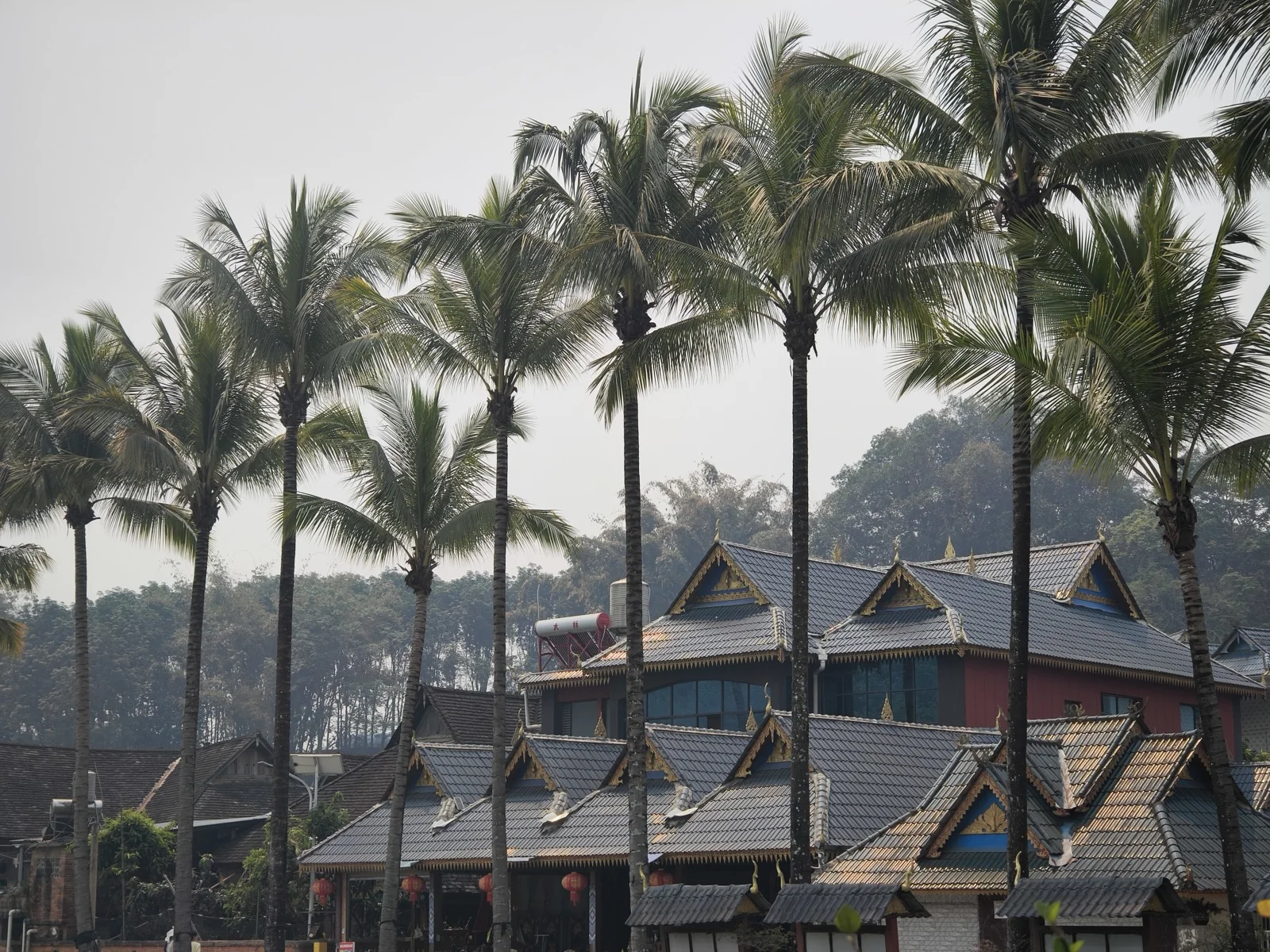
Mandiu was a niche destination I specifically sought out: an authentic Dai ancient village rarely featured on standard tour routes, where one can observe genuine local community life.
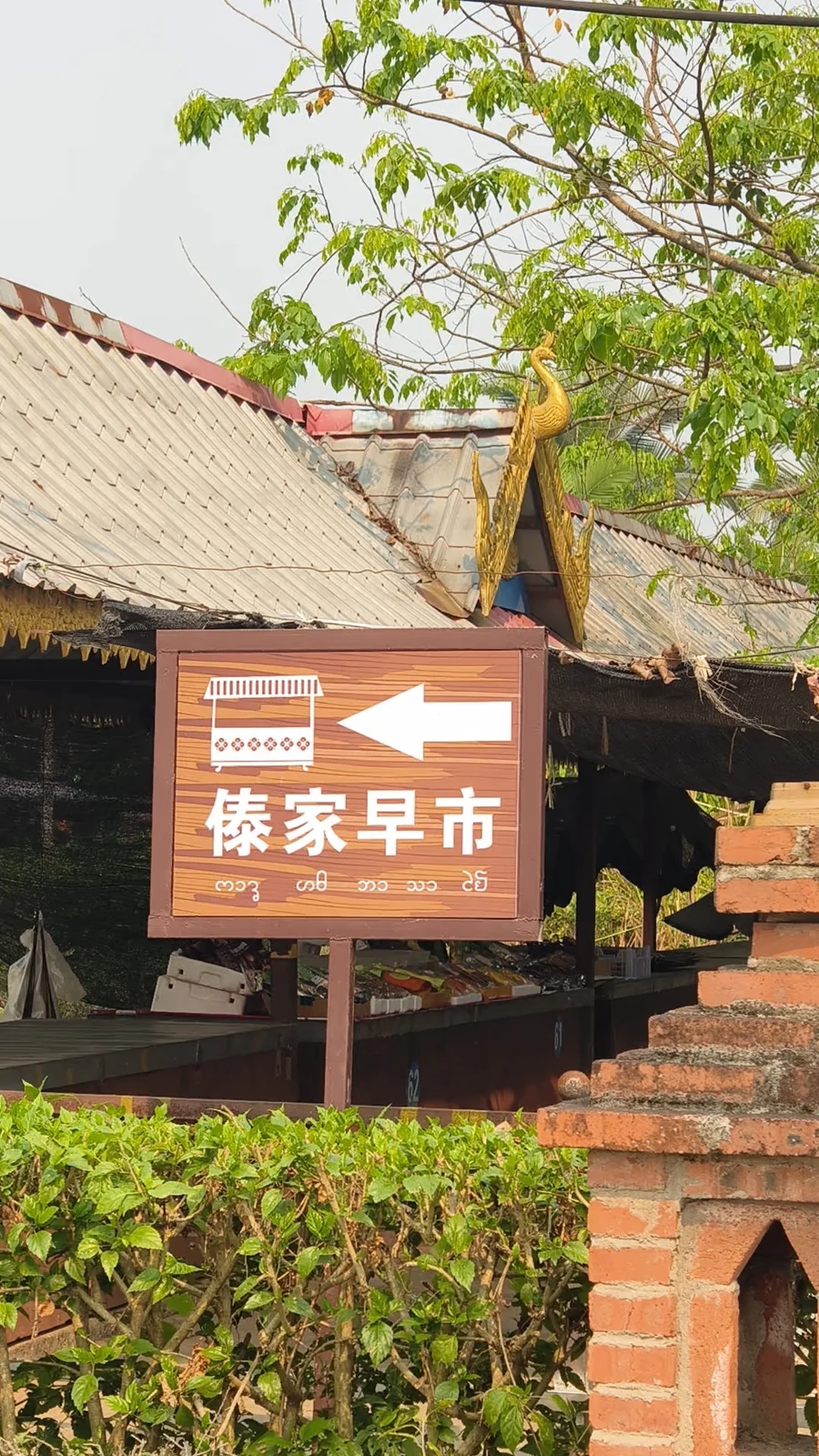
We arrived just as the village morning market was winding down and strolled through to take a look.
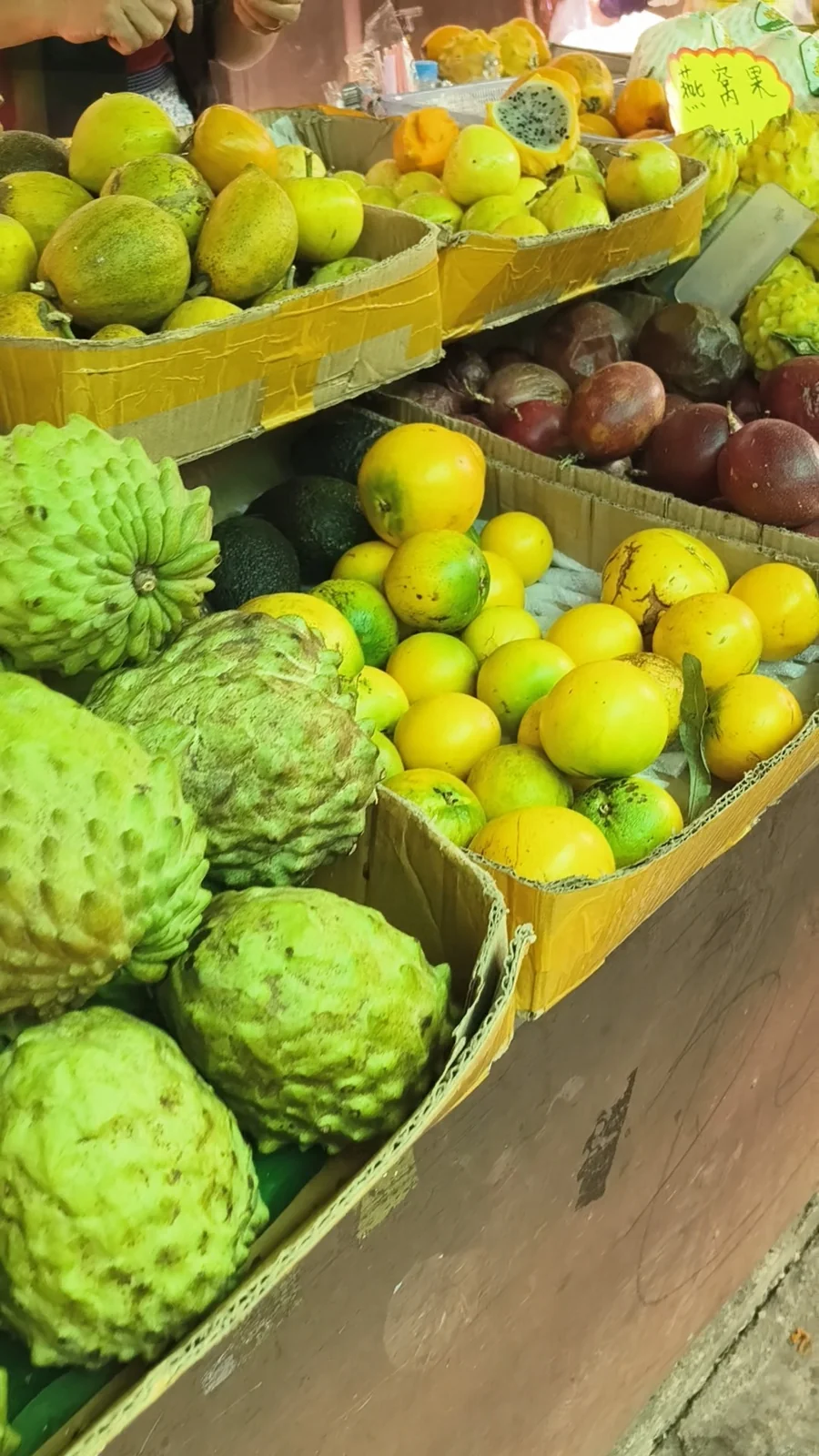
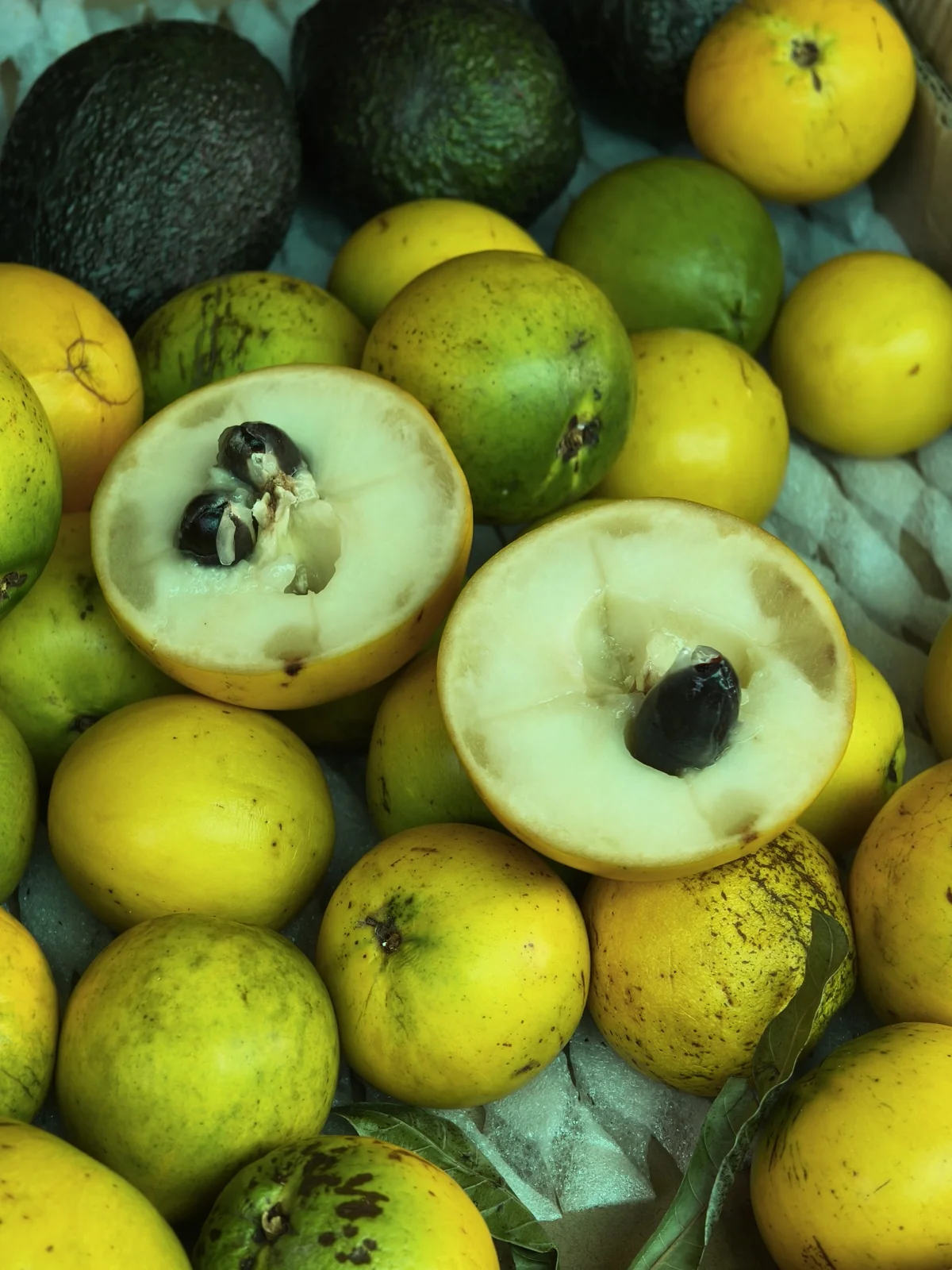
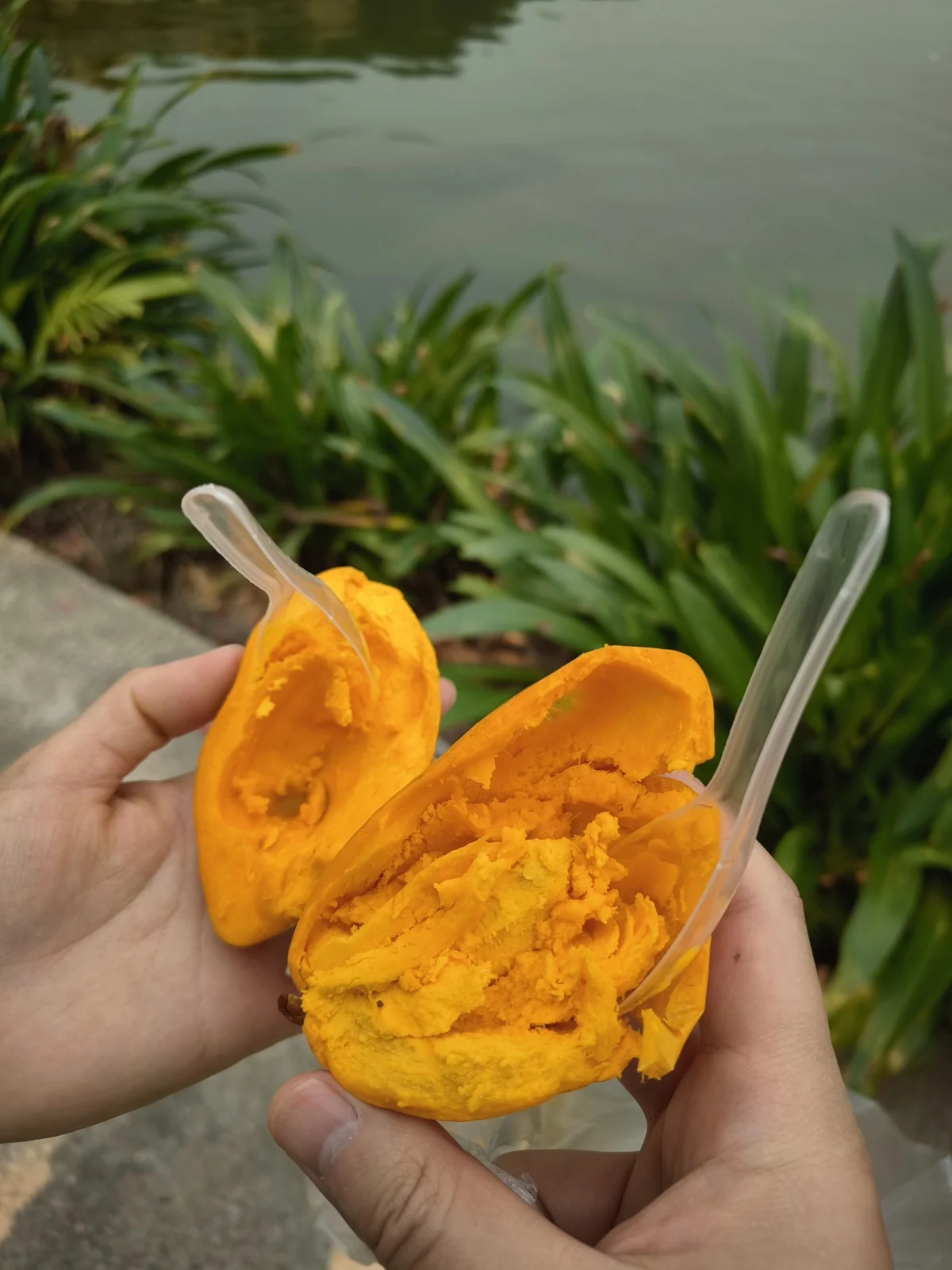
Our family lingered at a tropical fruit stall for a long time: canistel (egg fruit), star apple (cainito), yellow pitaya (bird’s nest fruit), sugar apple (sweetsop), and sweet tamarind. We essentially turned it into an impromptu tropical fruit buffet.
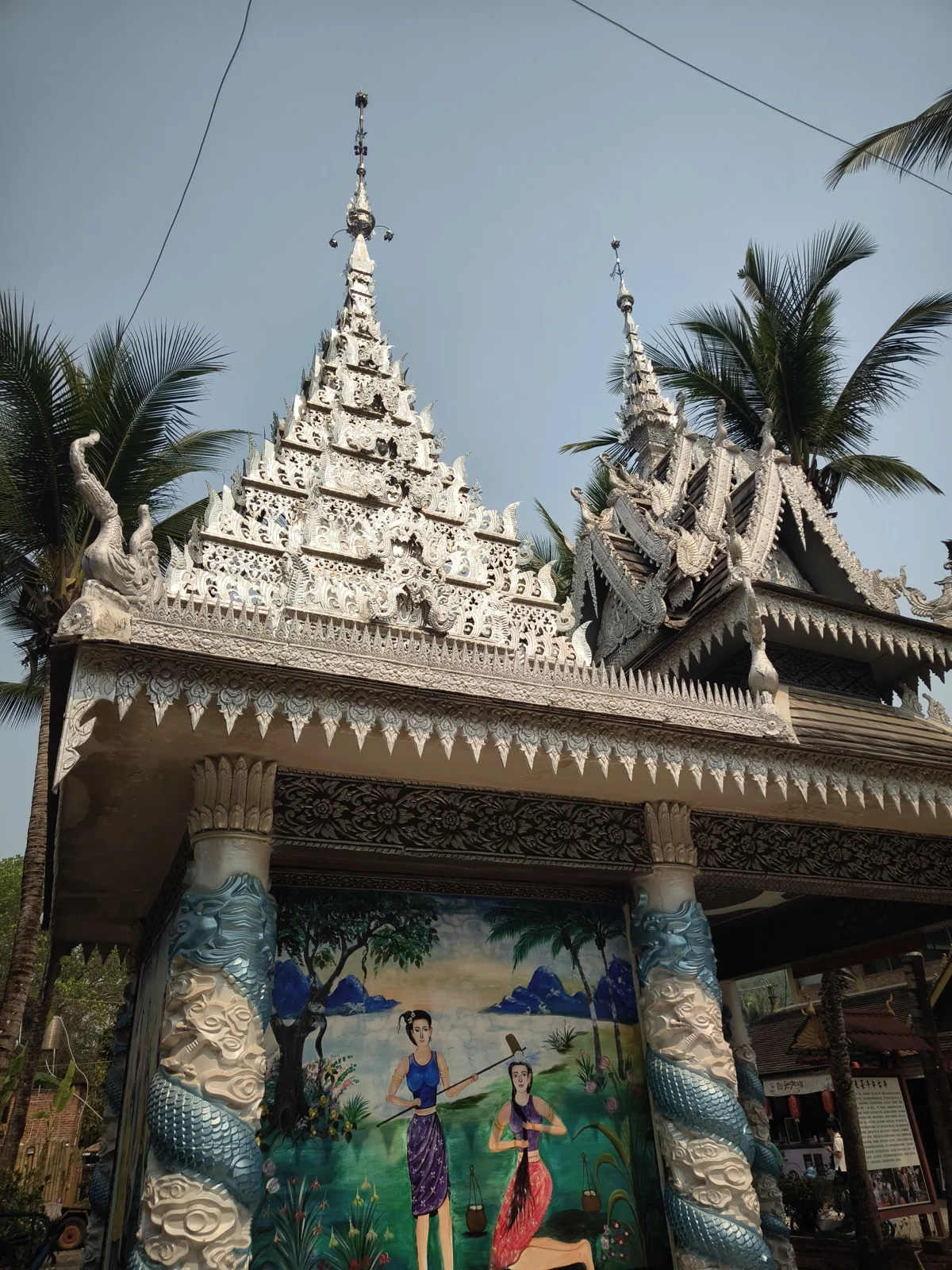
Within the village stands an ancient communal well; the wooden pavilion sheltering it is clearly a recent reconstruction, yet it retains faithful traditional proportions and character.
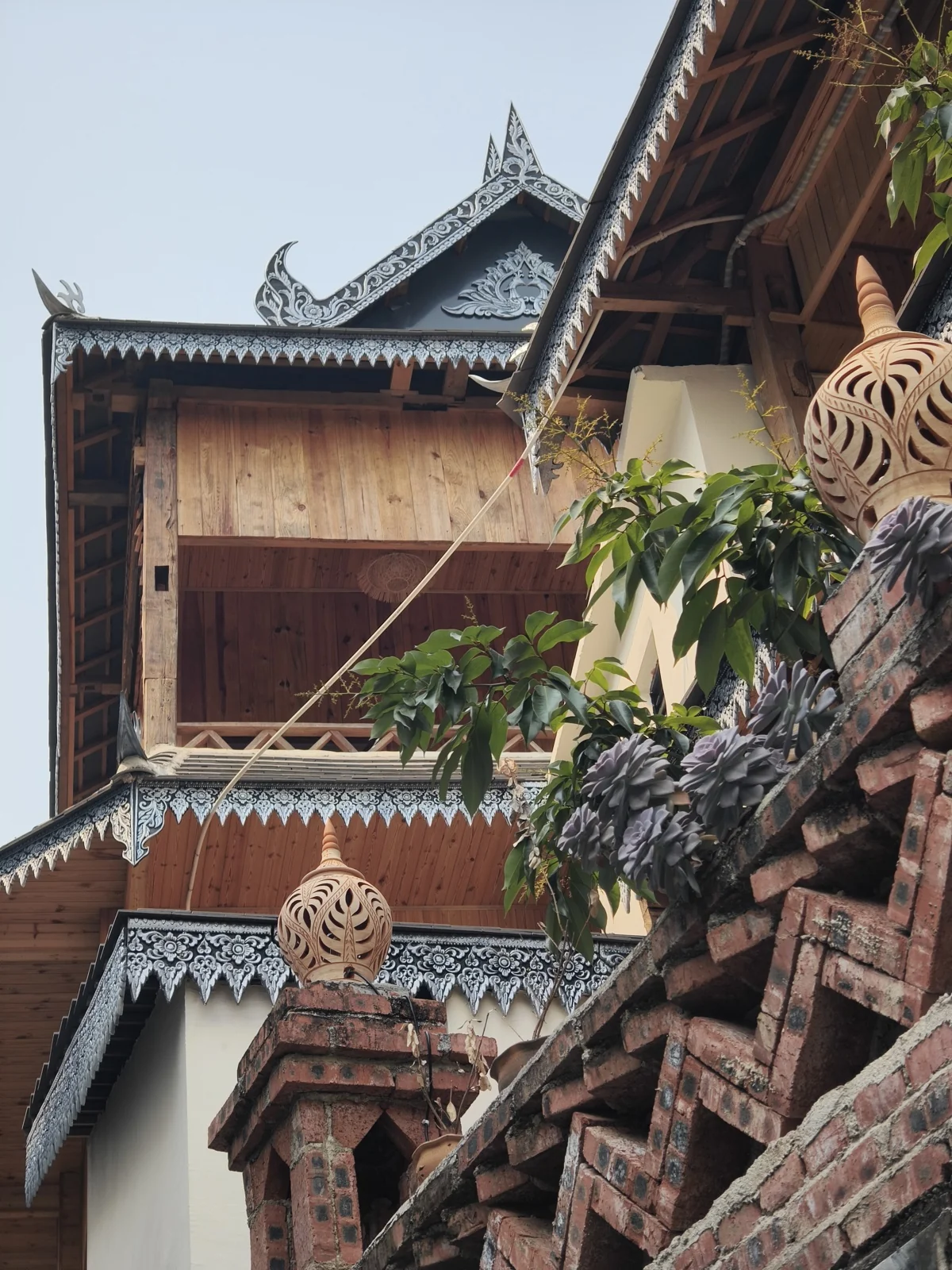
While termed an “ancient village,” it is not isolated deep in virgin mountains; local residents embrace modern conveniences. Several traditional homes have been converted into local eateries and homestays, and I spotted several more undergoing interior renovation.
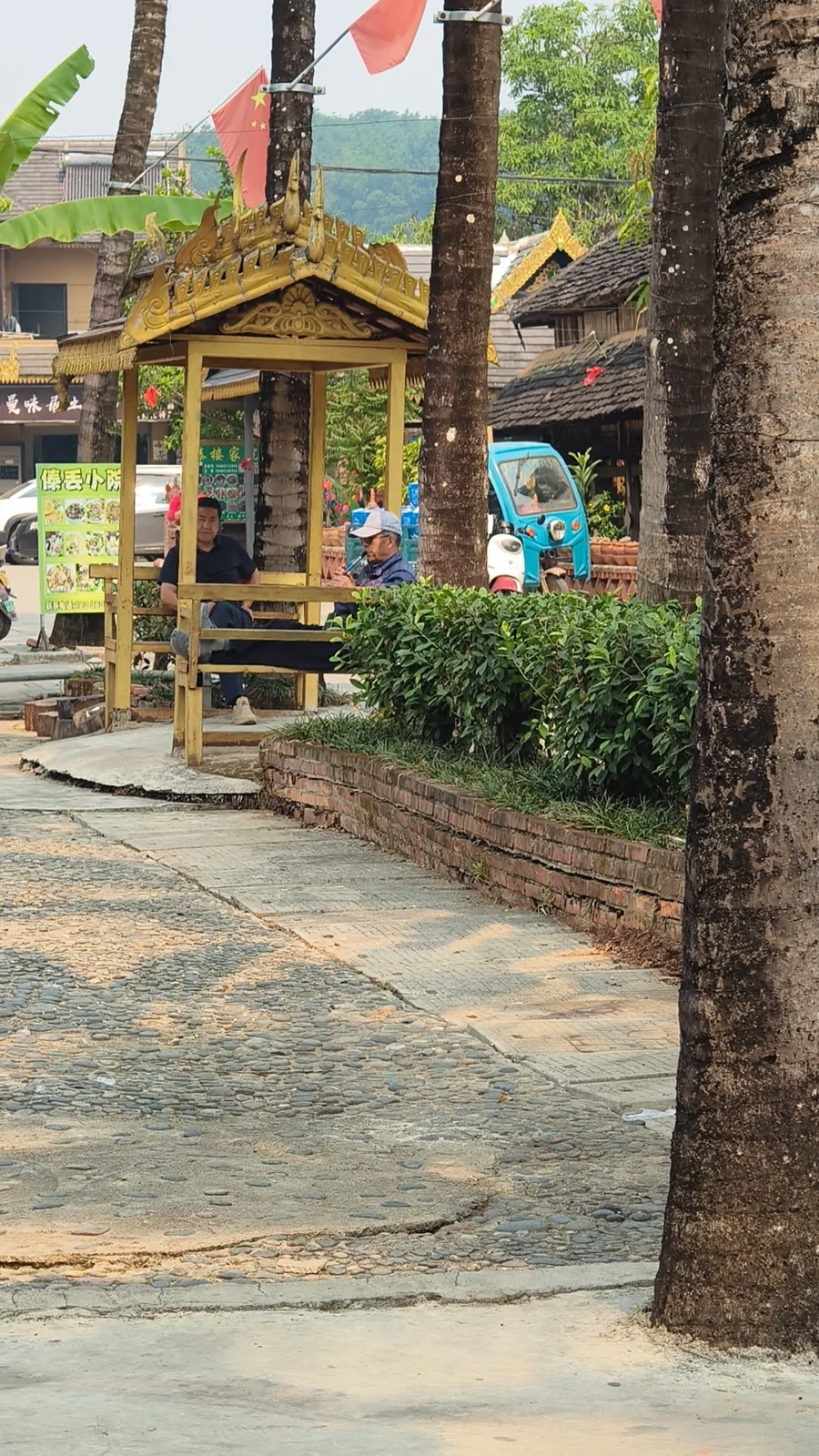
A timeless snapshot of everyday life: a village elder sat quietly in the distance playing a traditional bamboo reed pipe.
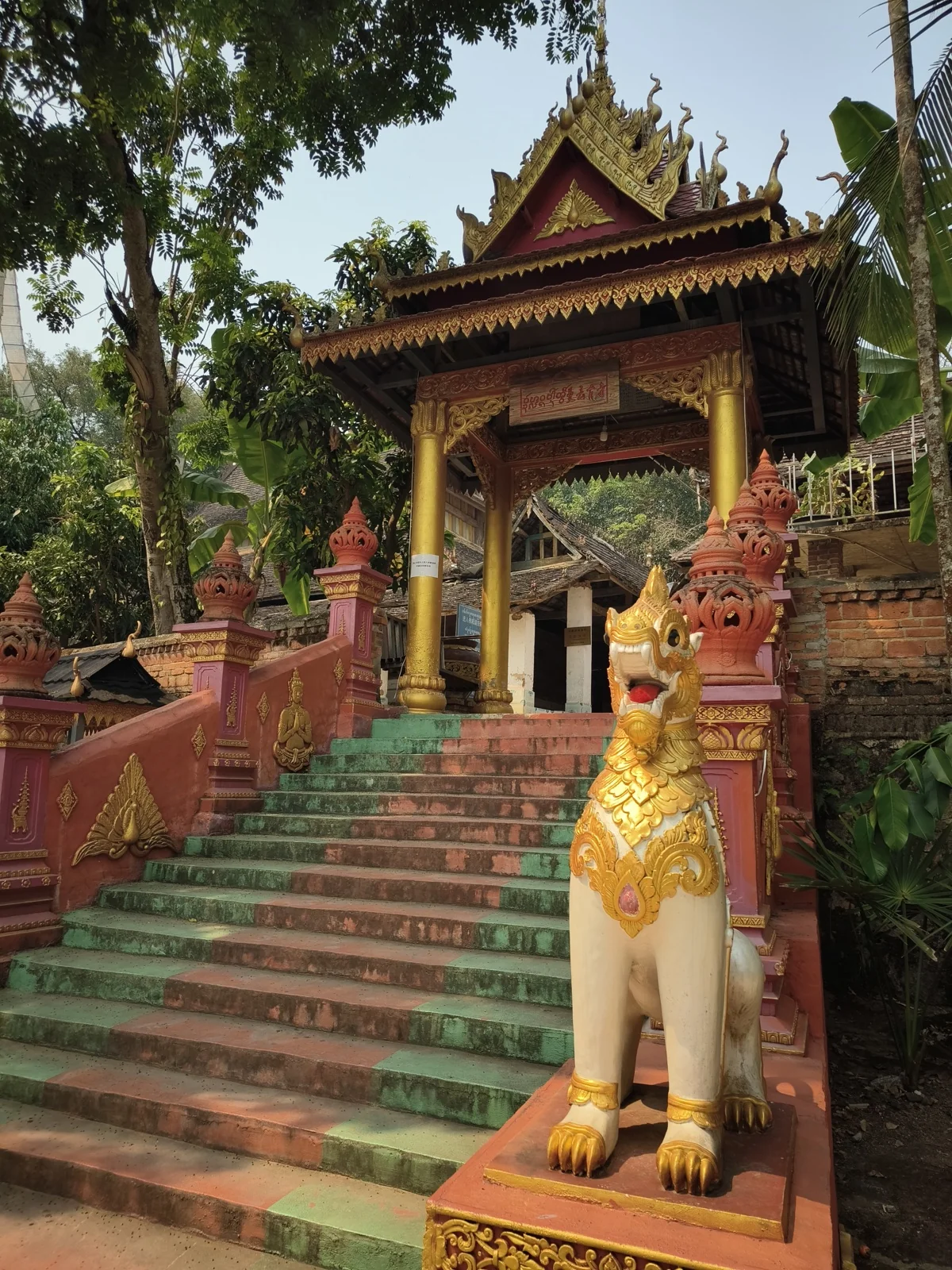
Ascending further up the hillside path brings you to the ancient temple at the village’s highest point.
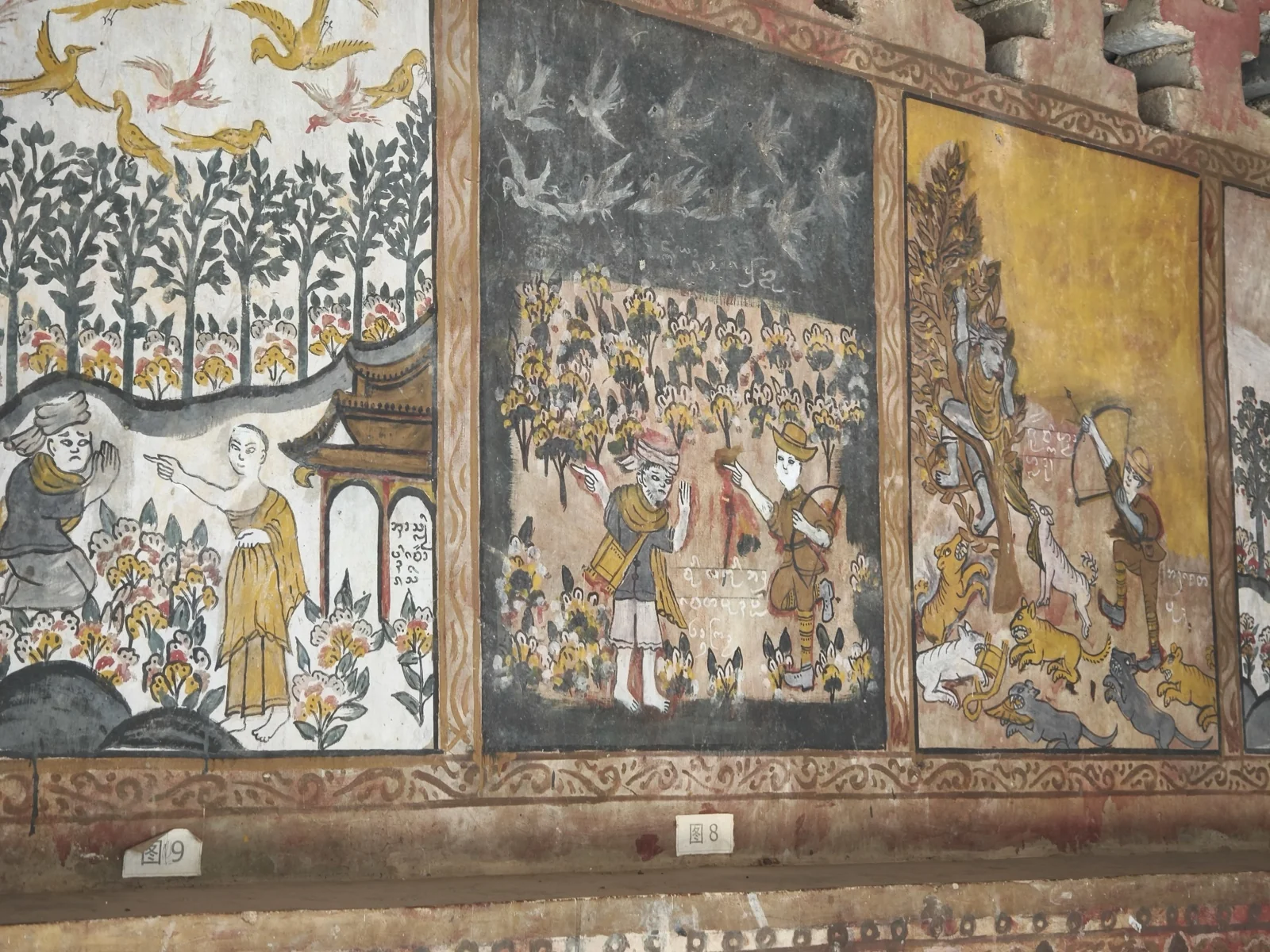
The temple’s exterior walls feature intriguing religious murals. Their artistic style diverges sharply from typical Han Chinese Buddhist frescoes, evoking a visual aesthetic reminiscent of European medieval religious illustrations.
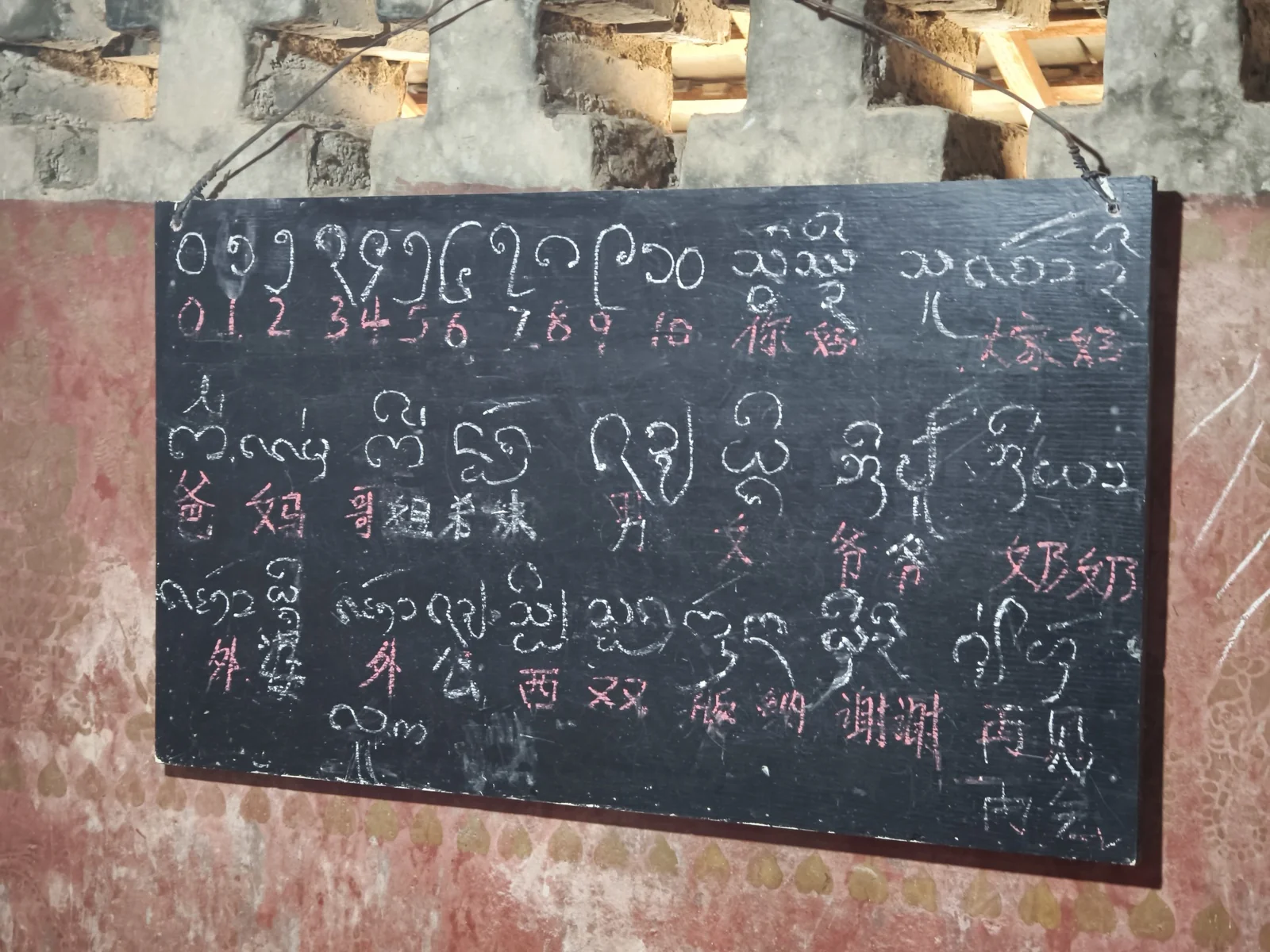
Inside the temple stood a small chalkboard, presumably used for language instruction in either Dai script or Mandarin.
Dai script utilizes rounded loops and hooks similar in appearance to Thai, yet the two scripts are clearly distinct. Although Dai and Thai share distant common linguistic roots, they diverged independently centuries ago; modern spoken Dai and Thai are completely mutually unintelligible today.
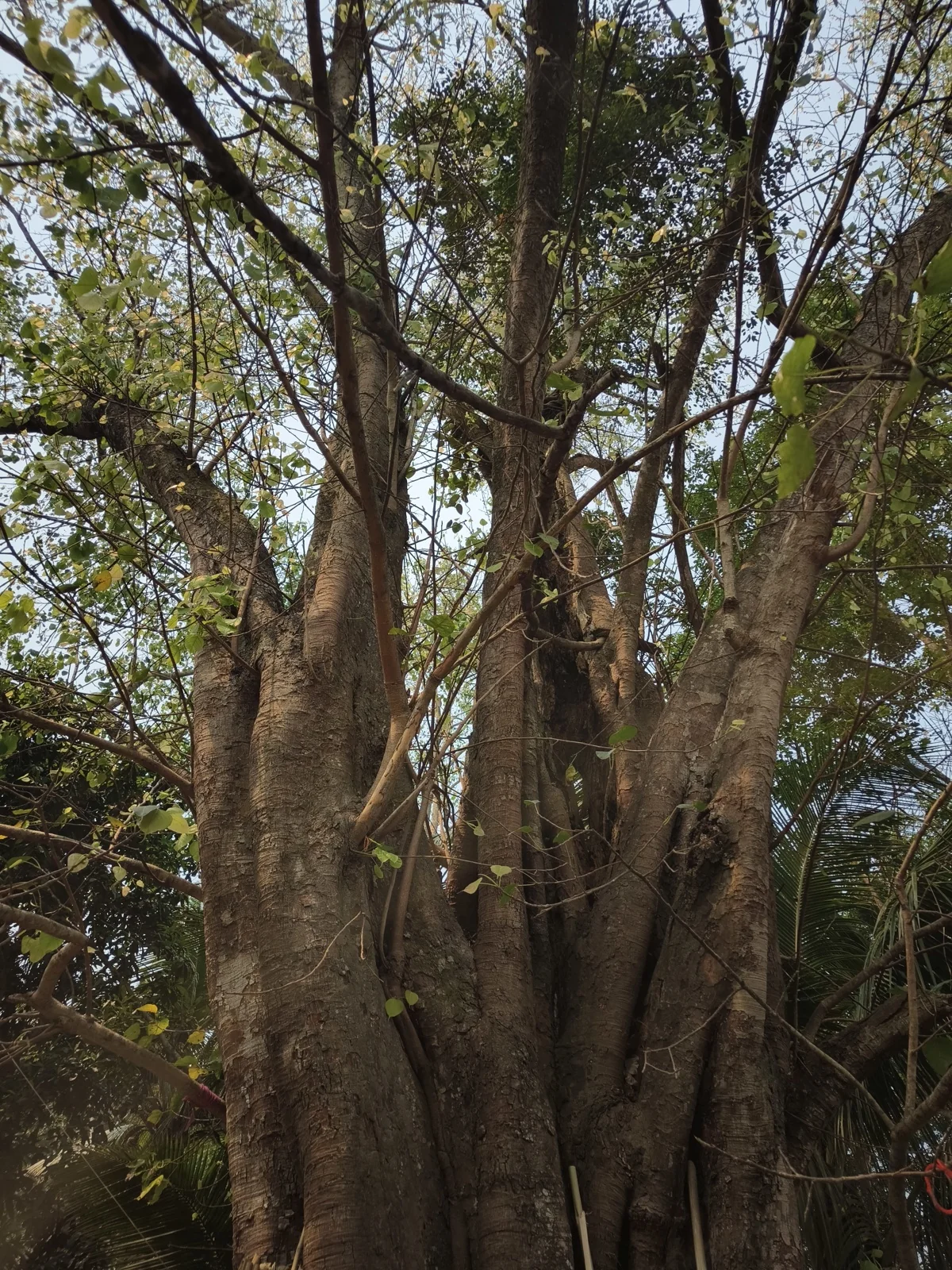
Outside the temple stands a venerable Bodhi tree. In Buddhist symbolism, the Bodhi tree represents a gateway to transcendent realms; its sprawling canopy naturally instills a profound sense of inner peace.
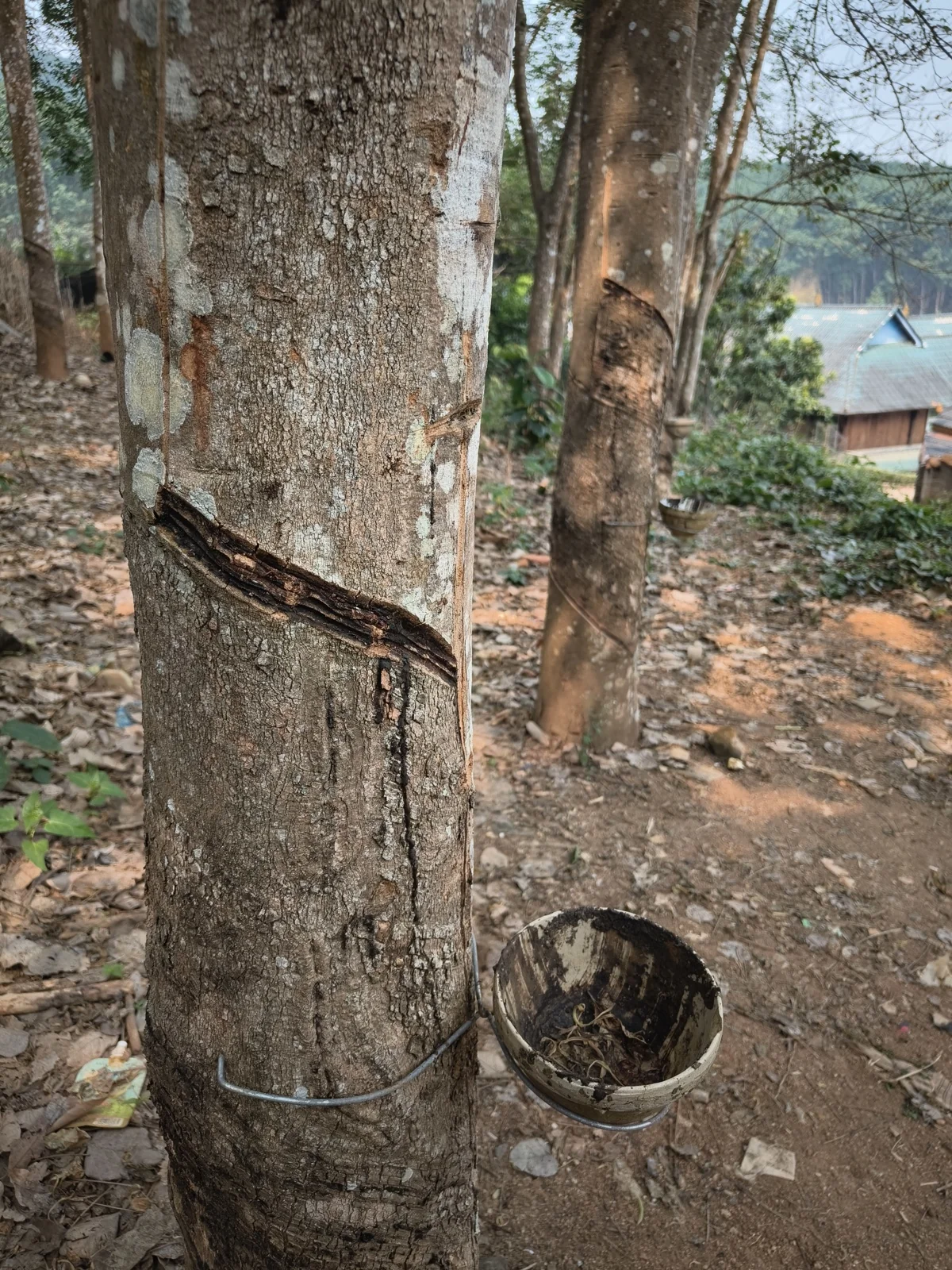
Adjacent to the temple lies a small rubber tree grove. My daughter frequently asks how everyday objects are manufactured, and I typically break down their constituent raw materials and origins. Here, she finally witnessed firsthand the raw botanical source of car tires and pacifiers.
The village is compact, and walking down from the temple brought us back to the entrance in just a few minutes. With virtually no other tourists around, the peaceful atmosphere was palpable:
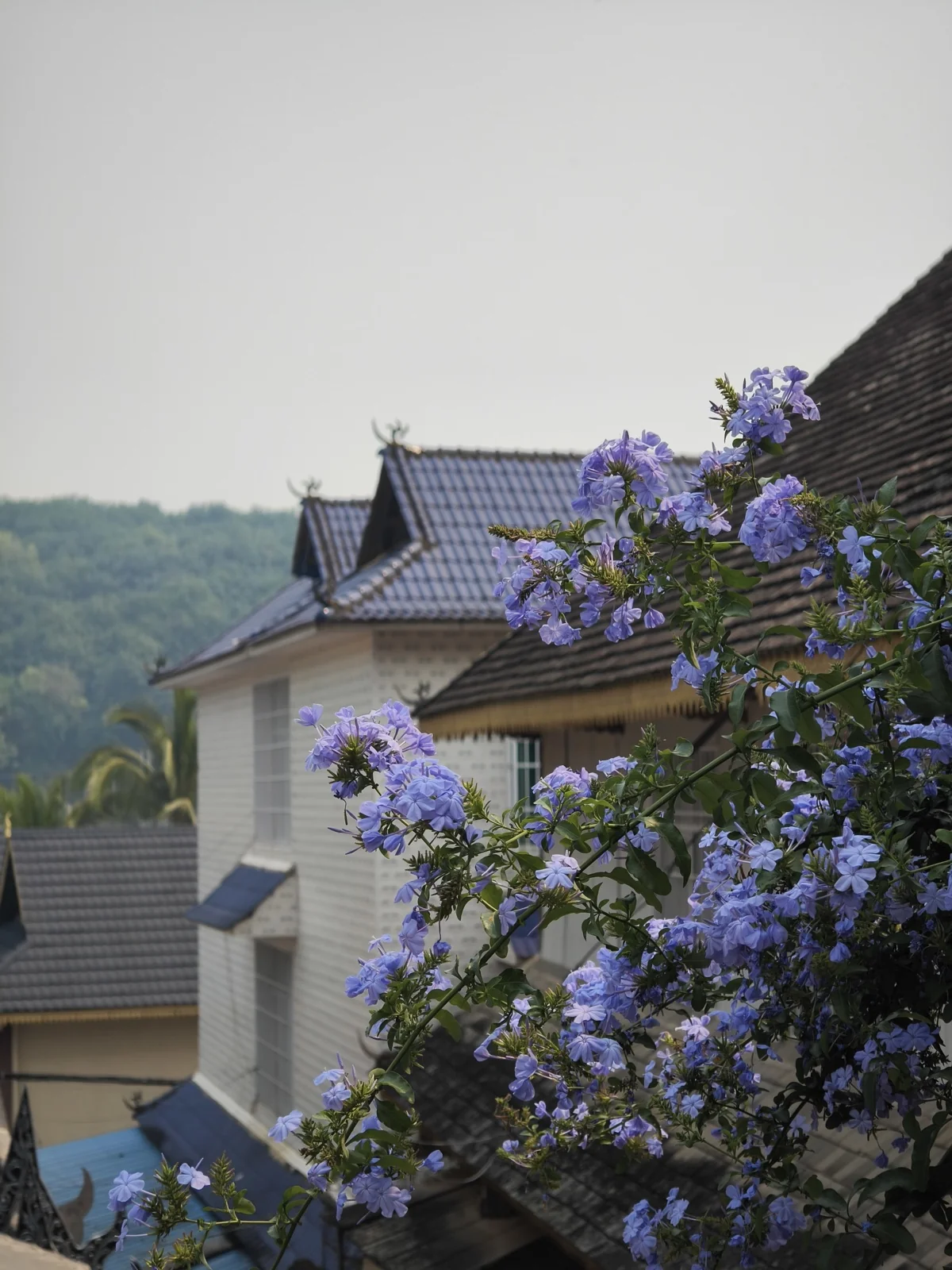
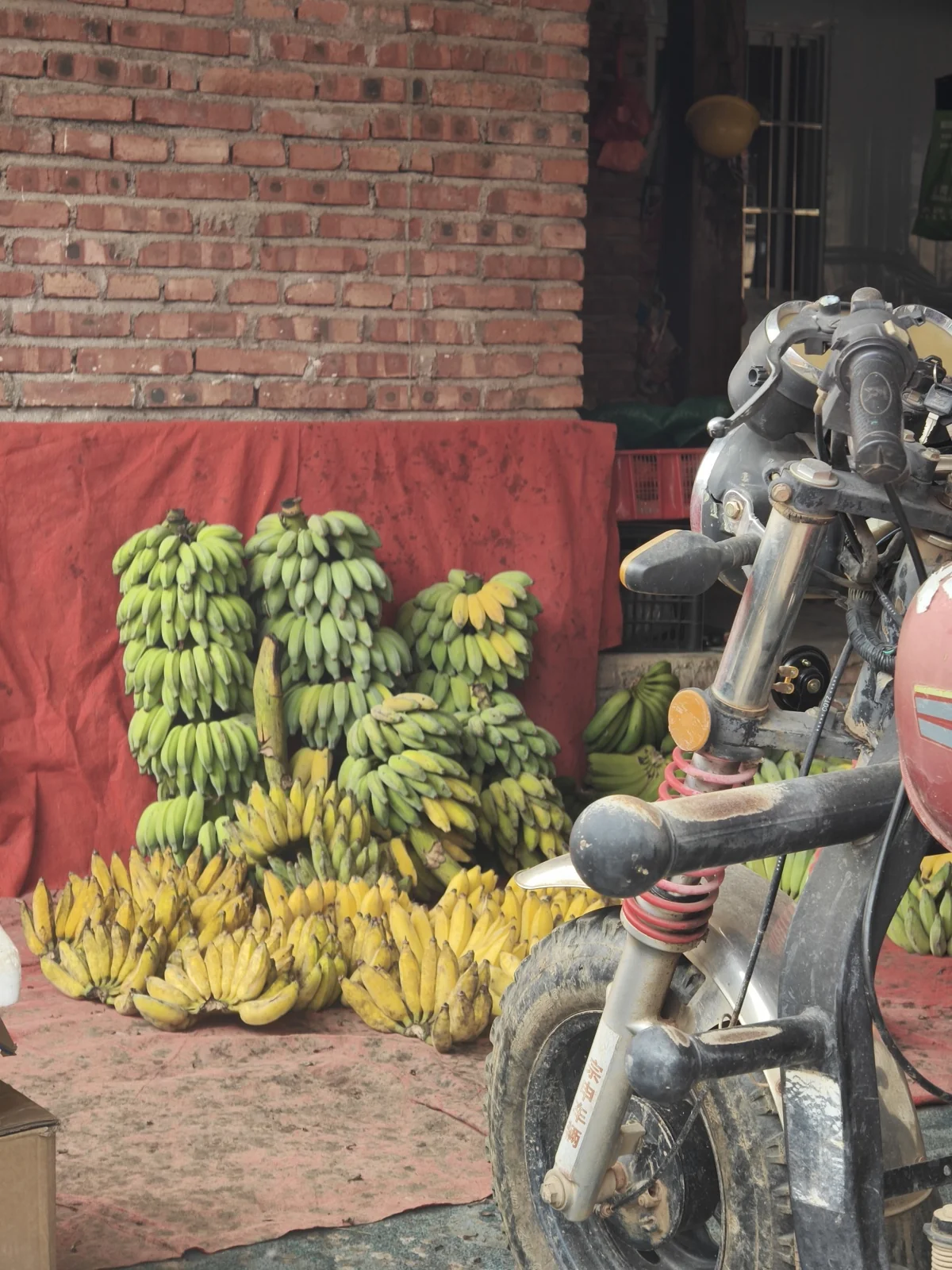
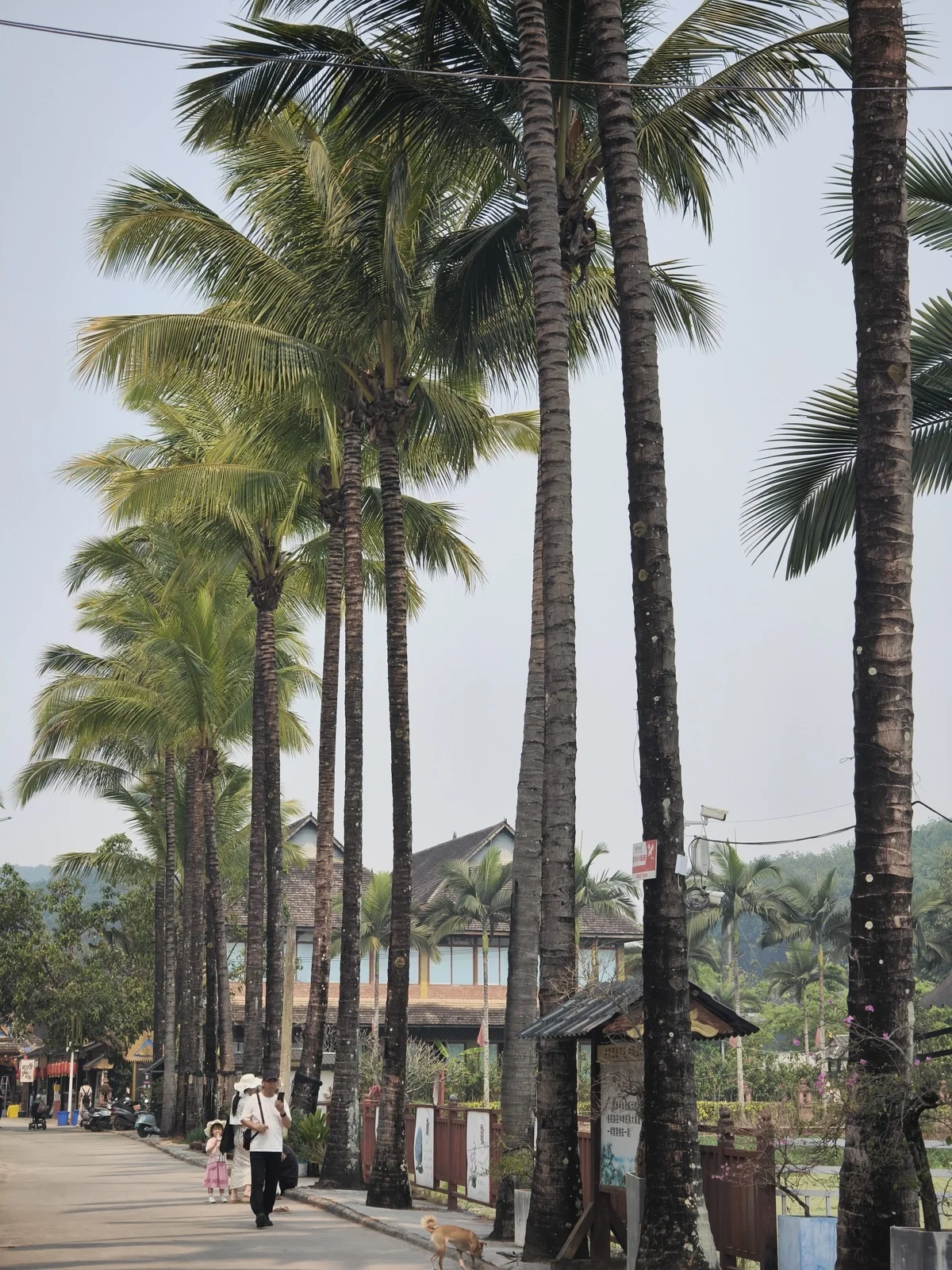
Prajna Stupa
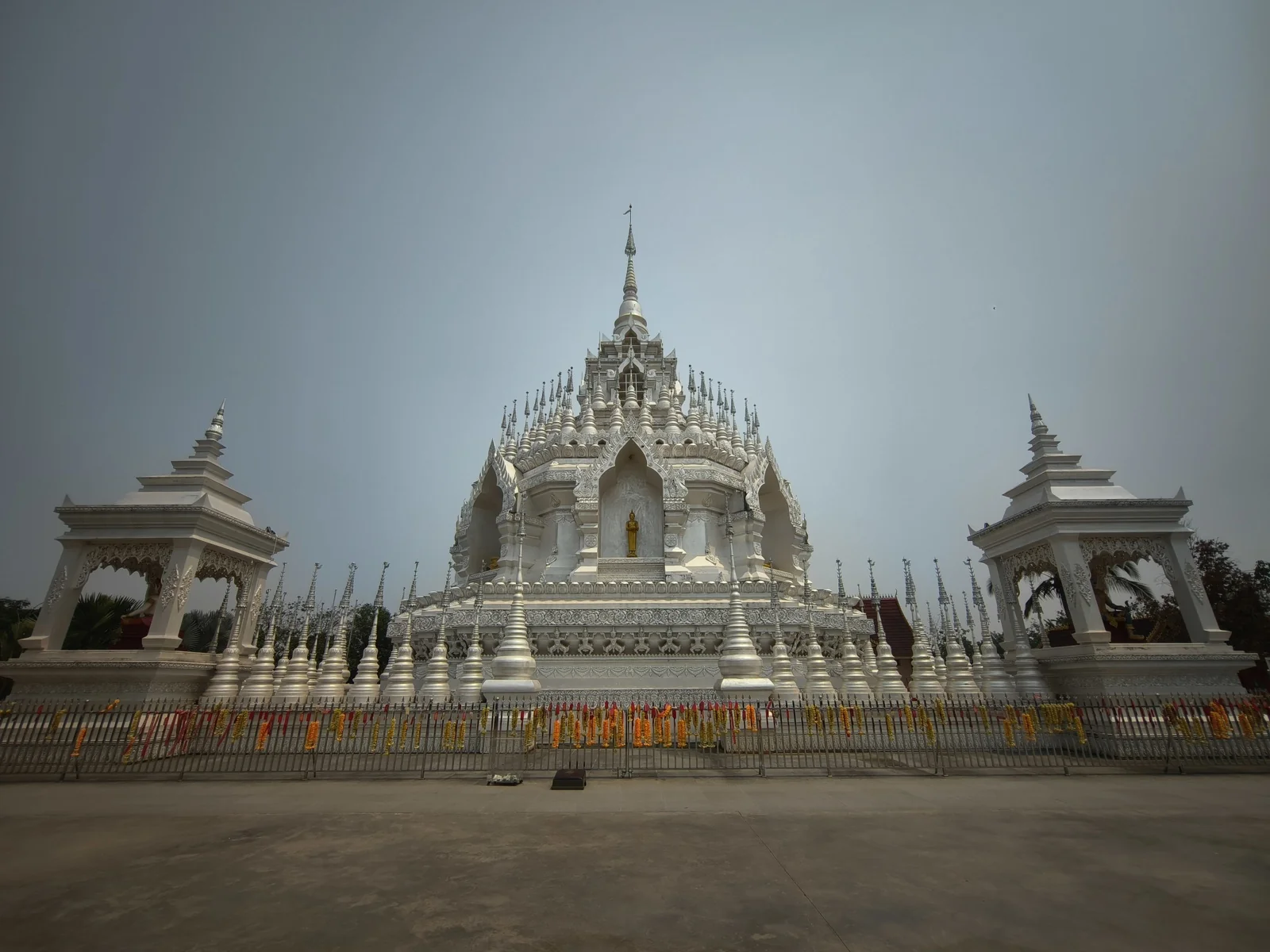
The largest silver-white stupa in Jinghong City.
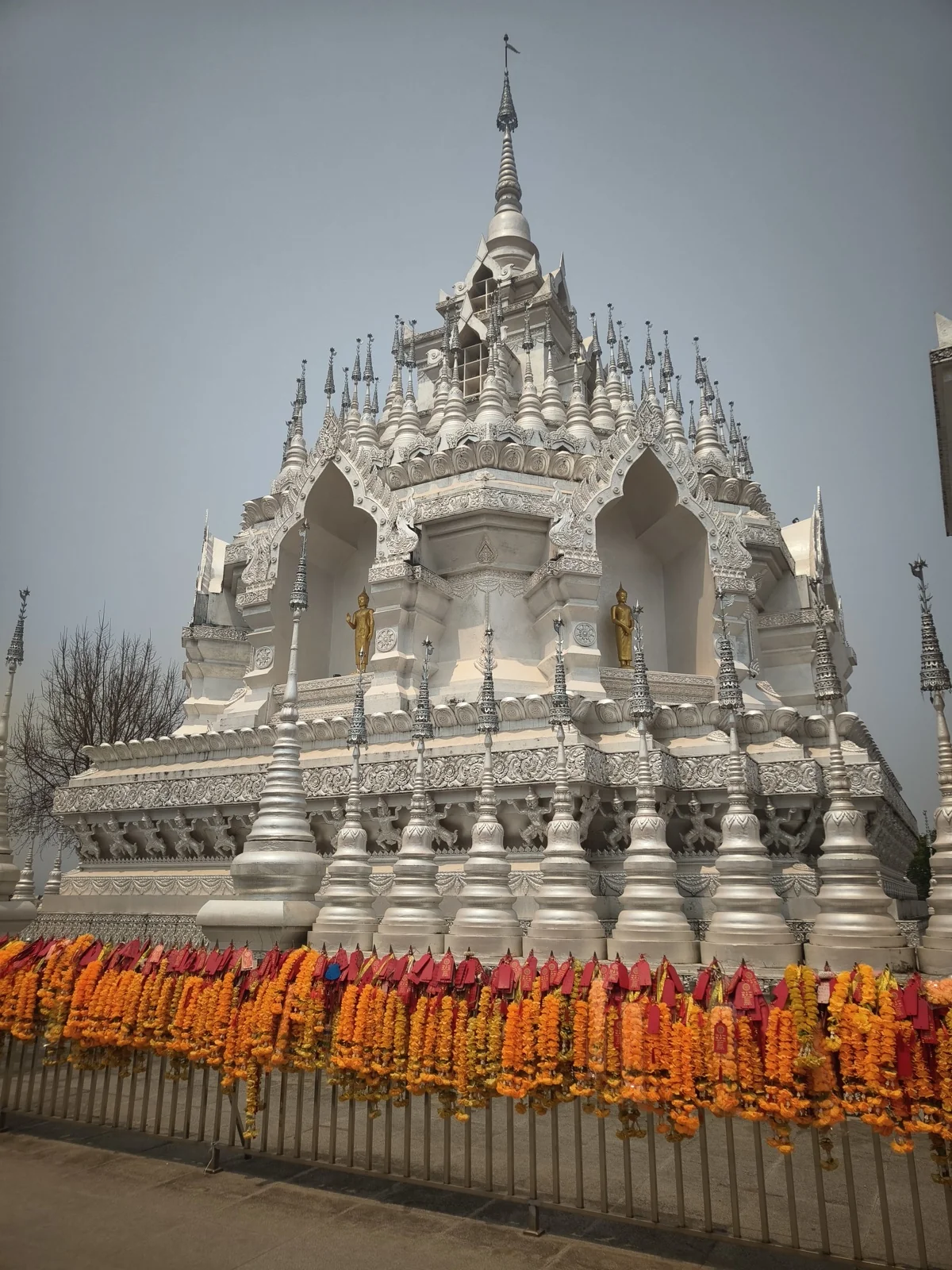
This is a standalone monument rather than a conventional temple complex; there are no accessible interior halls, only the monumental stupa itself.
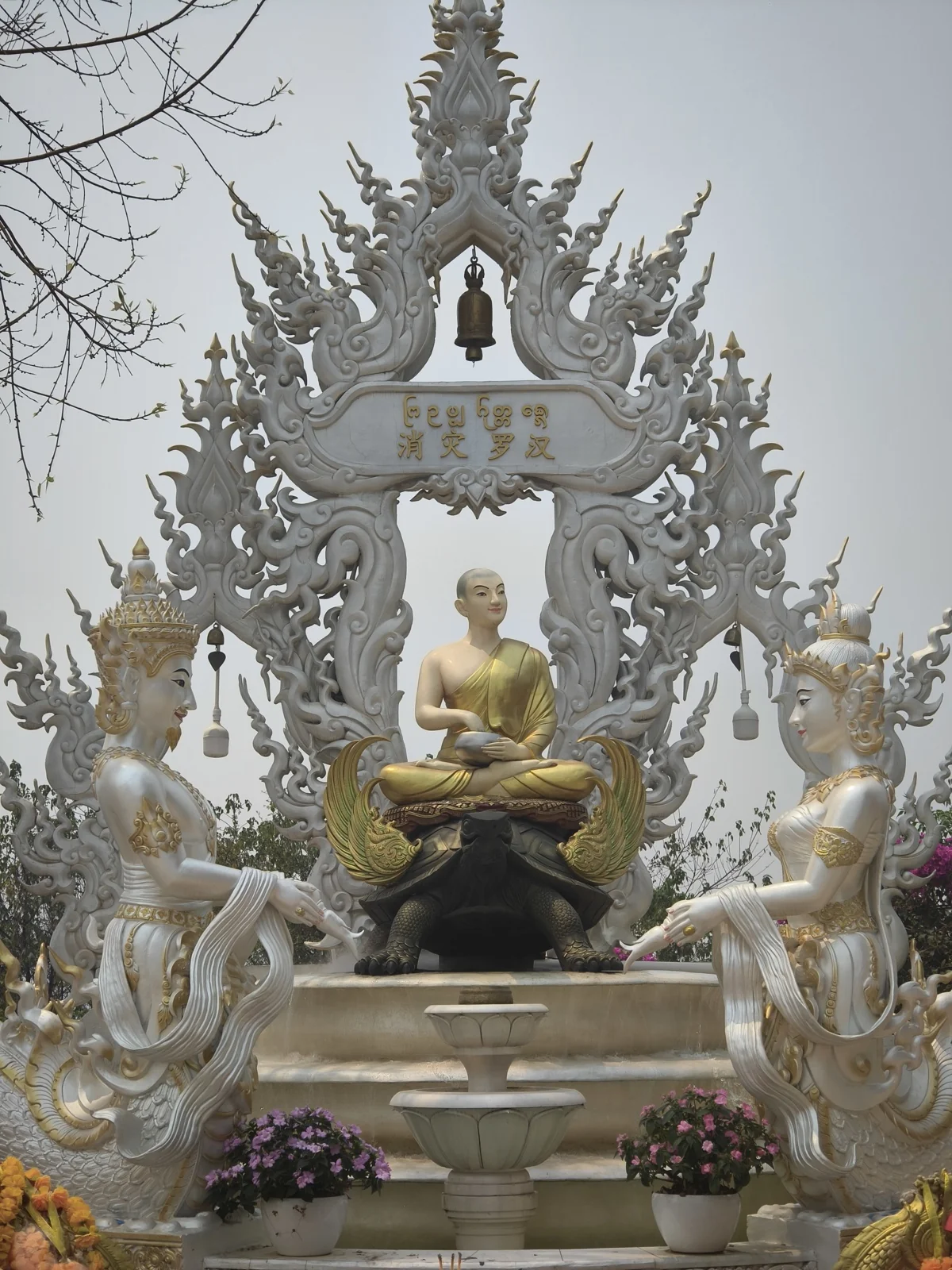
The central stupa is encircled by independent smaller deity statues and subsidiary shrines.
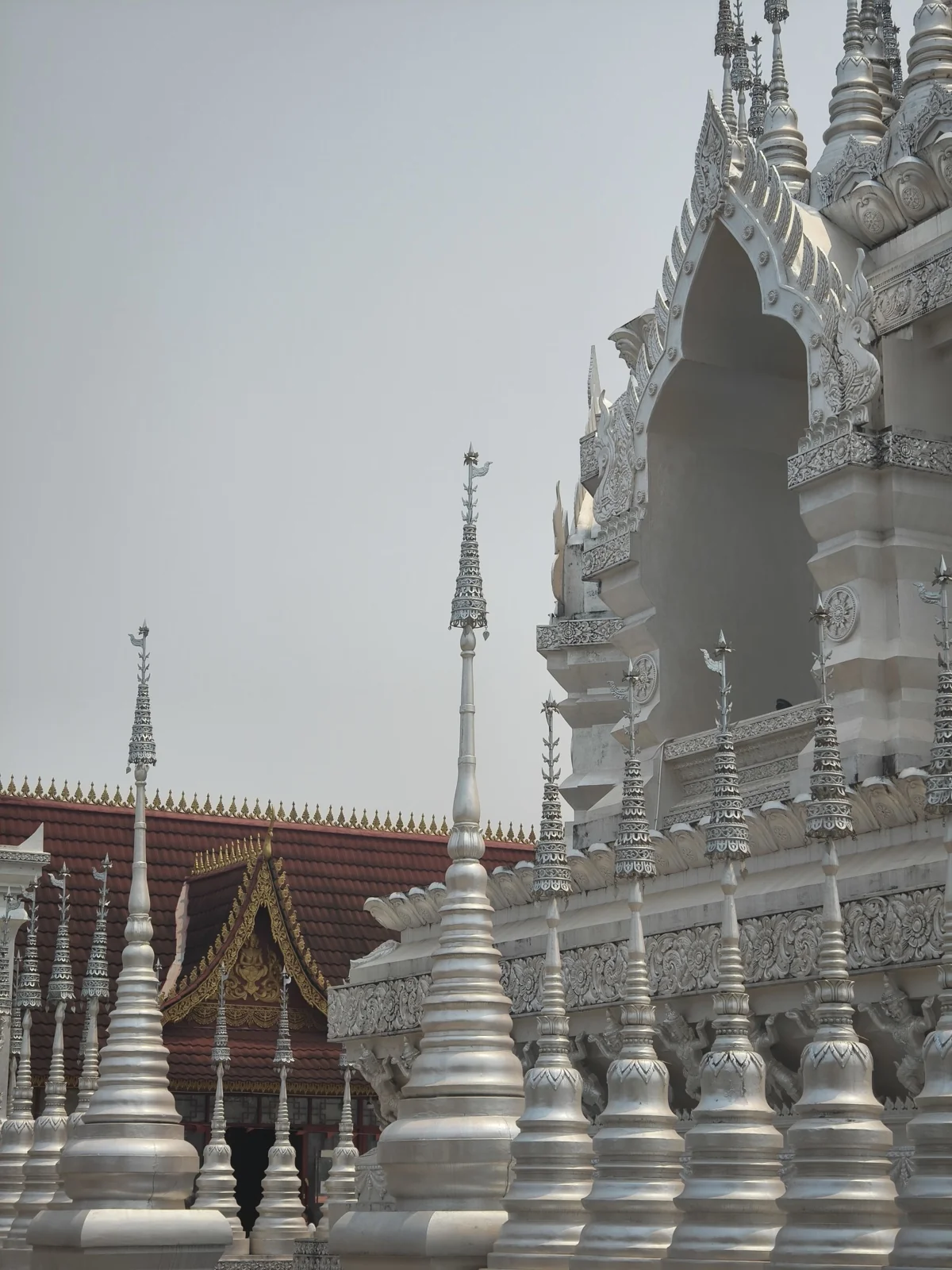
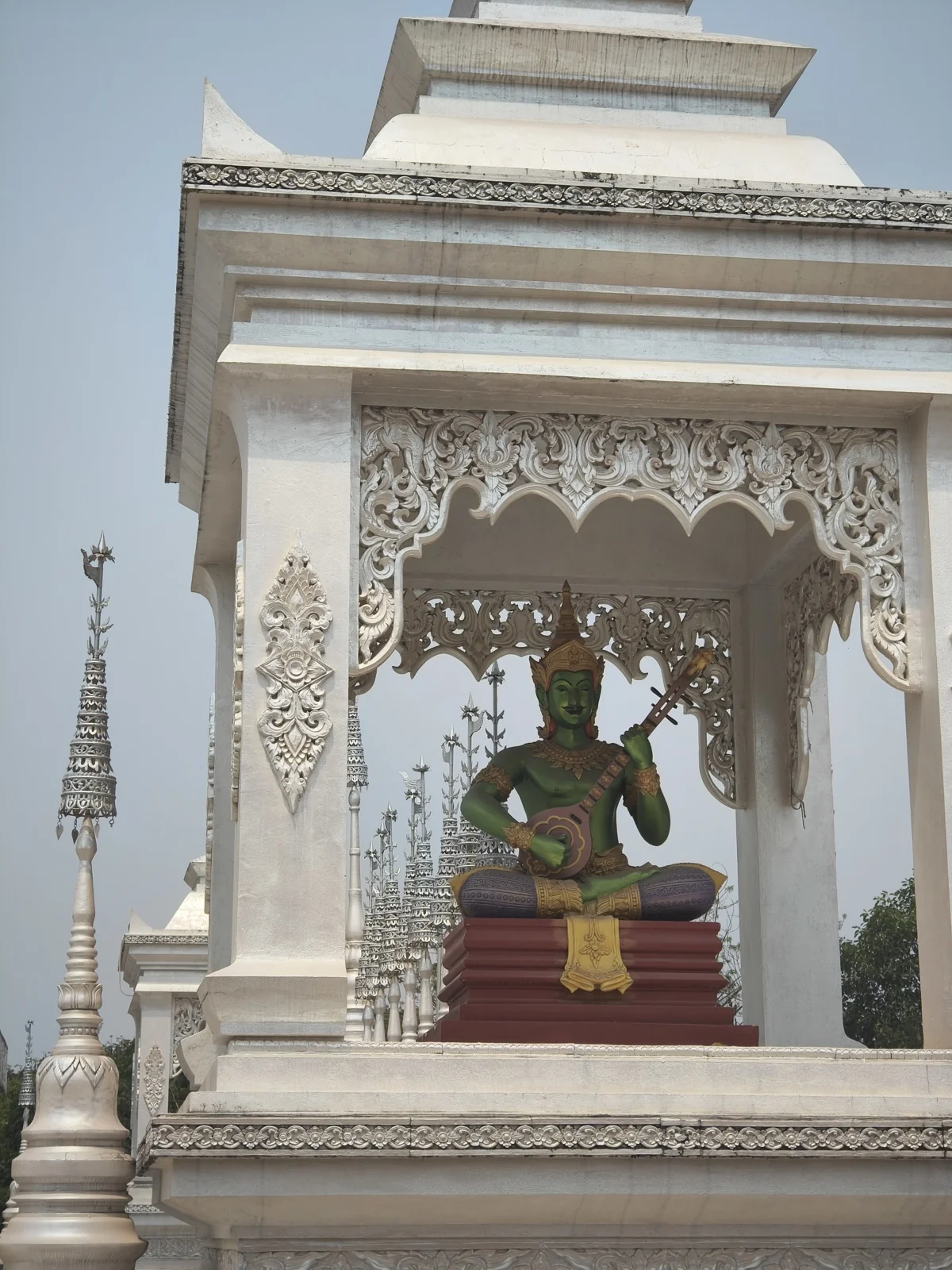
Visiting simply involves walking a circumambulation loop around the perimeter. As this site is situated somewhat apart from Jinghong’s other main attractions, we stopped by on the day we had arranged private charter transport.
Manting Imperial Garden
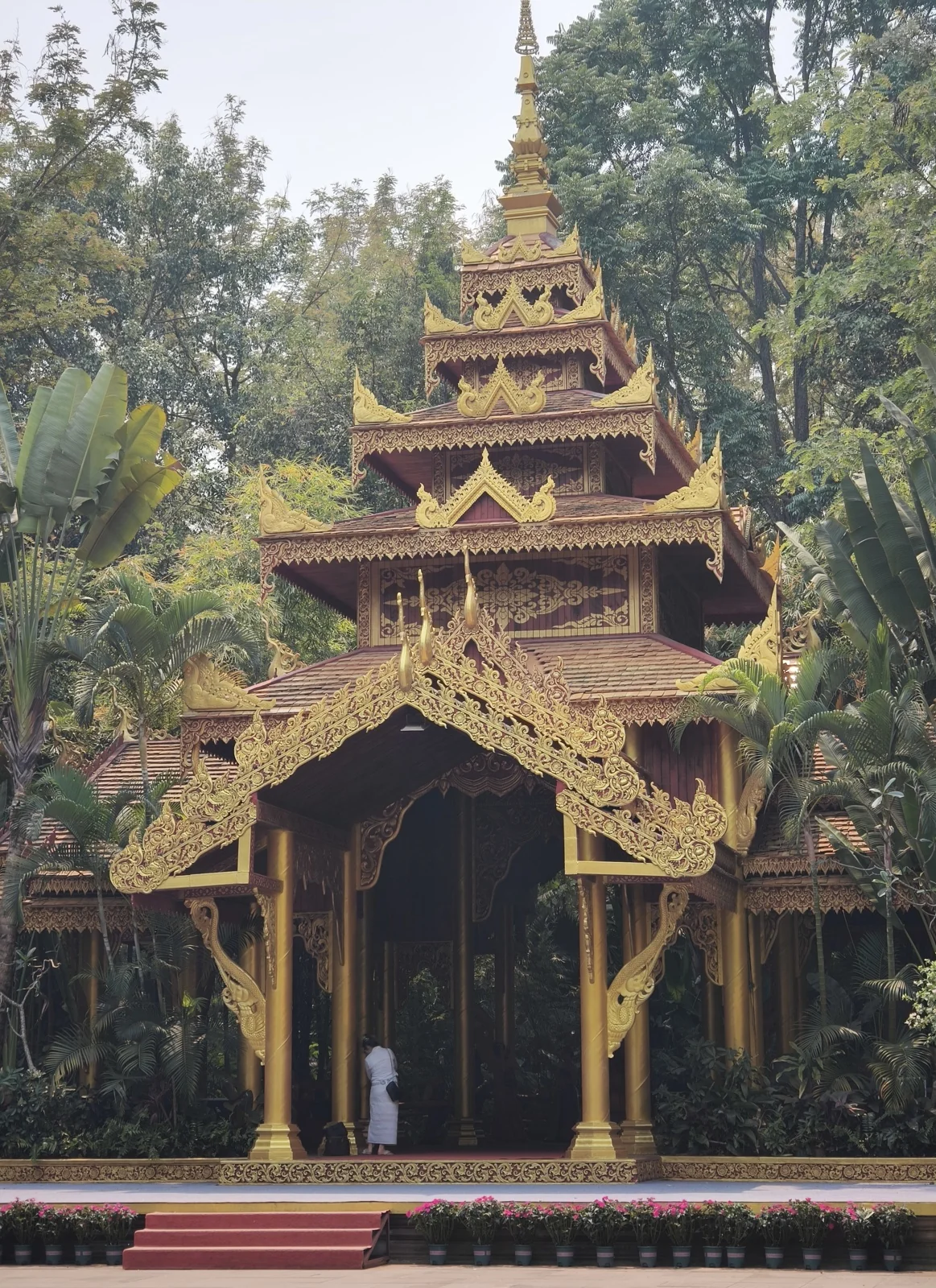
Manting Imperial Garden is one of downtown Jinghong’s premier destinations. Historically the palace and royal retreat of Dai kings, it also houses an elephant education sanctuary.
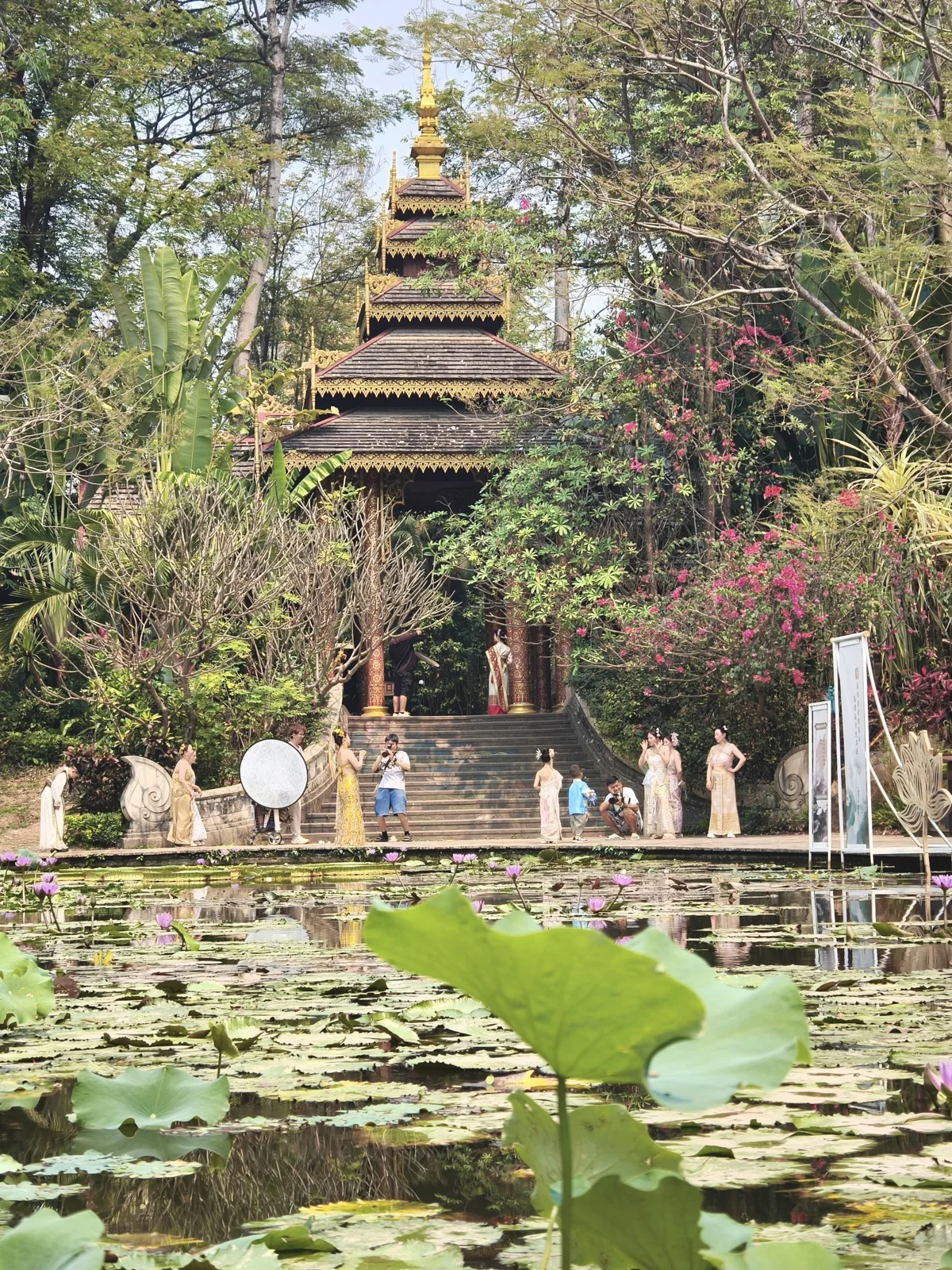
The primary reason for its immense popularity today is travel photography. Theravada Buddhist temples enforce strict modest dress codes (shoulders and knees must be fully covered). Manting Garden is virtually the only location in the city where visitors can capture elaborate Dai architectural backdrops without temple dress code restrictions, and the palace grounds are overwhelmingly populated by tourists dressed in traditional Dai costume rentals for photo shoots.
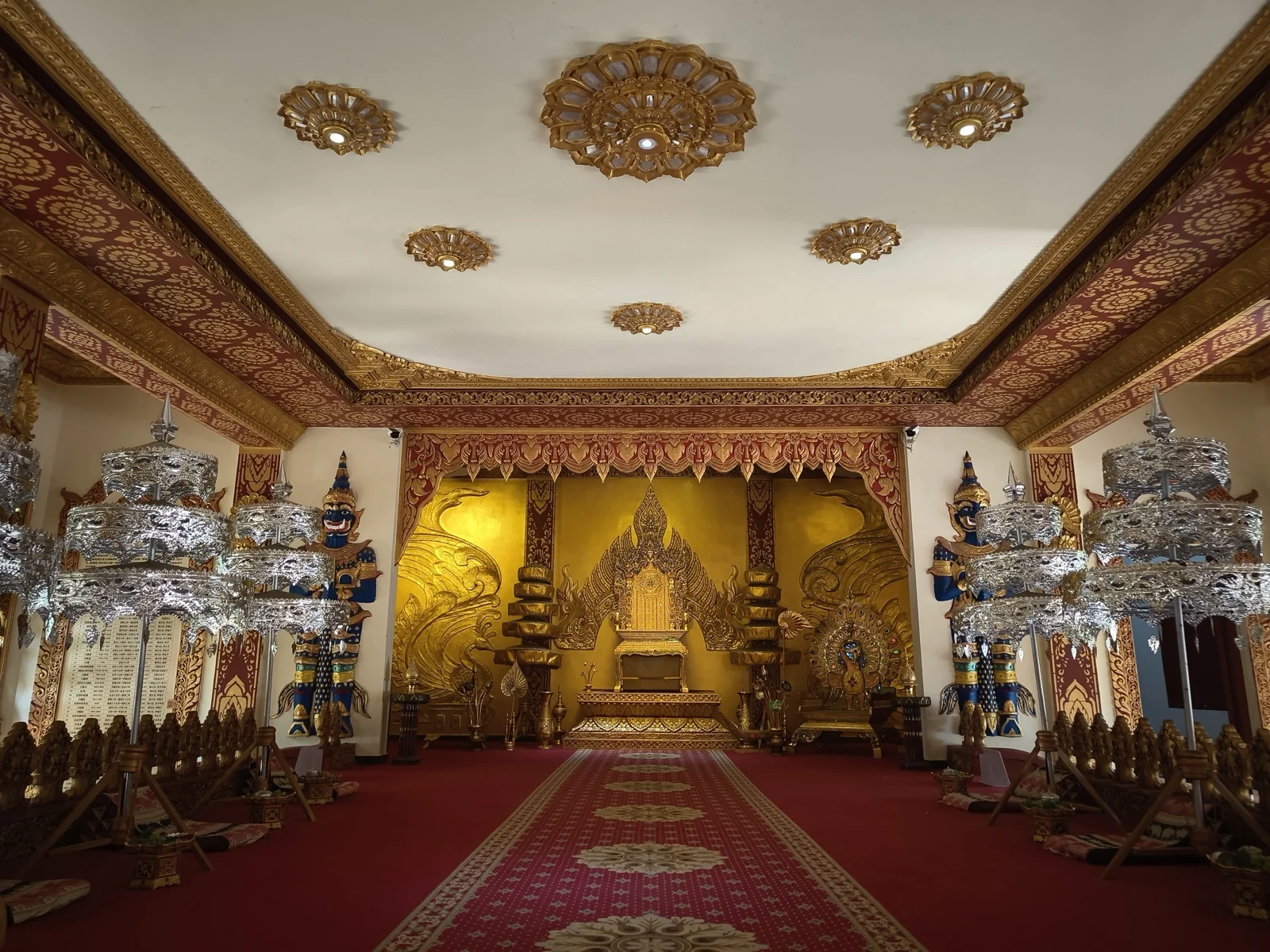
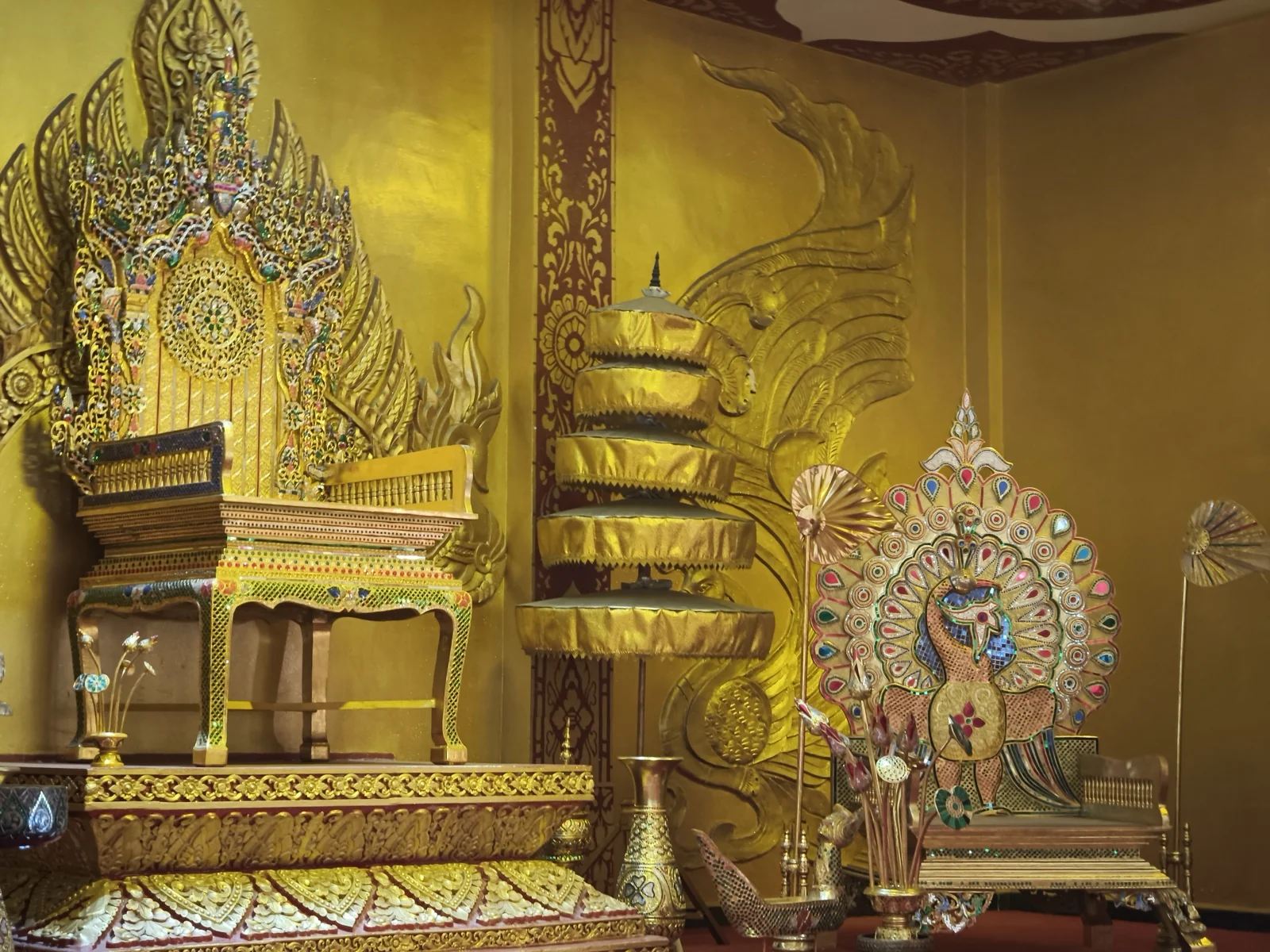
While the historical royal palace stood on this exact ground, what visitors see today is a modern reconstruction. Their affinity for gleaming gold easily surpasses even the imperial splendor of Ming and Qing dynasties.
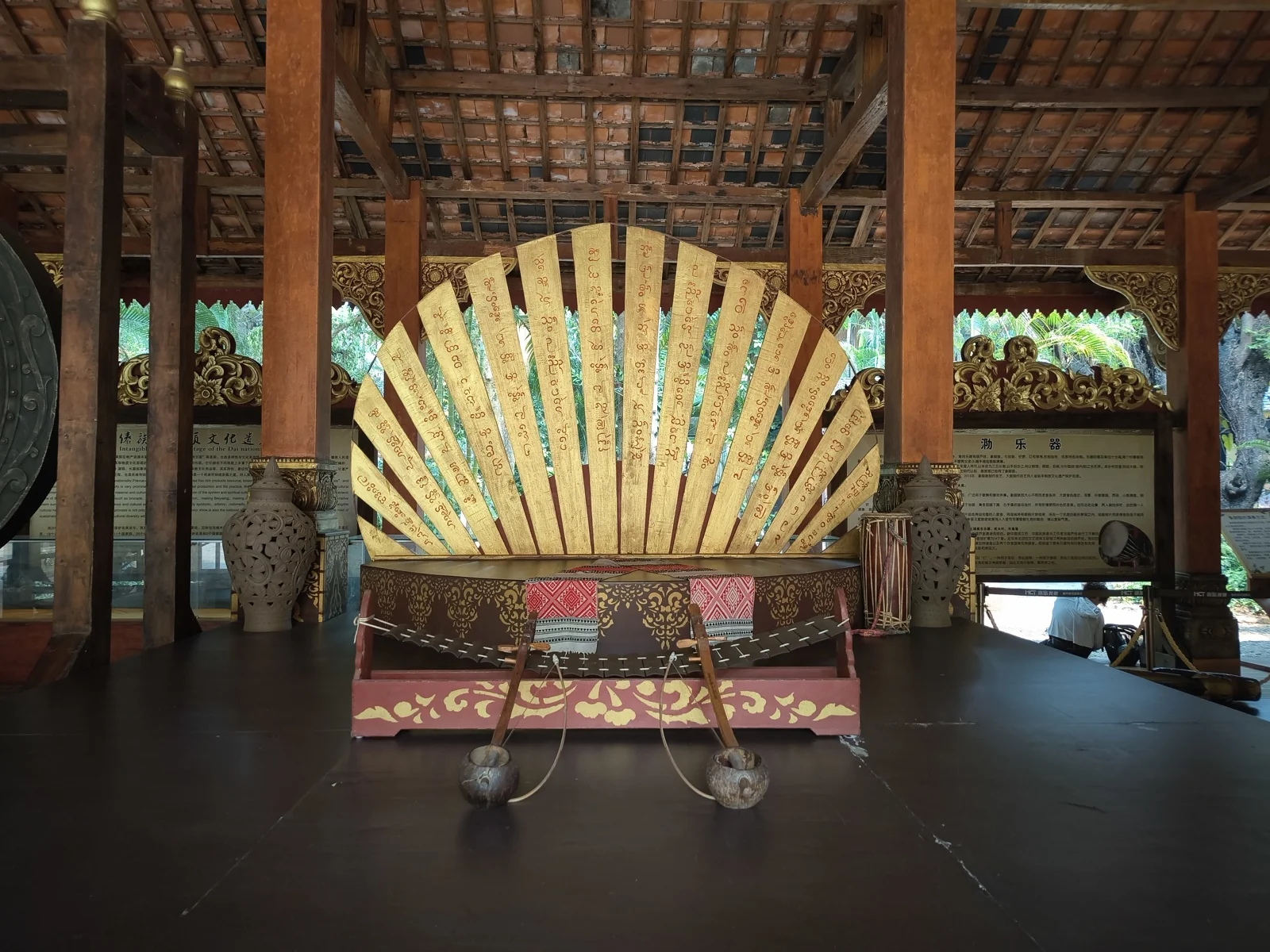
Ceremonial regalia displayed outside the palace halls. As the legendary homeland of peacocks, peacock motifs permeate every facet of Dai visual culture.
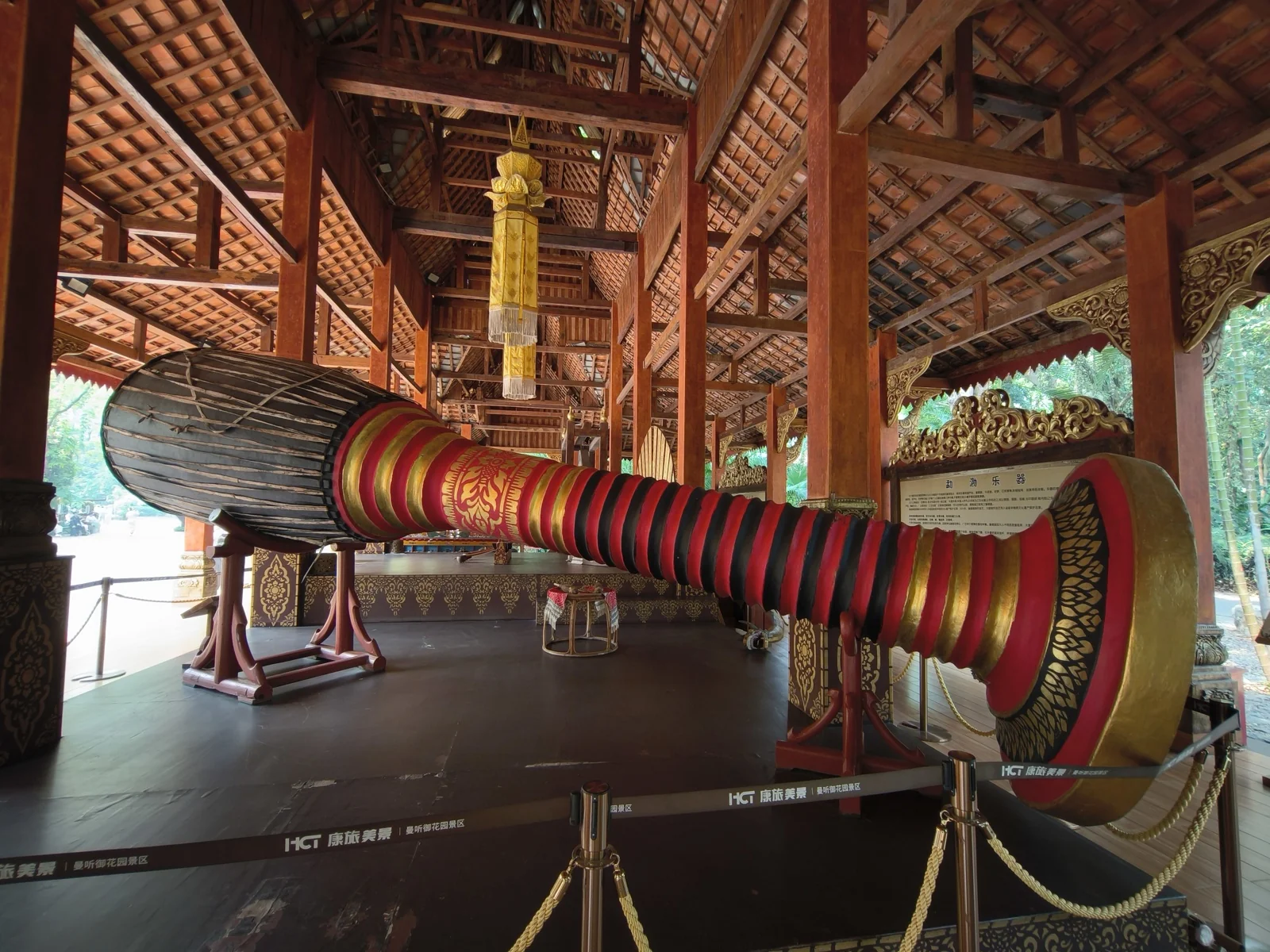
A massive traditional Mengle instrument - the iconic elephant-foot drum.
Historically, this entire region ruled by Dai chieftains was known as Mengle. In the Dai language, “Meng” means “territory” or “region,” which explains why so many local place names begin with Meng (such as Menghai and Mengla). “Le” refers specifically to the Dai people; thus, Mengle translates straightforwardly as “The Land of the Dai.” In downtown Jinghong, the Mengle Grand Buddhist Temple stands as another prominent historical namesake.
Similarly, “Man” in Dai signifies a “village” or “settlement,” another frequent prefix across local maps. For example, Manzhang Village literally means “Elephant Village” (“Zhang” meaning elephant). Dai toponymy follows a distinctive head-initial grammar where the general category comes first and the specific descriptor follows - diverging from Chinese and many Western naming conventions.
As for “Xishuangbanna” itself, the name translates from Dai as “Twelve Thousand Rice Fields” (Sipsongpanna). In the Ming Dynasty, administrative reforms reorganized the Dai territory into twelve administrative tax districts called “Panna” (thousand fields) for efficient tribute assessment. This historical administrative label stuck and evolved into the prefecture’s official name today.
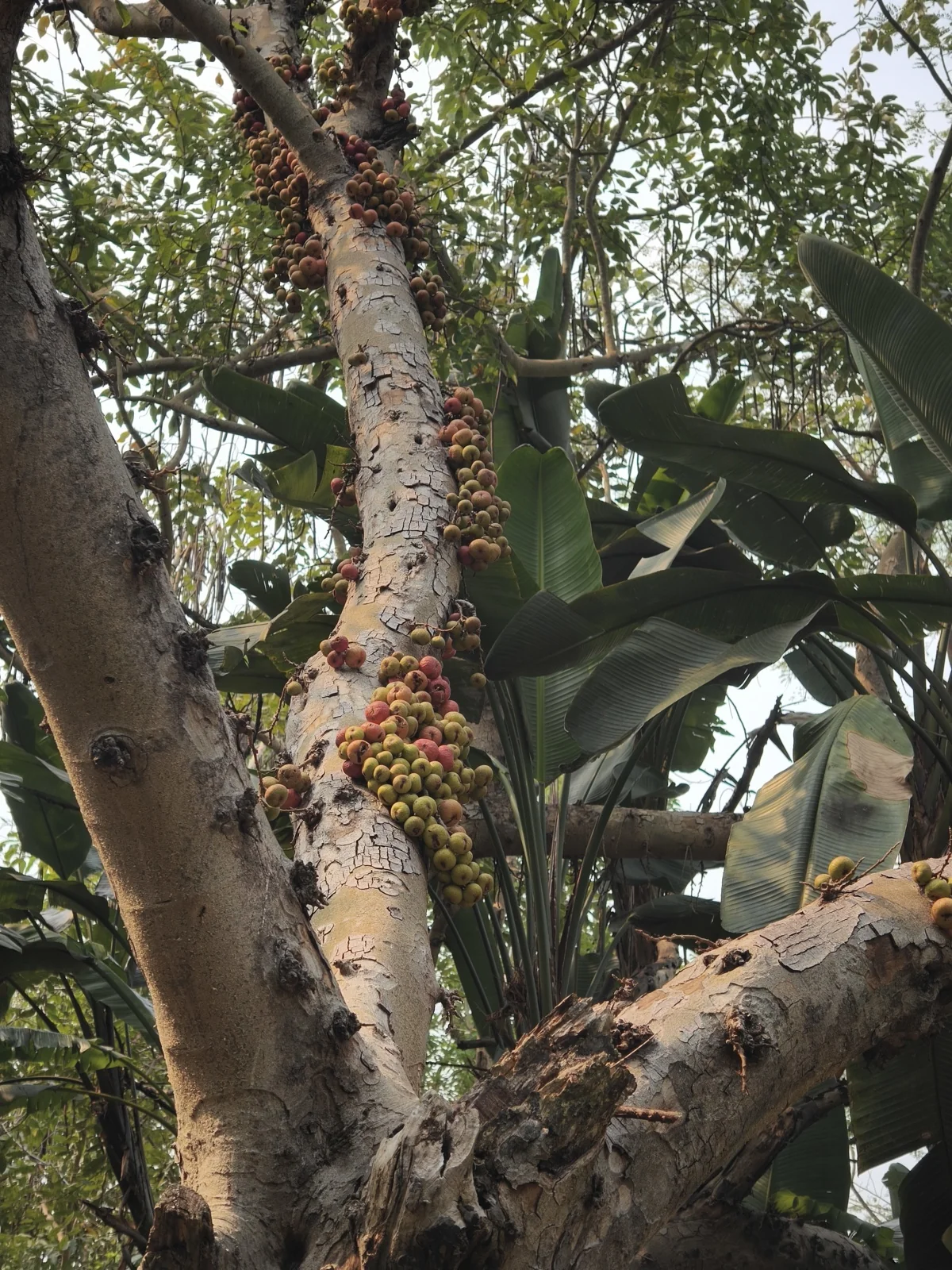
Leaving the palace grounds to catch the elephant presentation, we walked swiftly through the botanical section, passing a Ficus tree heavily clustered with cauliflorous figs along its trunk.
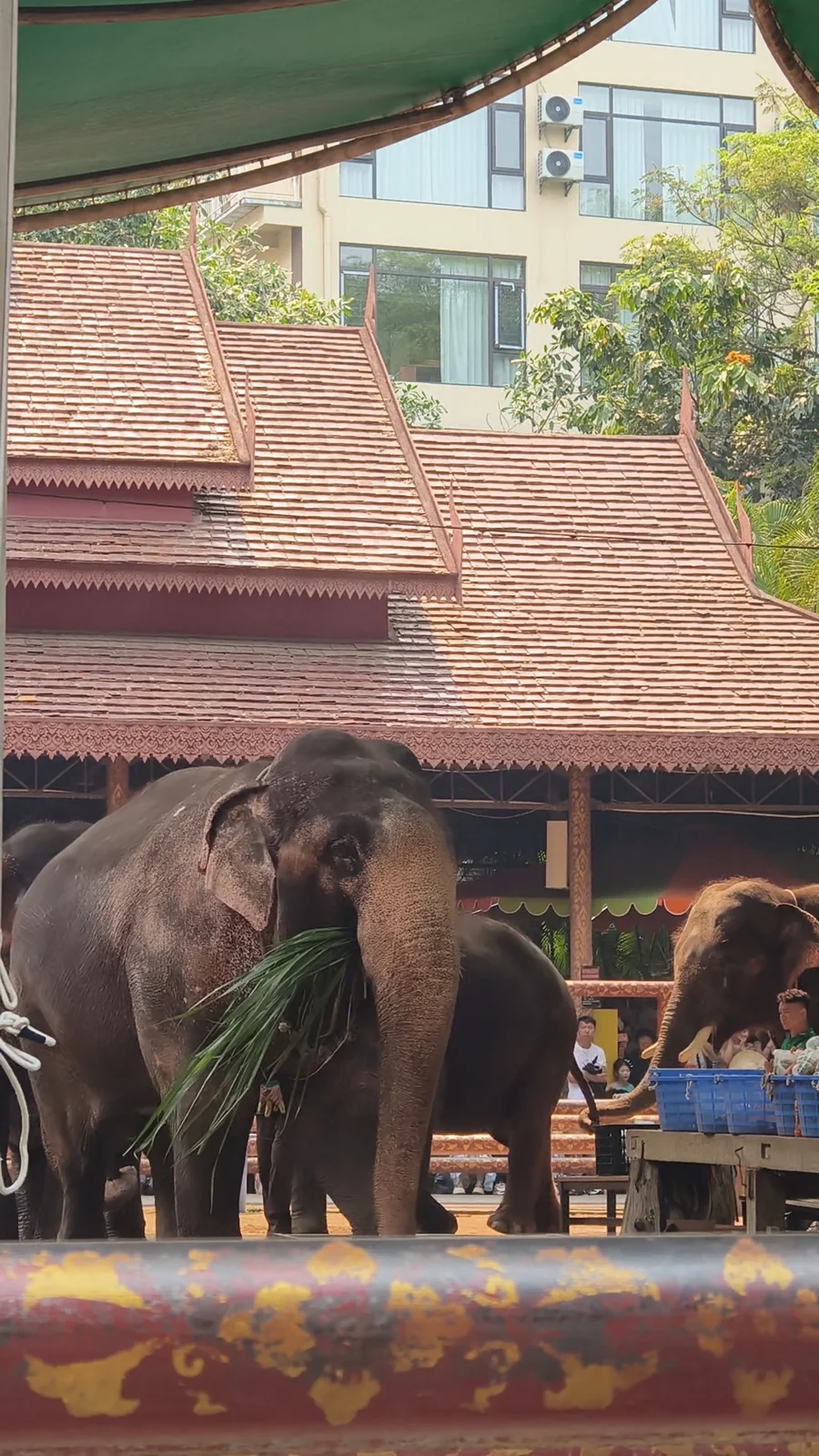
Asian elephants are Xishuangbanna’s flagship conservation species, and the educational programs are commendably structured. (I will consolidate comprehensive elephant biology and conservation insights in the Wild Elephant Valley section below.)
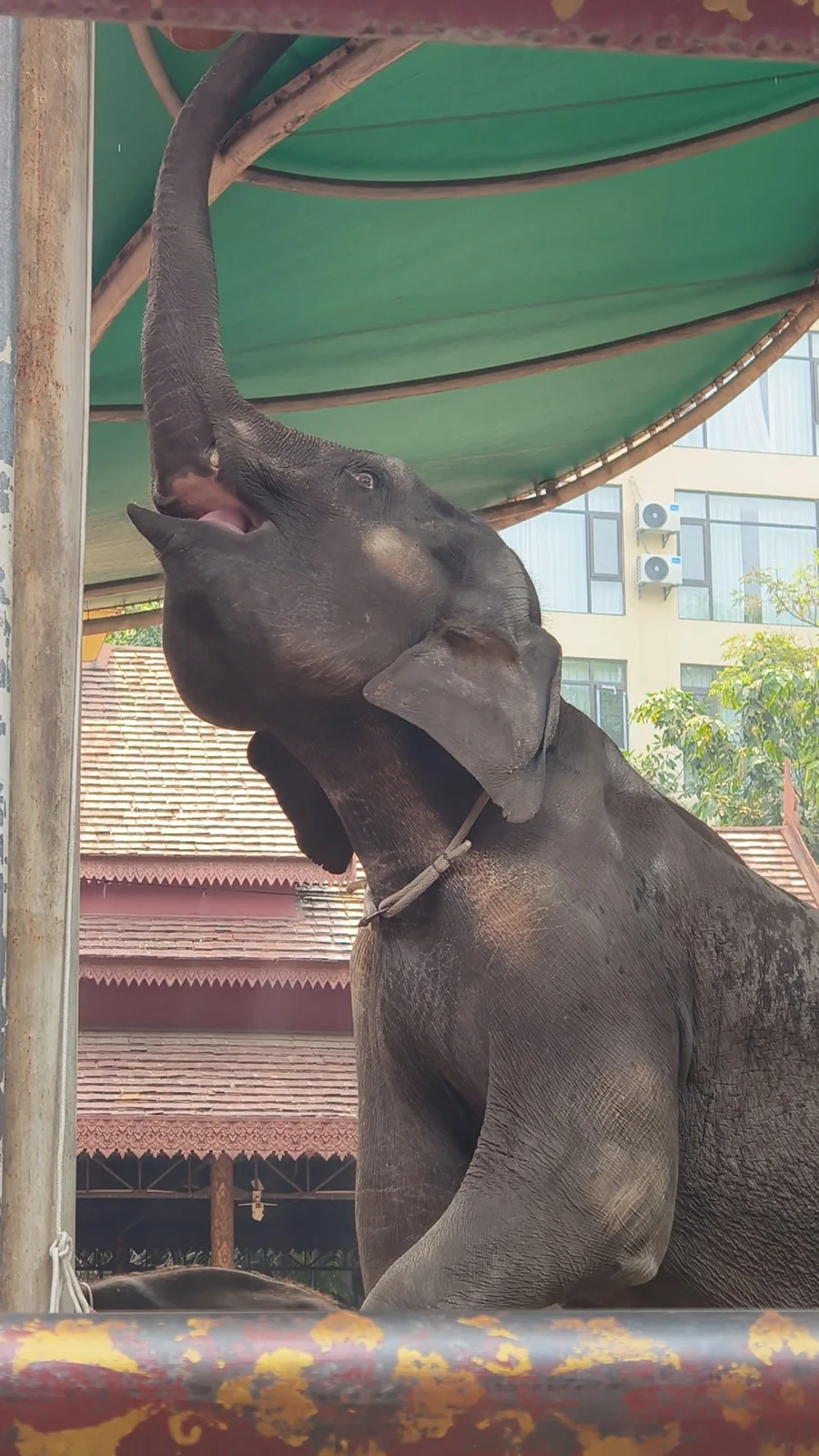
The presentations across our trip were strictly lecture-based educational sessions. Keepers only directed the elephants through natural behaviors like foraging and weighing, with zero unnatural circus tricks or exploitative stunts.
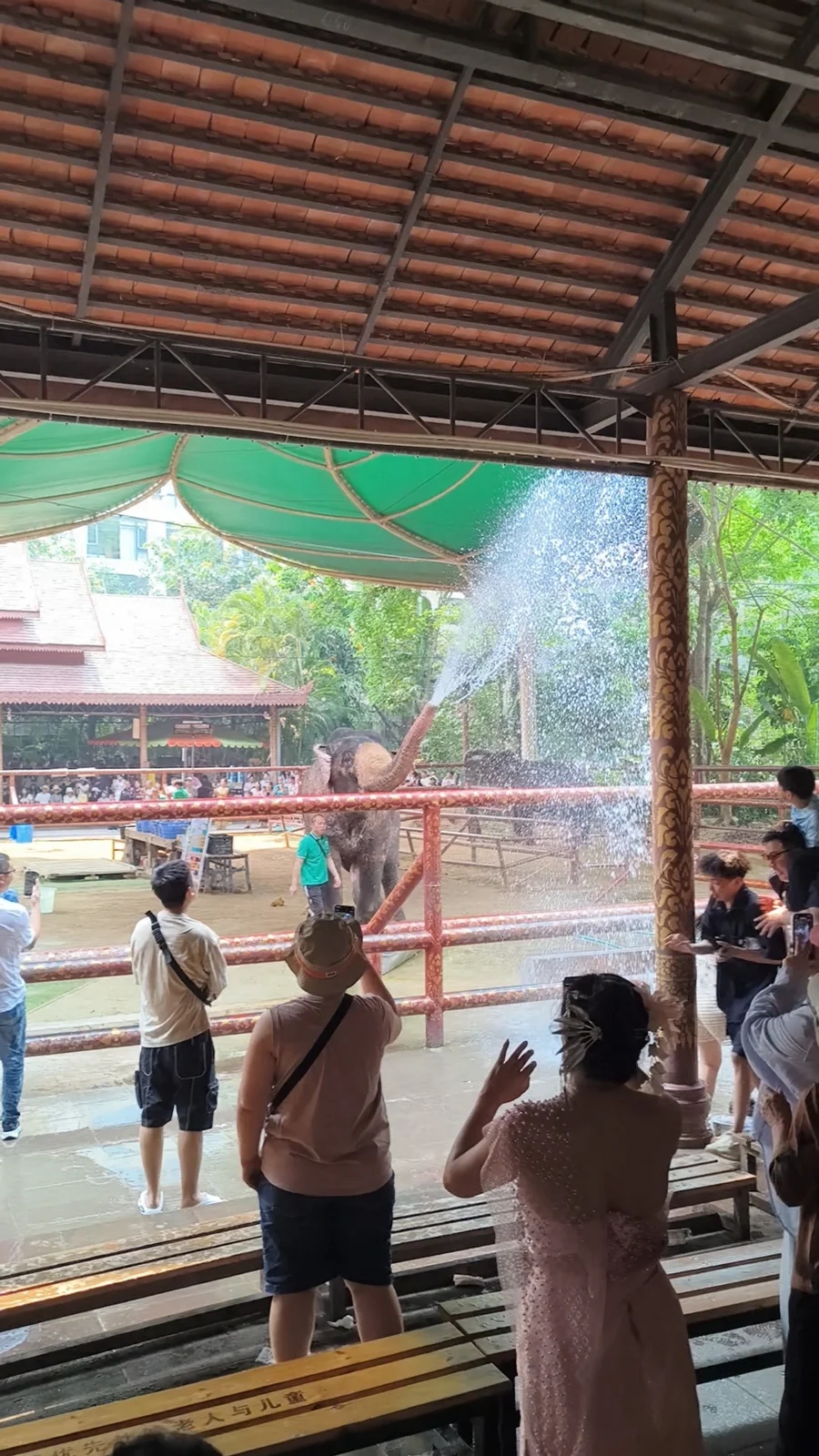
At the conclusion of the session, the elephant sprayed a playful water salute toward the viewing stand.
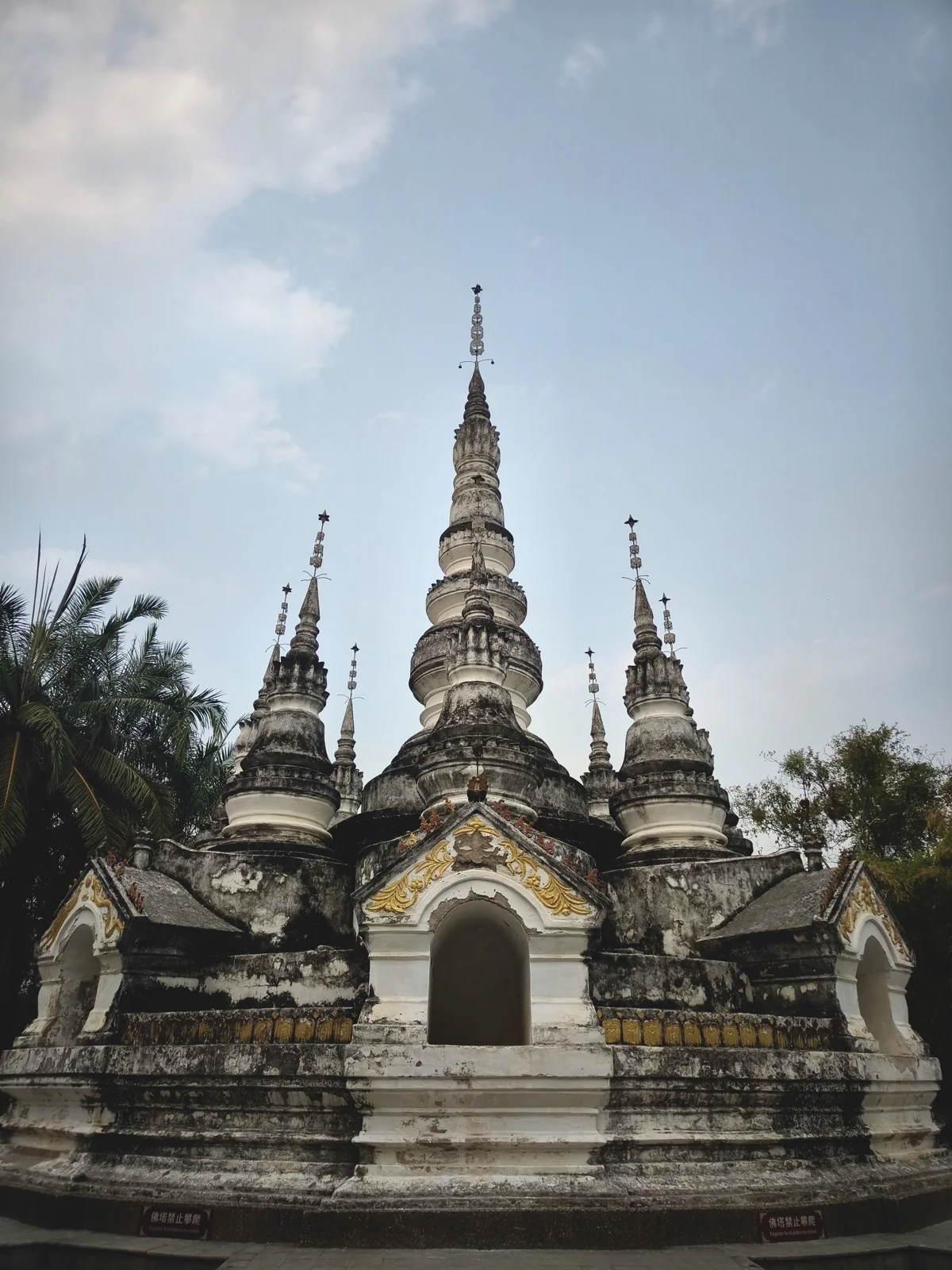
Walking along the opposite garden bank toward the exit, we passed an elegant cluster of miniature white stupas.
Zongfo Temple (General Buddhist Temple)
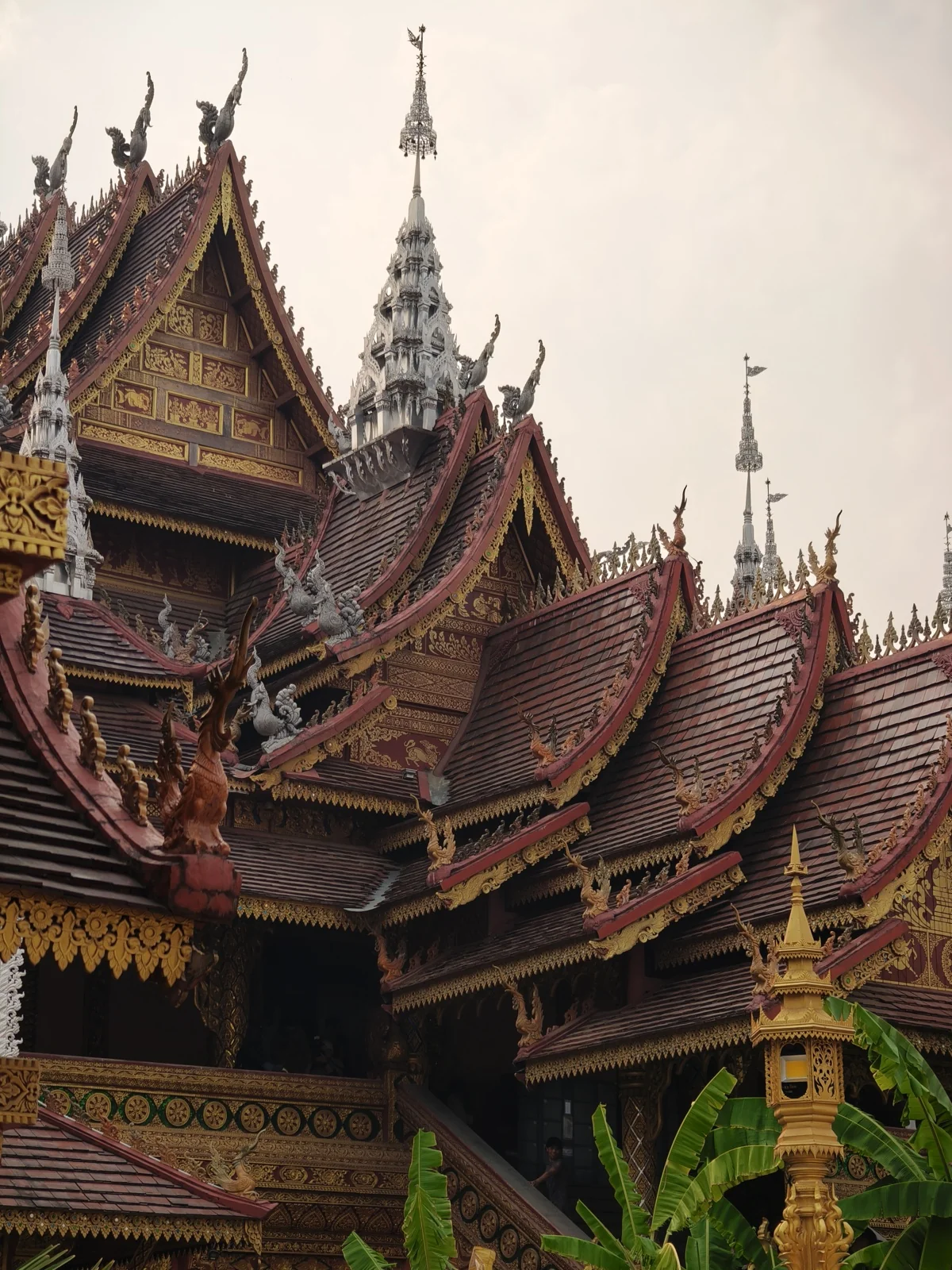
Manting Imperial Garden connects directly to Zongfo Temple via a rear gate, allowing visitors to transition seamlessly into the sacred temple grounds.
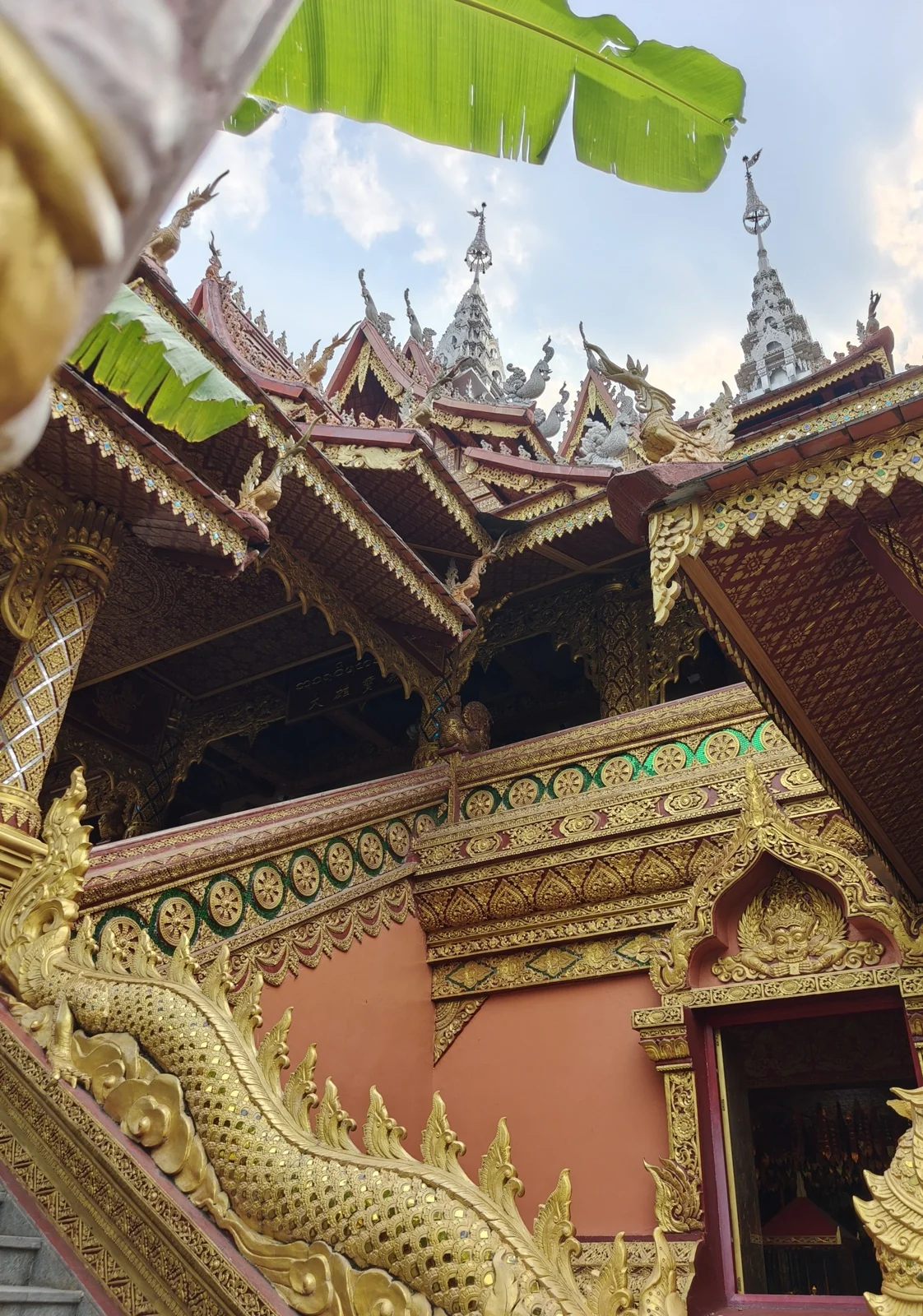
Visiting in broad daylight reveals intricate layers of architectural craftsmanship that are invisible at night.
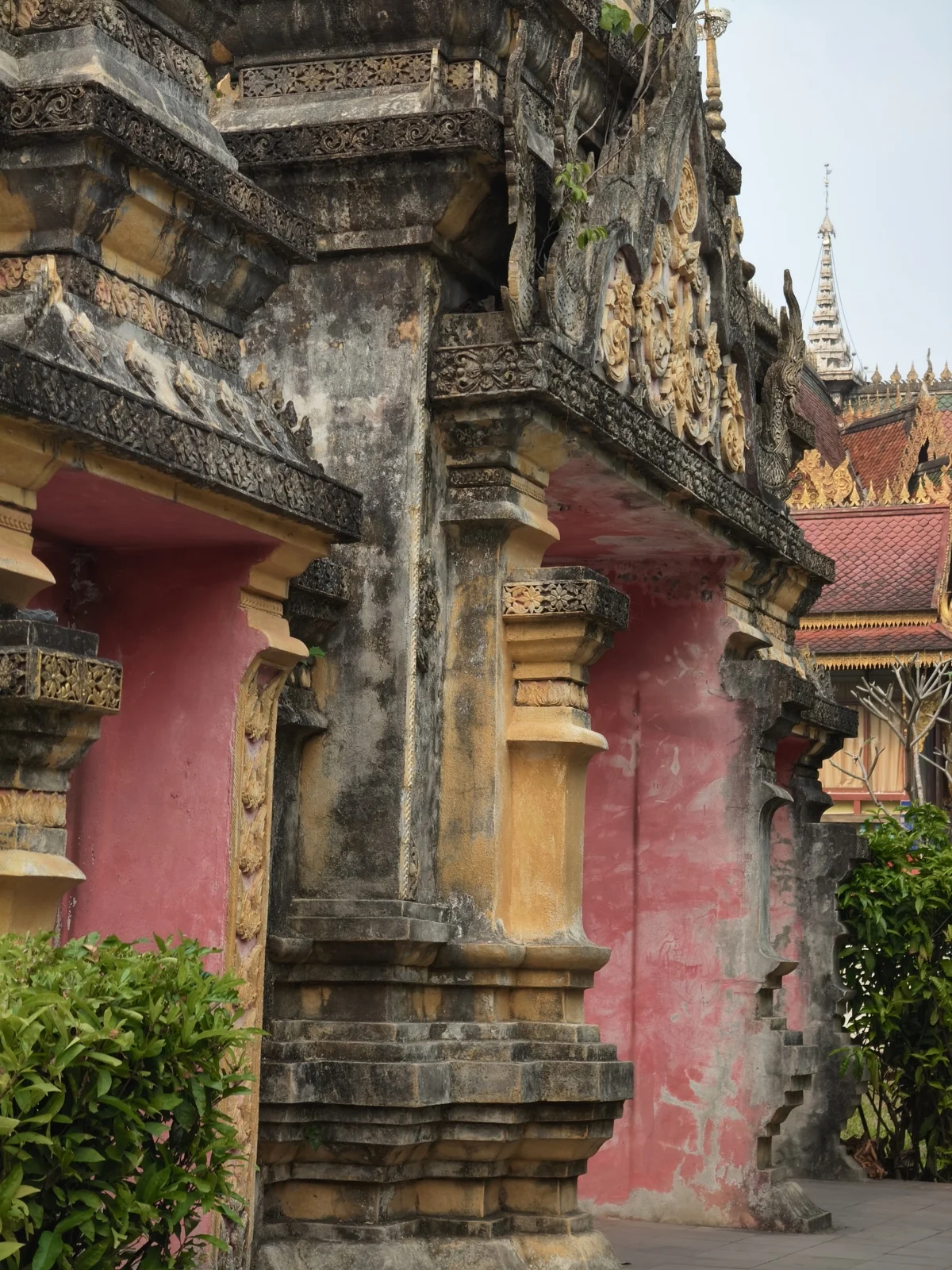
Among the structures stands an ancient wooden doorway whose weathered patina is noticeably older than the surrounding reconstructed pavilions.
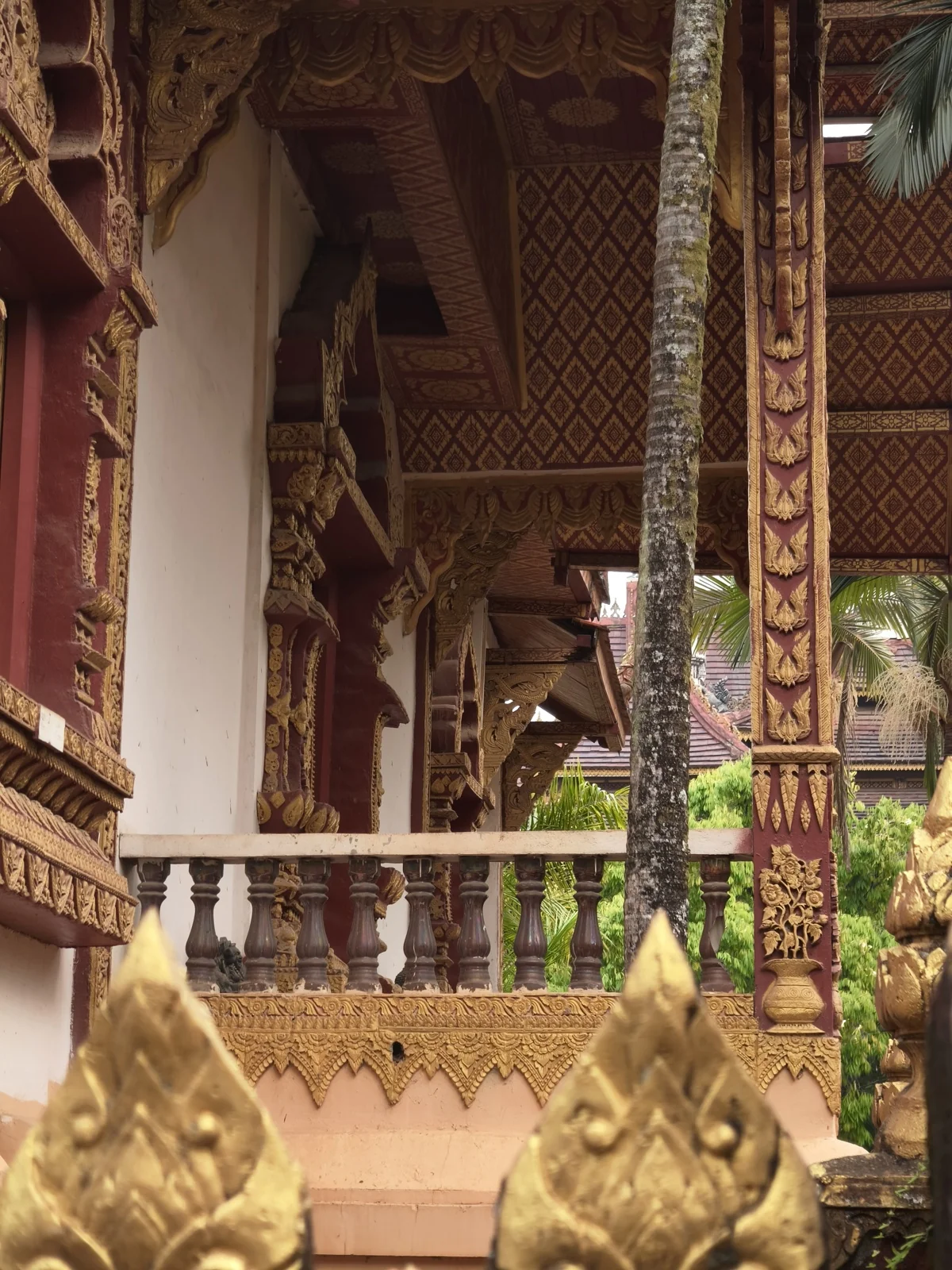
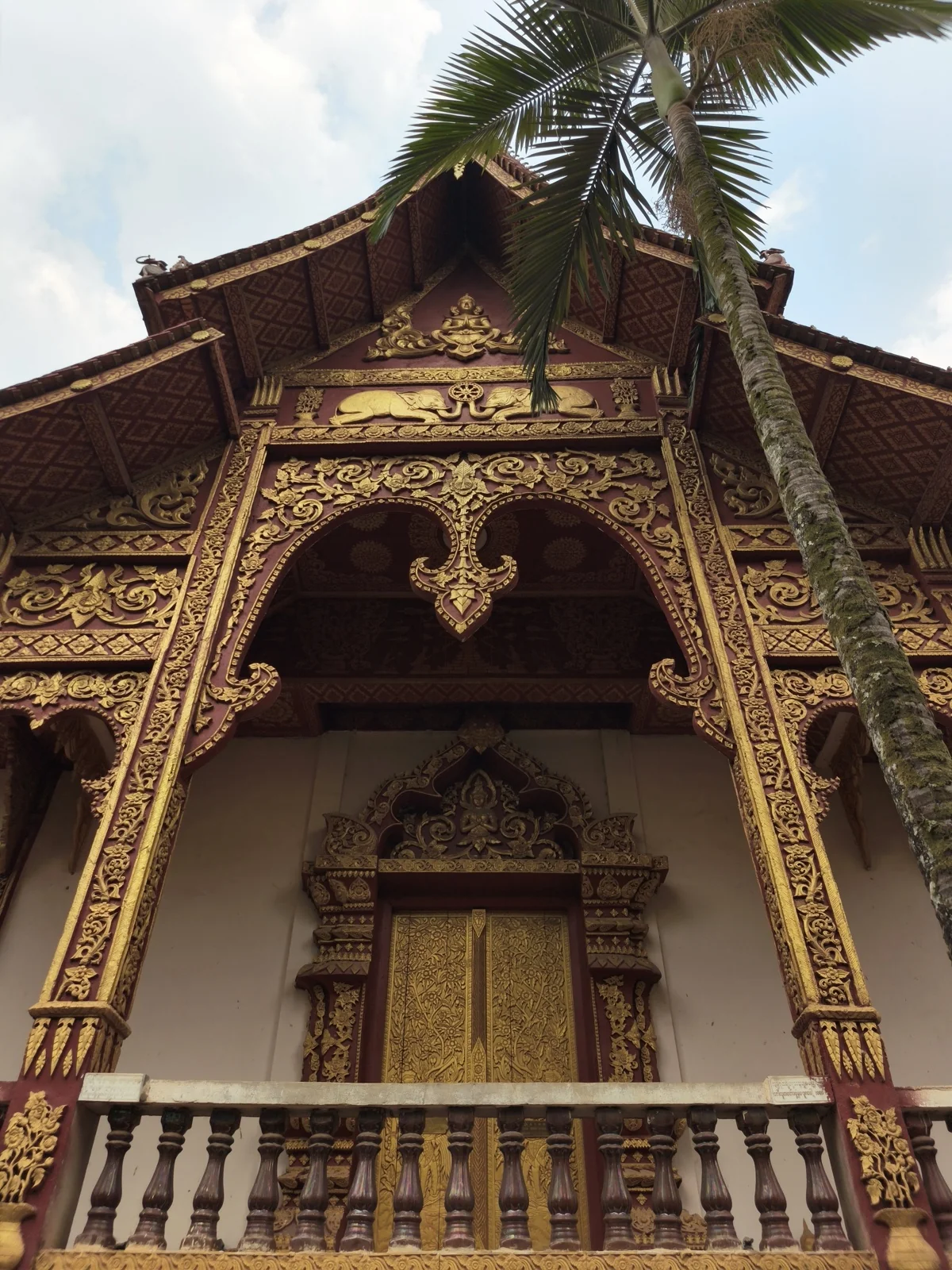
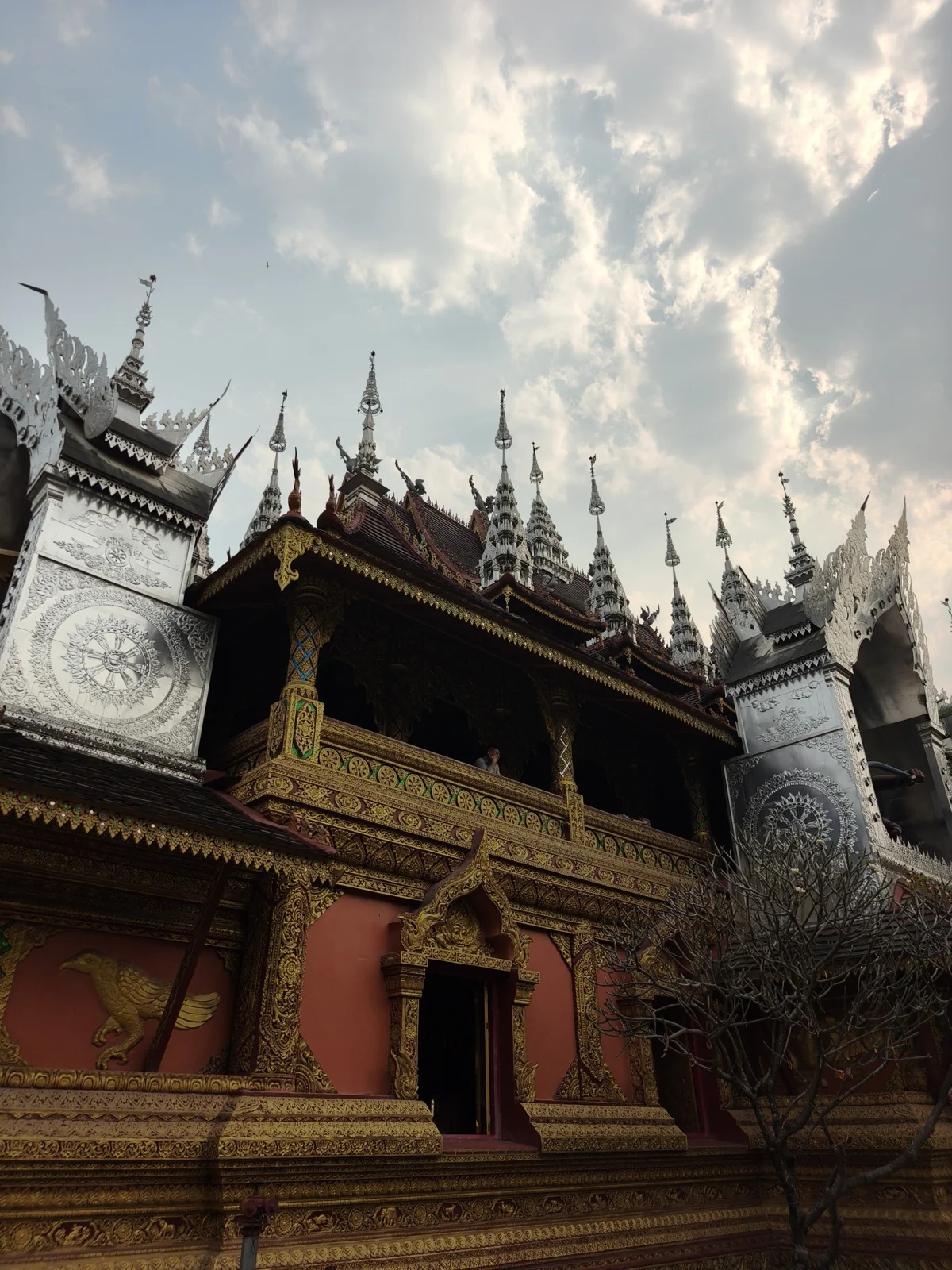
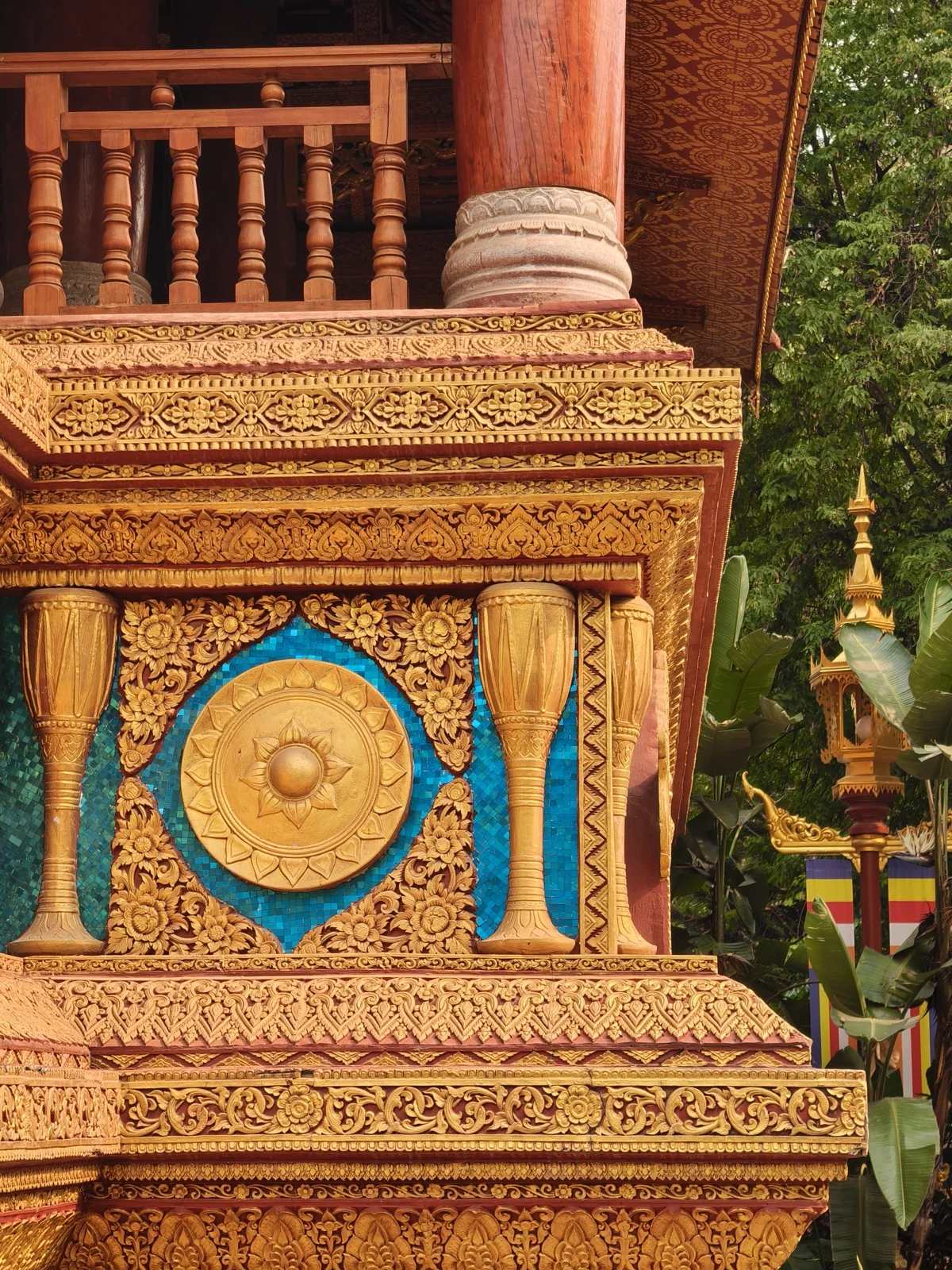
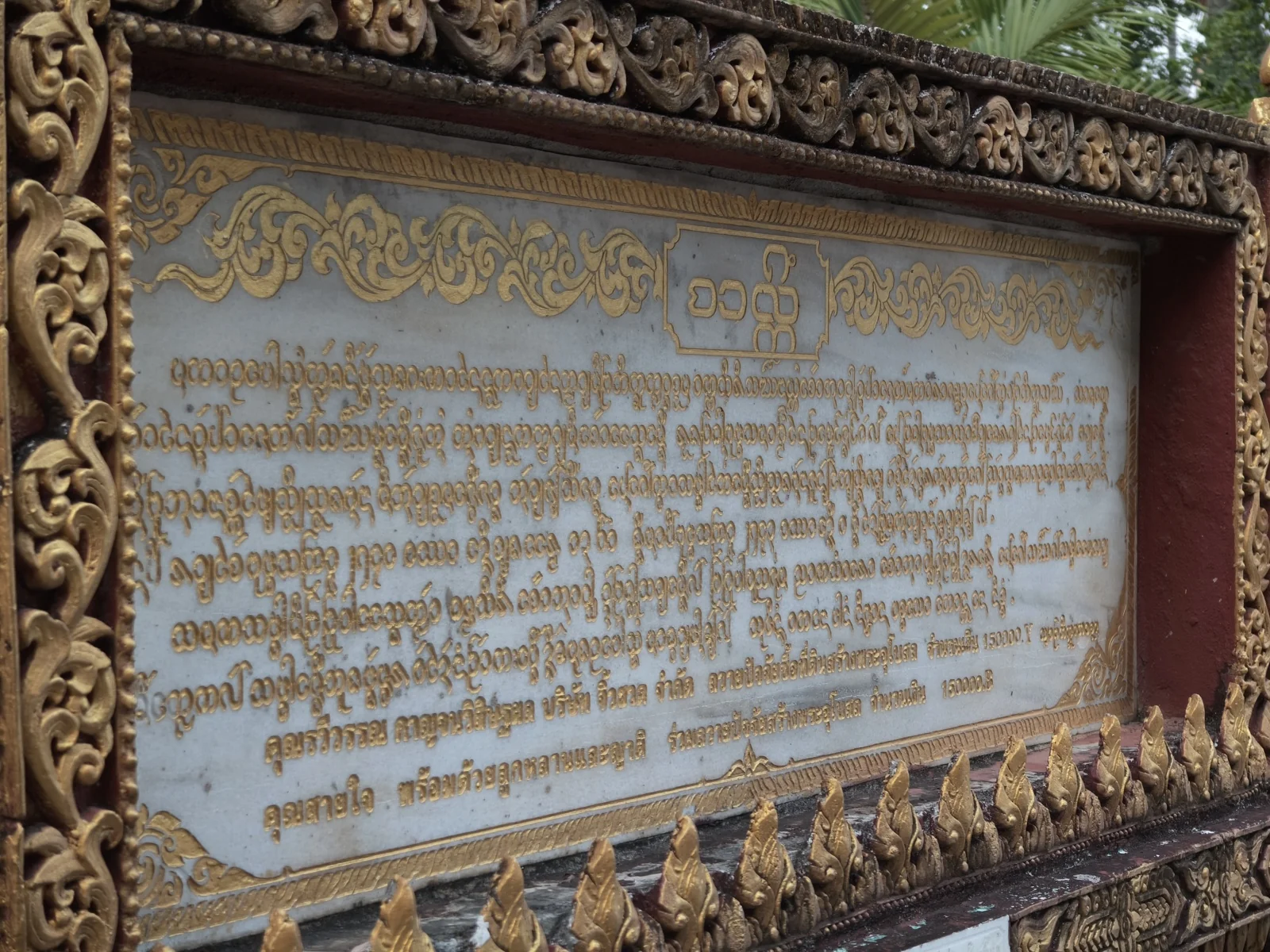
Beside a stupa stands an inscribed stone stele. The script appears distinct from standard contemporary Dai signage, and accompanying placards noted it commemorates a revered monk’s lineage and legacy.
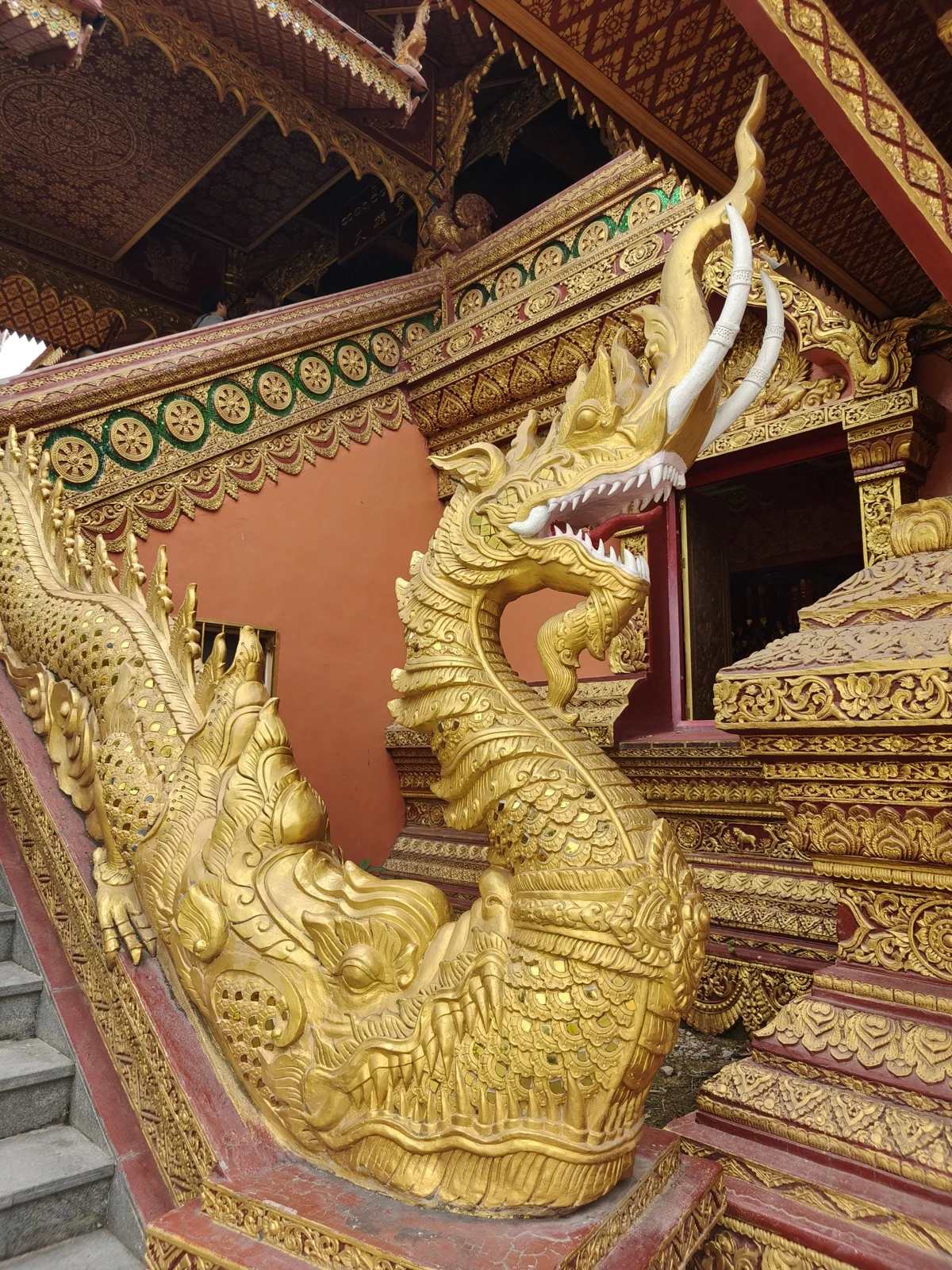
In Dai iconography, the mythical dragon (Naga) is uniquely synthesized with elephant features, incorporating prominent tusks and elongated trunks.
Day 4: Wild Elephant Valley
Wild Elephant Valley is a long, narrow nature reserve extending from southeast to northwest, divided into three primary zones. The southeastern sector comprises the elephant conservation and dining center, along with the paid rainforest elephant-trekking experience. The central zone features tropical flora and fauna exhibits (monitor lizards, snakes, butterflies, orchids) and cultural performances. The vast northwestern expanse is a protected wild elephant habitat, accessible via a passenger cableway and elevated canopy boardwalks.
Elephant Science & Rainforest Trekking
Having reserved the Rainforest Elephant Trekking experience in advance, we proceeded directly to the elephant zone upon arrival. While waiting for our session, we attended an in-depth elephant educational talk.
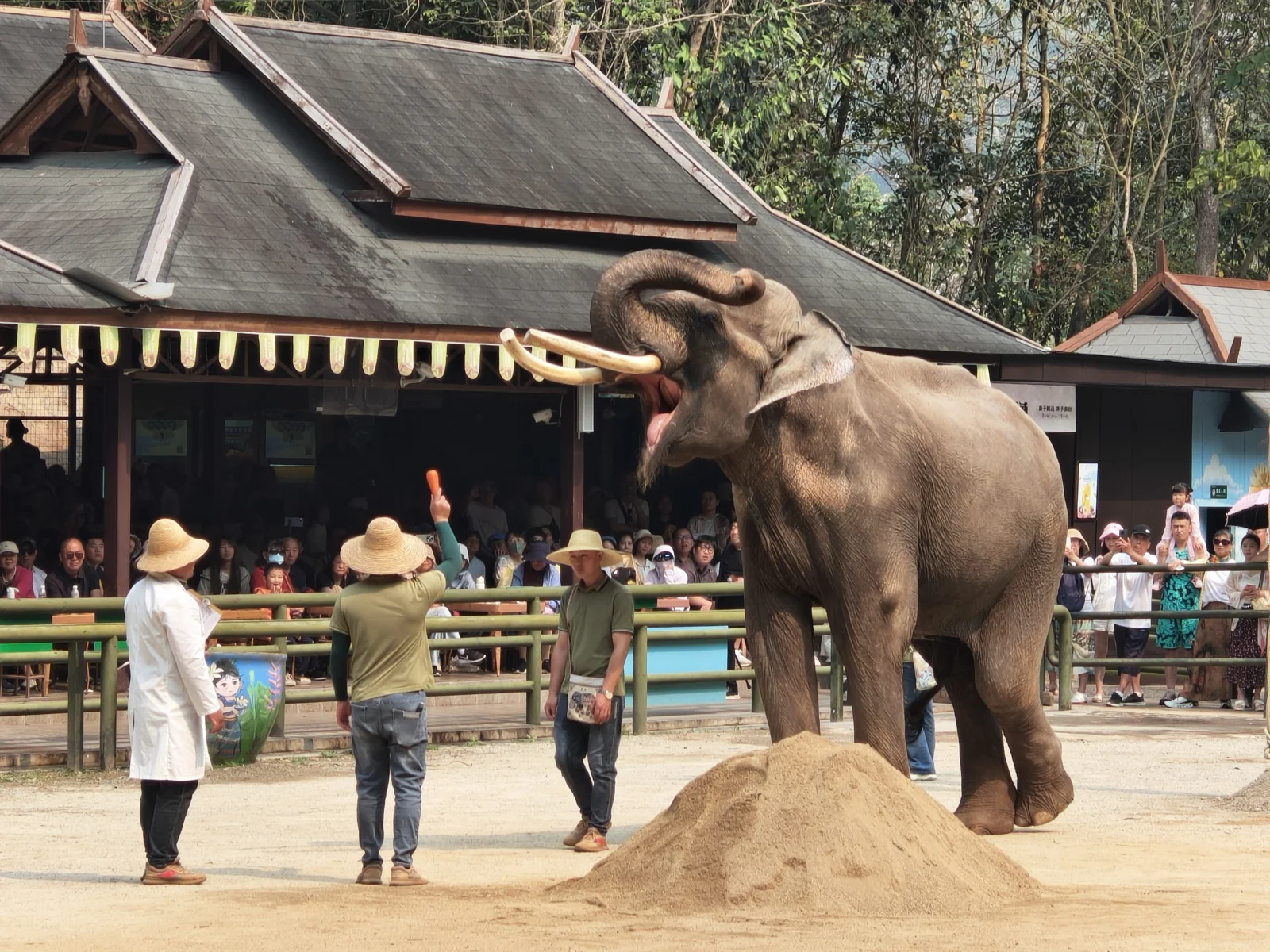
The image shows a keeper having an elephant hold its mouth open to examine its molar condition. Elephants only maintain their mouths open for extended periods around keepers they deeply trust.
Key biological insights learned during the tour:
- Dentition & Lifespan: Elephants undergo 5 tooth replacements throughout their life, producing a total of 6 sets of molars. Wild elephants, which subsist on fibrous bamboo and coarse vegetation, wear down their teeth rapidly and typically exhaust all 6 sets. Once the final set of molars is worn away, the elephant cannot chew and naturally approaches the end of its life, resulting in a wild lifespan of around 60 years. Captive elephants receive finely prepared diets, allowing them to live well into their 80s without necessarily wearing out all six sets.
- Foot Anatomy: Toe counts differ significantly across species. Asian elephants possess 5 toes on their front feet and 4 on their hind feet. African savanna elephants have 4 on the front and 3 on the rear, whereas African forest elephants share the 5/4 configuration of Asian elephants.
- Digestive Efficiency: Elephant digestive tracts exhibit low digestive efficiency, absorbing only about 40% of consumed nutrients. During our trek, fresh dung clearly contained large amounts of intact, undigested grasses. The educator explained that elephant calves occasionally ingest maternal dung to seed their gut microbiome with essential fiber-digesting symbiotic bacteria, finding the pre-processed roughage easier to absorb.
- Matriarchal Structure: Asian elephant herds are strictly matriarchal, led by senior females. Any bulls present in a family herd are juveniles; upon reaching sexual maturity, males depart to live solitary lives or form loose bachelor bachelor groups.
- Age Estimation: Ear curvature is a reliable indicator of elephant age - the more pronounced the downward folding along the top edge of the ear, the older the individual.
- Trunk Biomechanics: An elephant’s trunk is entirely composed of complex muscle bundles without a single bone. Its dexterity relies on a specialized tip projection called the “finger” (proboscis projection). When looking at a human hand, the opposable thumb provides the anatomical foundation for grip and tool use - a rare evolutionary trait in nature. The elephant’s finger projection fulfills a similar opposable function, enabling it to pick up objects as small as a single soybean with pinpoint accuracy. Asian elephants have one dorsal finger projection, whereas African elephants have two (dorsal and ventral).
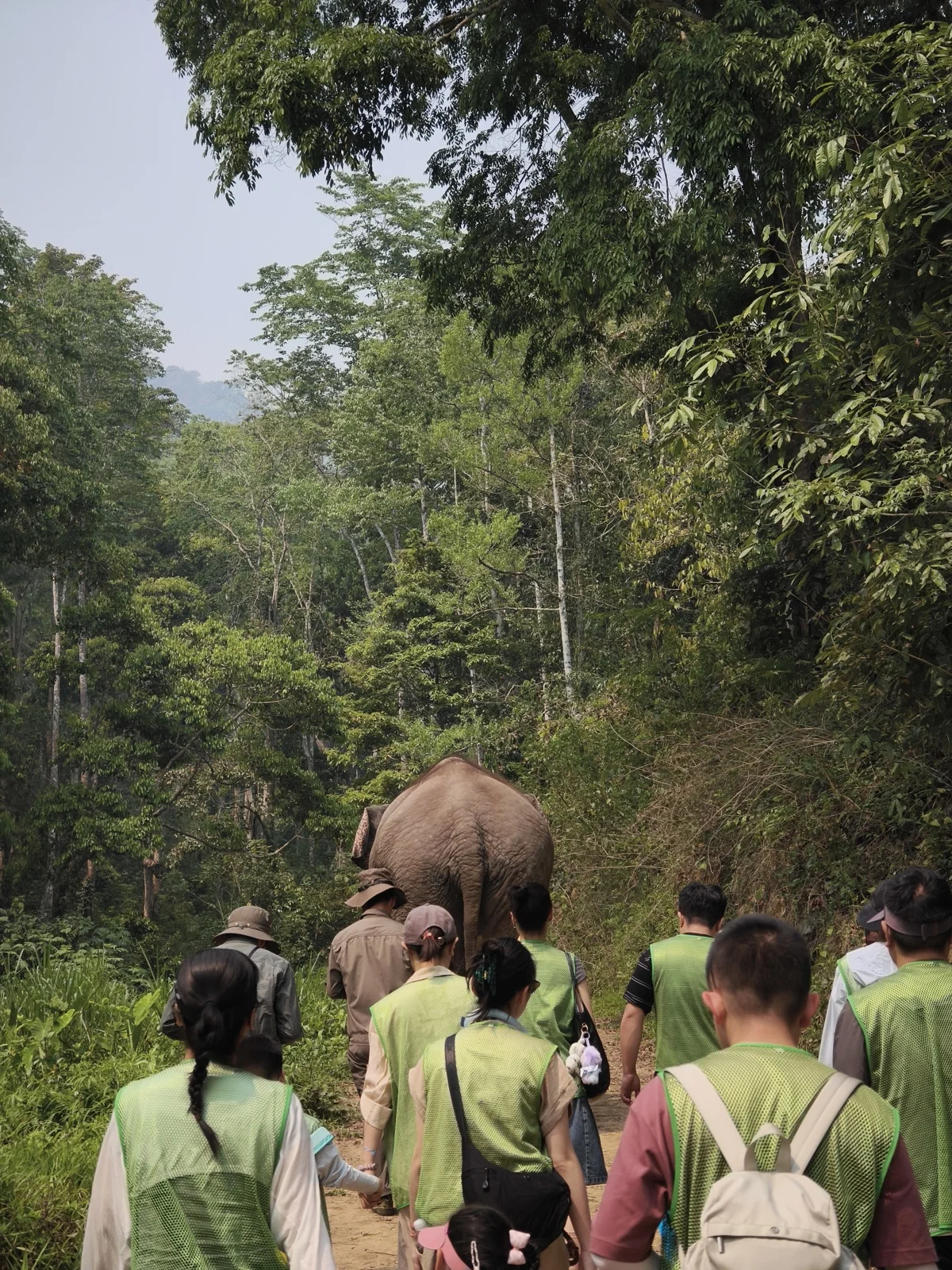
The Rainforest Elephant Trekking experience entails following a designated elephant on a guided walk through the rainforest, arriving at a clearing for feeding and commemorative photos, accompanied throughout by educational commentary.
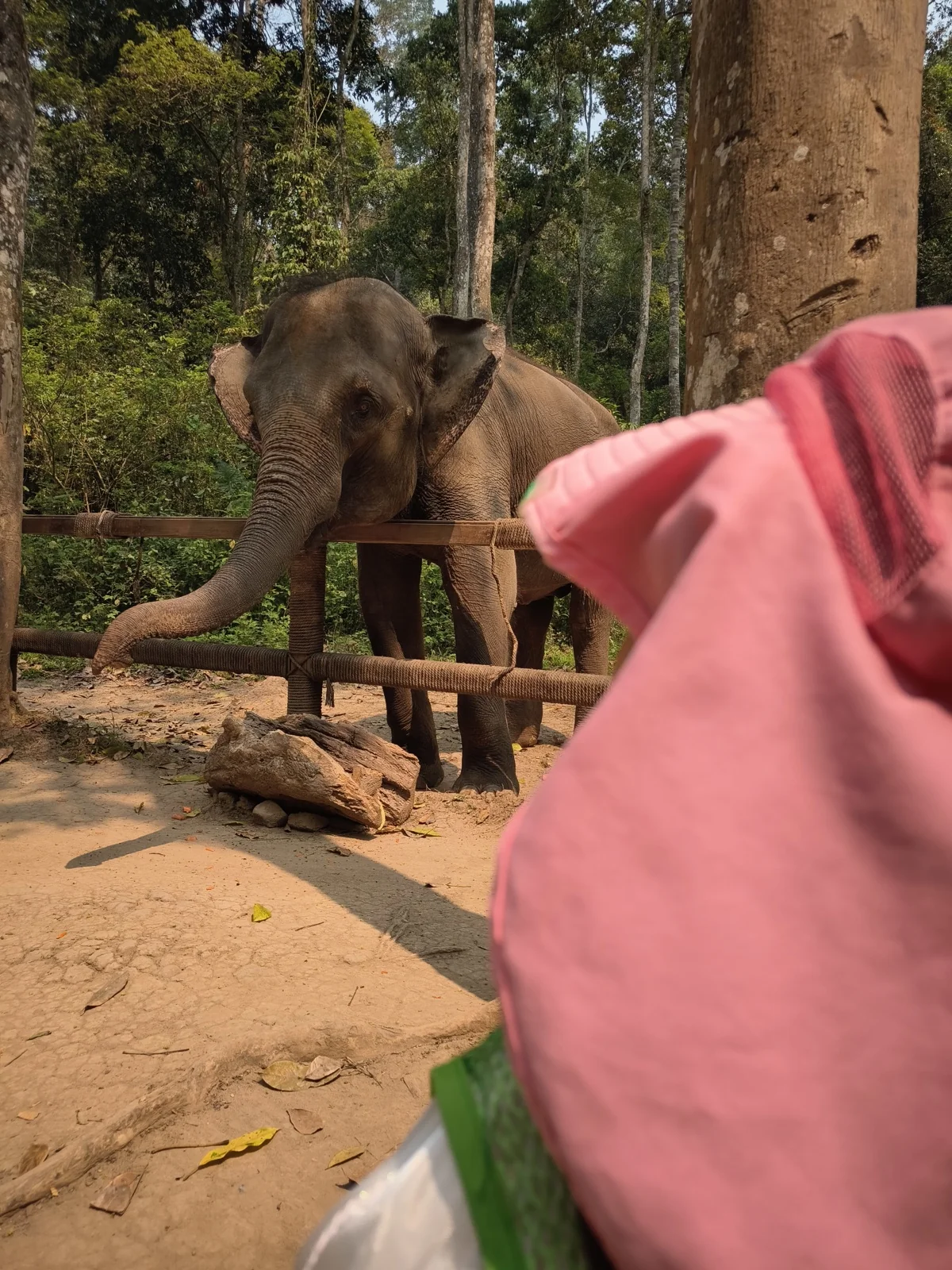
After escorting the elephant back to its sanctuary paddock, the trail led to an adjacent enclosure housing an elephant mother and calf.
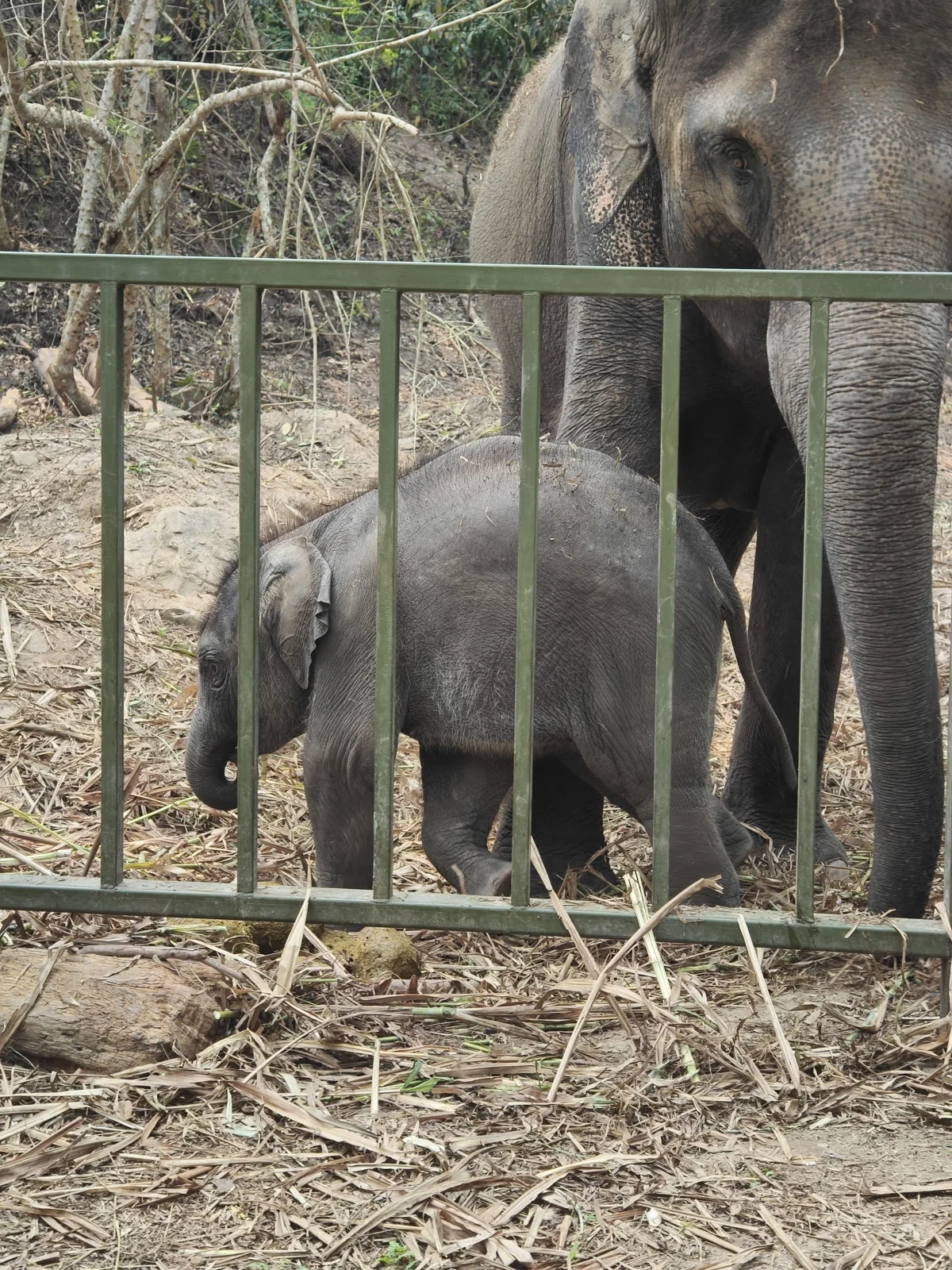
Calves require several months of practice to master trunk motor control; we watched in amusement as the little calf accidentally stepped on its own trunk while playing.
Throughout the forest walk, harmless tropical insects hovered around visitors. A young girl in our group mistook them for bees and cried out in alarm.
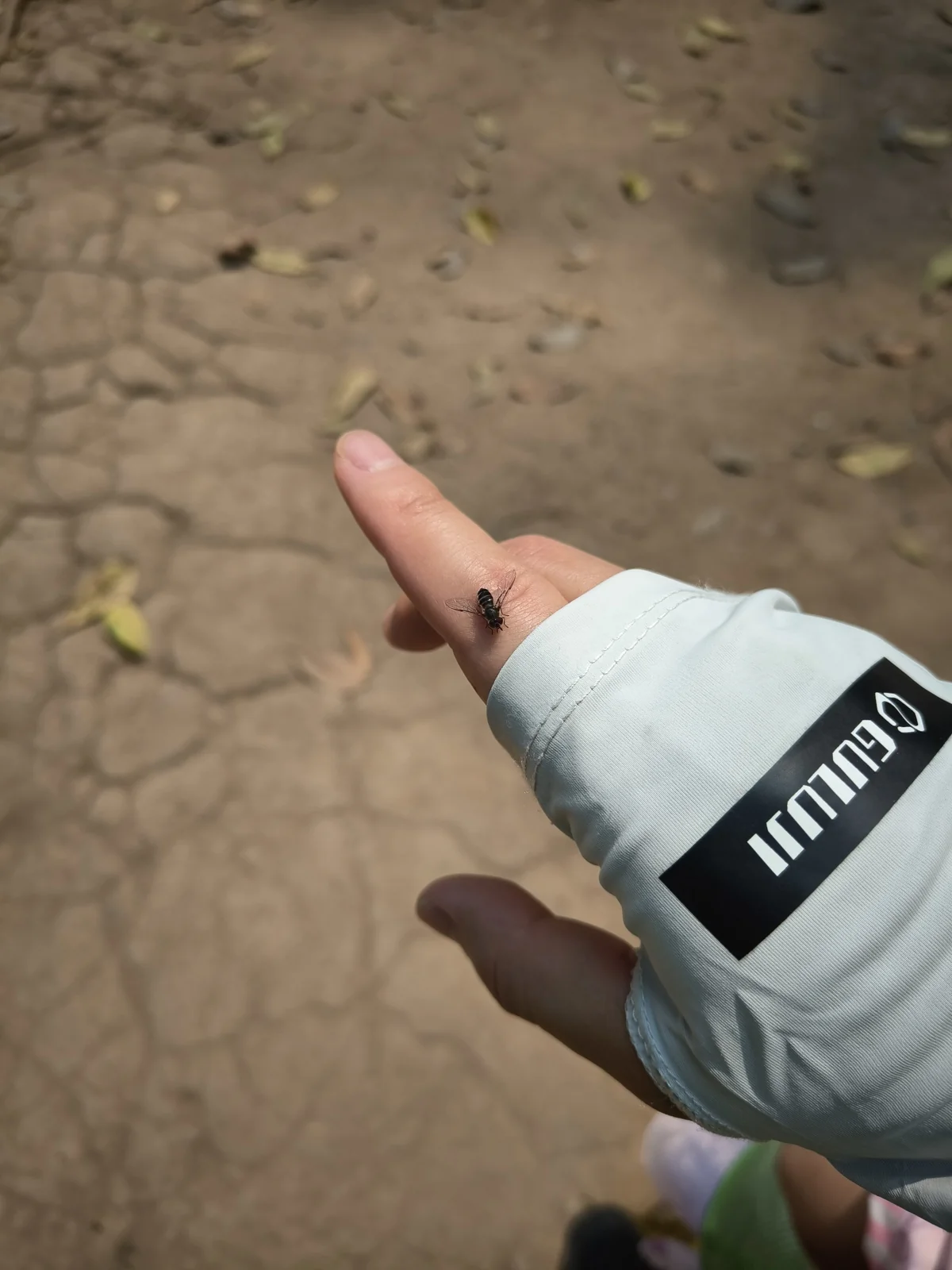
One landed on my hand; looking closely revealed it was a hoverfly (family Syrphidae) - a true aerial acrobat of the insect world. Hoverflies are completely harmless flower-visiting nectar feeders and aphid predators. While this individual was a standard specimen, certain species in Hangzhou mimic honeybee colorations perfectly as an evolutionary defense mechanism. Unlike bees, hoverflies possess the rare ability to hover motionless in mid-air and fly in reverse.
Tropical Exhibits & Folk Performances
We spent only brief time in the central commercial and exhibit zone.
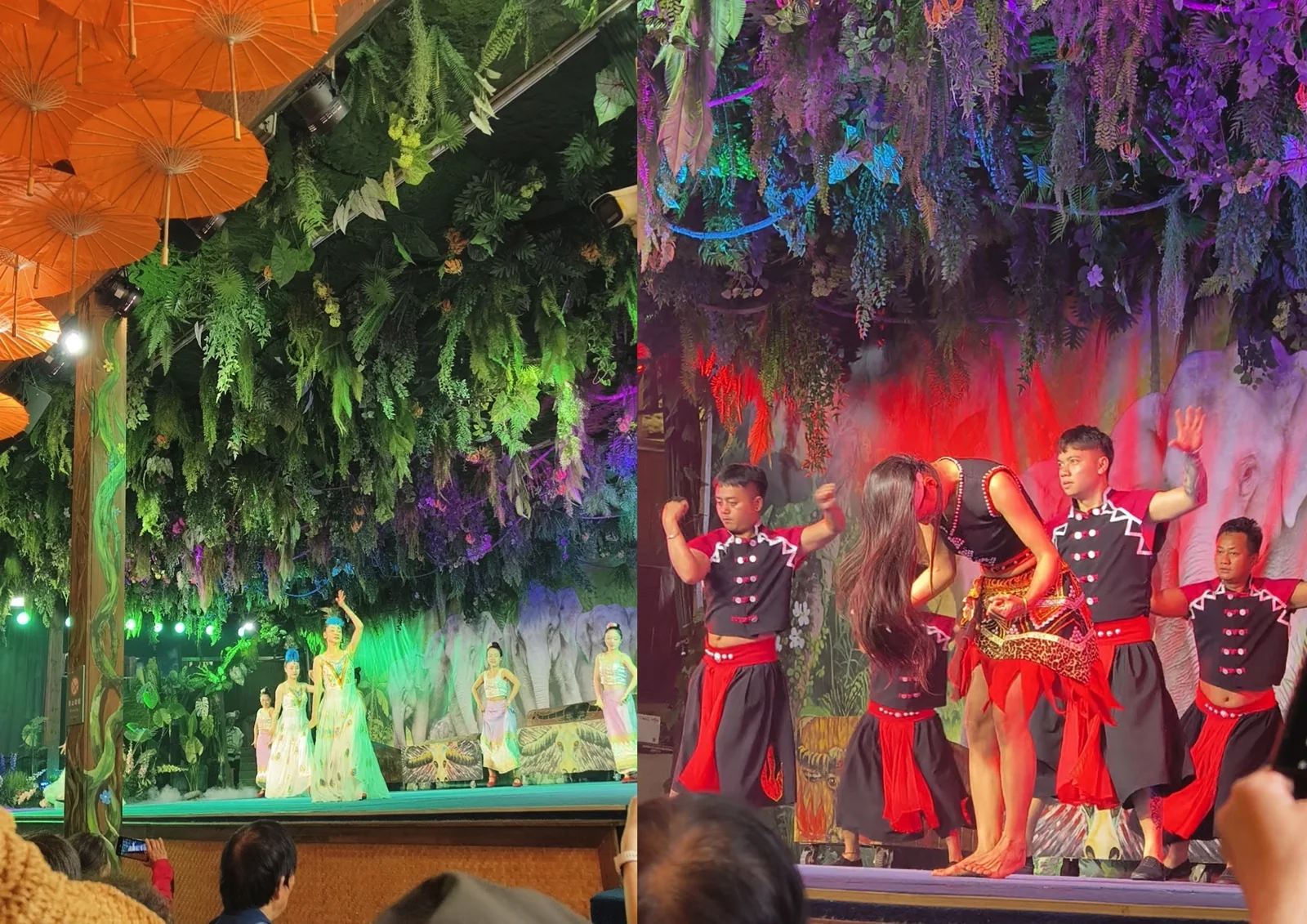
While having lunch in the central plaza, an ethnic folk dance began nearby. It highlighted multiple regional groups, including the iconic hair-swinging dance of the Wa people on the right.
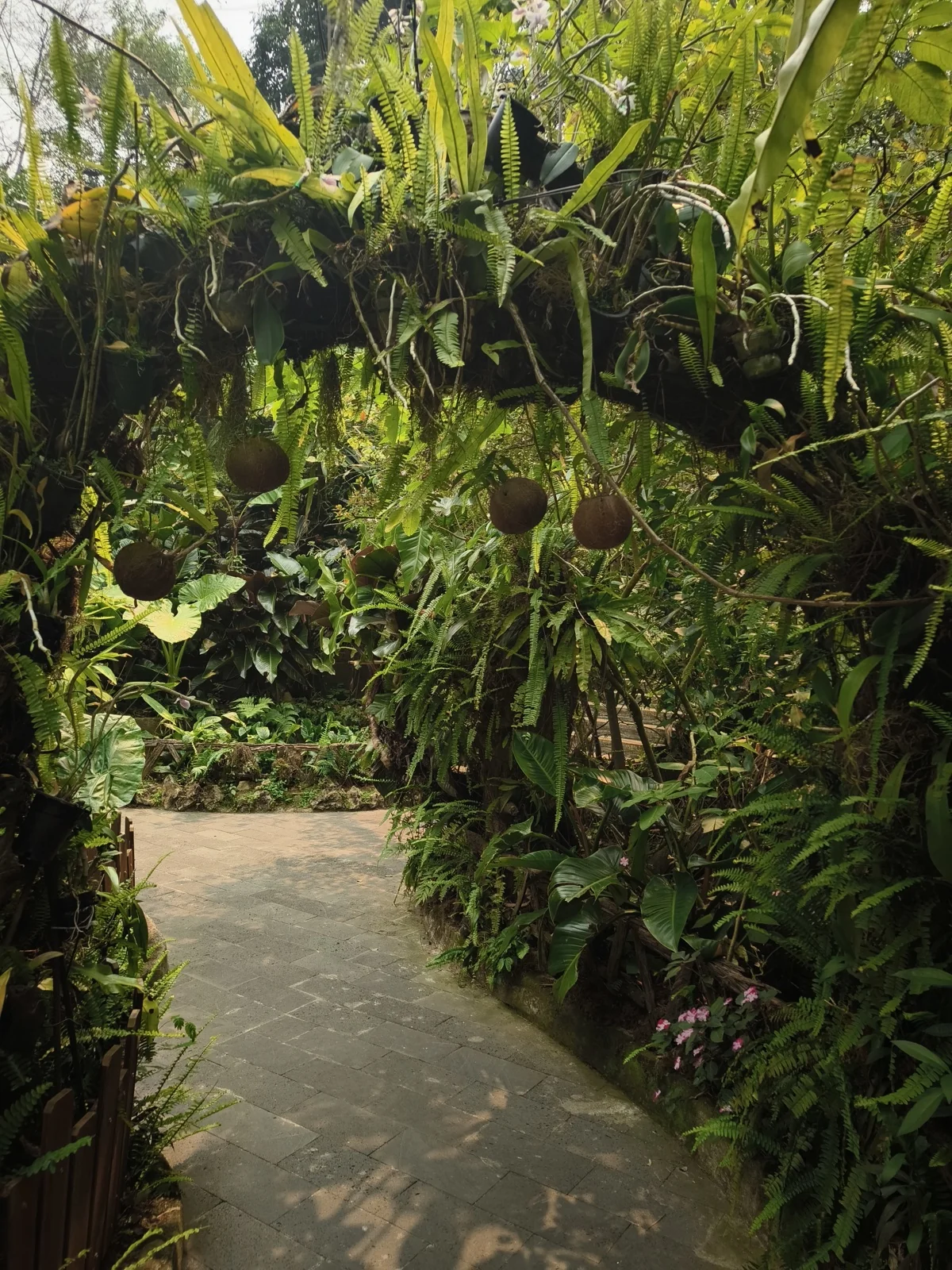
Proceeding toward the cableway station, we passed through the orchid pavilion, which had few blooms in this season. My daughter discovered a tiny snail along the path and proudly held it in her palm the entire way.
Wild Elephant Habitat
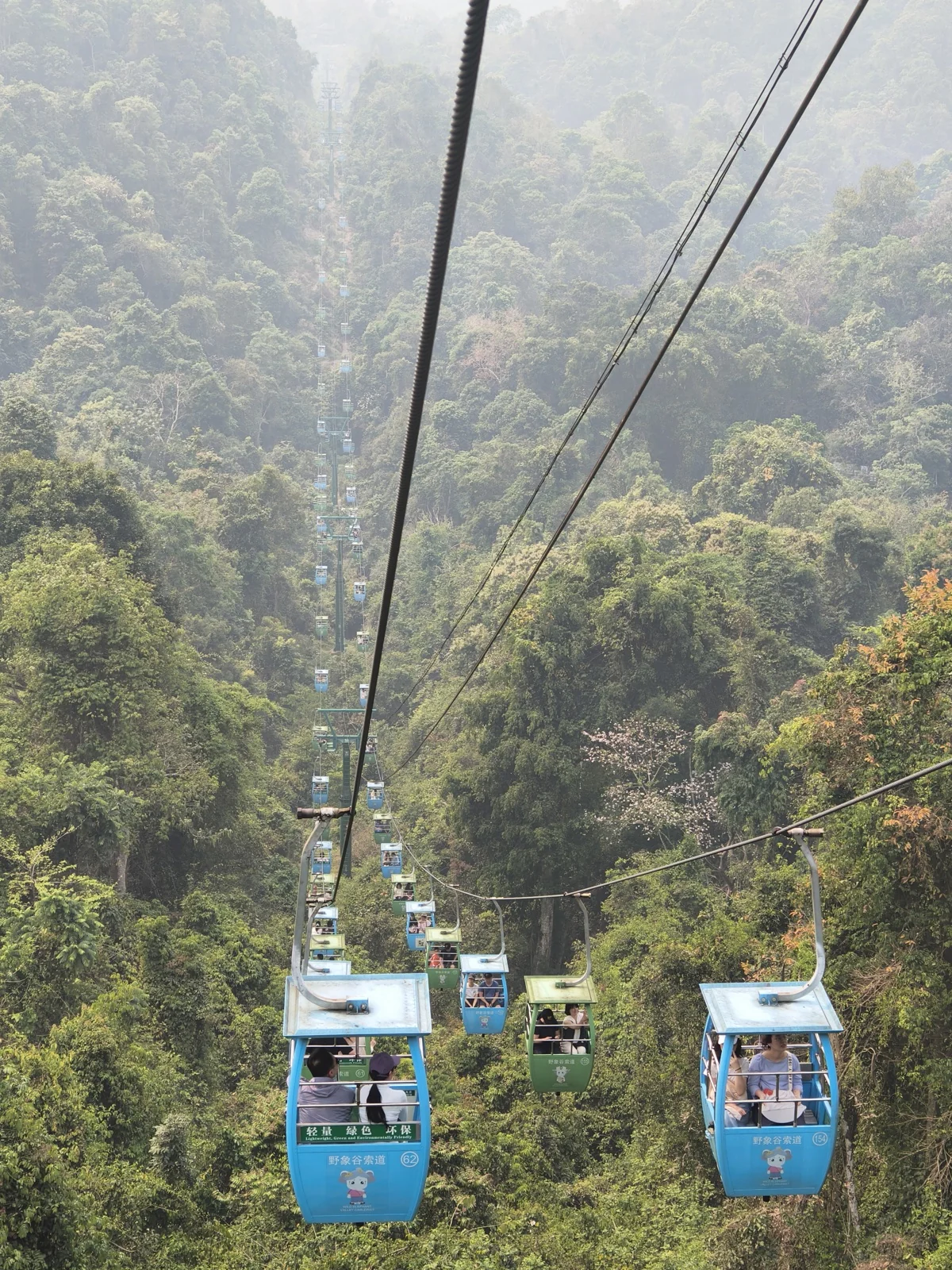
The 30-minute cableway ride ascended across several deep valleys toward the mountain summit. Inside the gondola, an illustrated map marked specific ravines known for frequent wild elephant sightings.
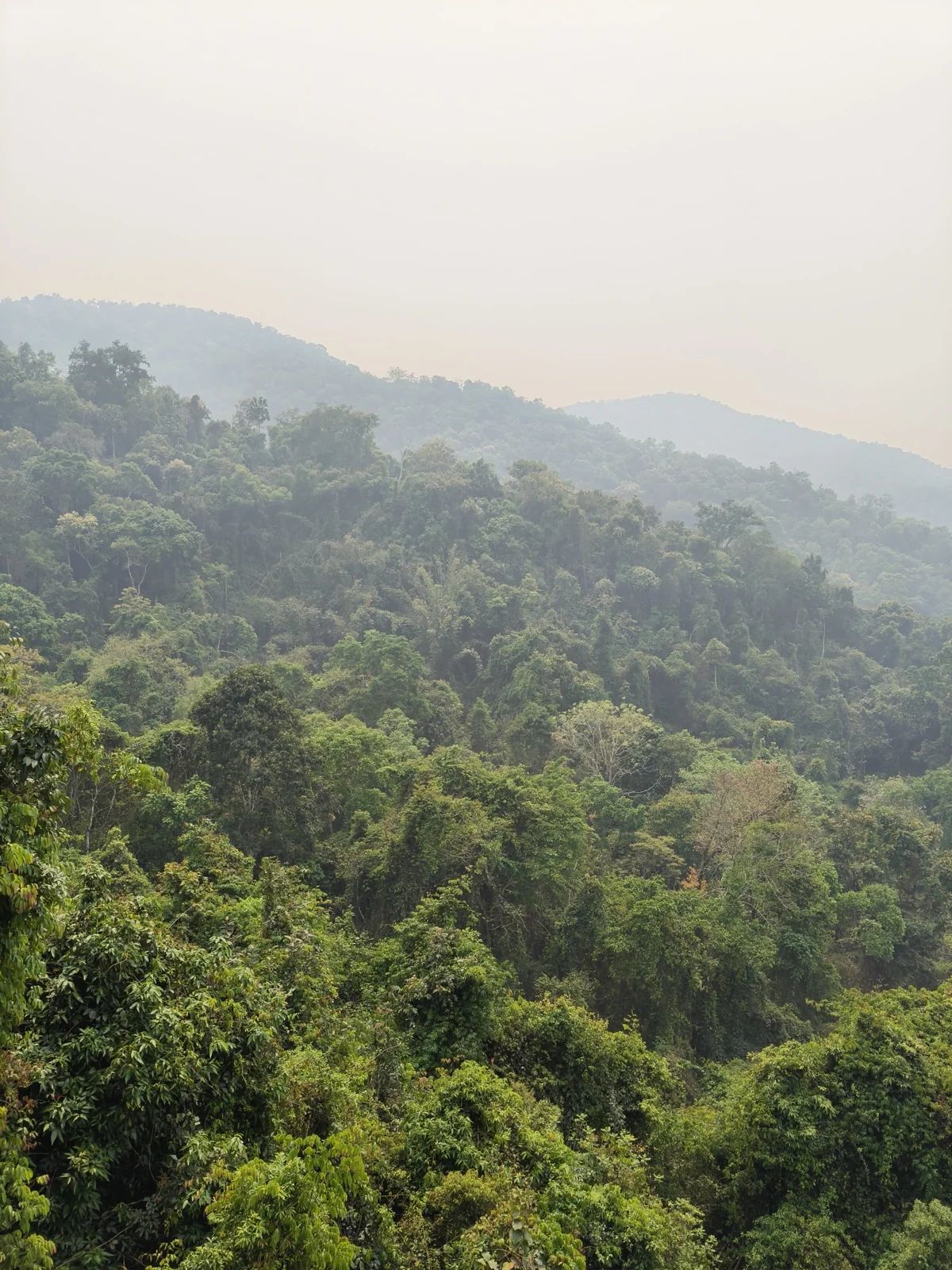
Visually, tropical rainforests differ from temperate forests most distinctly through their sprawling lianas. Like giant spiderwebs, vines bind the entire forest into a single continuous mass. From the air, individual trees become almost indistinguishable as species lock in endless structural competition.
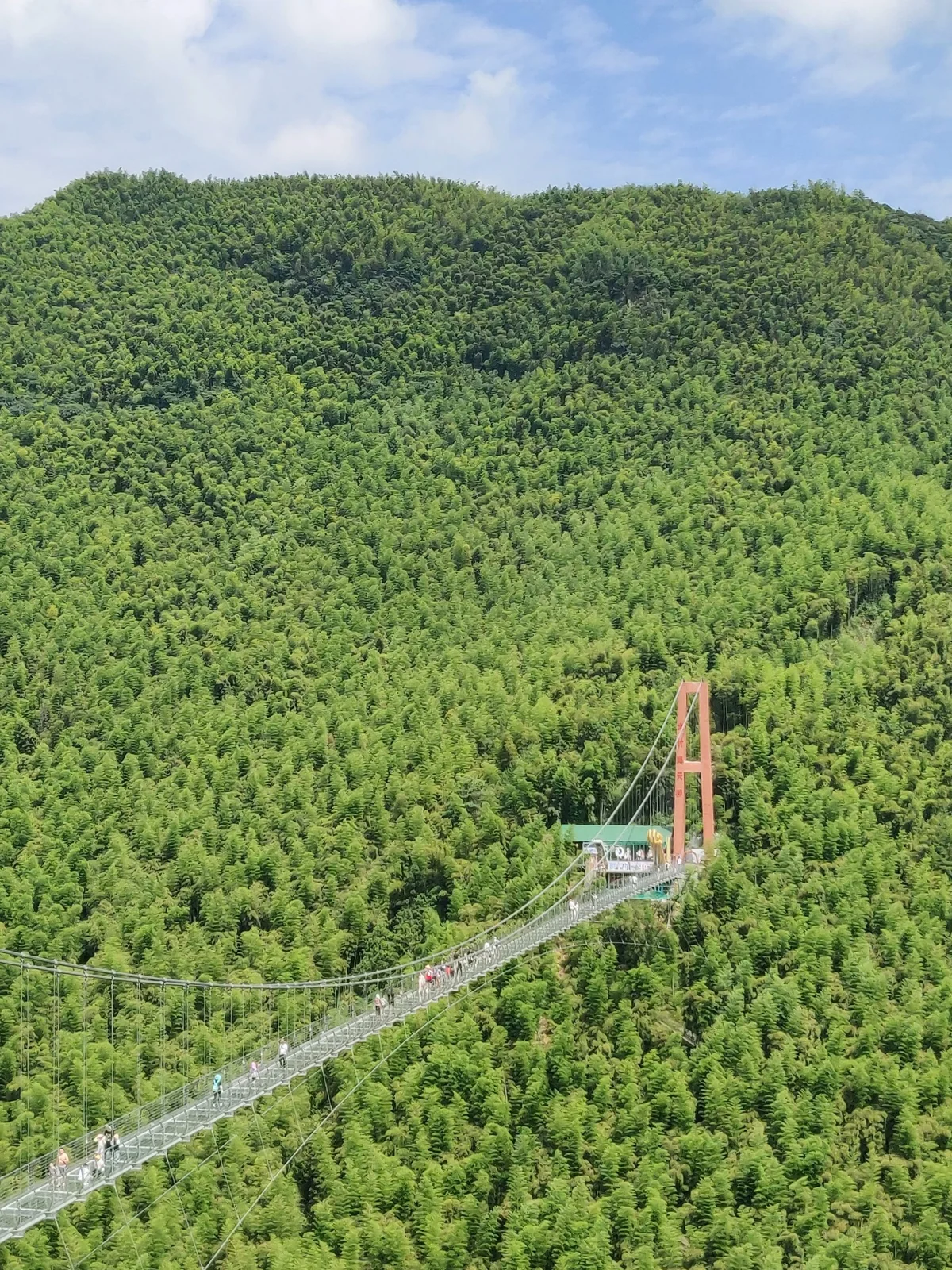
By contrast, here is a photo I took years ago of an orderly bamboo forest in Anji, Zhejiang, where temperate plant competition is far more restrained.
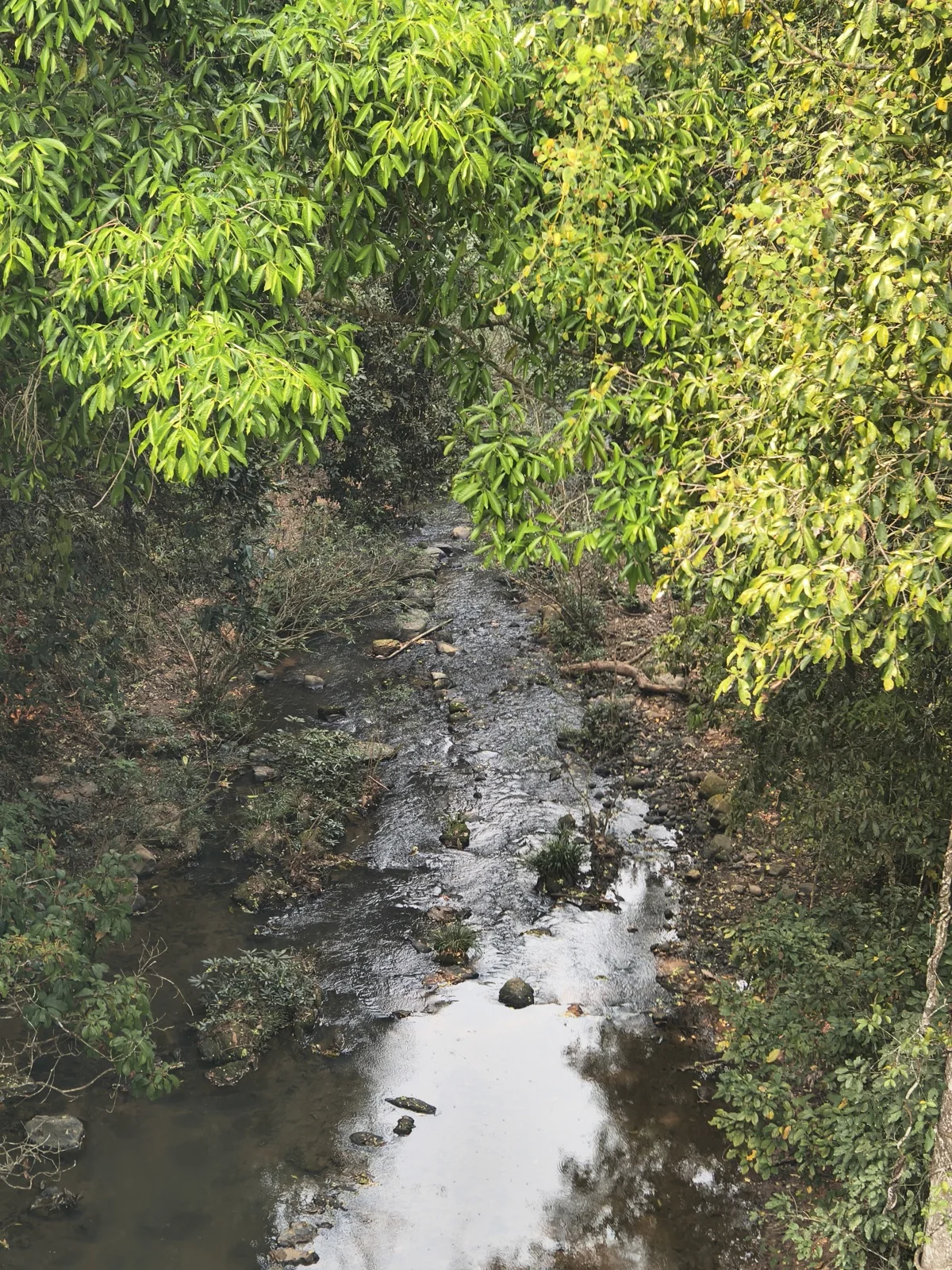
We continuously scanned the canopy and riverbanks for wild elephant activity, as water sources offer the highest probability of sightings.
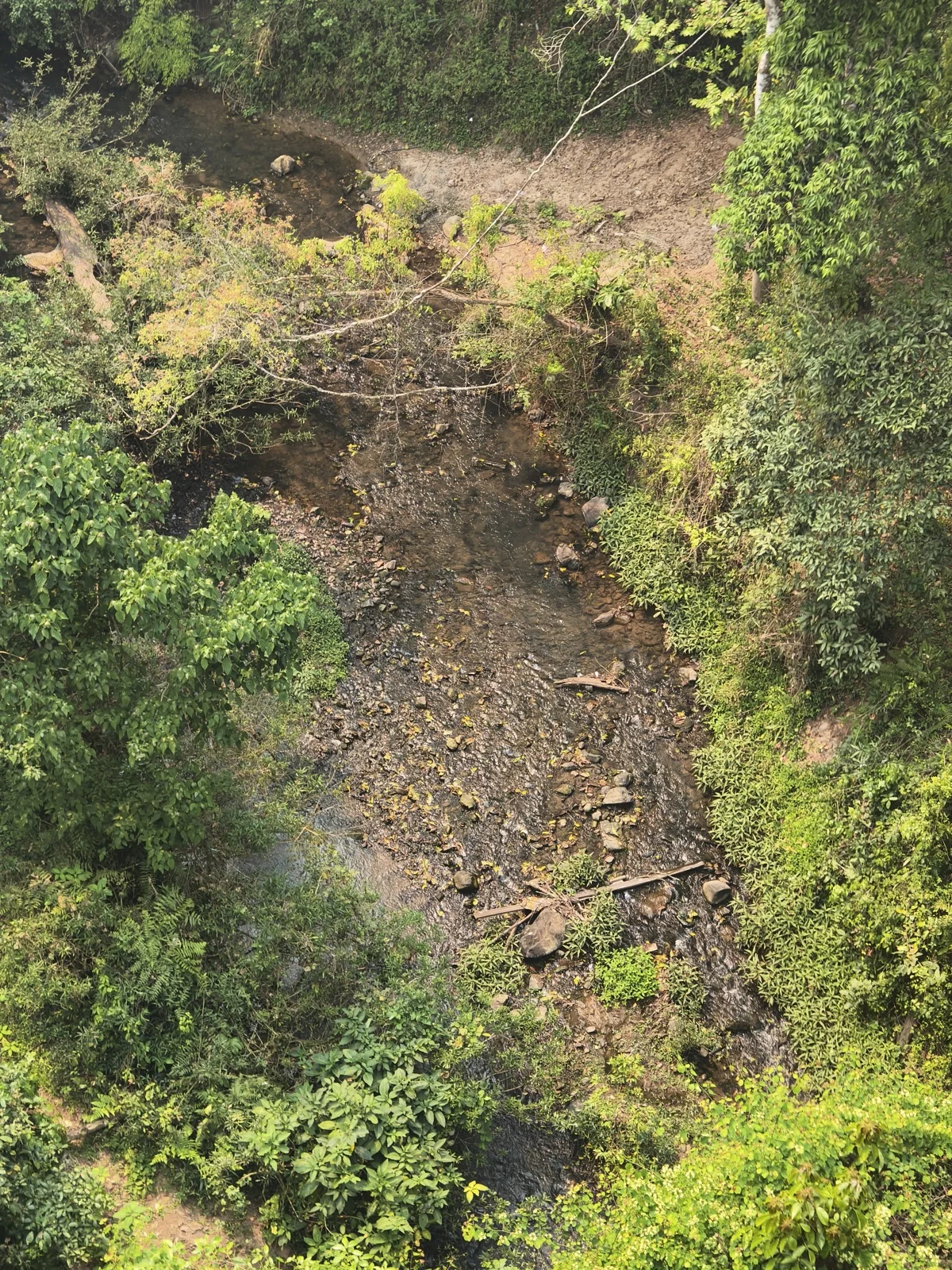
Rangers advised us to look for concentrations of fresh elephant dung near gravel bars as markers of active foraging paths.
Exiting the upper cableway terminal leads to an observation pavilion featuring extensive entomology panels covering Coleoptera, Hymenoptera, Lepidoptera, Diptera, Neuroptera, and Arachnids, which captivated both my daughter and me.
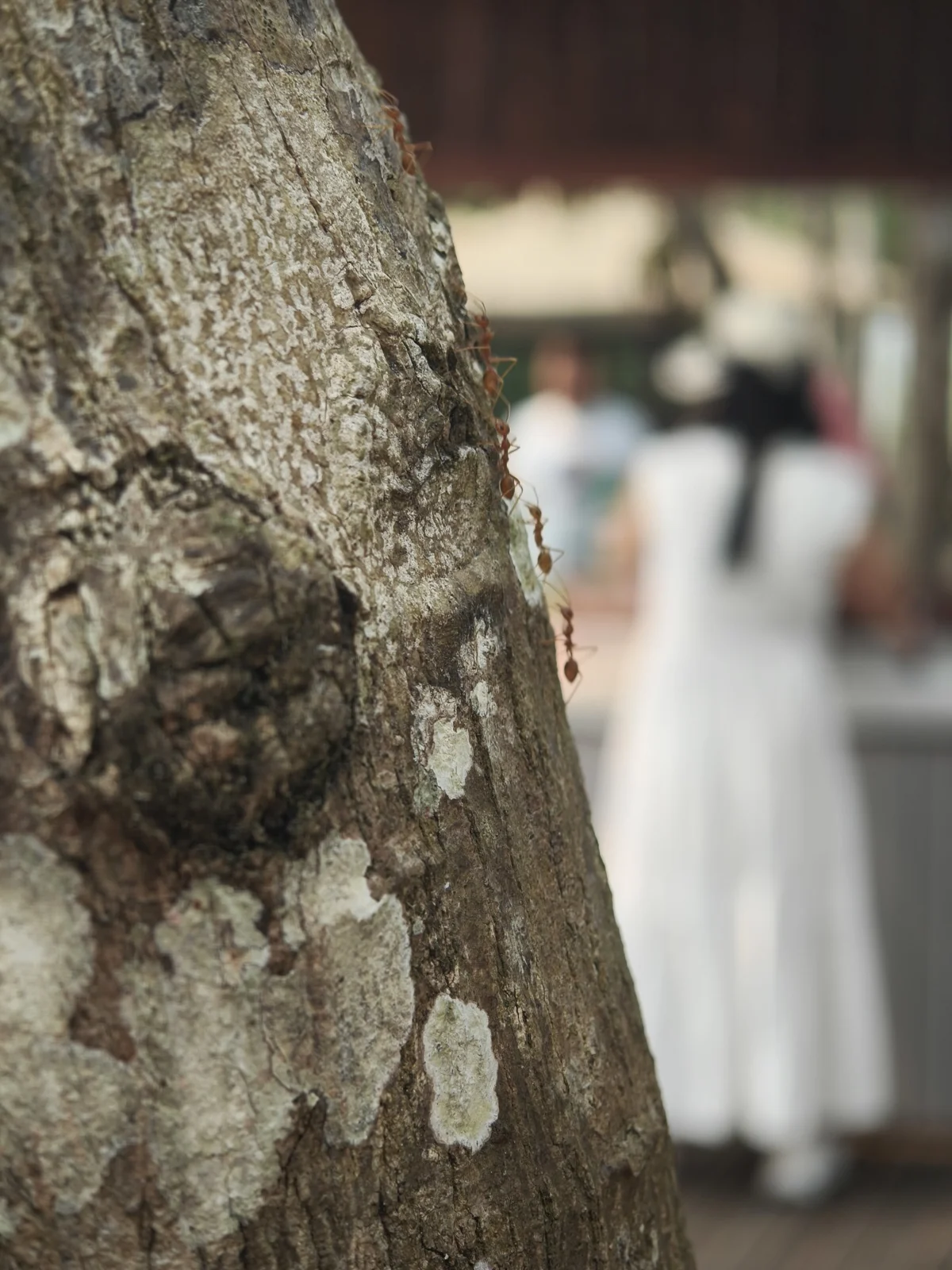
On nearby trees, large reddish ants were active. My immediate thought was whether these might be aggressive invasive Red Imported Fire Ants (Solenopsis invicta), as staff cautioned visitors against touching red ants. Fire ants are high-risk invasive pests present in southern Yunnan whose stings can cause severe allergic shock.
However, careful anatomical comparison confirmed these were native Asian weaver ants (Oecophylla smaragdina). Weaver ants have a uniform golden-orange hue across their entire body, whereas fire ants feature noticeably darker, nearly black gasters.
Furthermore, weaver ants construct arboreal nests by binding living leaves with larval silk, whereas fire ants build low earthen mounds on the ground. Weaver ants exhibit localized territorial defense rather than the aggressive swarm-and-sting behavior of fire ants.
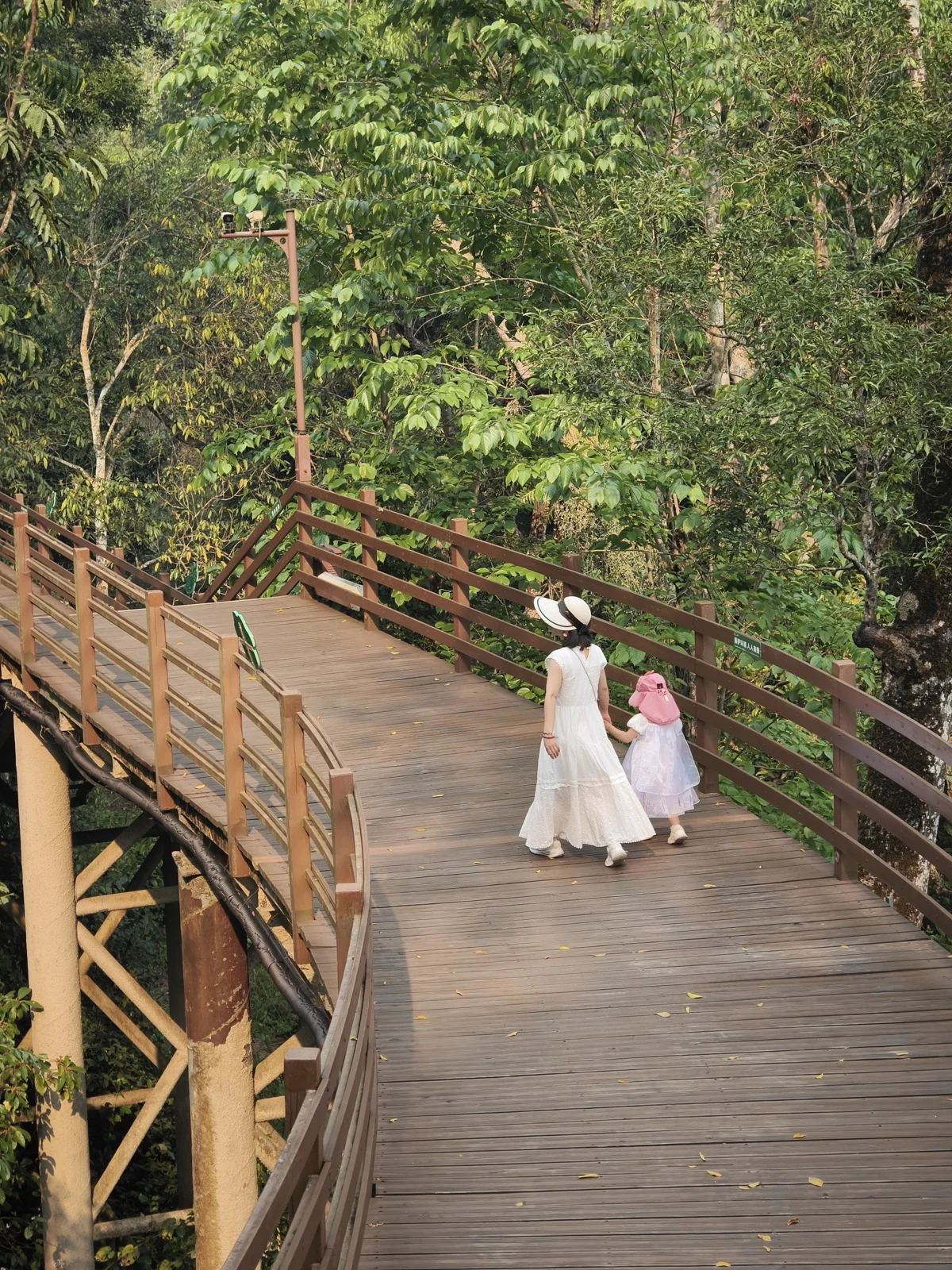
We did not spot wild elephants that day. While termed “high-frequency activity zones,” wild sightings remain relatively rare, and visitors should not approach the valley with an absolute expectation of seeing wild herds.
Here, humans are merely guests. Wild elephants roam freely across thousands of hectares and do not exist to entertain tourists. Catching a glimpse of the forest’s true masters is a matter of pure luck; our true purpose was to immerse ourselves in their habitat and observe the intricate rainforest ecosystem with open mindfulness.
Descending along the elevated boardwalk, the path featured continuous panels dedicated to insect mimicry. Leaf mimics, flower mantises, twig caterpillars, and bird-dropping spiders demonstrated astonishing evolutionary arms races.
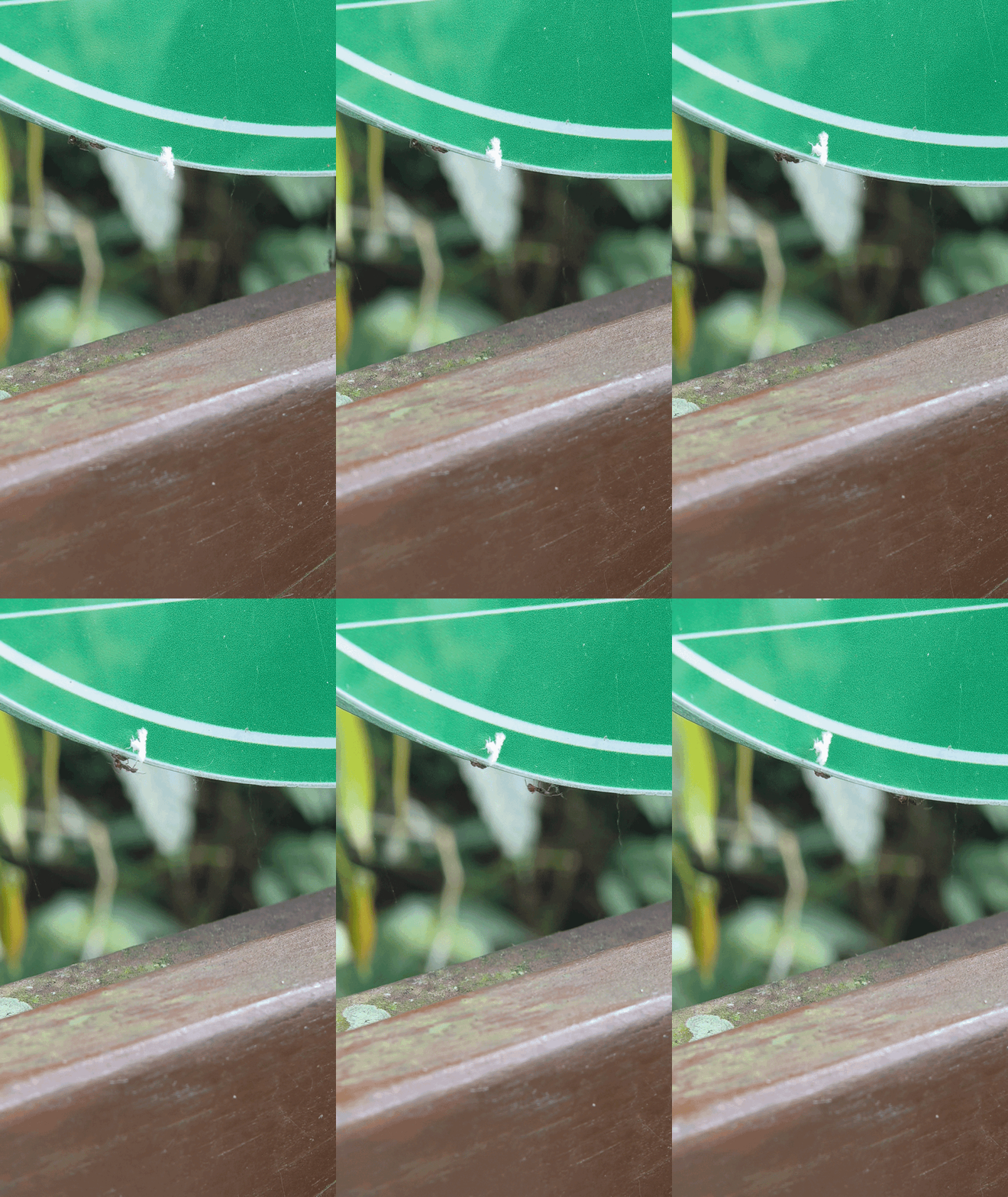
We were fortunate to spot a living mimic in the wild: a flatid planthopper nymph (Flatidae), commonly nicknamed “walking popcorn.”
Planthoppers earn their “wax” moniker honestly: nymphs secrete tufts of hydrophobic waxy filaments from their abdominal glands, creating a fluffy white coat several times larger than their actual body. This serves as a deceptive decoy that deters predators or breaks away harmlessly during an attack, allowing the nymph to escape unharmed.
We originally planned to take the boardwalk back to the central hub to visit the butterfly sanctuary, but inadvertently followed an alternate path out through the north gate. Before leaving, we passed an exhibit hall playing wildlife camera footage of elephant herds across Xishuangbanna, featuring heartwarming compilations of calves tumbling and playing together.
Day 5: Tropical Flower Garden
Located within downtown Jinghong, this botanical park is often overlooked. If you do not plan to travel to the distant Xishuangbanna Tropical Botanical Garden in Mengla, this serves as an ideal urban alternative.
It is a professionally curated research garden with clearly defined thematic zones and a single entrance/exit gate. In addition to plant collections, the furthest sector features a popular artificial white sand beach.
Our bundled family ticket included fish feeding, deer feeding, and a “miracle fruit” tasting experience. At her age, my daughter has developed a genuine fascination with nature, spending the entire day carrying a transparent collection bag to gather fallen blossoms and seed pods.
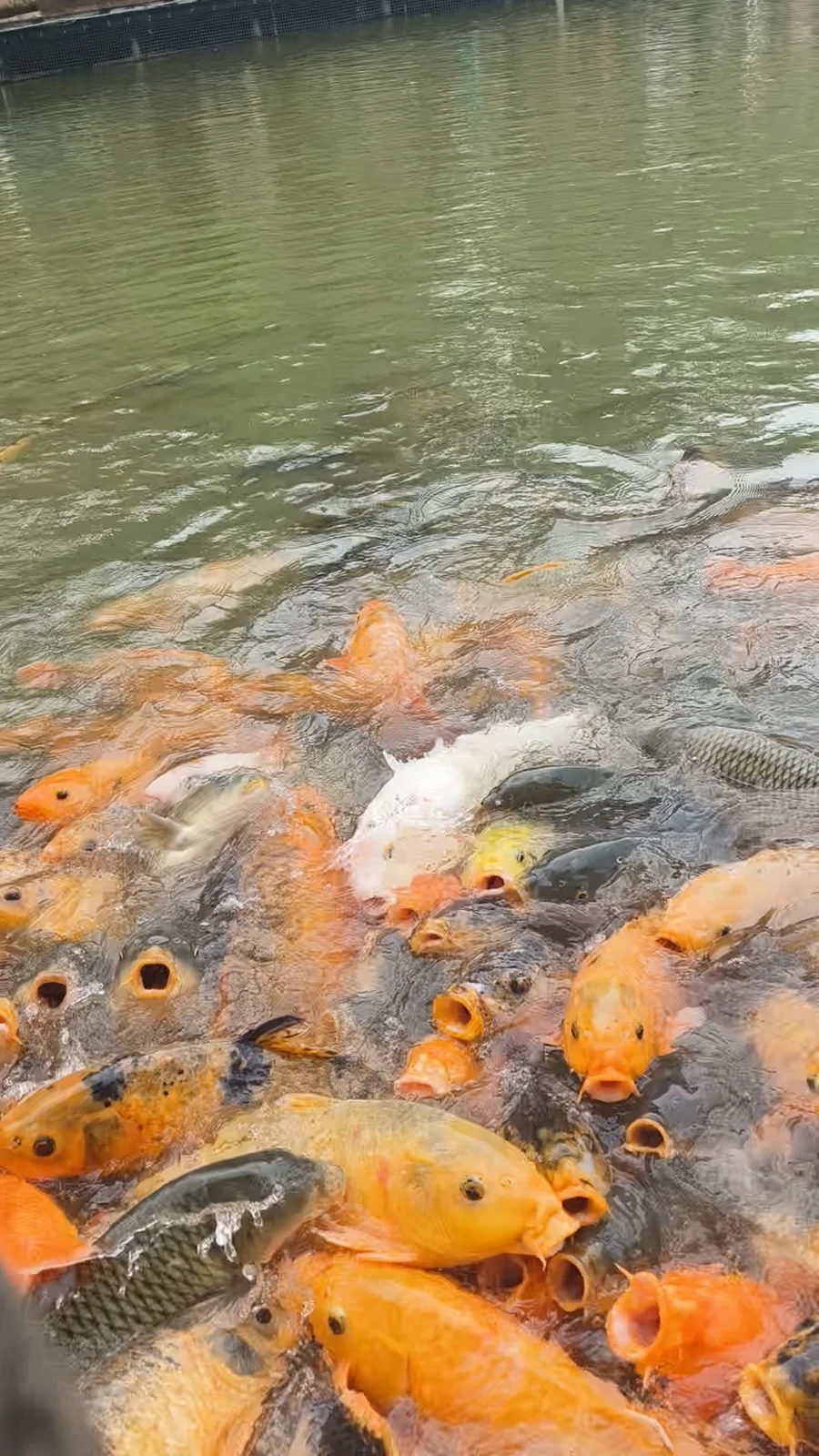
The entrance opens onto a large koi pond. The fish are vigorously conditioned to visitors; scattering a handful of pellets creates a feeding frenzy so intense that fish are pushed completely above the water’s surface.
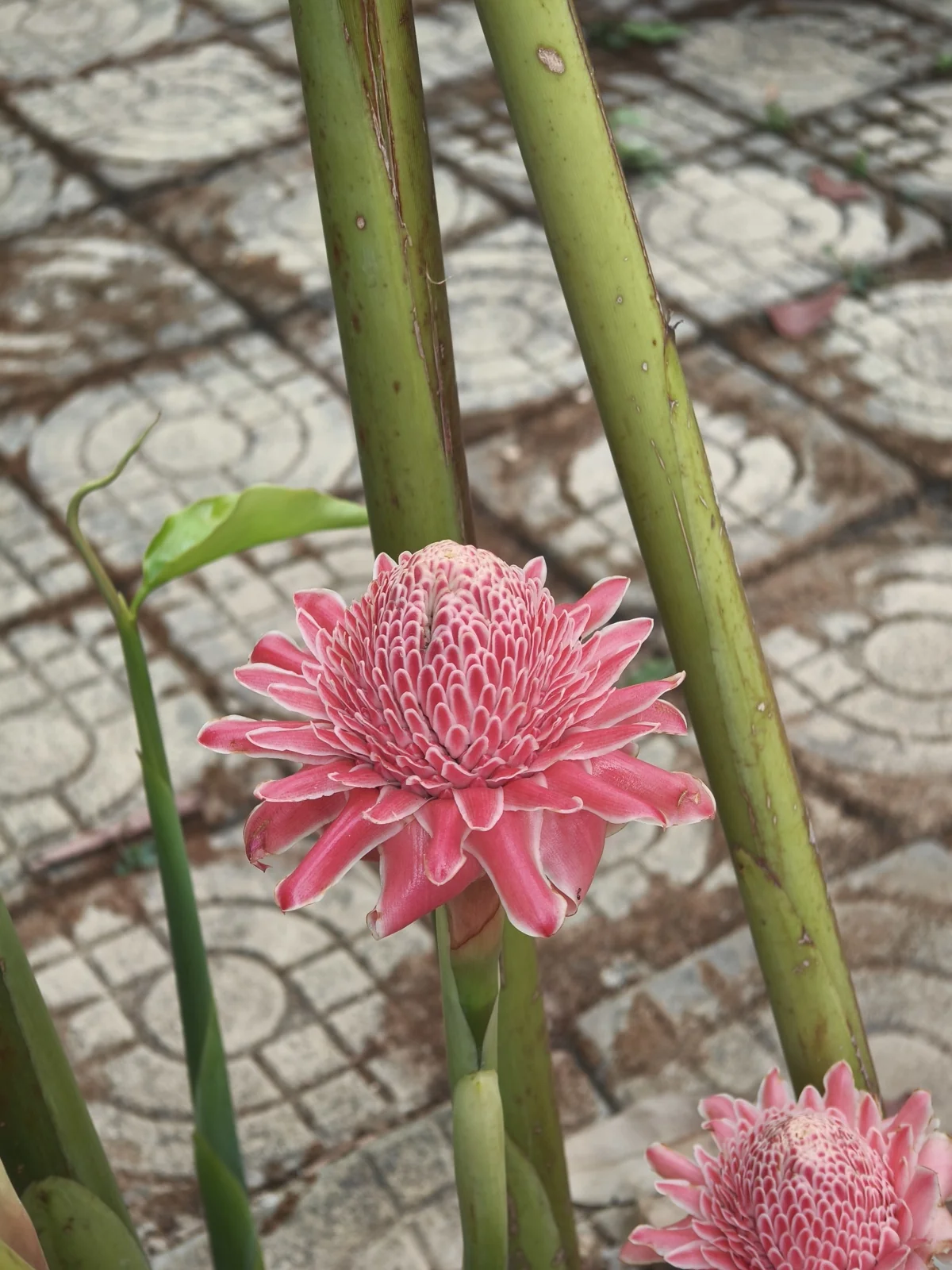
Nearby, we encountered torch ginger (Etlingera elatior). The striking scarlet “petals” are actually modified bracts; the true botanical flowers are tiny blossoms nestled deep within the cone.
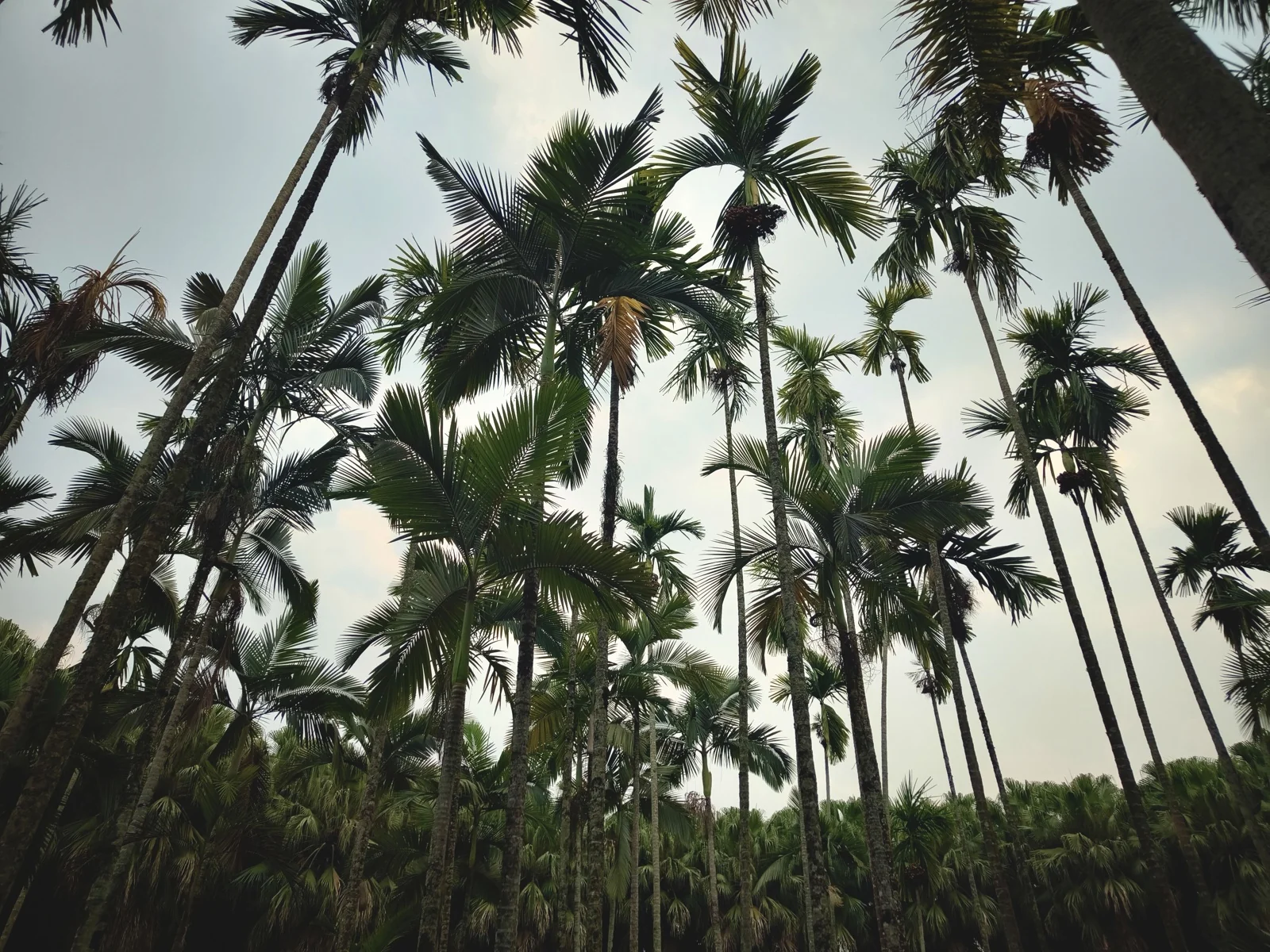
A dedicated grove featured betel nut palms (Areca catechu), a common sight across Jinghong streets with their slender, sky-reaching trunks and compact crownshafts.
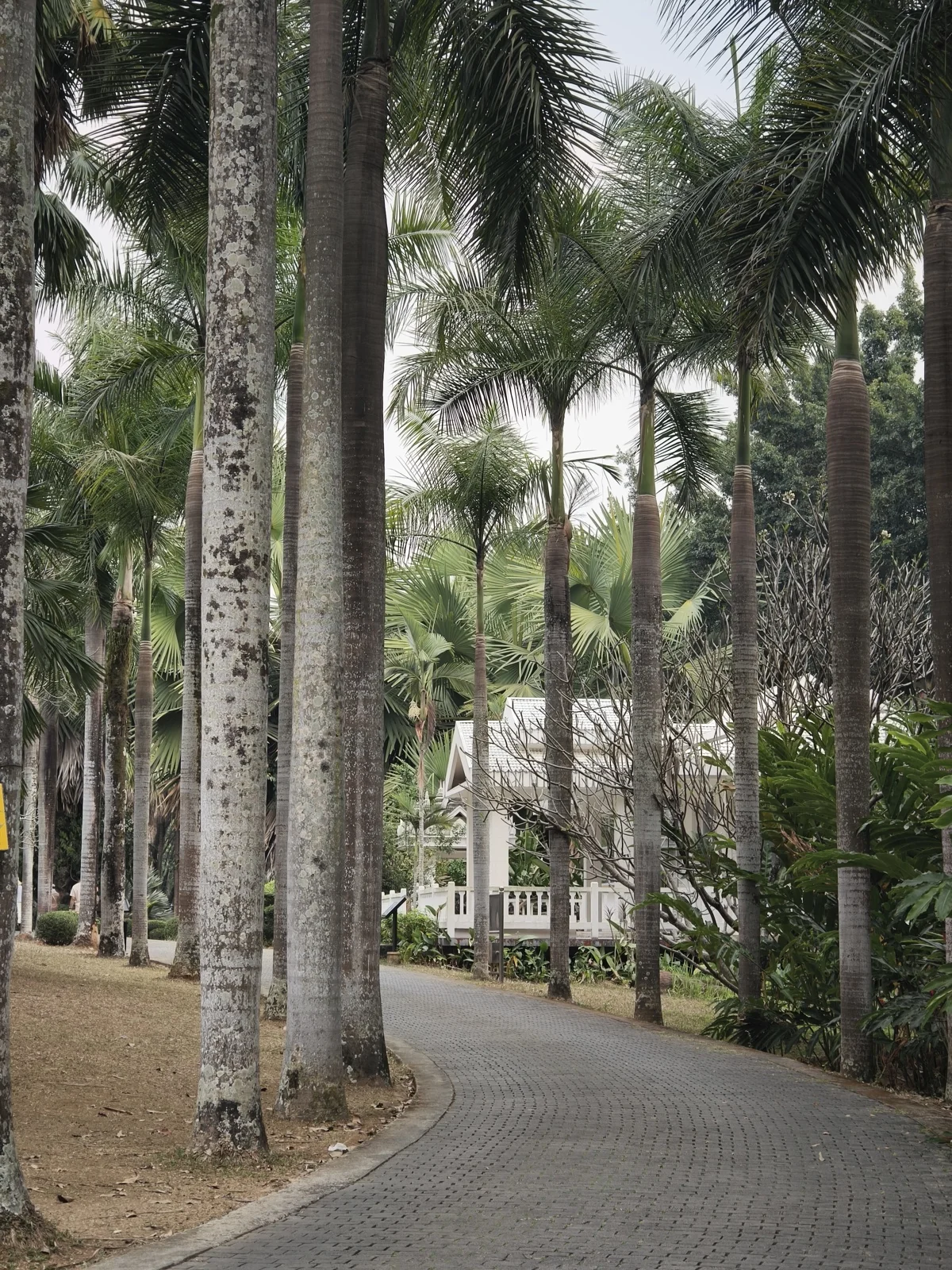
Another grand avenue was flanked by towering royal palms (Roystonea regia). Even without focusing on botany, strolling through the grounds as an urban leisure park is deeply enjoyable.
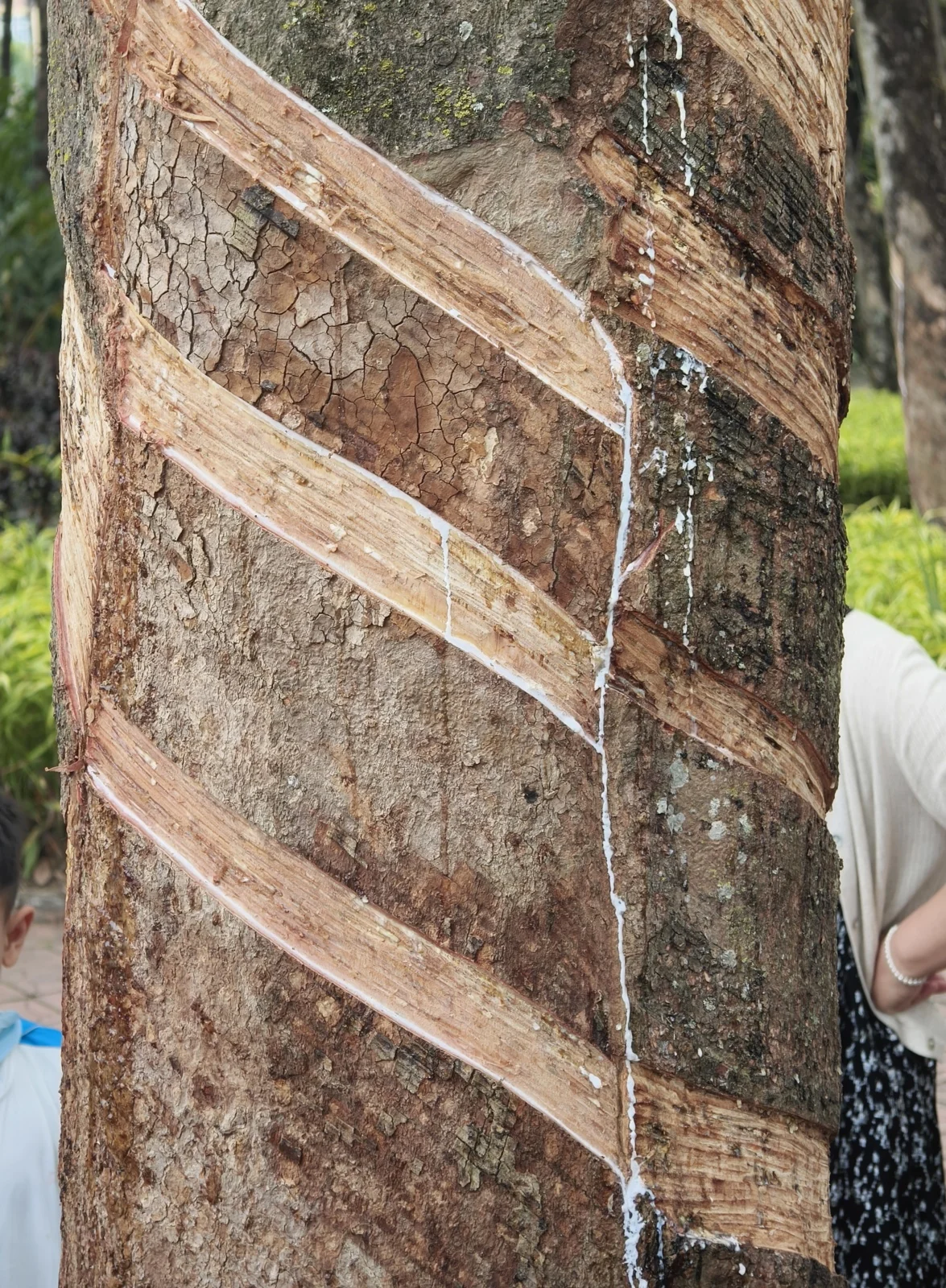
In the rubber demonstration zone, a staff member conducts periodic latex tapping demonstrations with educational commentary. Children eagerly touched the semi-cured white latex ribbons to test their elasticity and poked sticks into the collection cups.
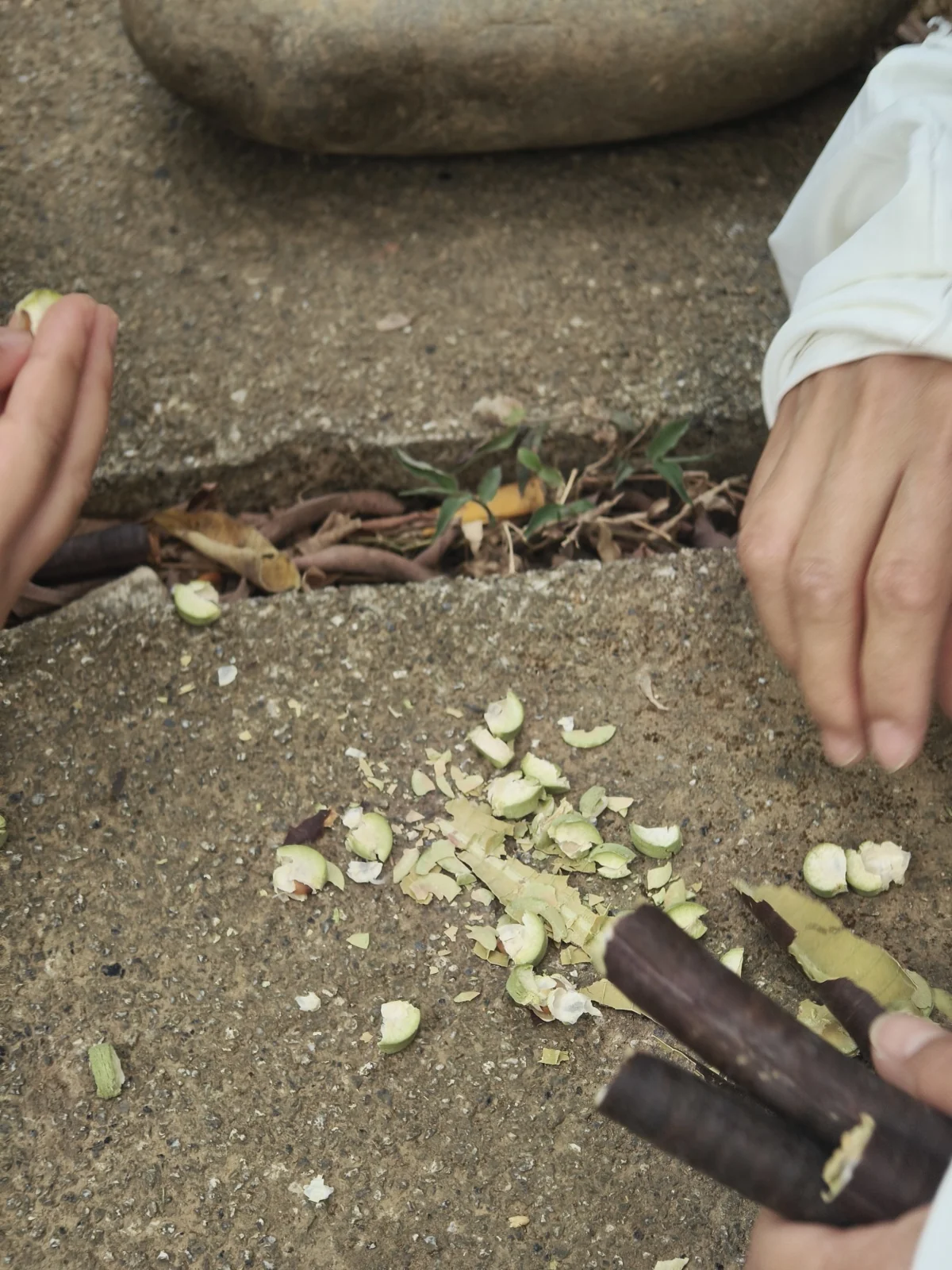
In the next zone, my wife and daughter found fallen pods of the golden shower tree (Cassia fistula). A full pod measures 40 to 50 cm in length with a woody, unbreakable shell.
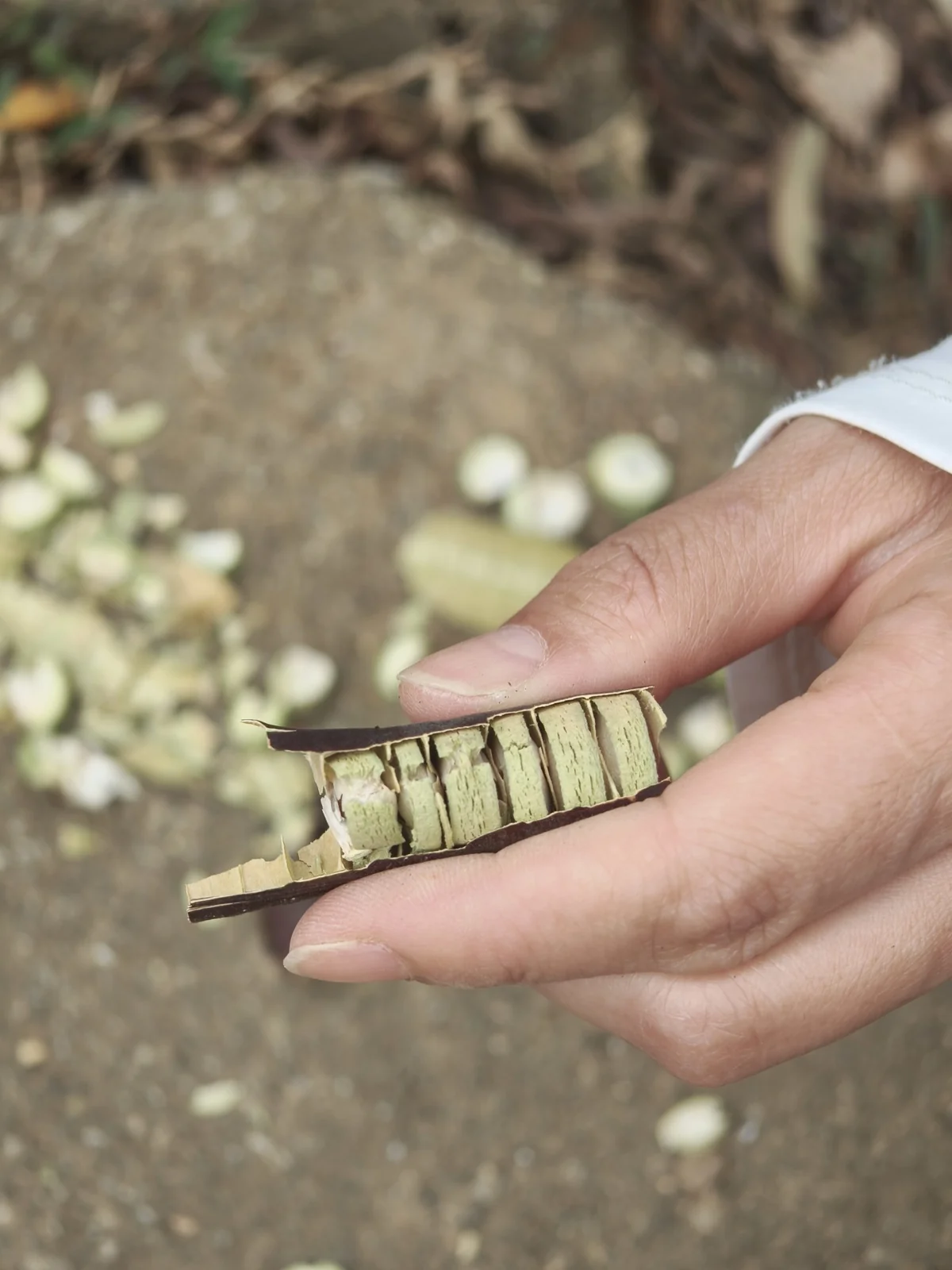
We used a large stone to crack open a fallen rubber seed capsule, revealing an orderly chamber structure resembling a loaded ammunition magazine.
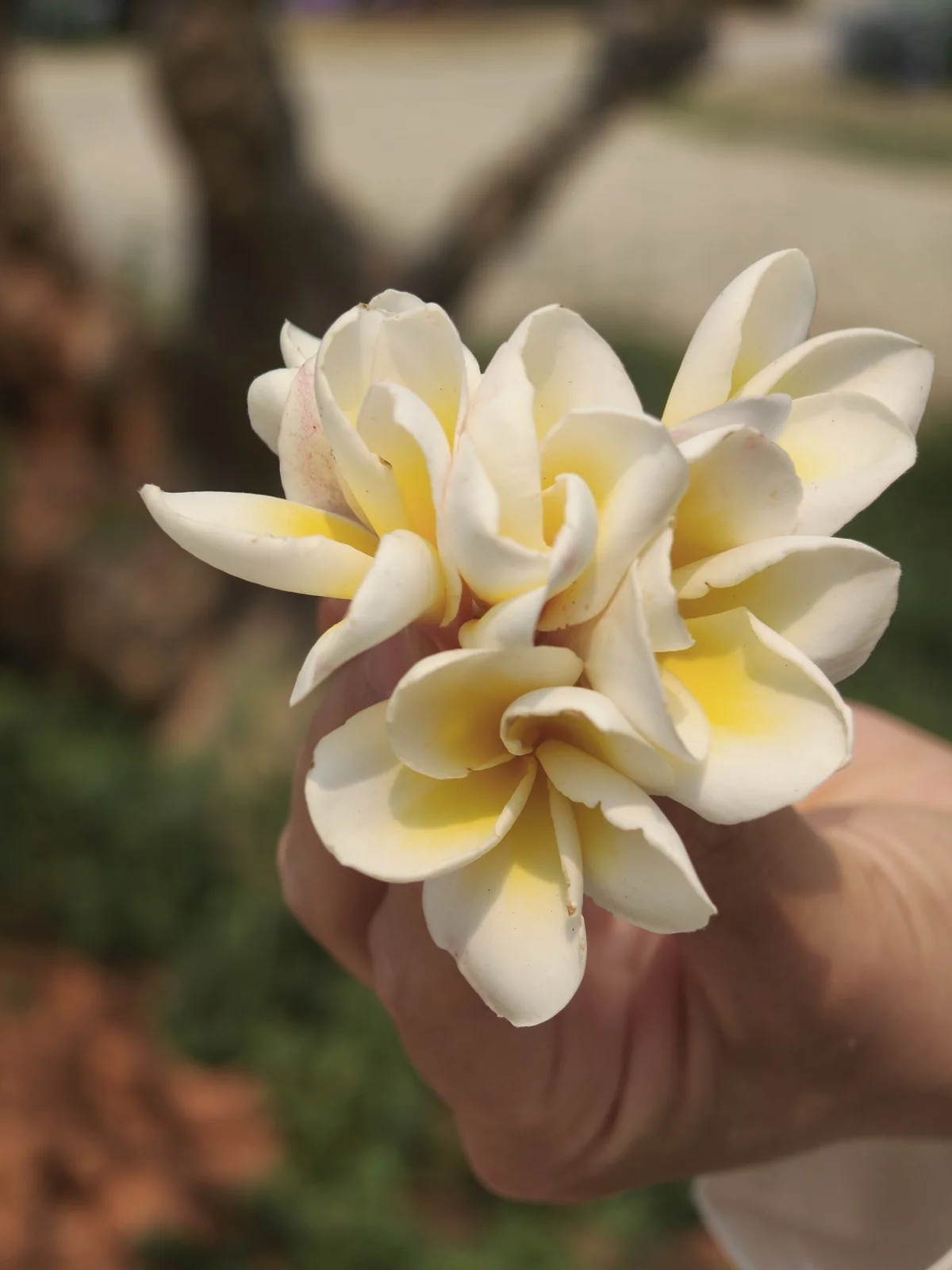
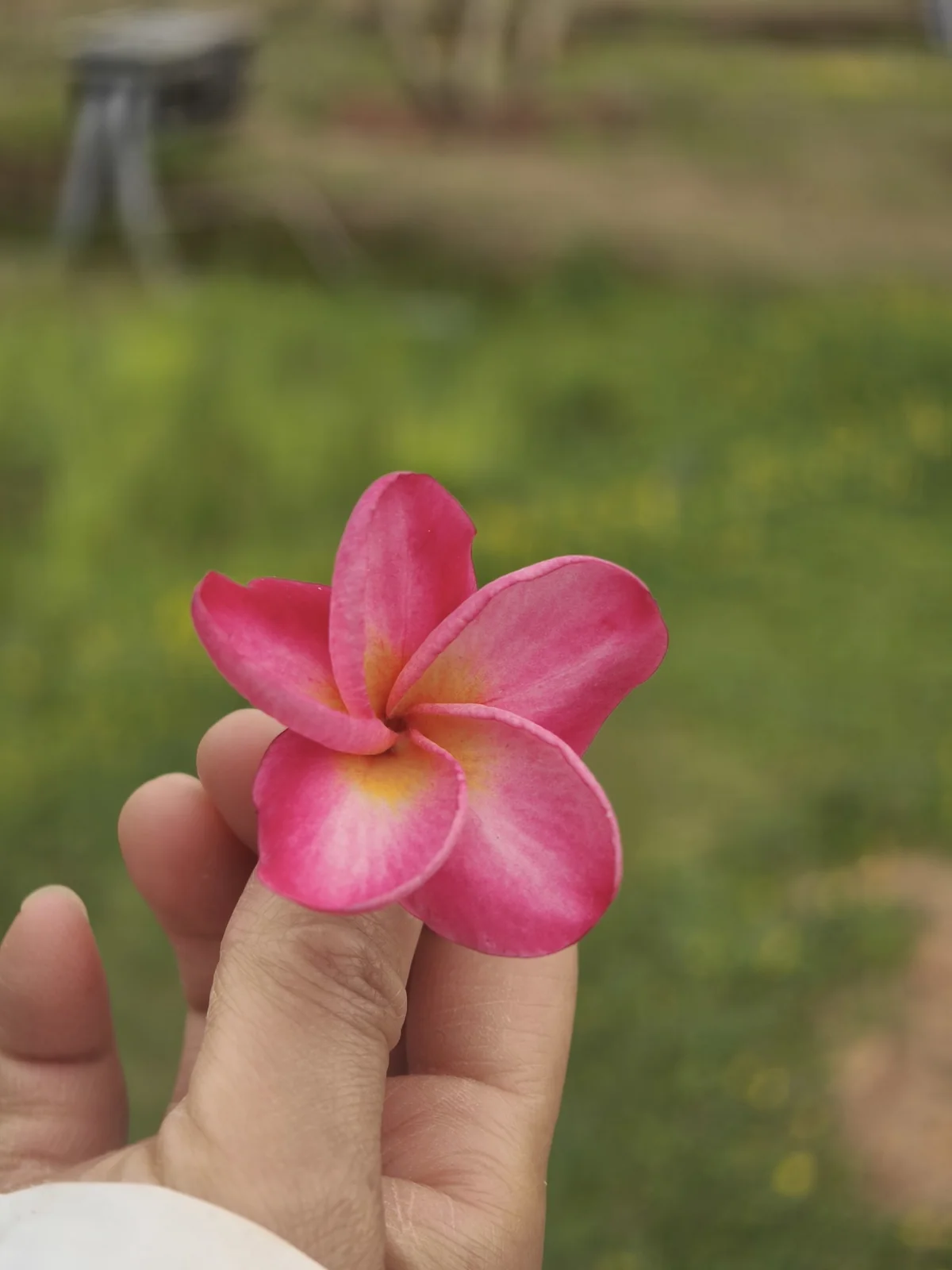
Collecting golden-yellow and magenta frangipani (plumeria) blossoms, my daughter happily filled her collection pouch.
At the pavilion entrance to the orchard, we participated in the “miracle fruit” tasting and deer feeding.

Miracle fruit (Synsepalum dulcificum) is a small red grape-sized berry. The staff first served slices of fresh lime and sour green papaya; my wife’s face instantly contorted from the intense acidity.
We then ate a miracle fruit each; the berry itself has a neutral, slightly bland taste with thin pulp and a large seed. Yet when we tasted the lime and sour papaya immediately afterward, the sourness was entirely transformed: the lime tasted as sweet as honeyed lemonade, and my daughter remarked the papaya tasted just like sweet apple. The miraculin glycoprotein temporarily binds to taste receptors, altering acid perception for roughly 15 to 30 minutes.
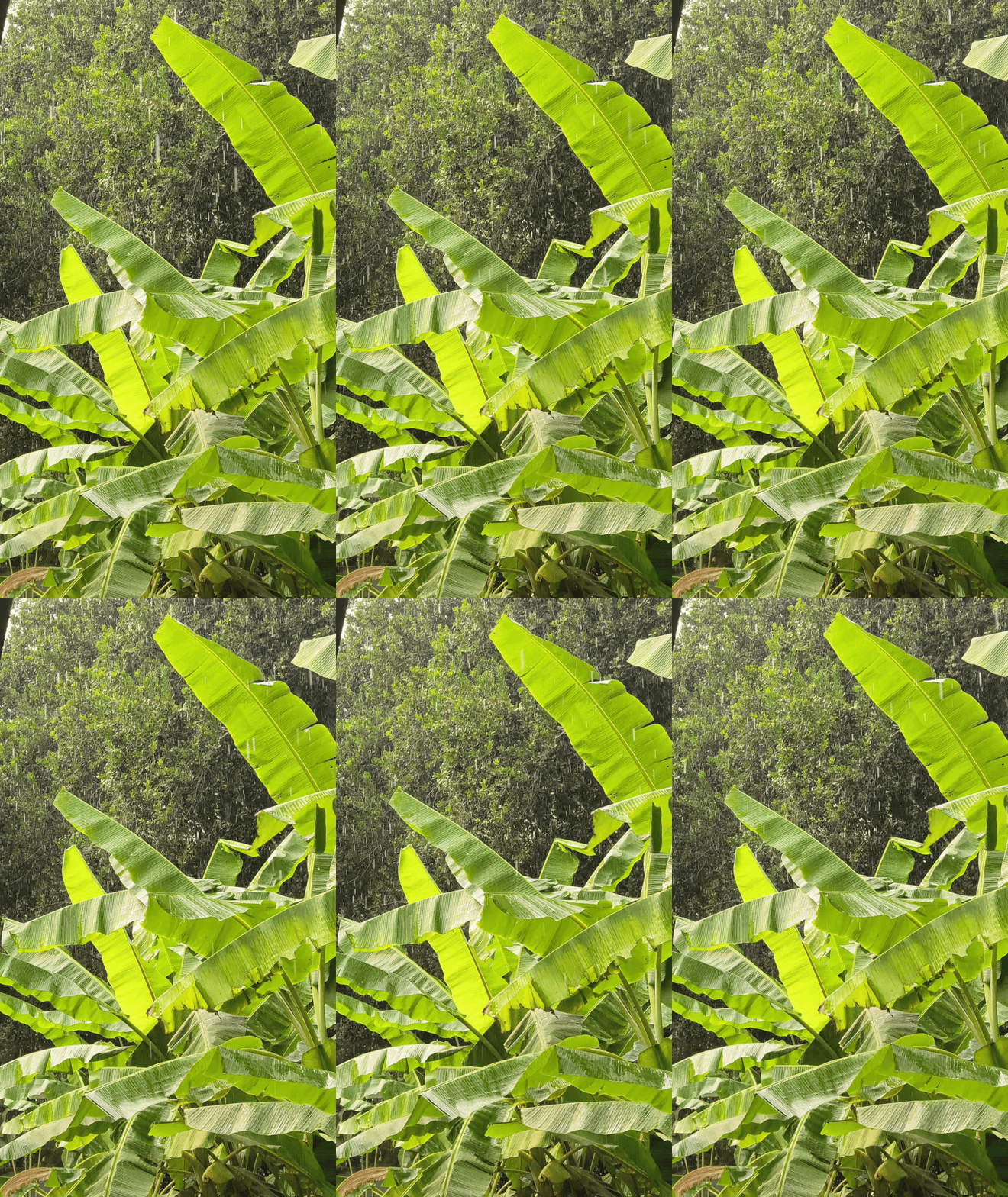
After feeding the sika deer, a sudden tropical downpour struck, and we sheltered under wide eaves for over 20 minutes. Being caught in a torrential rain surrounded by lush tropical greenery proved to be an atmospheric travel memory in its own right.
Among diverse biomes - deserts, tundras, temperate forests, river valleys - the tropical rainforest holds a unique distinction: it is the only ecosystem defined by a weather phenomenon in its very name. This is not mere geographical coincidence; rainforests do not simply happen to sit in wet areas.
Tropical rainforests generate their own rain. Due to immense vegetative density, leaf transpiration reaches astronomical levels. The forest acts as a colossal planetary pump, drawing groundwater up into the canopy and evaporating it into the atmosphere under intense equatorial sun. Thick clouds accumulate rapidly directly above the canopy, triggering localized afternoon rain that returns moisture to the soil in a self-contained hydrologic loop.
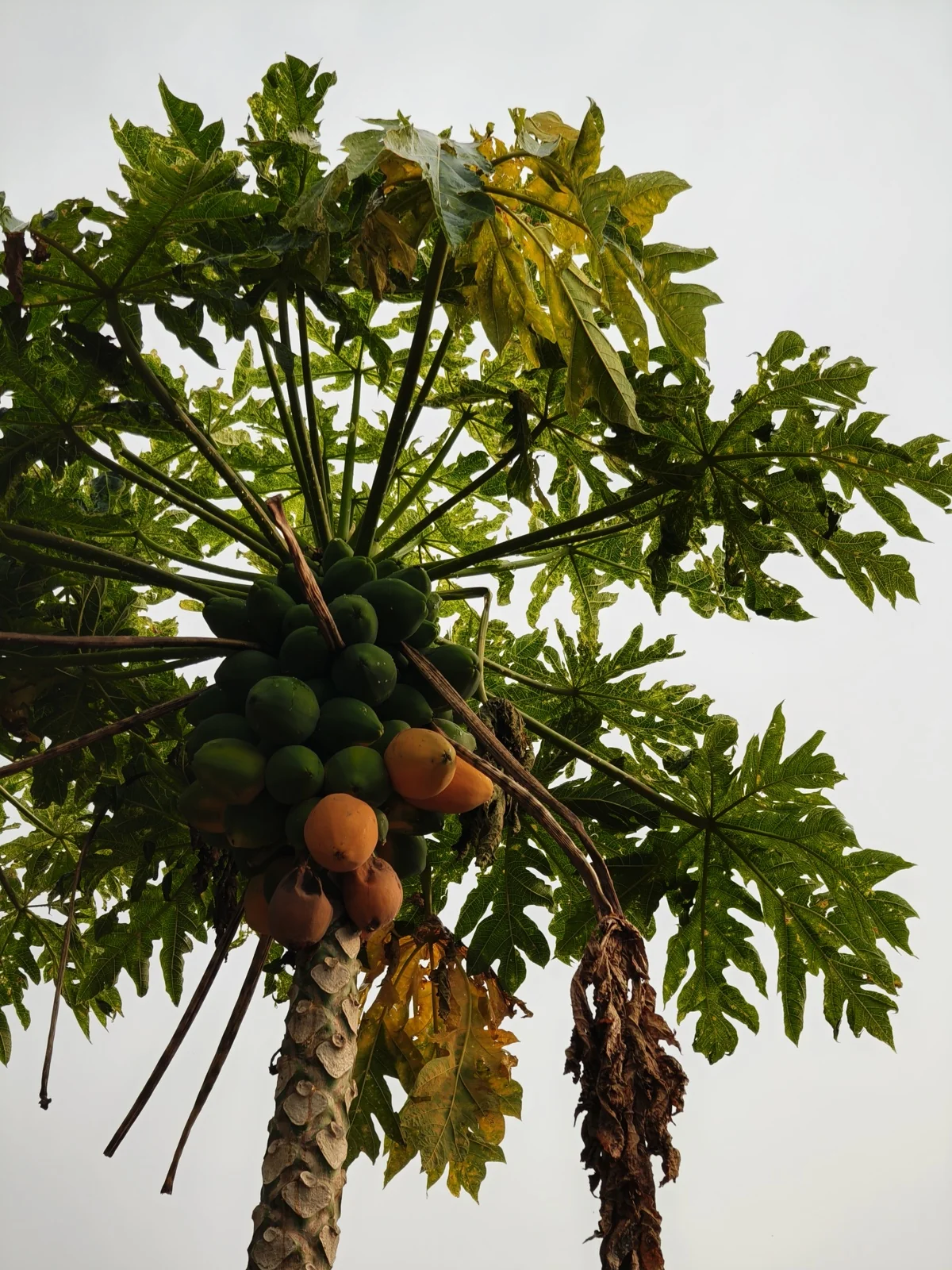
Once the rain cleared, we walked into the fruit orchard, encountering familiar starfruit and papayas alongside exotic jaboticaba and wild silverberries.
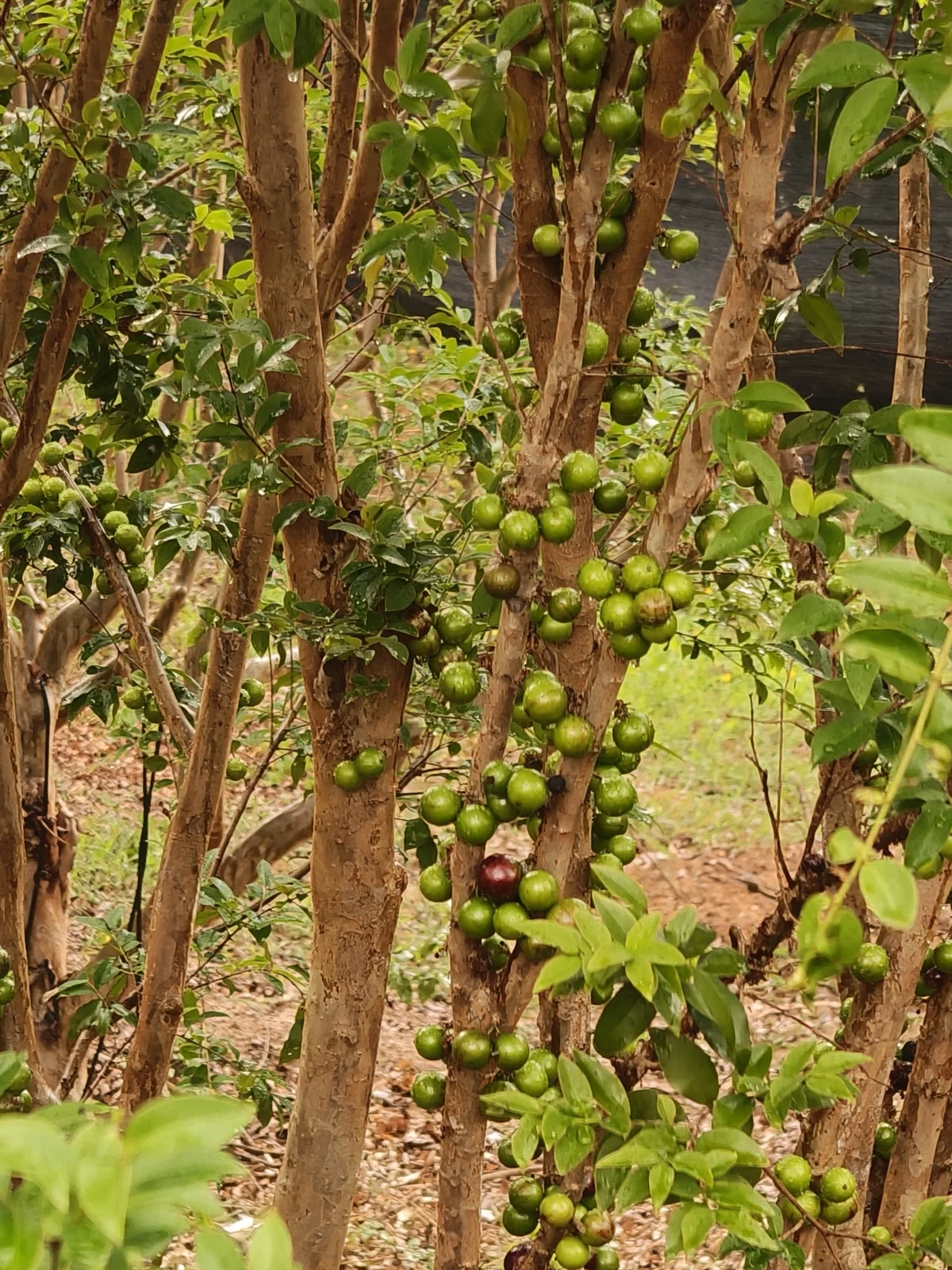
These are genuine jaboticaba (Plinia cauliflora); in certain tourist markets, deceptive vendors coat common black grapes in oil to masquerade as this exotic fruit.
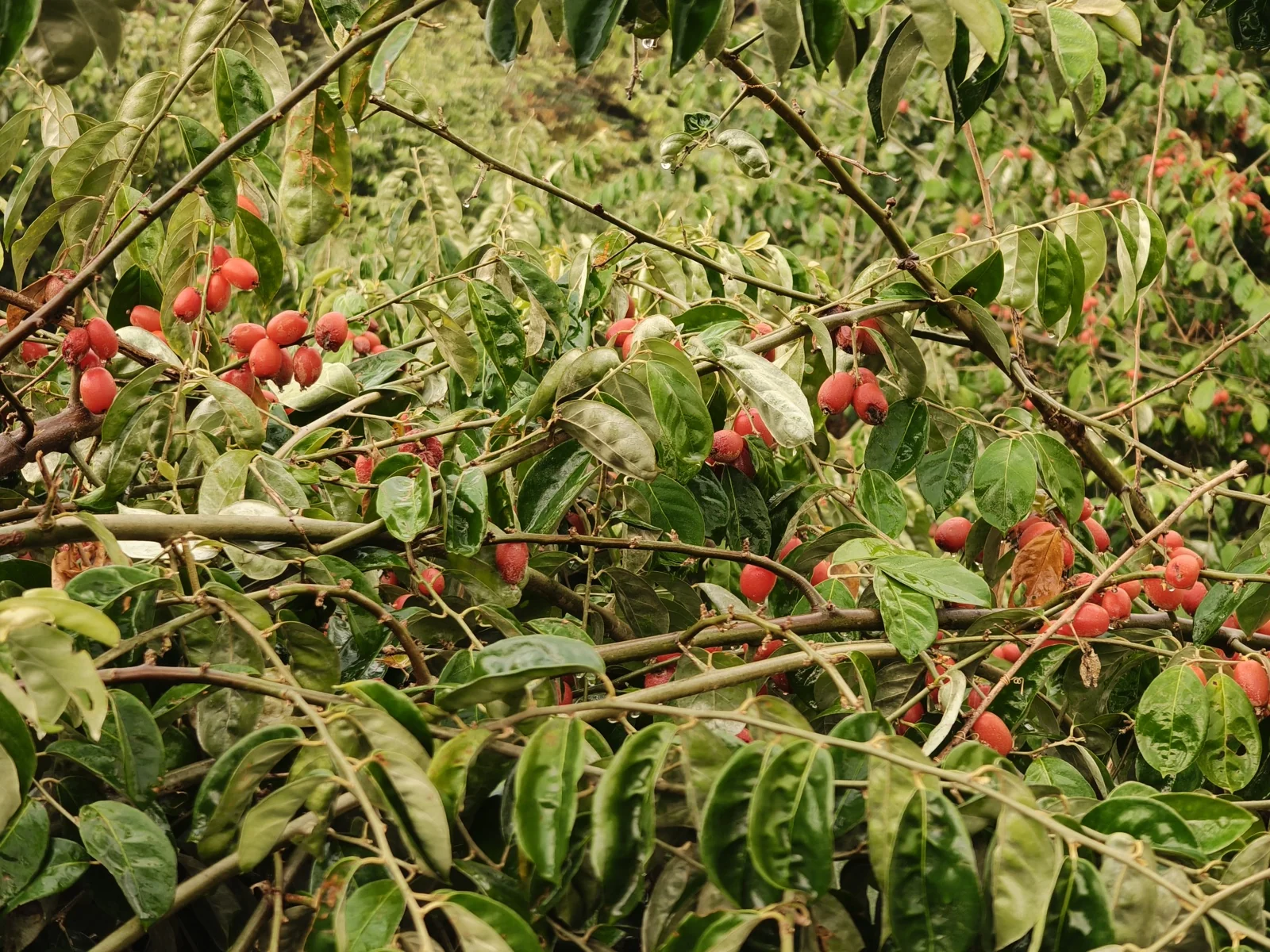
A dedicated section featured Elaeagnus (silverberry) trees available for pick-your-own harvesting.
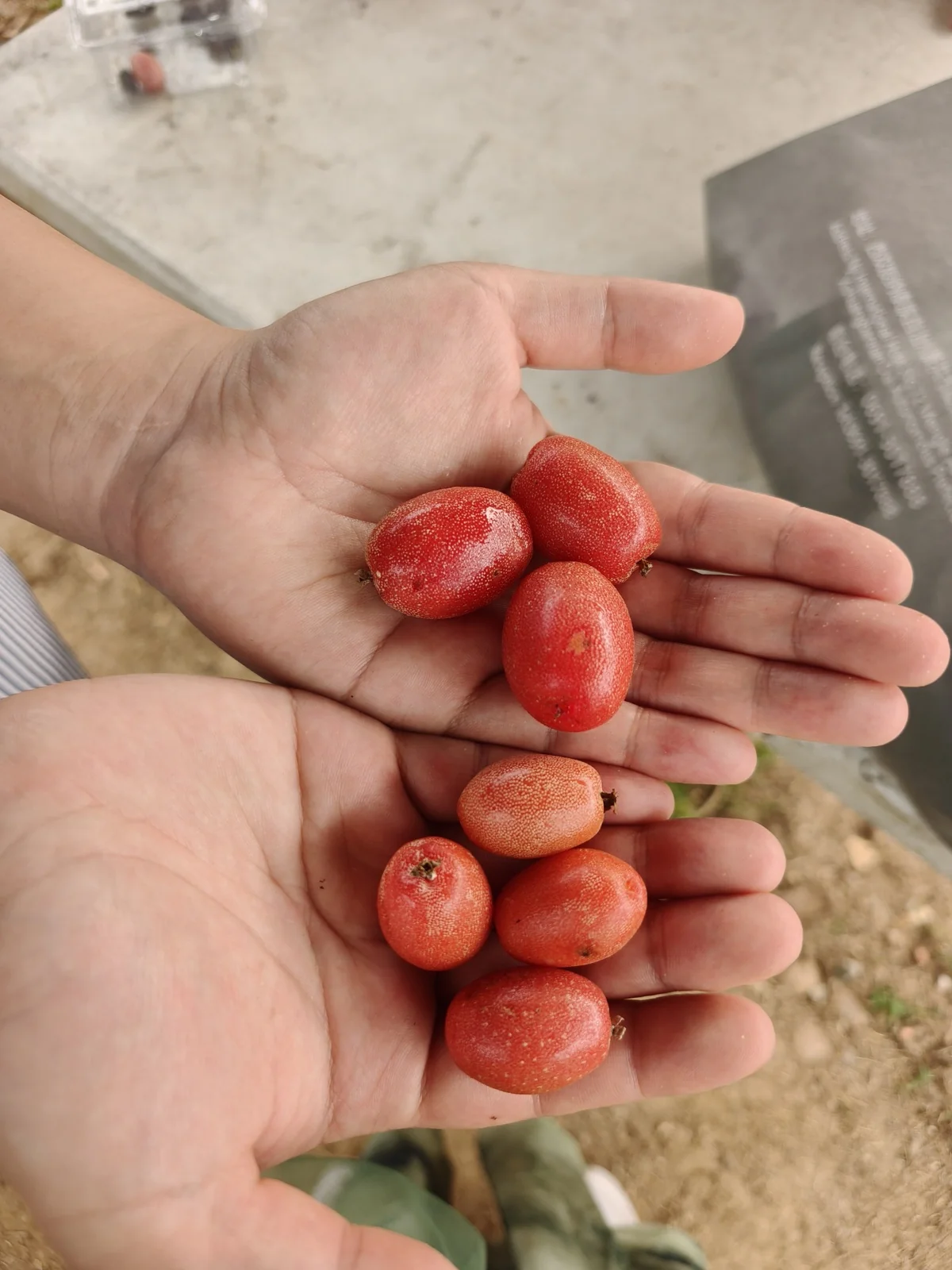
A local visitor harvesting alongside us generously shared a few ripe berries from her basket. The fruit in my left hand was from her - deep crimson and pleasantly sweet; the yellow-orange fruit in my right hand was my own pick, which had an astringent sour bite.
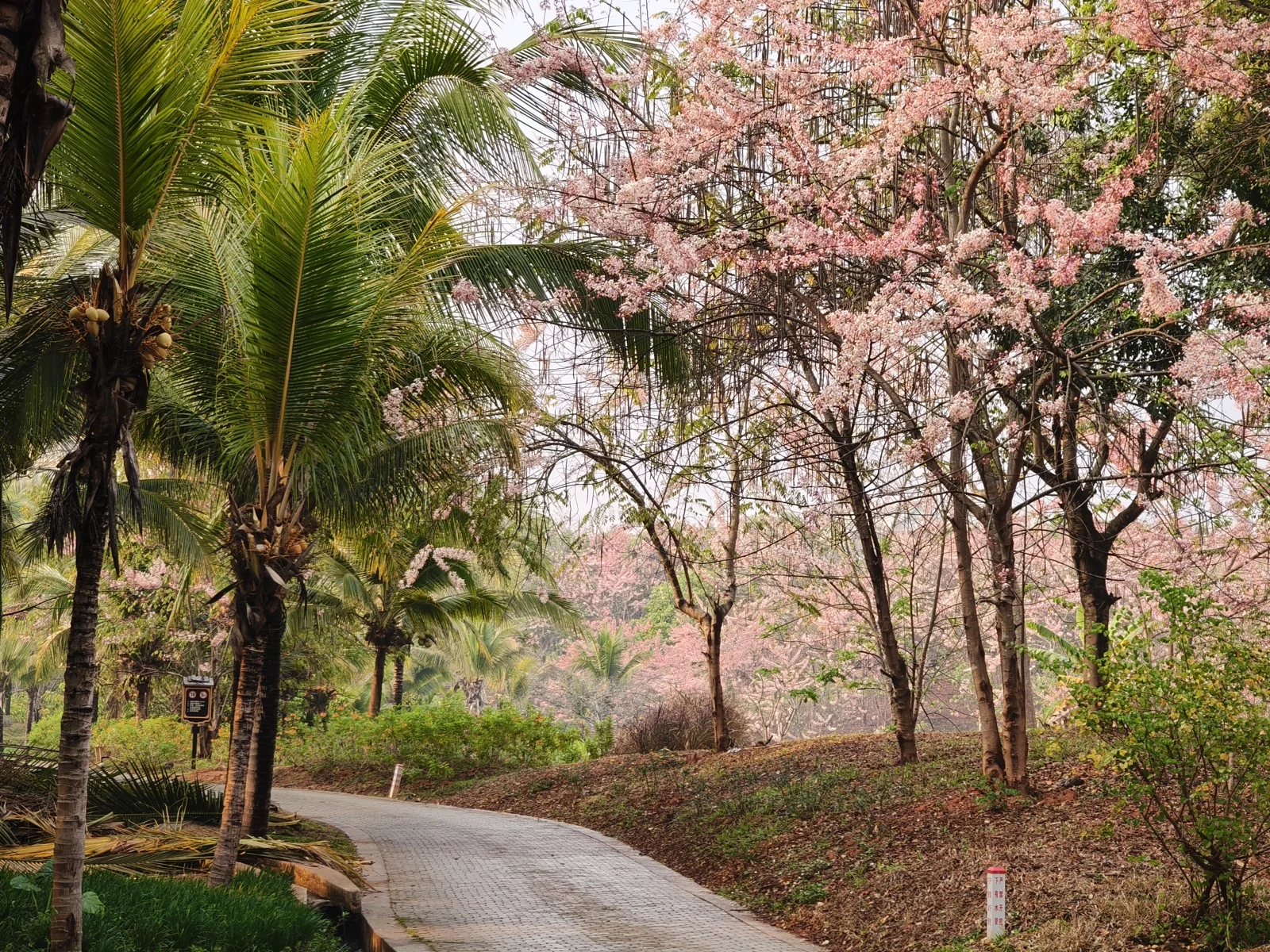
Crossing the bridge past the orchard brought us to the lake’s opposite shore, featuring terraced coconut groves and Thai pink showers.
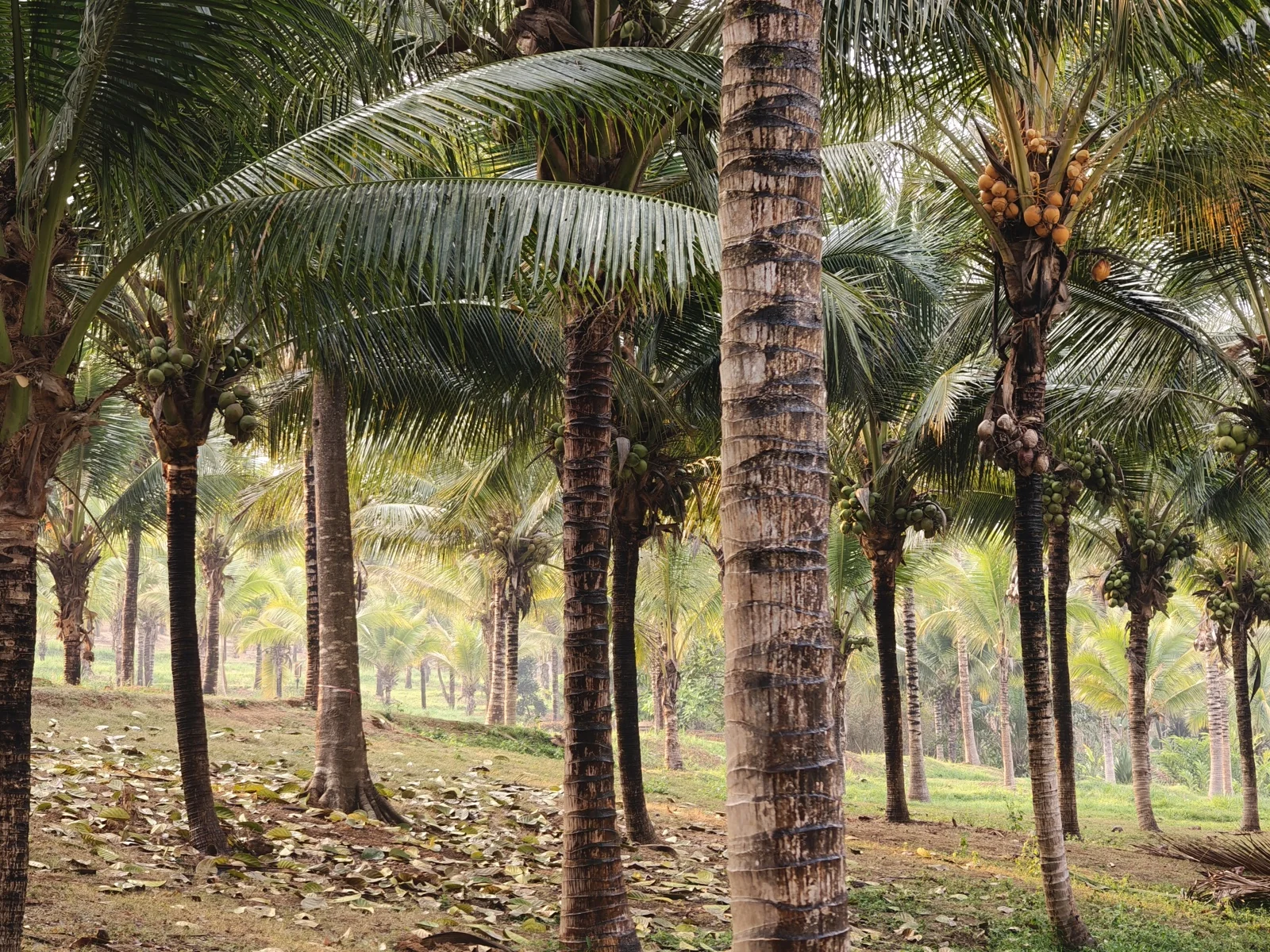
The coconut palm terraces illuminated by low afternoon sunbeams were visually stunning.
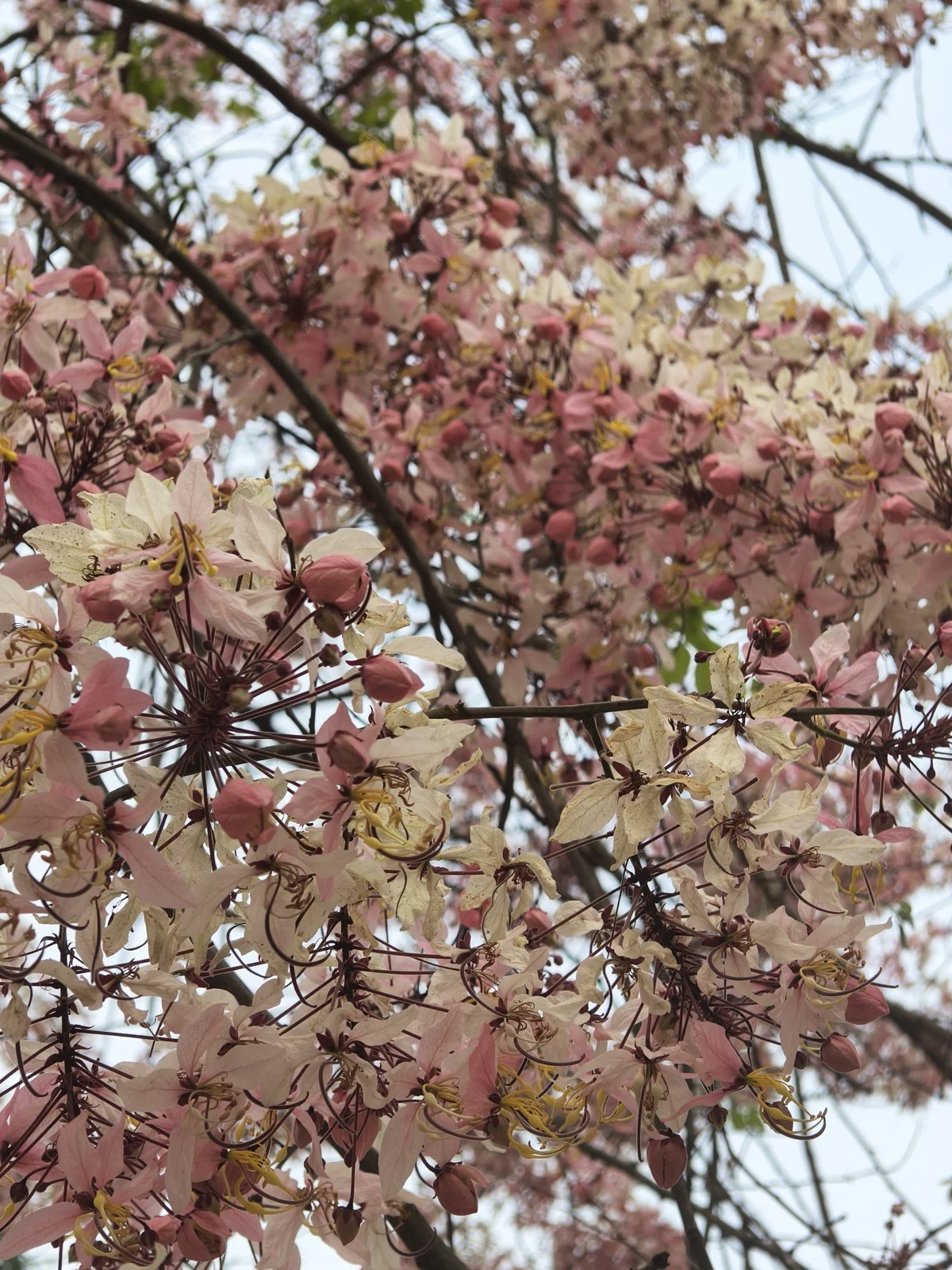
The Thai pink shower (Cassia bakeriana) bloomed with remarkable density. Looking closely, its petals lack the notched tips characteristic of true Rosaceae cherry blossoms; it is actually a member of the legume (Fabaceae) family. Despite its common name, it is frequently confused with Thailand’s national flower, which is actually the golden shower tree (Cassia fistula).
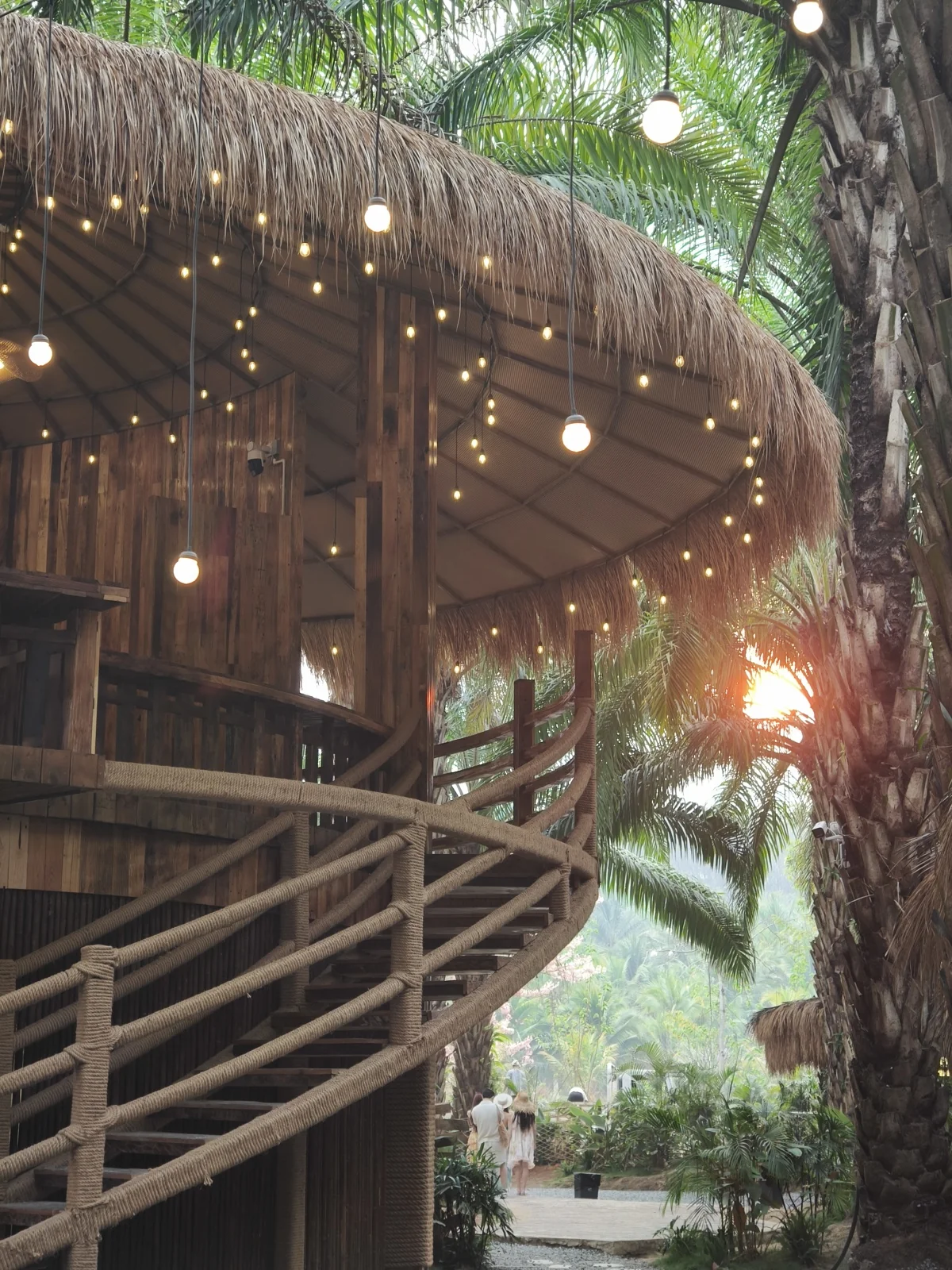
Nearby stood the popular artificial white sand beach, where my daughter played in the sand. The landscape design captures a Southeast Asian resort atmosphere, drawing numerous portrait photographers. In the evening, the area transforms into an entertainment zone with water-stage performances and camping tents.
As dusk fell, we boarded the park shuttle and concluded our day’s outing.
Local Life
Geography
Xishuangbanna operates socially about an hour behind Beijing standard time. Coming from Eastern China, we routinely found ourselves losing track of time and having dinner at 7:00 or 8:00 PM. Combined with the city’s vibrant tropical nightlife, it is easy to stay up late.
In late March, local temperatures fluctuated comfortably between 20°C and 35°C (68°F-95°F); summer attire with a light UV-protection layer was ideal. Mornings and evenings were delightfully pleasant, while midday hovered around 30°C. Mosquitoes were just beginning to emerge in very low numbers; I was bitten only once during the entire 6-day trip.
Hotels
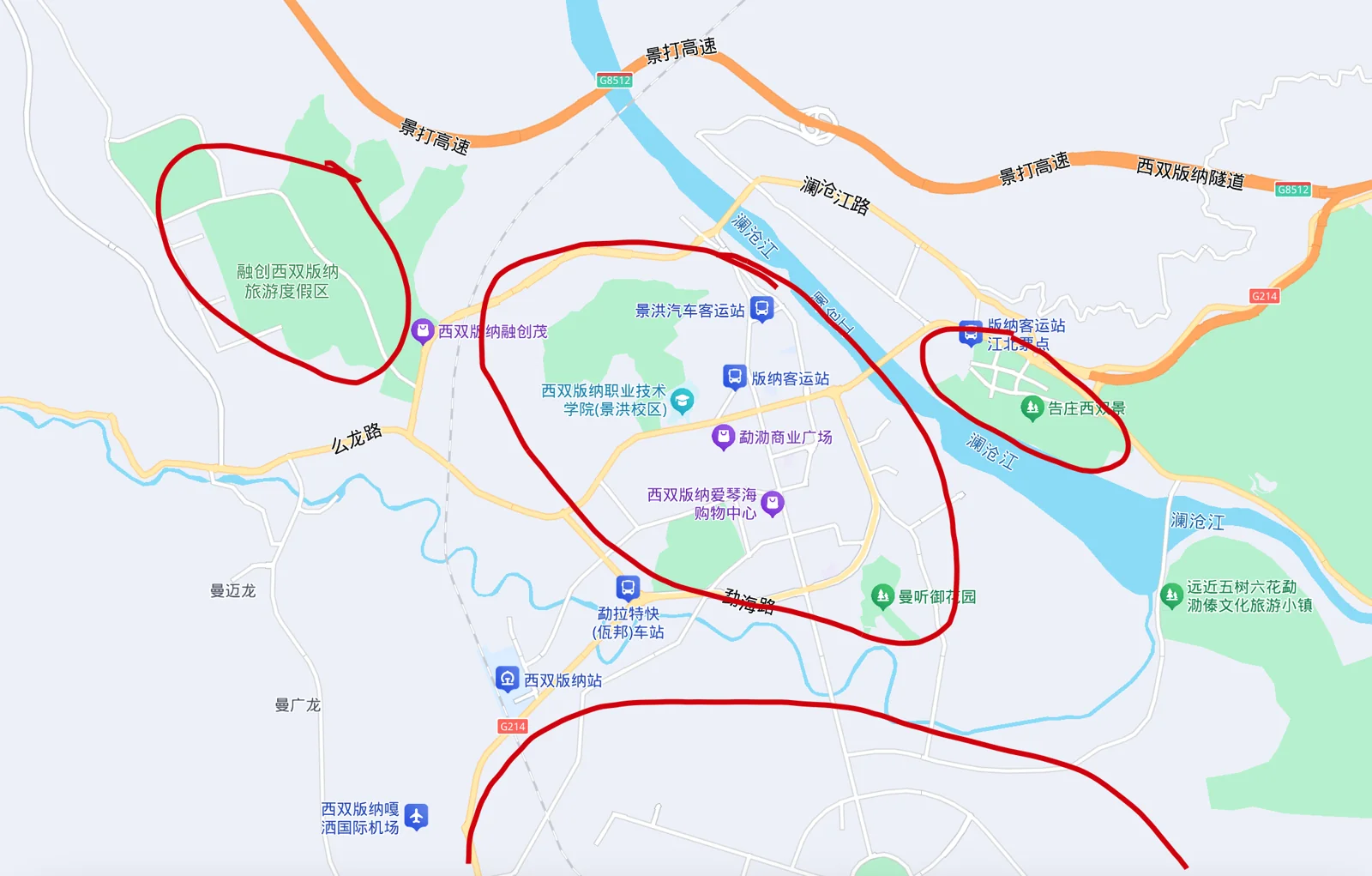
When researching accommodation, I analyzed Jinghong’s geography. Lodging falls broadly into four primary zones: Gaozhuang, City Center, Sunac Resort, and the Outer Suburbs:
- Gaozhuang: A self-contained commercial district built entirely for tourists. It features luxury boutique hotels, temples, night markets, trendy restaurants, bars, and Southeast Asian-themed streets - the premier choice for vacationers and photo-enthusiasts. Spending a week here feels like a trip to Thailand. However, traffic congestion is notorious and it lacks authentic local residential flavor, so we opted against staying here.
- City Center: The core area enclosed by the Lancang (Mekong) River and Liusha River. This is the heart of local urban life with the best transportation logistics and minimal traffic. We stayed at the Enji Hotel opposite the Aegean Mall; while its lobby and breakfast were modest, room comfort far exceeded our expectations.
- Sunac Resort: Situated in the city’s northwest corner, this master-planned resort caters to self-contained family stays with kid-friendly pools and theme parks, though traveling to outside attractions is inconvenient.
- Outer Suburbs: The wide arc south of the Liusha River. Attractions are few aside from the Mengle Grand Buddhist Temple, but excellent value-for-money upscale hotels can be found here.
Regarding urban planning, Jinghong features a prominent north-south arterial axis - Mengle Avenue - connecting the city center directly to the Mengle Grand Buddhist Temple. This was clearly planned from the city’s inception: looking south along Mengle Avenue provides stunning sightlines of the grand Buddha statue on the mountain ridge, attracting numerous photographers on clear days. Furthermore, master-planned dedicated tourist districts like Gaozhuang are rare across China, showcasing Banna’s pioneering approach to leisure tourism.
Transport
For transportation, staying in Gaozhuang has the advantage of dedicated tourist shuttle buses through the “Banna Anxinyou” WeChat mini-program, which sells bundled bus and admission tickets to major attractions. I purchased all our attraction tickets through this platform.
If you stay outside Gaozhuang, I strongly recommend hiring a private chartered car for at least one full day. For destinations over an hour away like Wild Elephant Valley or the Dai Garden, hailing a return taxi or ride-share is unreliable.
Chartering also provides local insider knowledge, as drivers eagerly share hidden viewpoints and authentic dining recommendations.
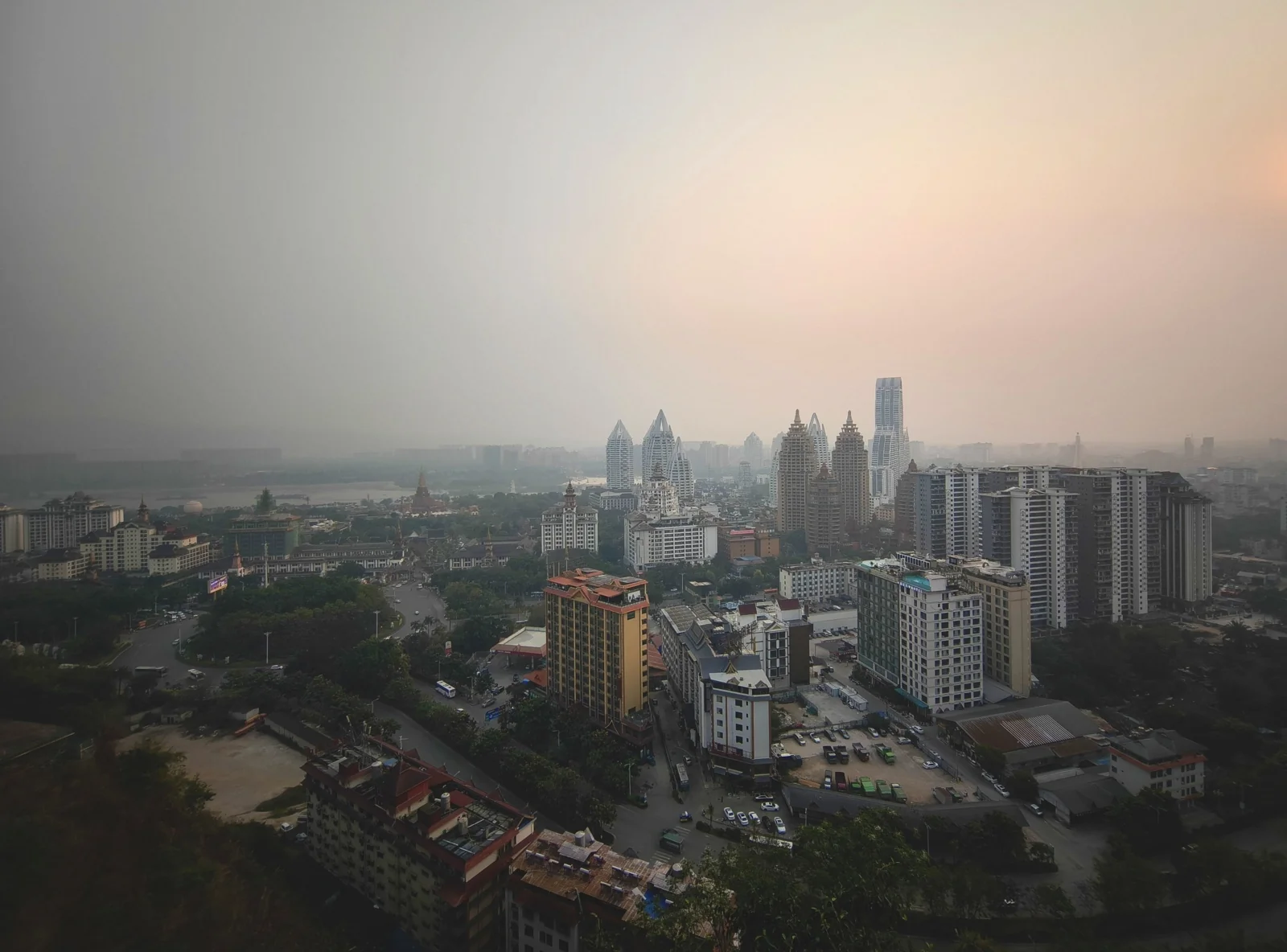
On our Wild Elephant Valley day, my wife mentioned wanting authentic local Yunnan cuisine. Our driver recommended a hidden restaurant perched halfway up a hill on Gaozhuang’s outskirts, offering panoramic views over the entire district.
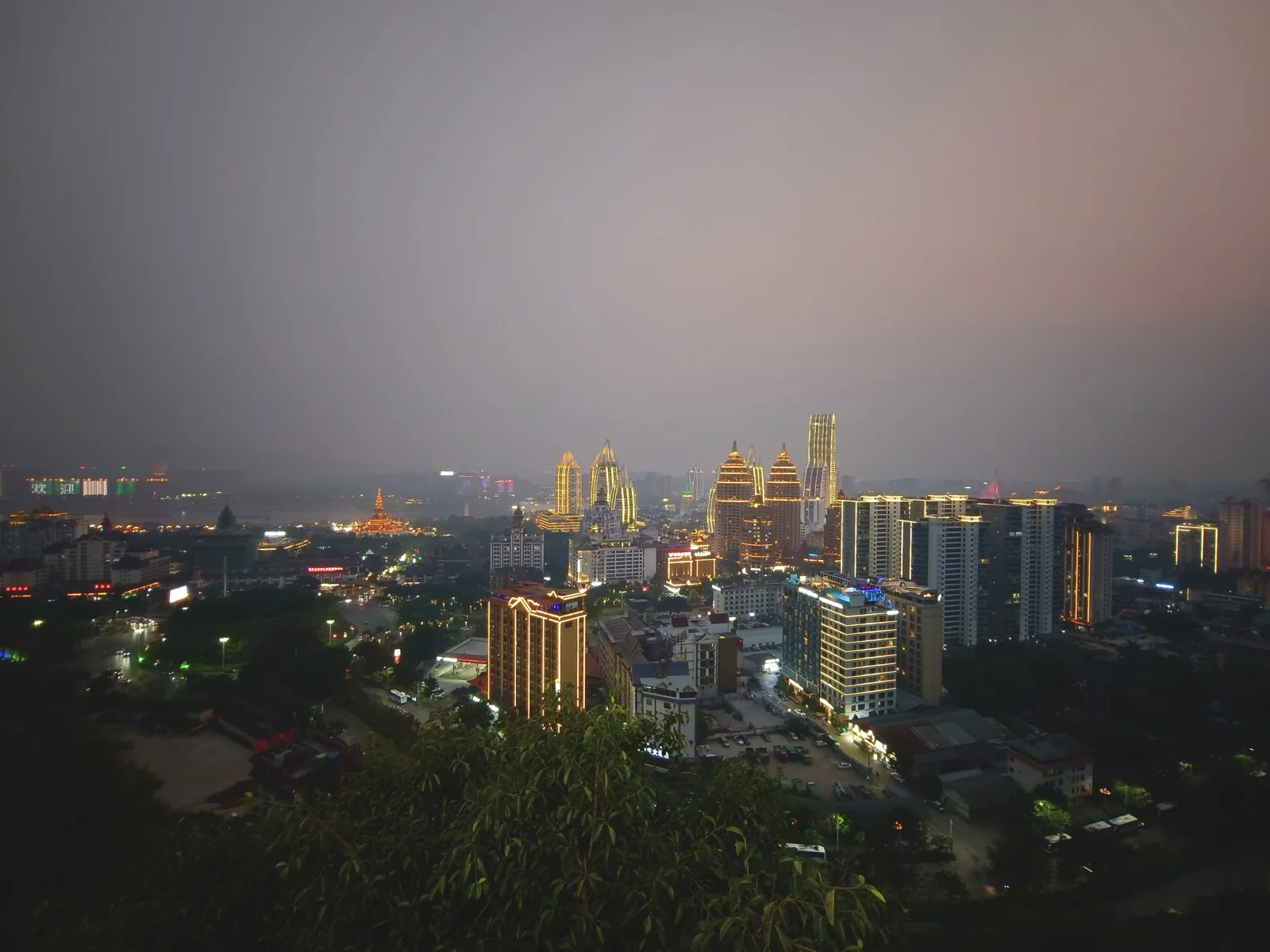
We dined from sunset through nightfall, watching the city lights flicker on as the gilded pagoda and luxury resort towers illuminated against the dark sky - an unforgettable dining atmosphere.
Food & Dining
Our entire family loves Southeast Asian flavor profiles - fresh mint, lemongrass, galangal, curries, and tropical fruits. Xishuangbanna was culinary paradise. Yunnanese and Dai cuisine share these vibrant notes while preserving distinct regional character.
Here is a chronological showcase of our culinary highlights:
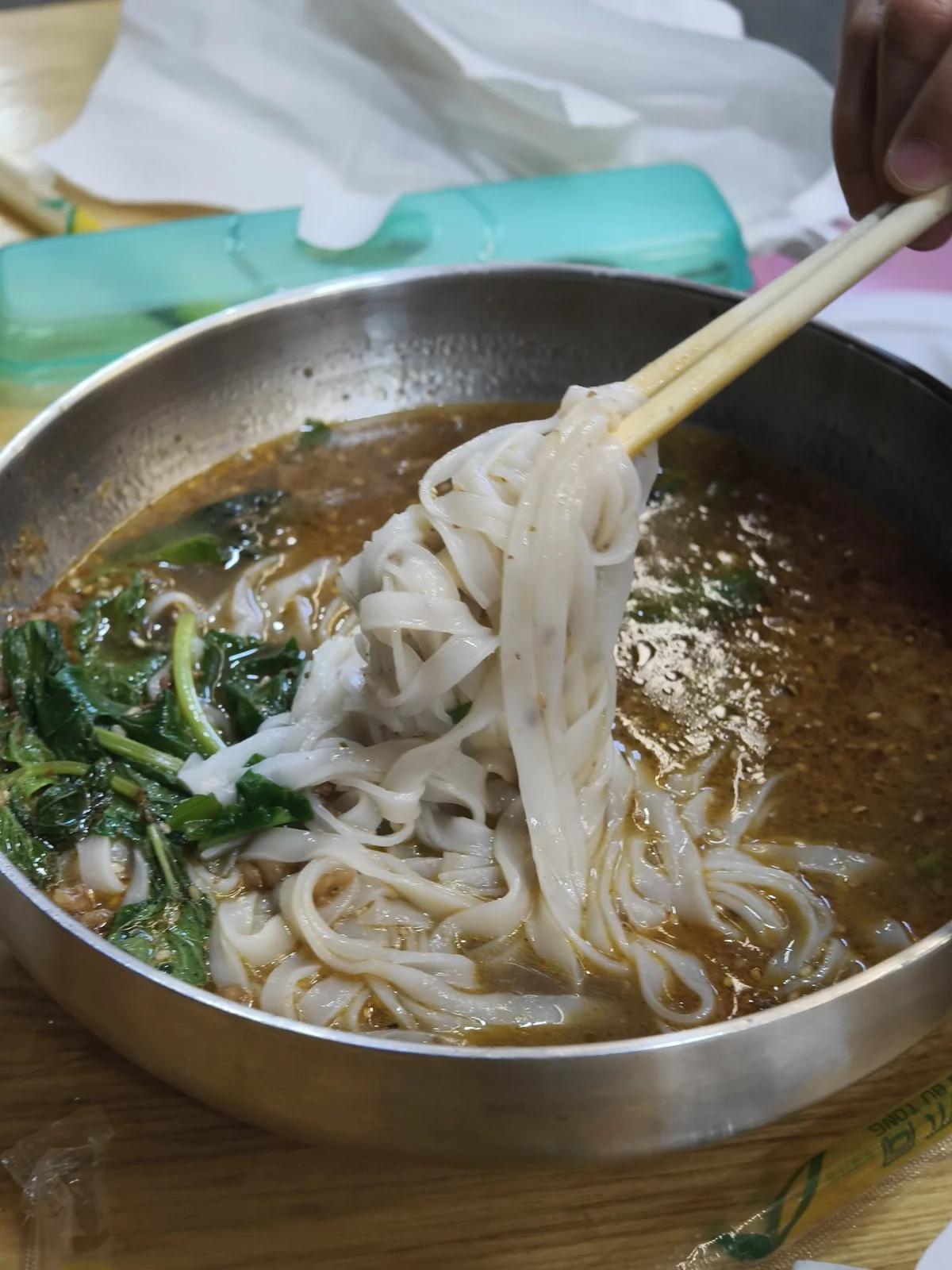
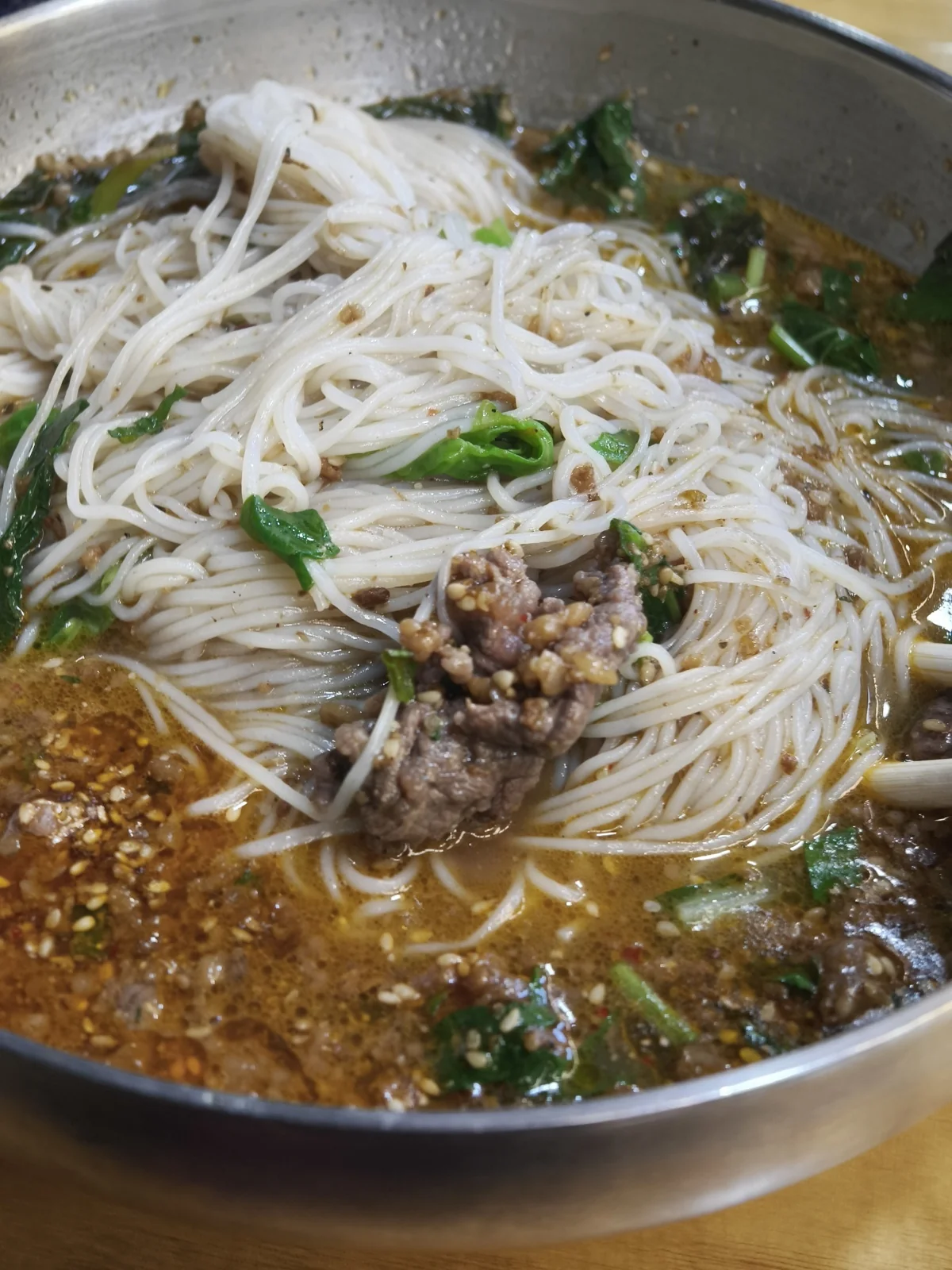
Our first evening meal upon arrival: Dai migan (flat rice noodles) and mixian with fresh mint and fragrant Sichuan peppercorn oil. We nearly returned for a second bowl before departing.
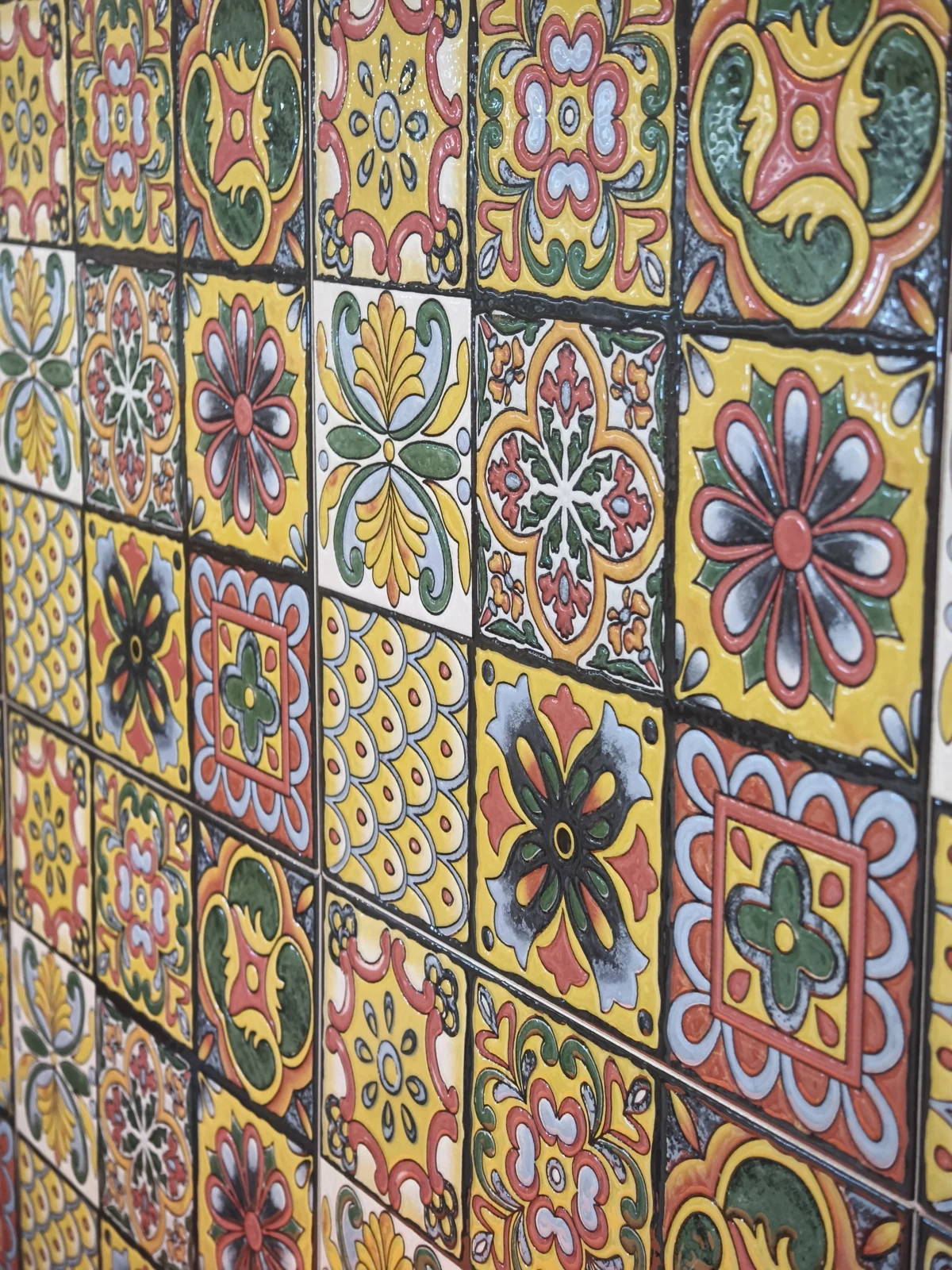
On the evening of our rainforest day, we found an intimate Burmese snack shop in Gaozhuang with charming mosaic-tiled walls and only a half-dozen tables.
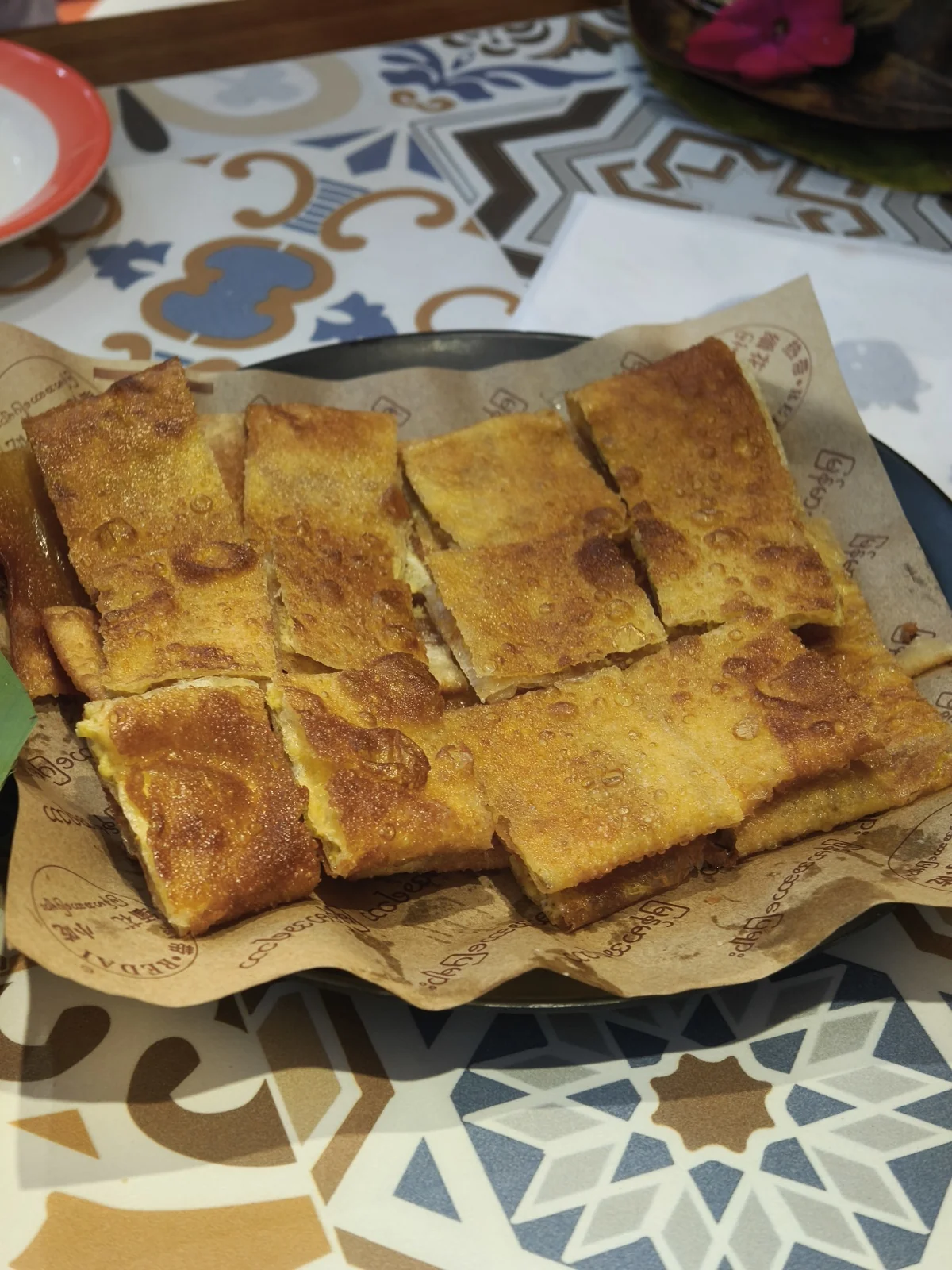
Burmese banana roti pancake - crispy, warm, and fragrant.
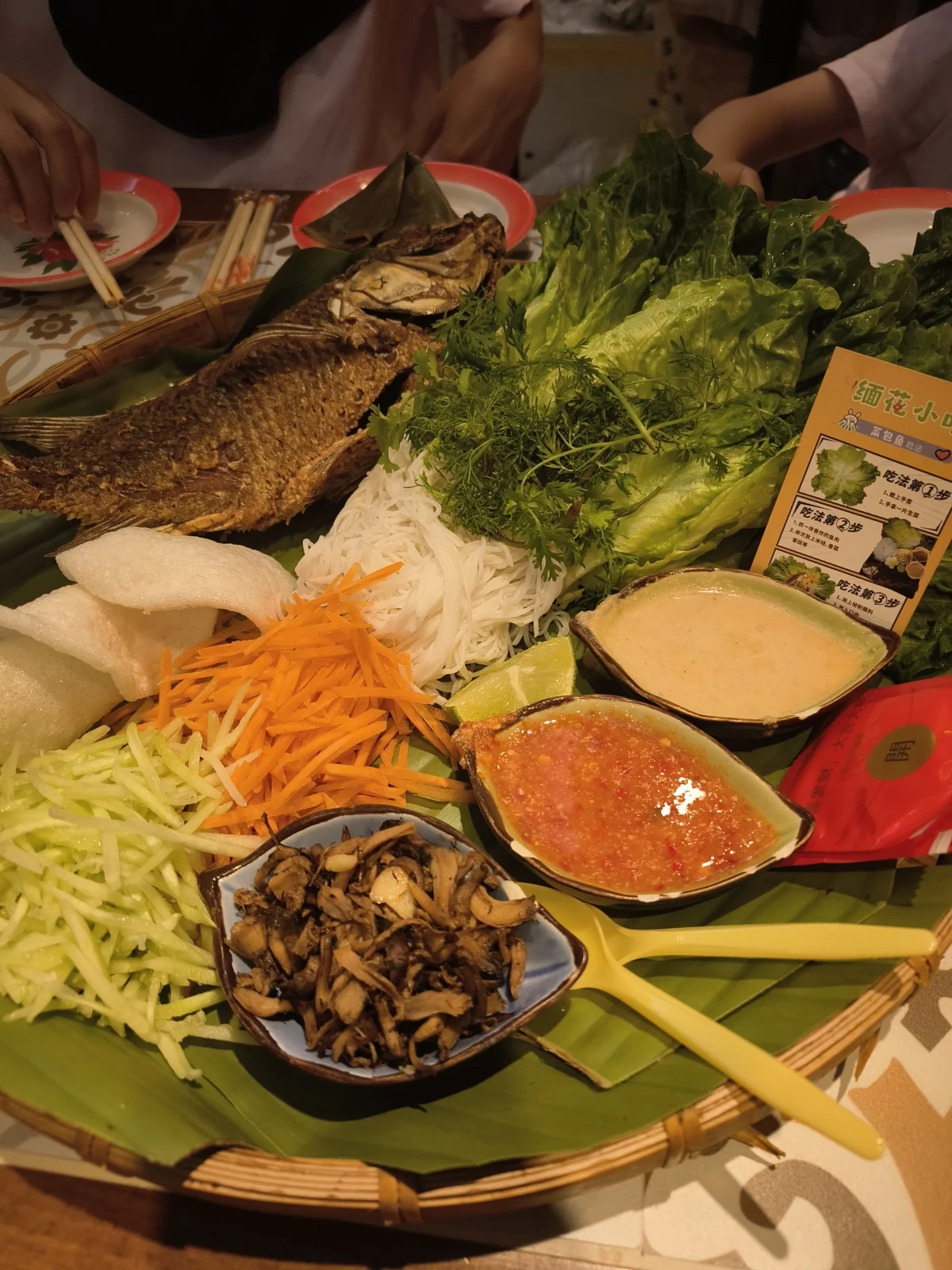
Caibaoyu (lettuce-wrapped fish): grilled lemongrass tilapia paired with cold rice noodles, fresh herbs, and dipping sauces, assembled by hand inside crisp lettuce leaves.
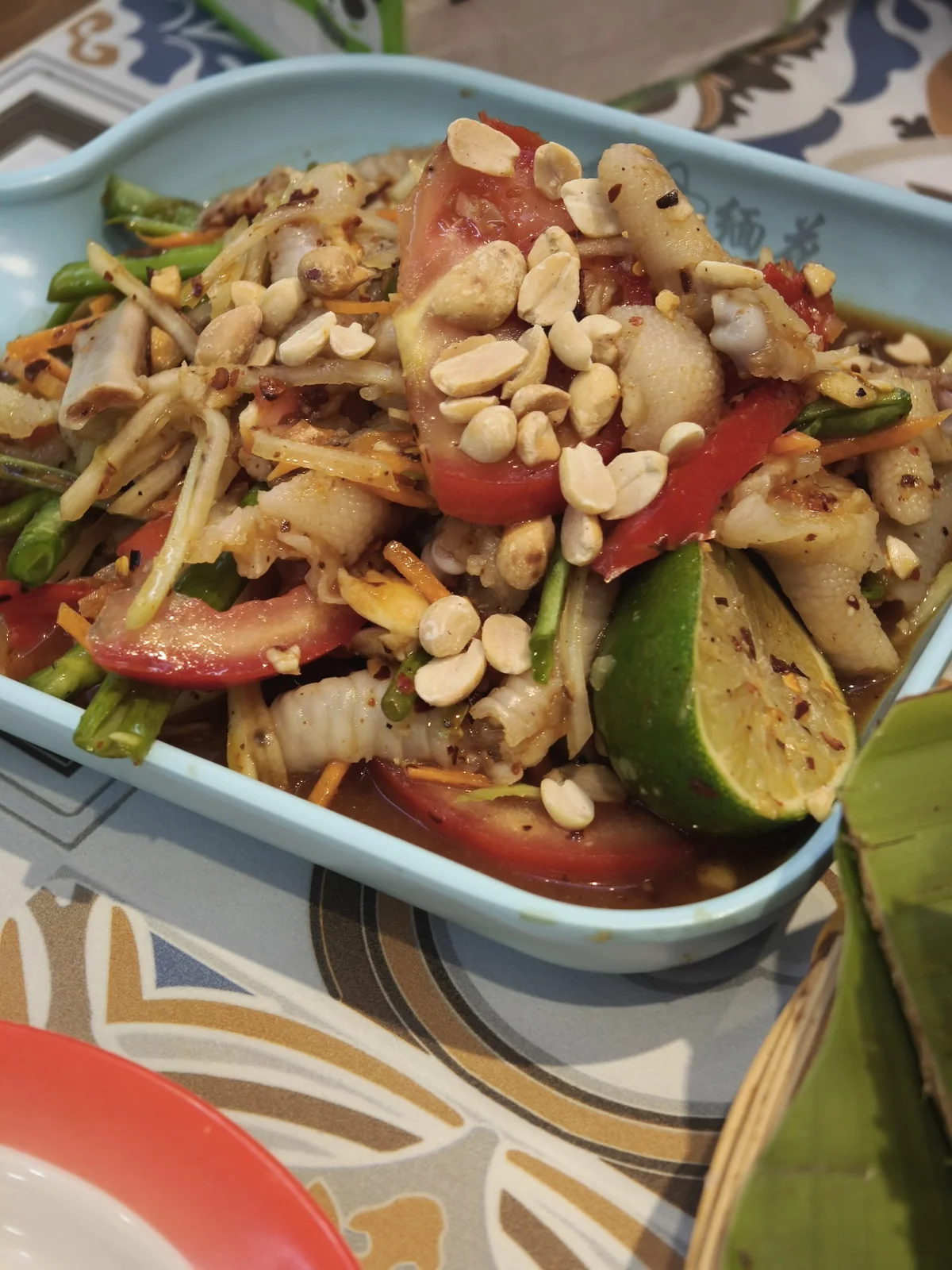
Chong jijiao (mortar-pounded chicken feet): tossed with lime juice, chili, coriander, and sour green papaya in a stone mortar - spicy, tangy, and addictive.
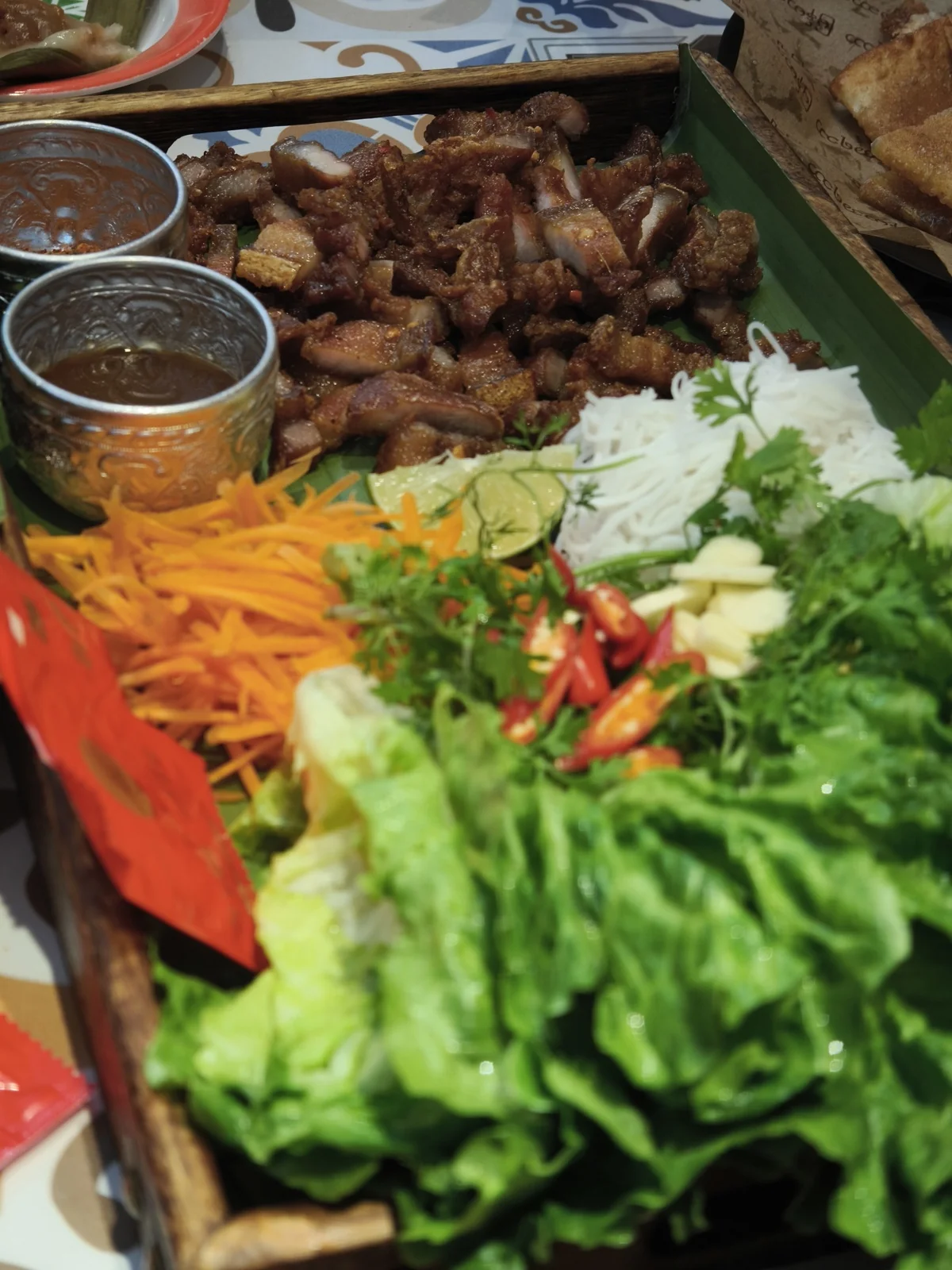
Caibaorou (lettuce-wrapped meat), prepared in the same wrap-and-eat style as the fish.
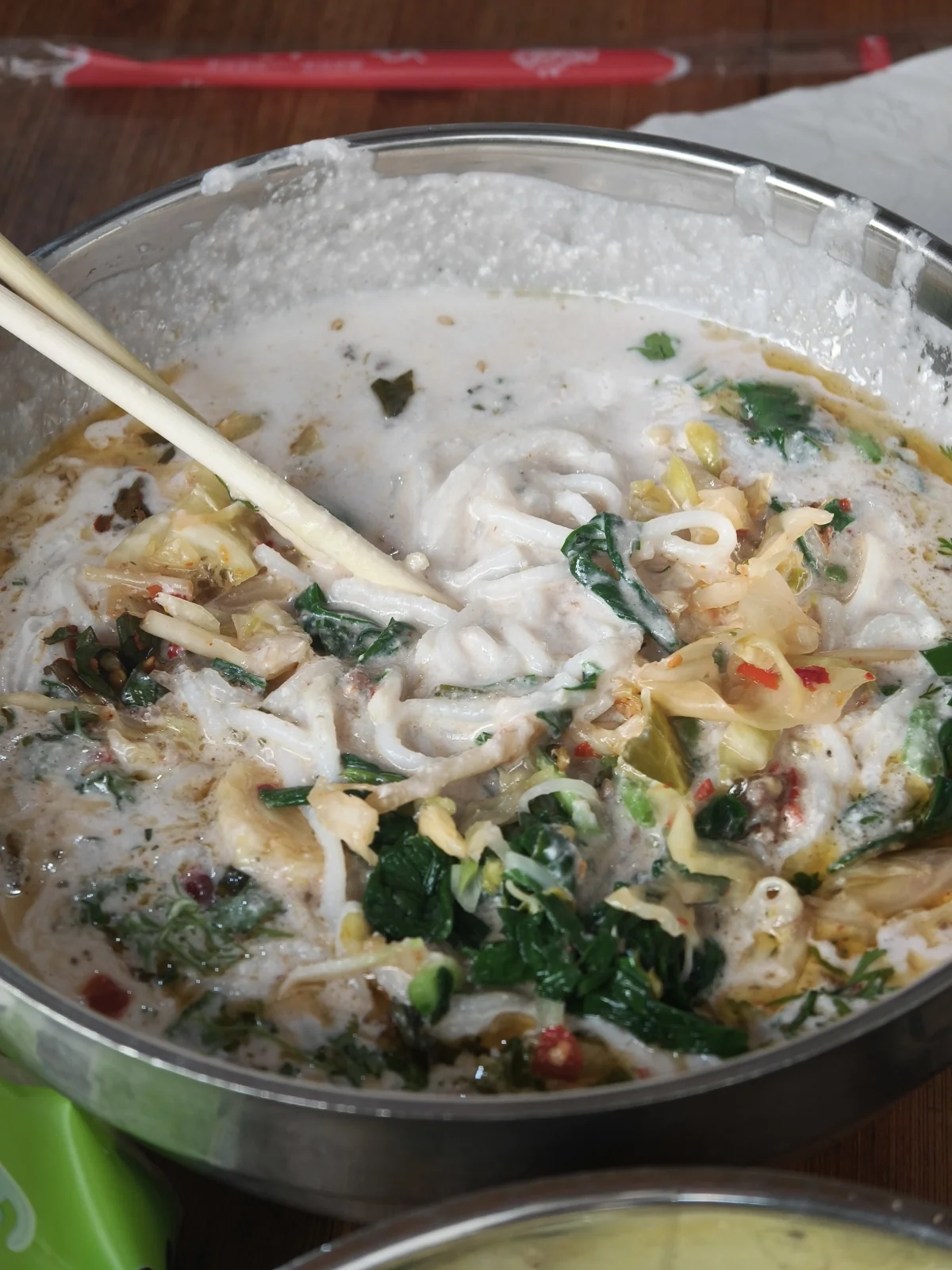
On Day 3, we had breakfast at a local shop specializing in doutang (yellow pea soup), a quintessential Yunnan morning staple.
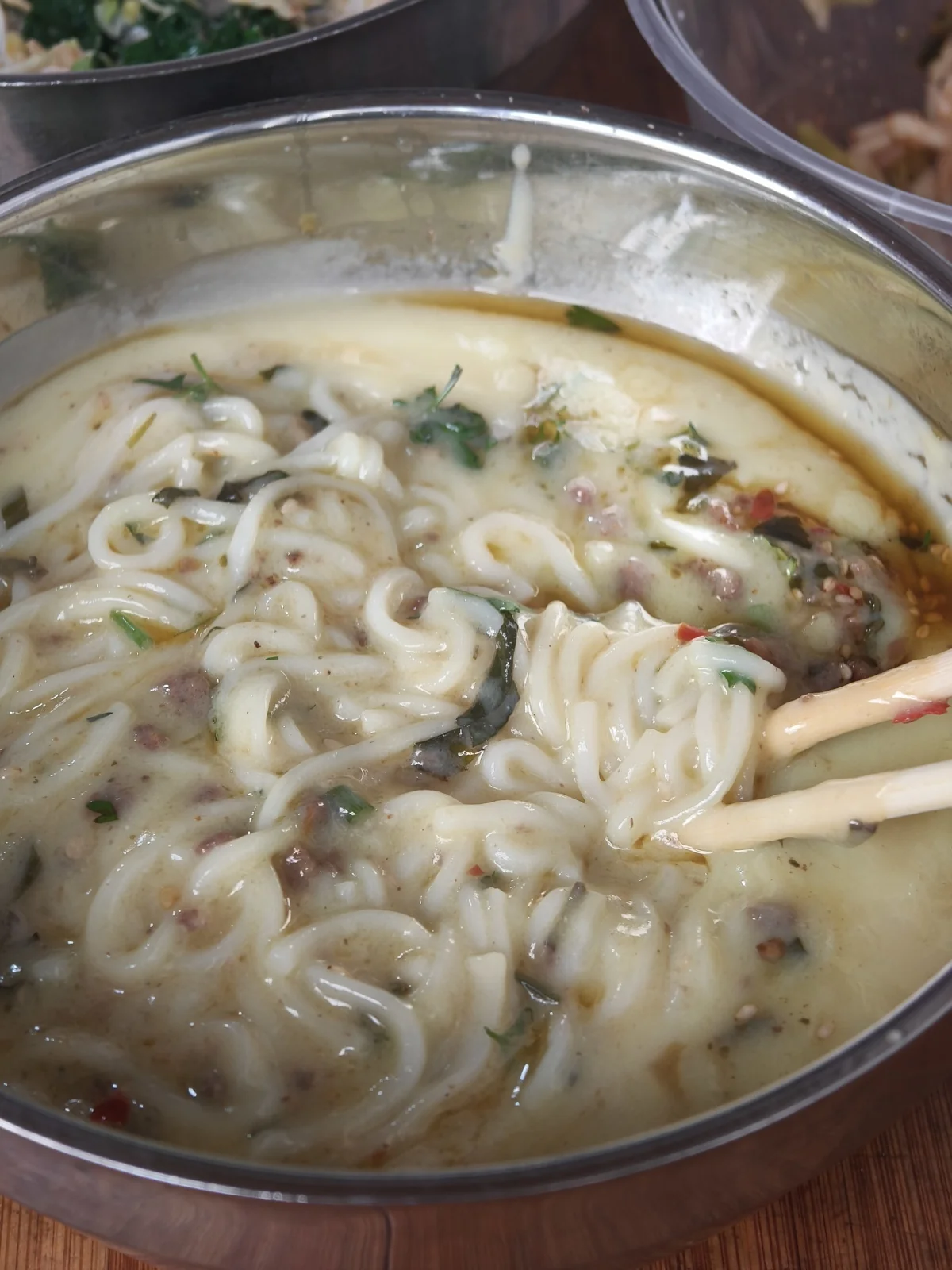
You select your broth base (peanut soup, pea soup, beef bone, or pork bone), your noodle format (mixian, flat migan, or rice cakes), meat additions (fresh pork, beef, offal), and garnish freely from a self-serve bar of pickled greens and chili pastes.
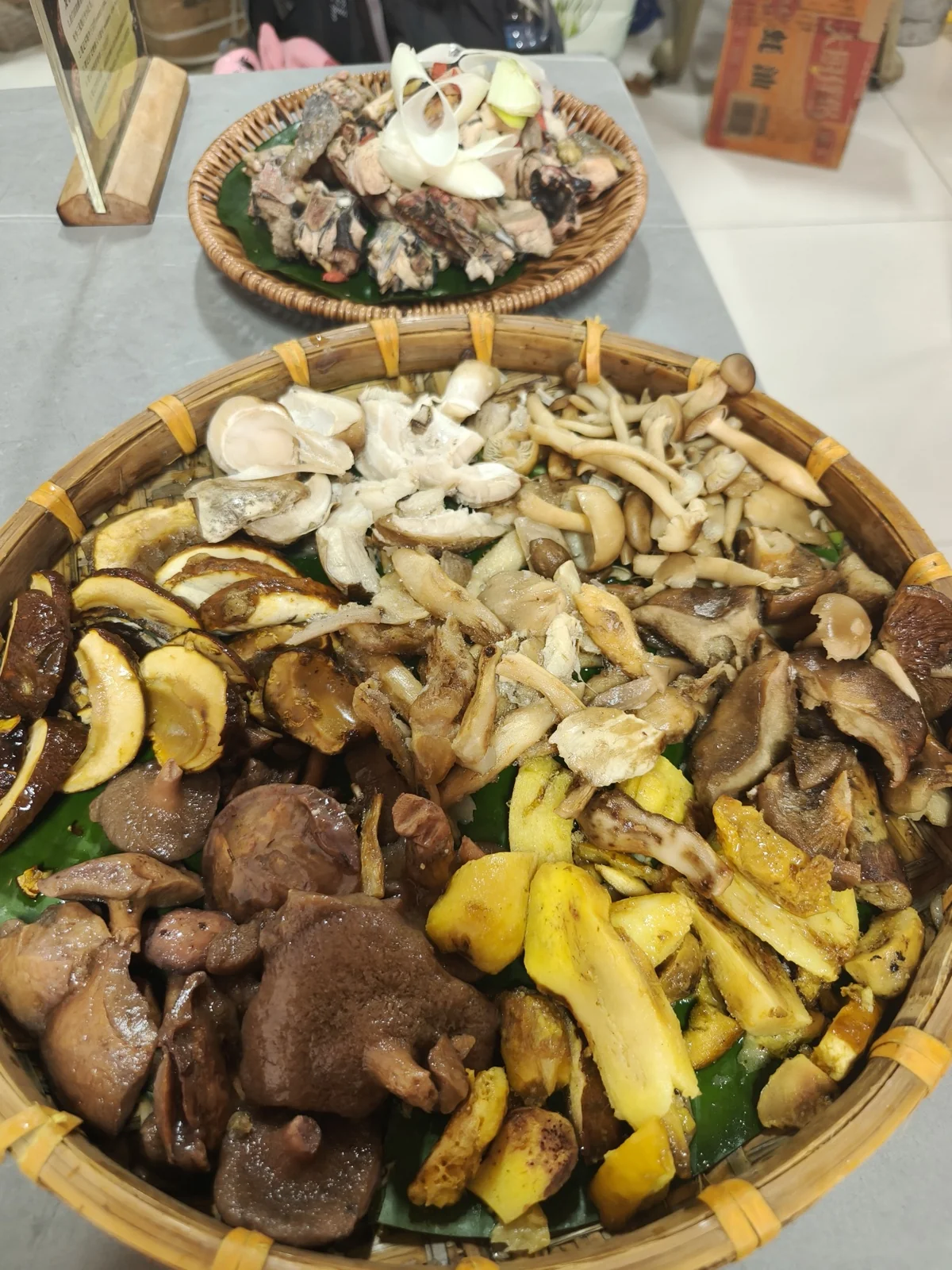
That evening, we had a wild mushroom chicken hotpot. As it was off-season, frozen-fresh wild varieties were served. Among the dozen varieties introduced, the vibrant yellow jianshouqing (blue-staining bolete) was most memorable.
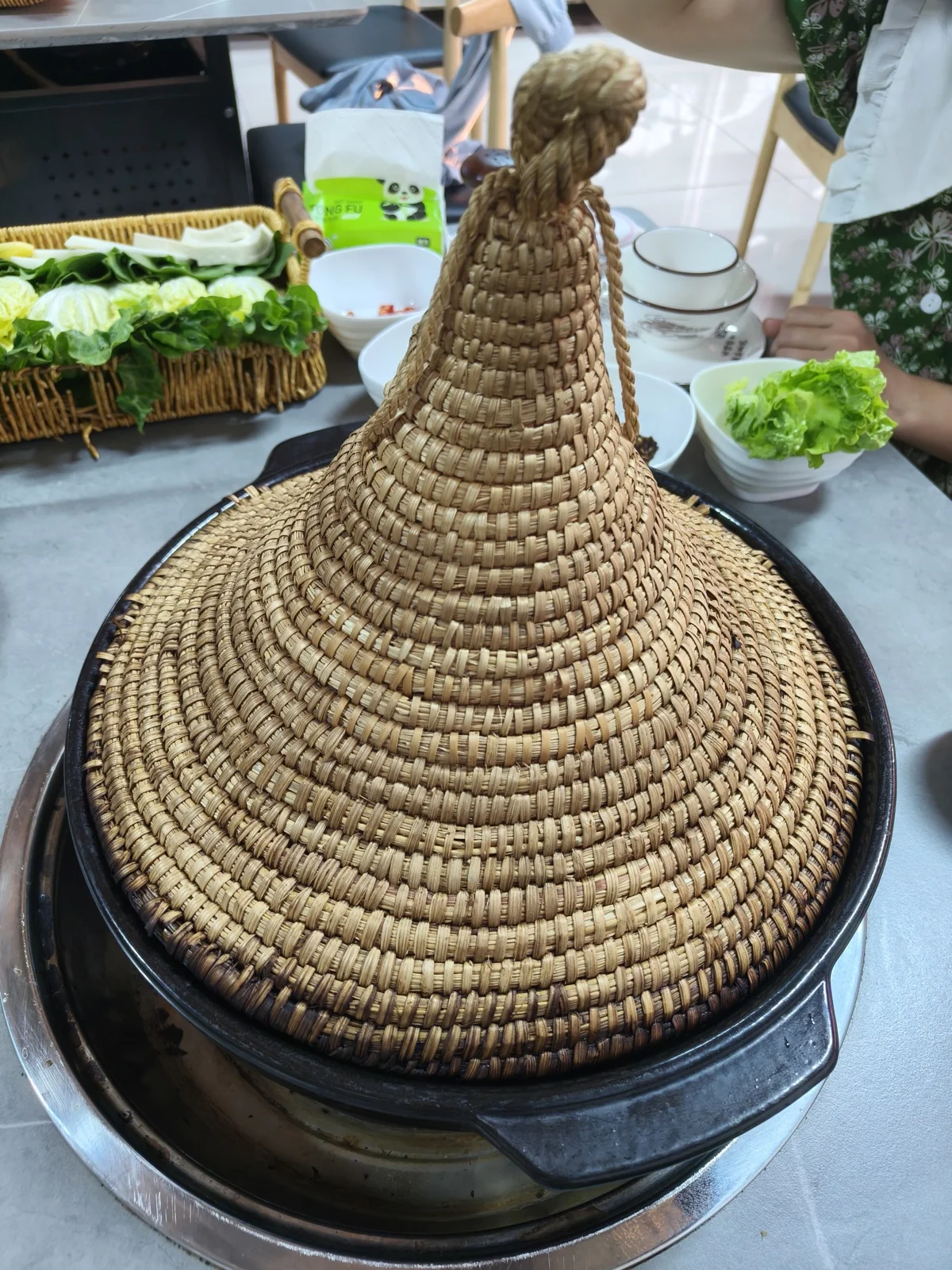
Wild mushrooms must be thoroughly cooked to neutralize natural toxins. Hotpot establishments enforce strict 35-minute timers beneath woven bamboo covers, withholding chopsticks until the alarm sounds.
They even keep formal safety samples: upon opening the lid, the waiter ladles a spoonful of broth into a sealed container labeled with my contact number for regulatory tracking.
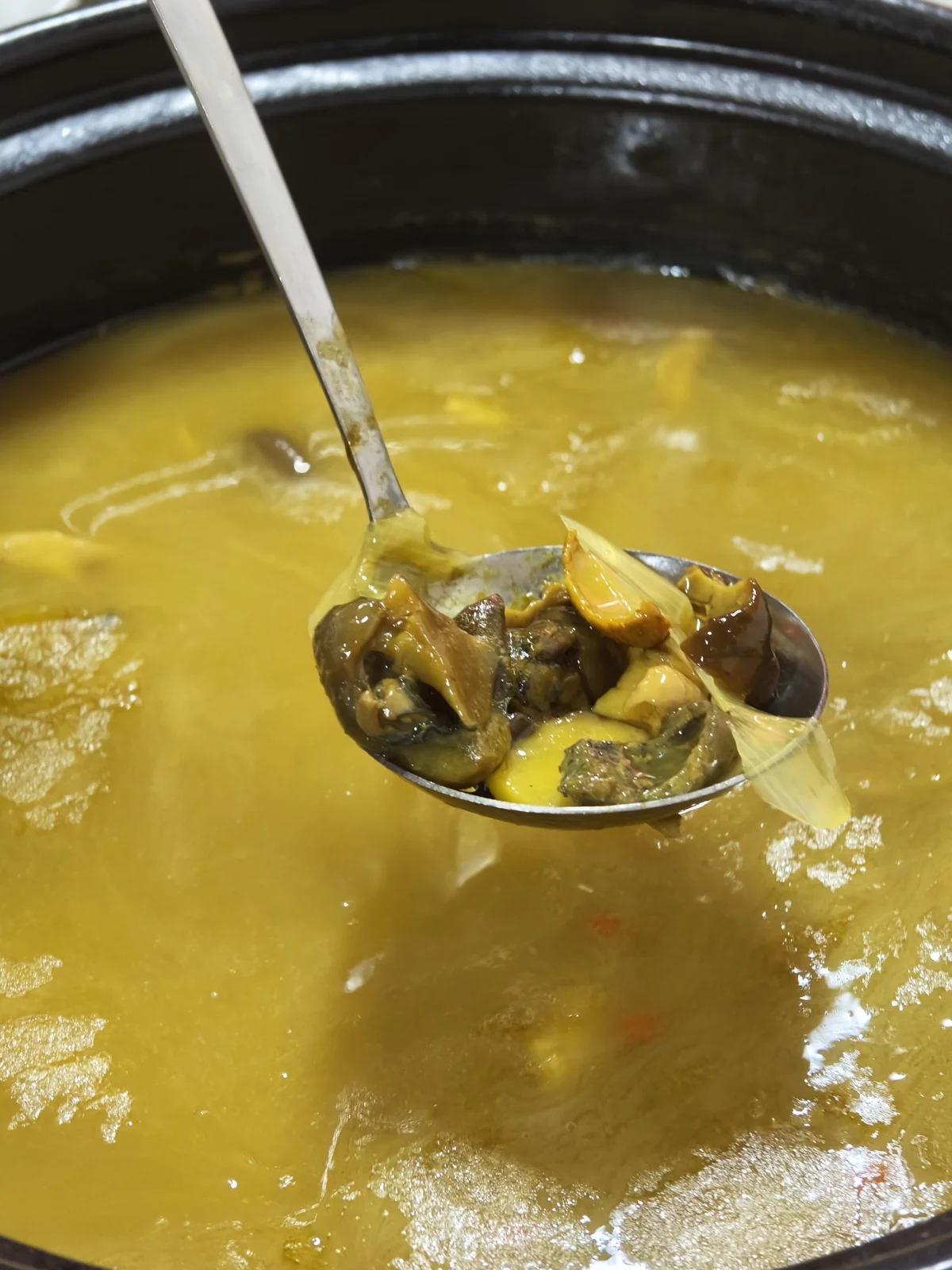
Simmered with native chicken, the rich, earthy umami broth bore an uncanny resemblance to traditional Fujian Buddha Jumps Over the Wall.
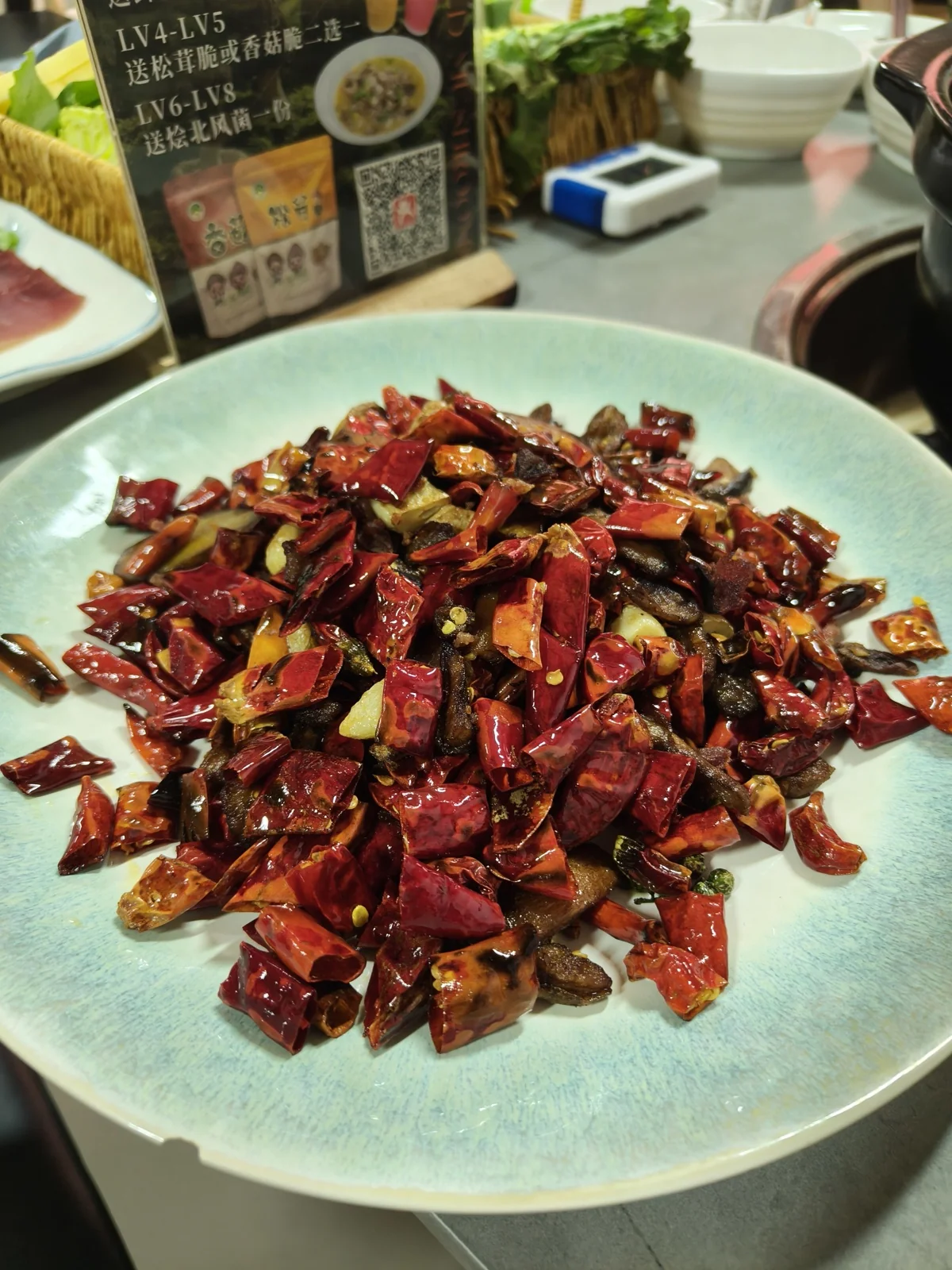
We also ordered a separate plate of wok-tossed spicy jianshouqing with garlic.
At the hillside restaurant overlooking Gaozhuang, the menu featured home-style wok dishes:
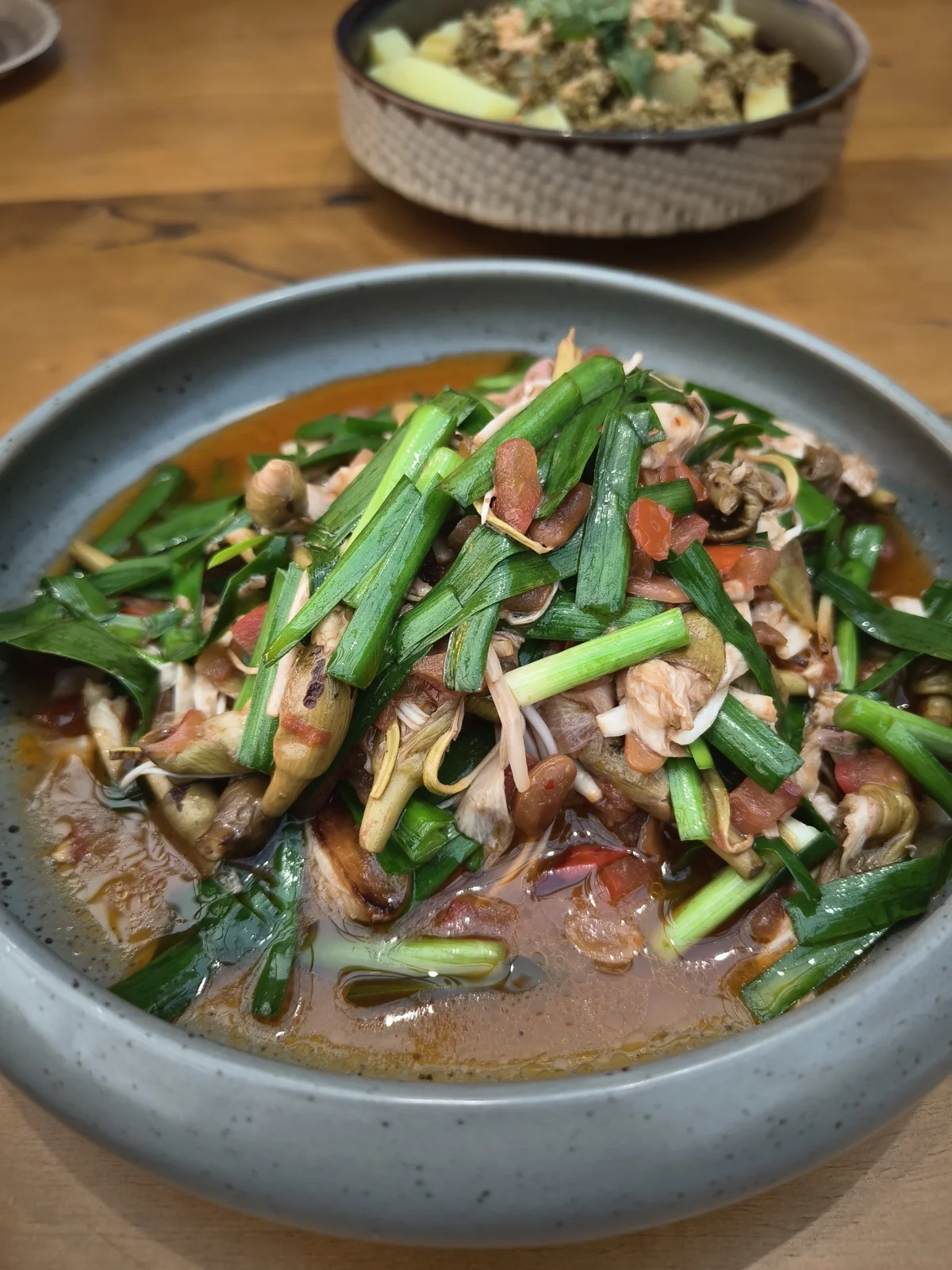
Stir-fried wild white blossoms with Chinese chives and tomato - tangy, savory, and demonstrating Yunnan’s culinary tradition of eating edible flowers.
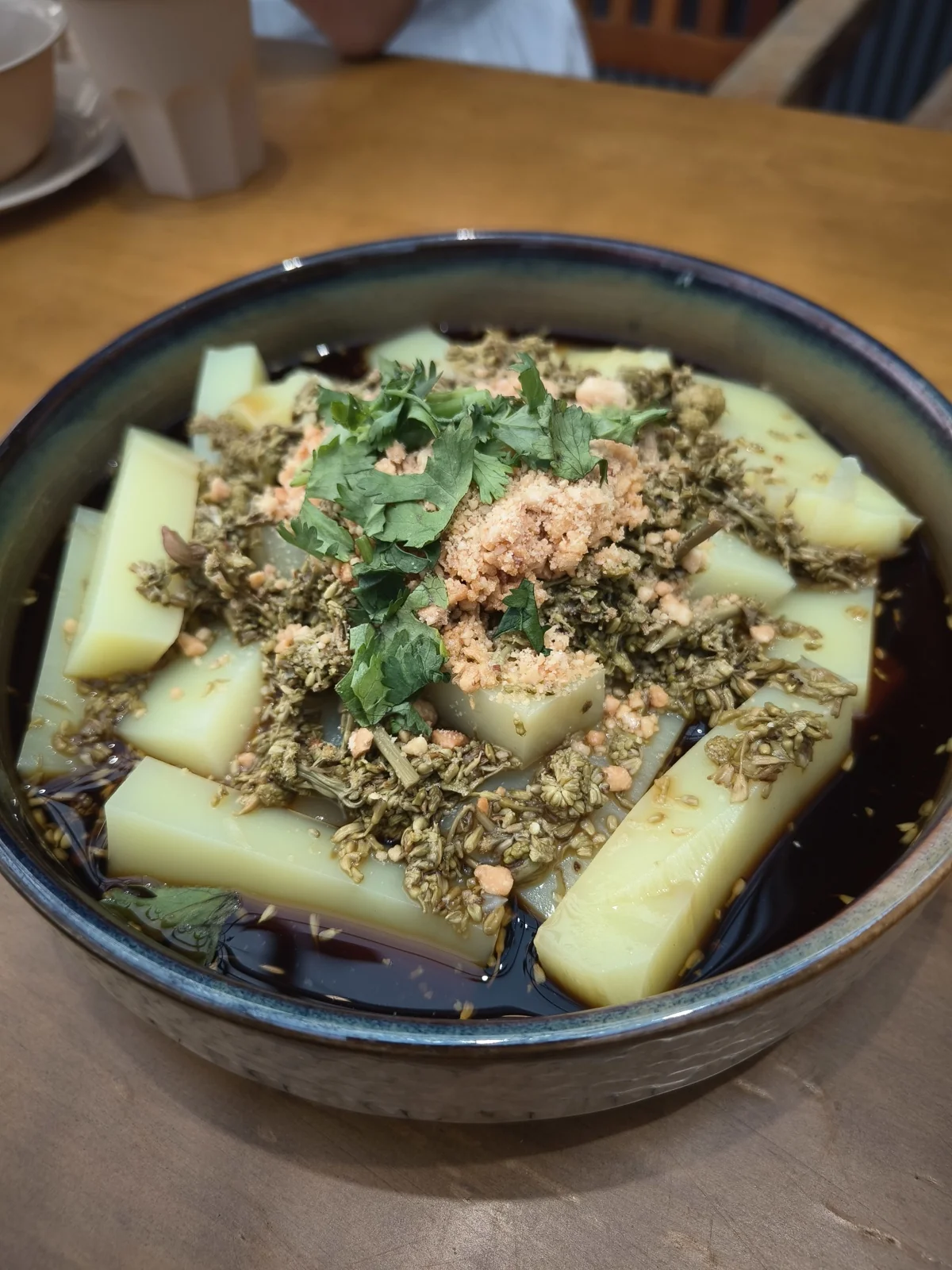
A chilled herbal jelly dessert sprinkled with fragrant wild flower confetti.
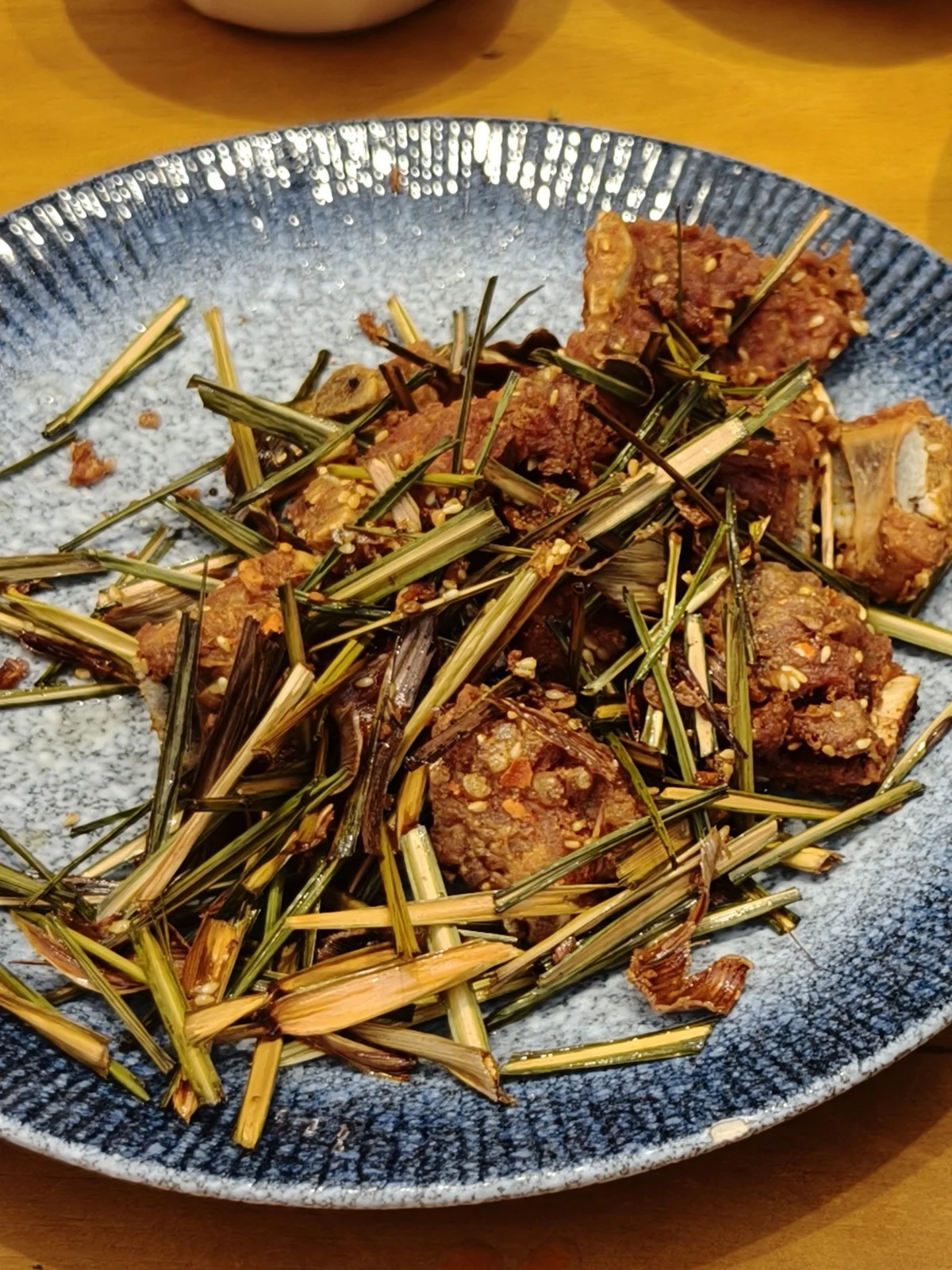
Crispy lemongrass pork ribs ordered for my daughter, fried golden with aromatic seasoning.
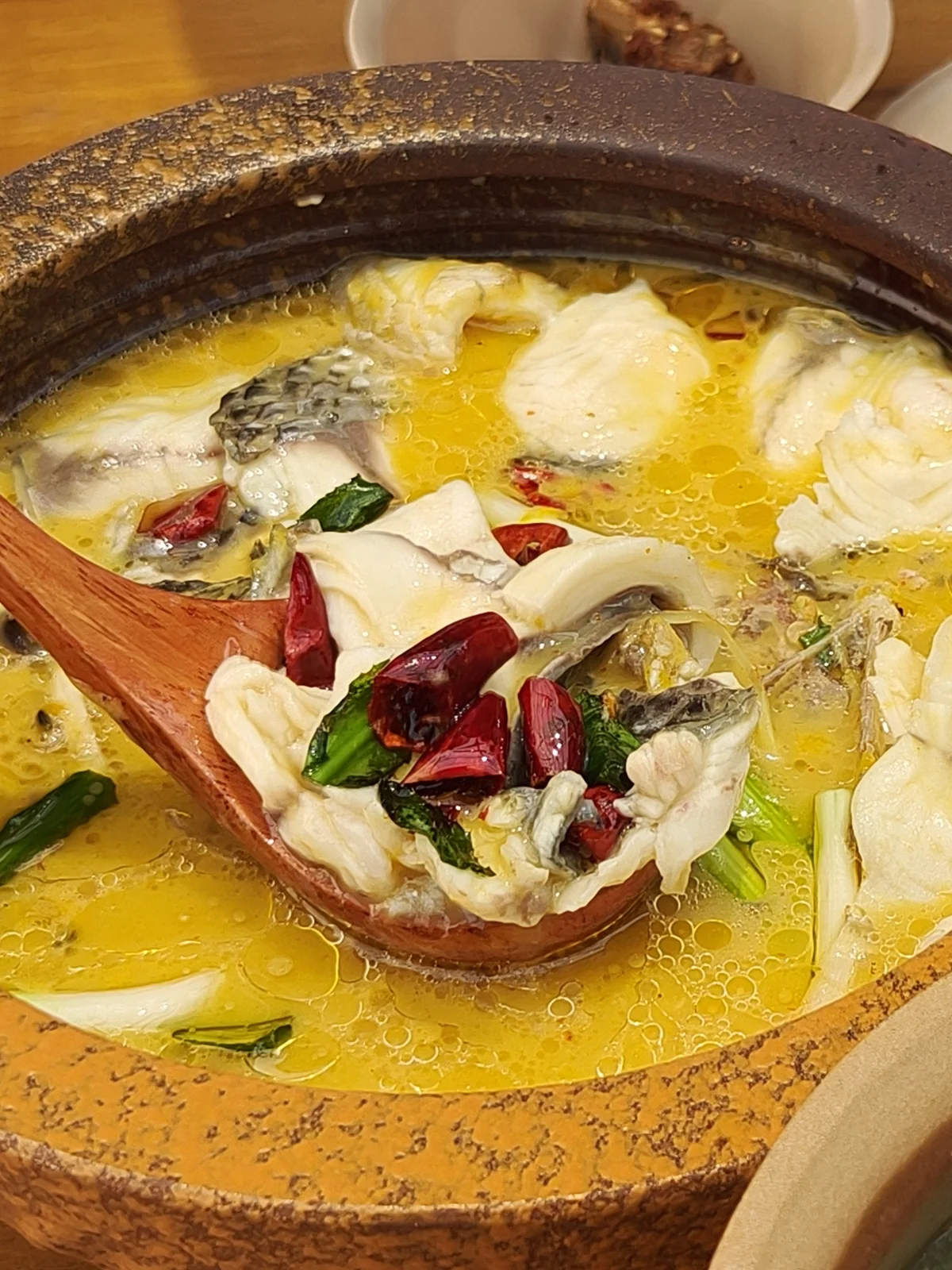
Passionfruit stone pot fish: the bright acidity derived entirely from fresh passionfruit juice without added vinegar or pickled greens.
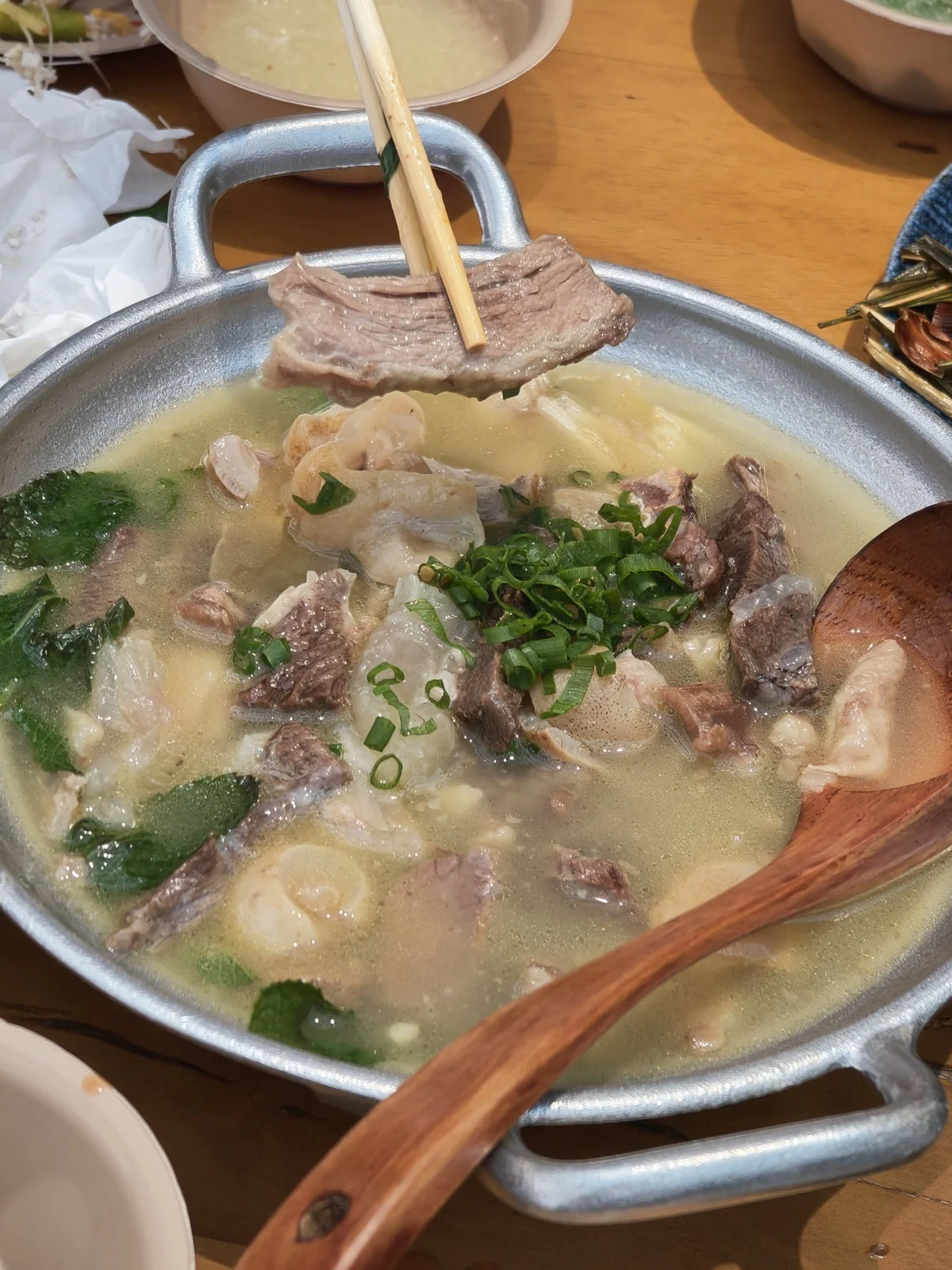
Our favorite dish was this mint beef: tender slices stir-fried cleanly with aromatic fresh mint, which my wife immediately resolved to recreate at home.
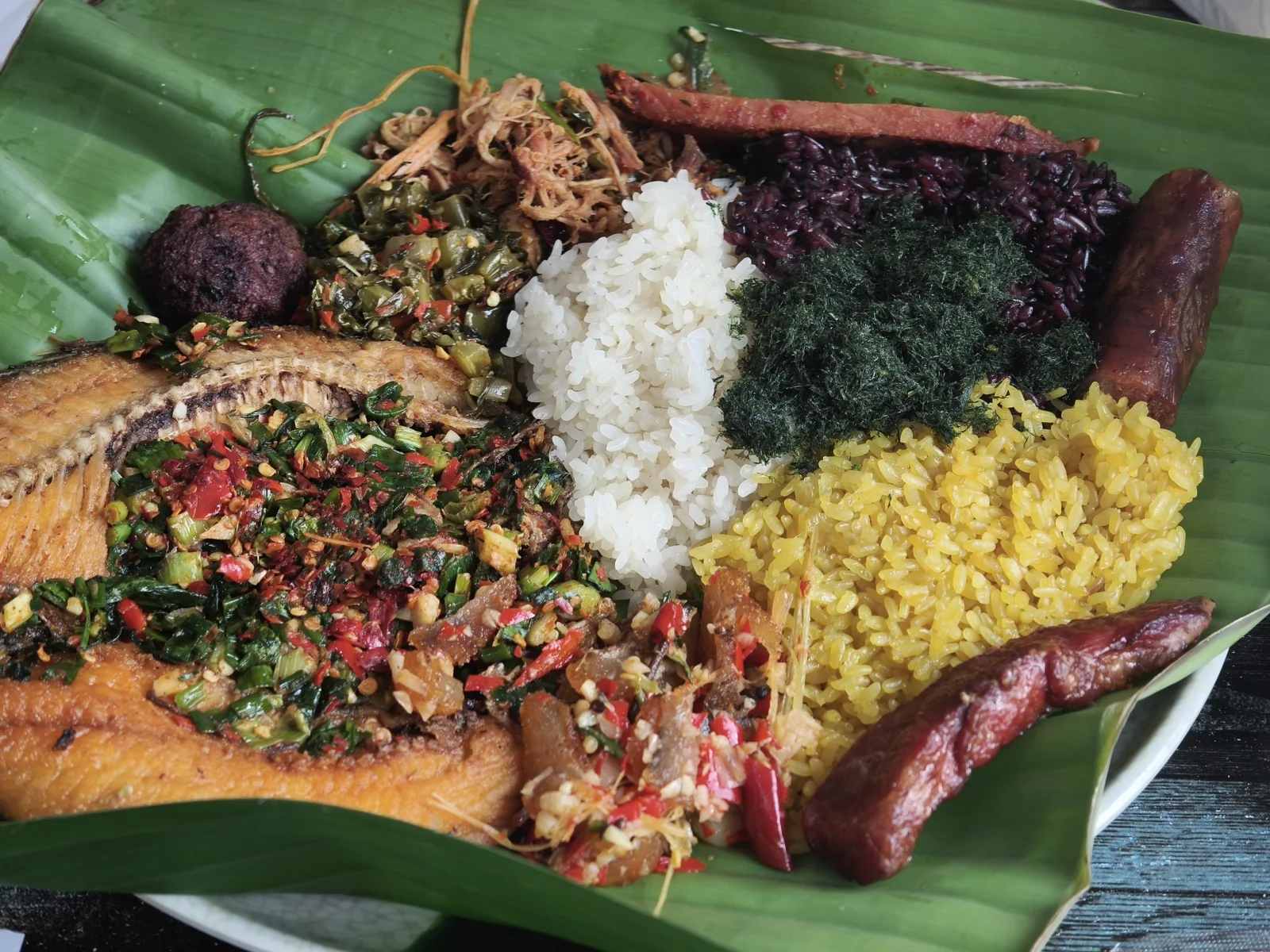
Brunch on Day 5: Dai sticky rice platter. The grains were firmer than expected and the accompaniments packed serious heat. I thoroughly enjoyed it, though my wife and daughter found it too fiery and supplemented with pea soup noodles afterward.
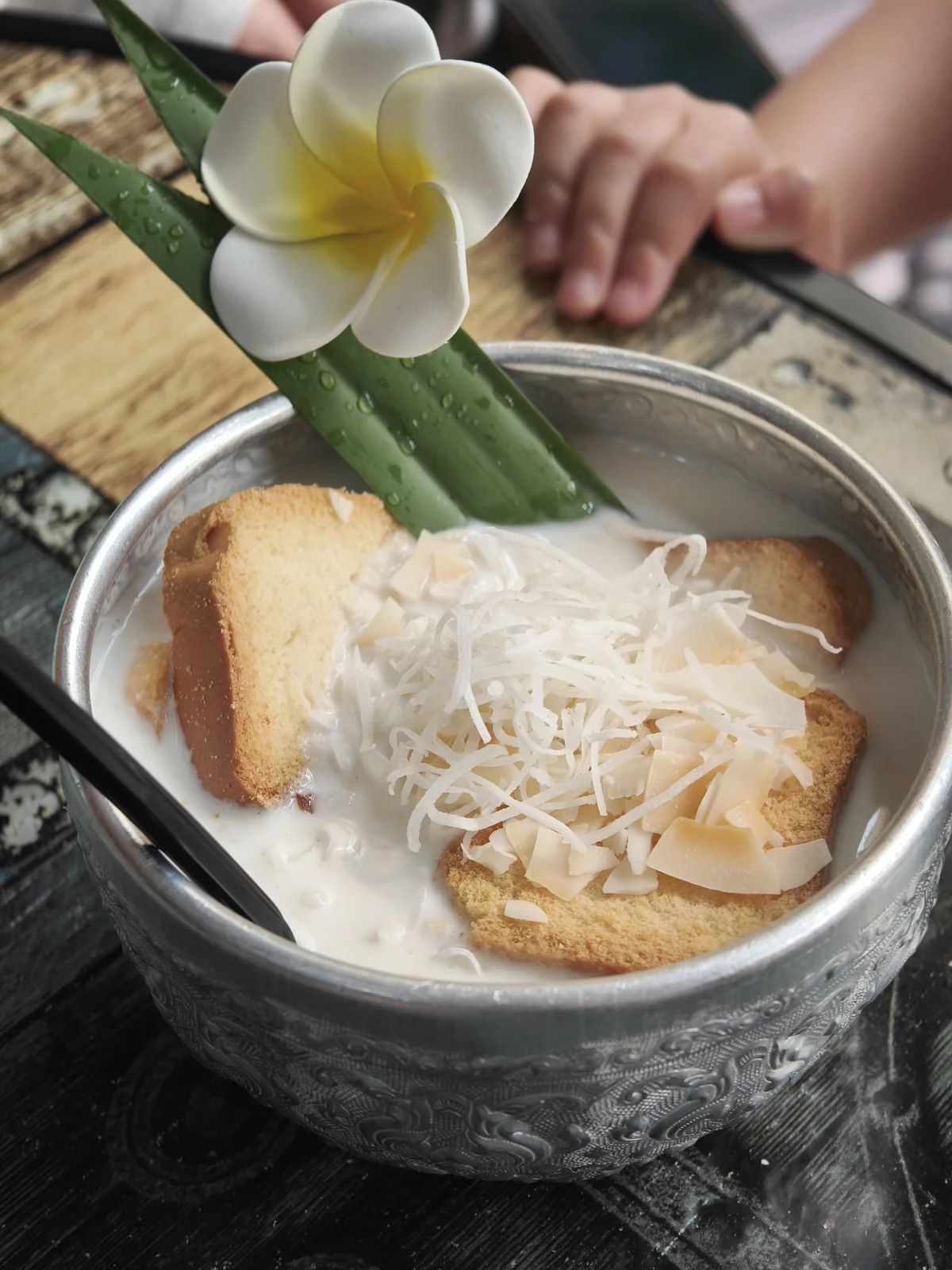
The iconic regional dessert Paoluda: crispy toasted bread rusks soaked in sweetened coconut milk, condensed milk, sago pearls, and toasted coconut flakes.
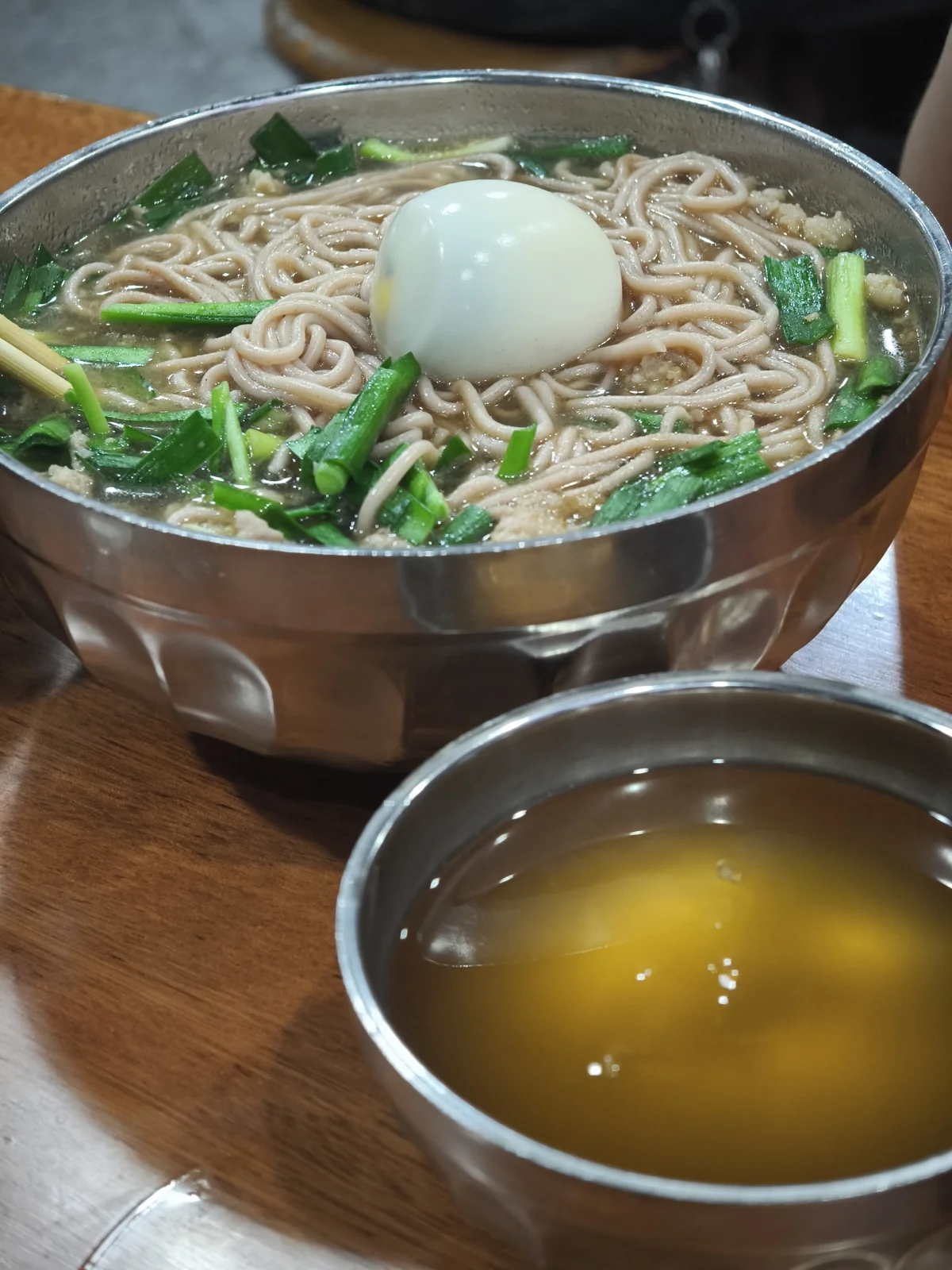
Outside the flower garden that evening, we tried fruit vinegar rice noodles. Served in a savory beef broth, it is paired with refreshing fruit vinegar reminiscent of chilled apple cider. Locals also lift noodles directly into the vinegar bowl before eating.
On our departure day, we enjoyed a final Yunnanese lunch opposite our hotel:
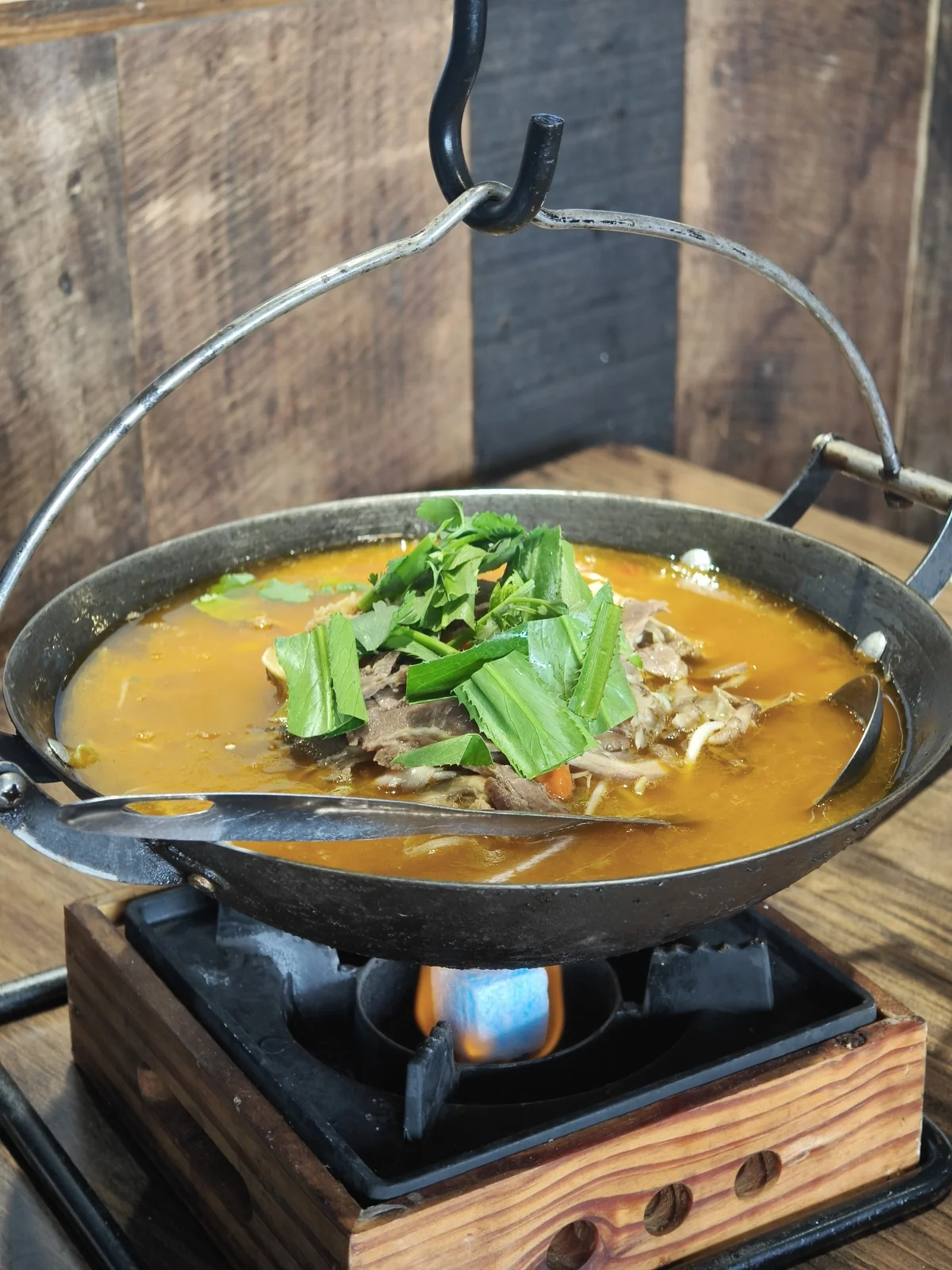
The standout was this clay pot hanging roast beef.
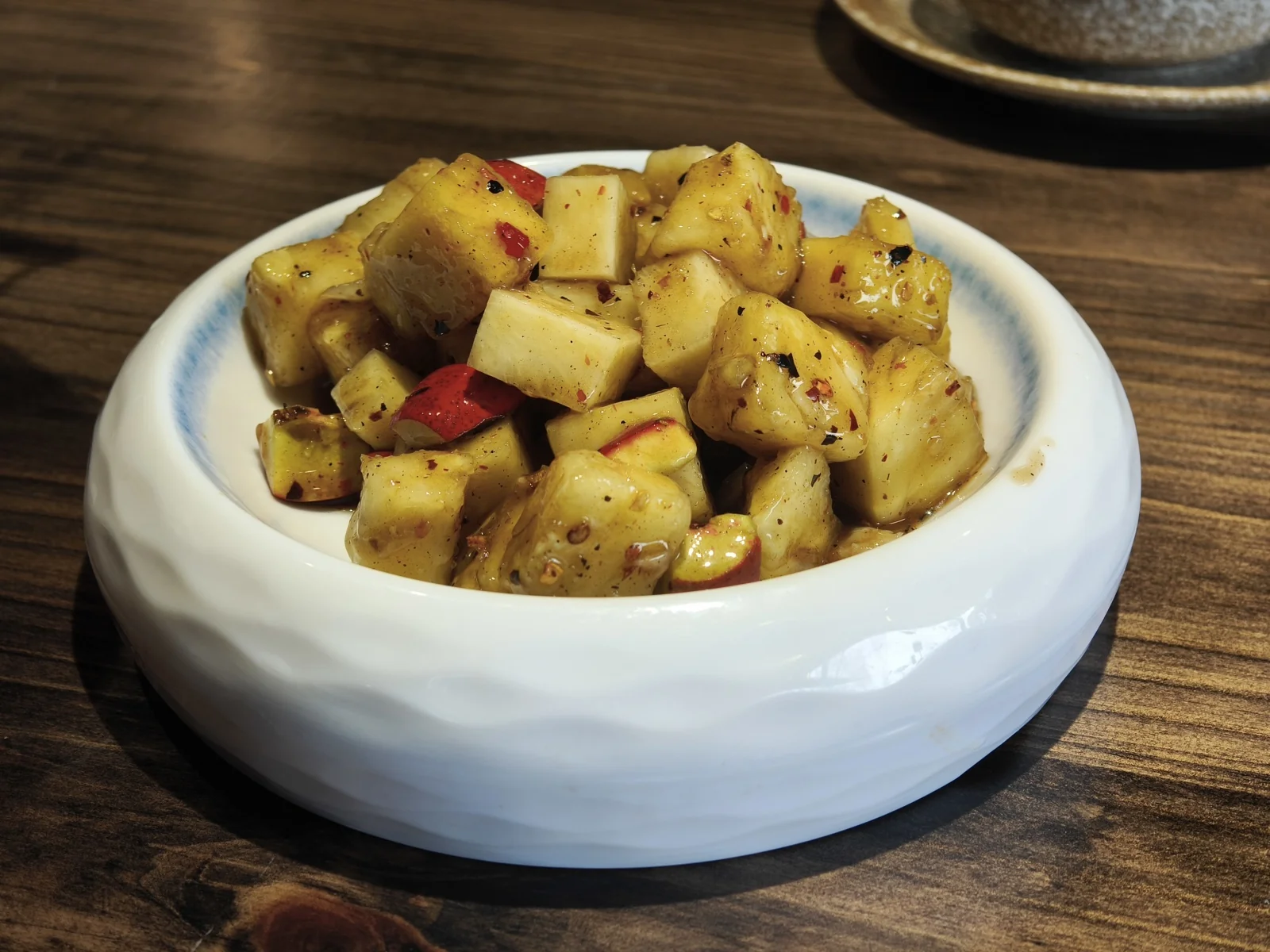
Spicy tossed pineapple, though the chili flakes were heavily scorched with a burnt aroma we found slightly unusual.
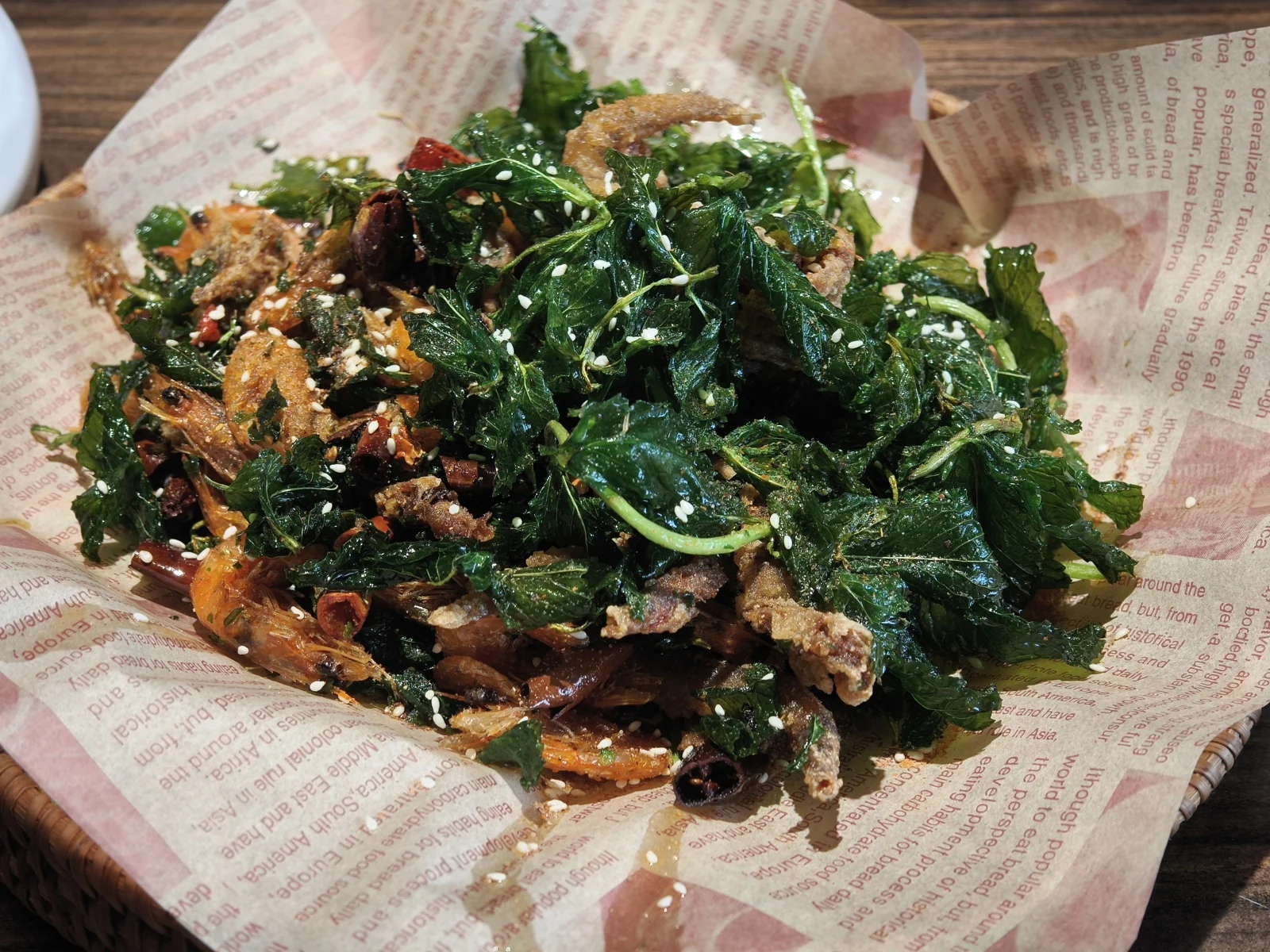
Crispy mint fried shrimp, mild and savory for our daughter.
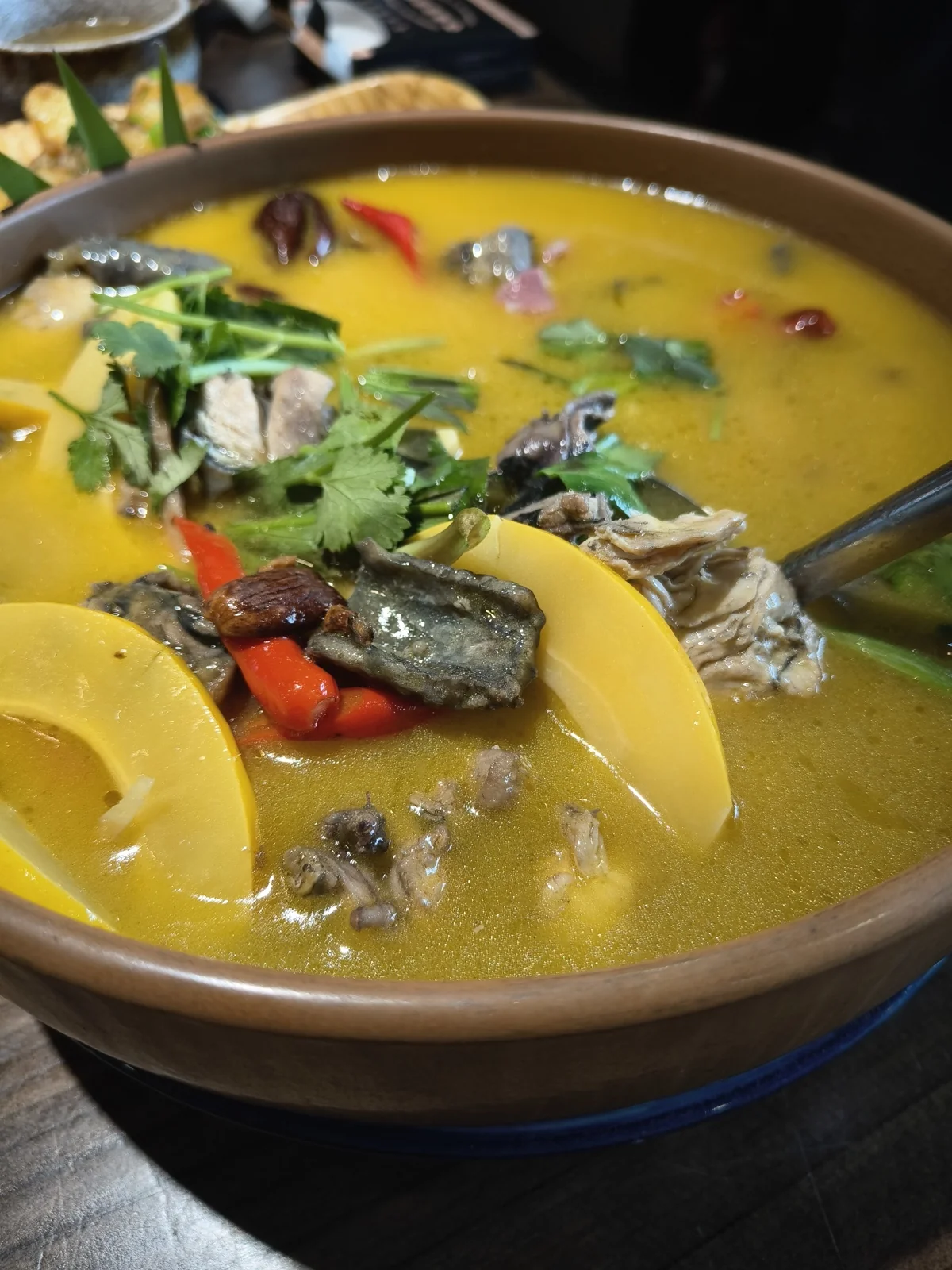
Sour papaya chicken stew: once simmered into broth, the sour papaya loses the harsh astringency of raw fruit and creates a soothing broth.
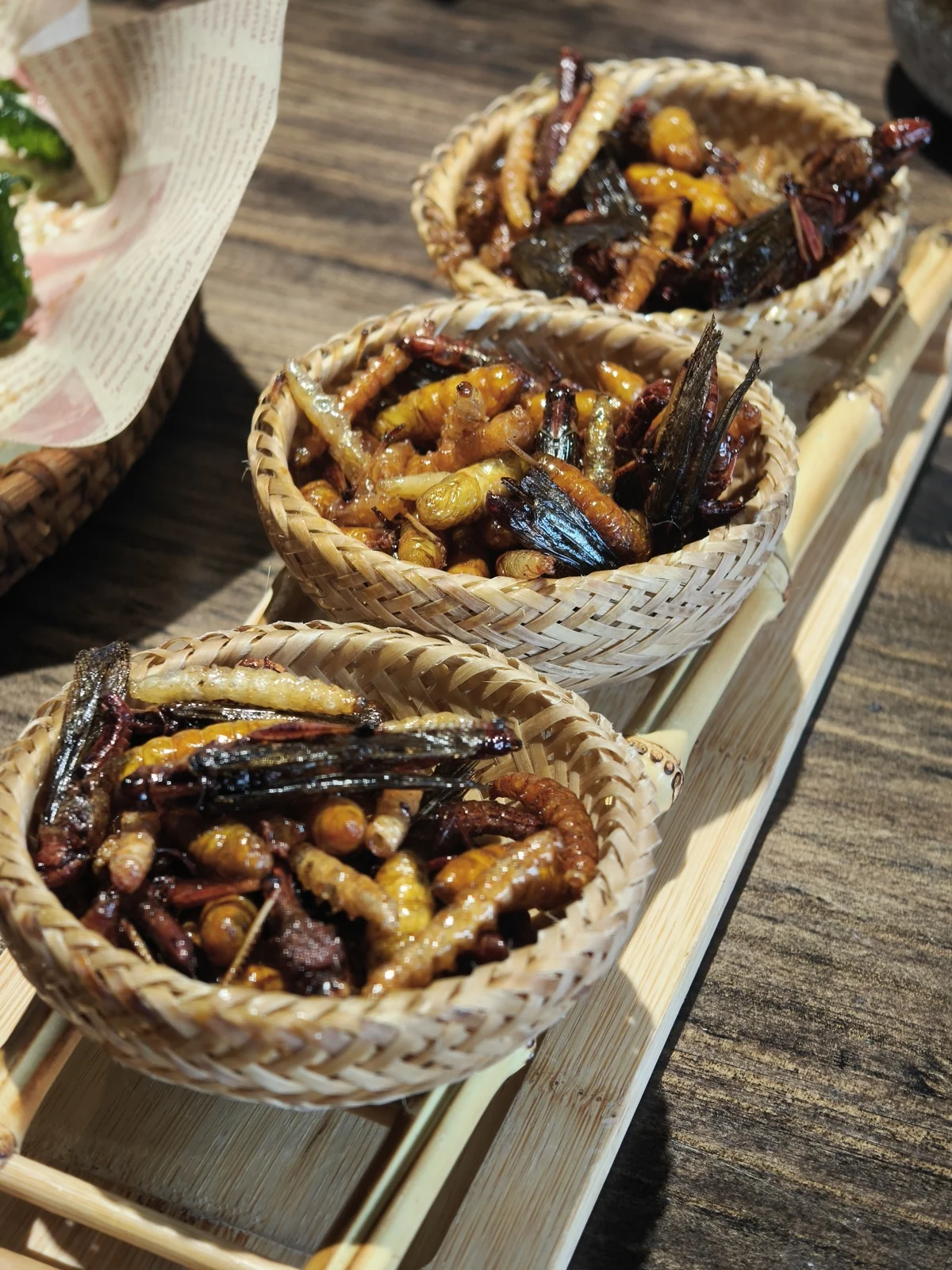
Fried insect trio: slender bamboo worms, plump bee pupae, and cicadas. Bee pupae offer a distinct sunflower-seed nuttiness with subtle earthy notes; the other two were fried crisp to where they primarily tasted of cooking oil.
Even without visiting a single paid scenic park, traveling here purely to stroll, eat, and relax is well worth the journey.
Local Observations
Dai architectural motifs possess unmistakable visual identity: gold and silver finials, sweeping upturned eaves, and pointed spire caps.
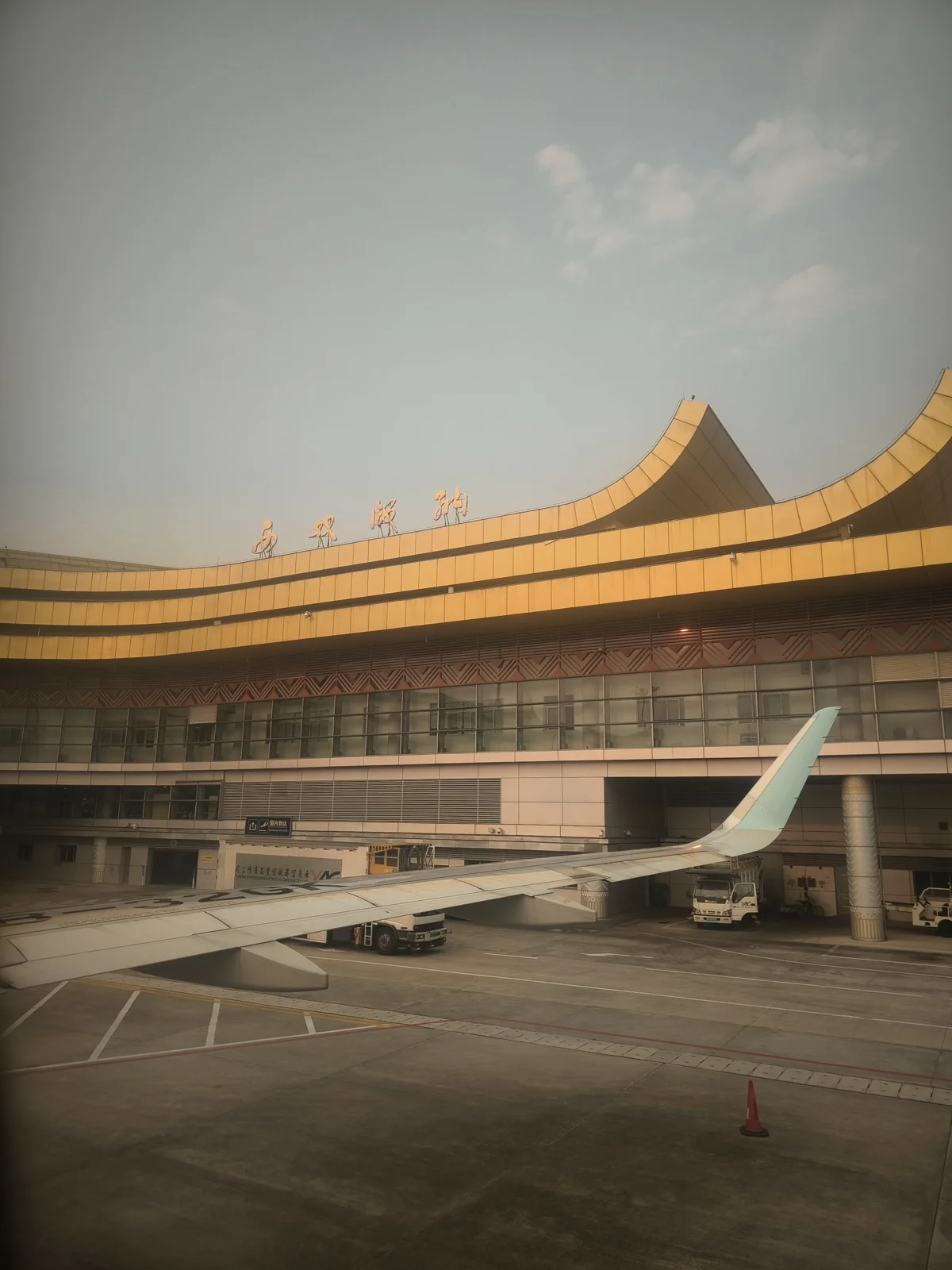
The Gasa Airport terminal building itself serves as an exemplary representation.
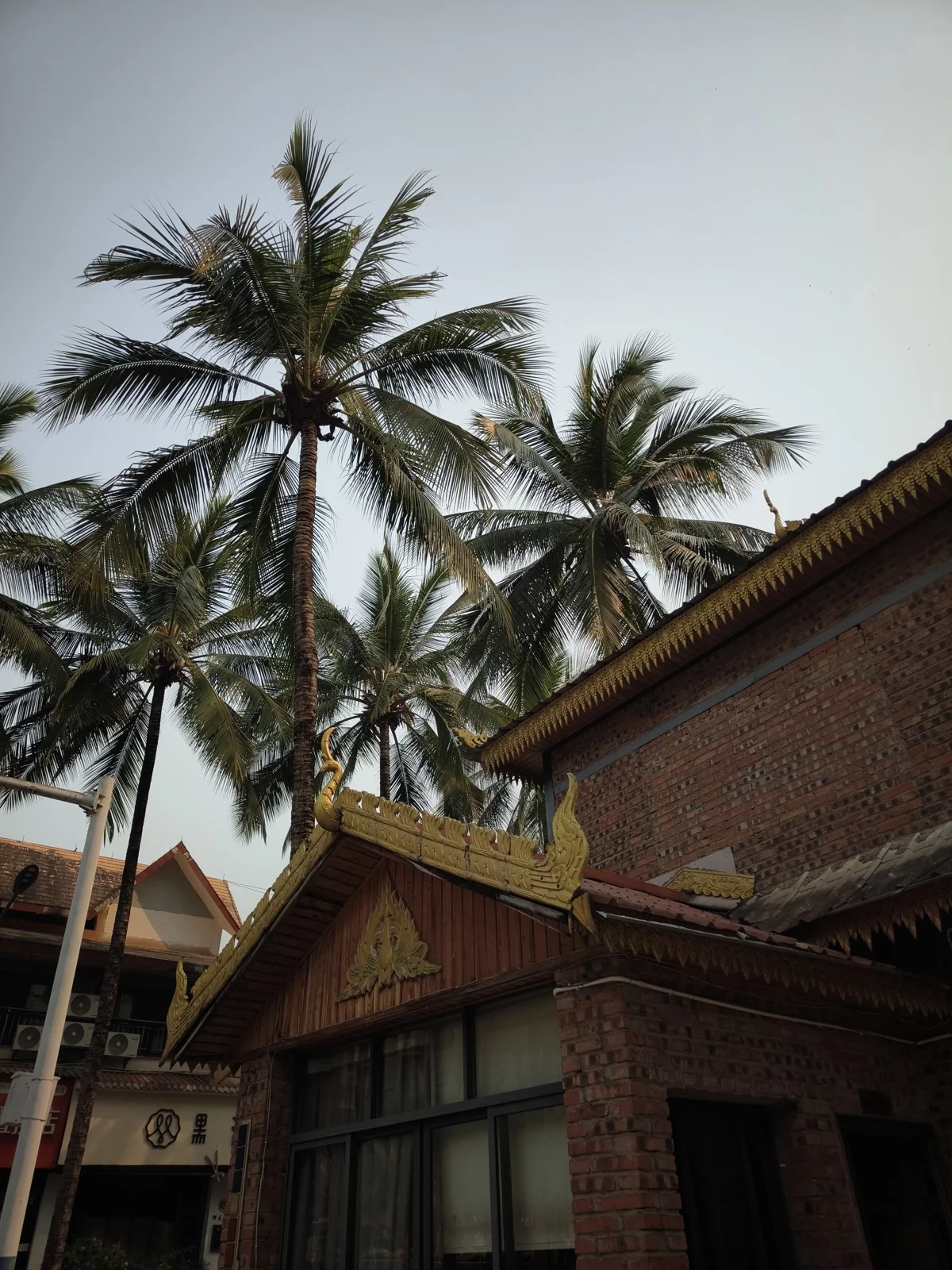
Standard residential apartment complexes incorporate identical motifs.
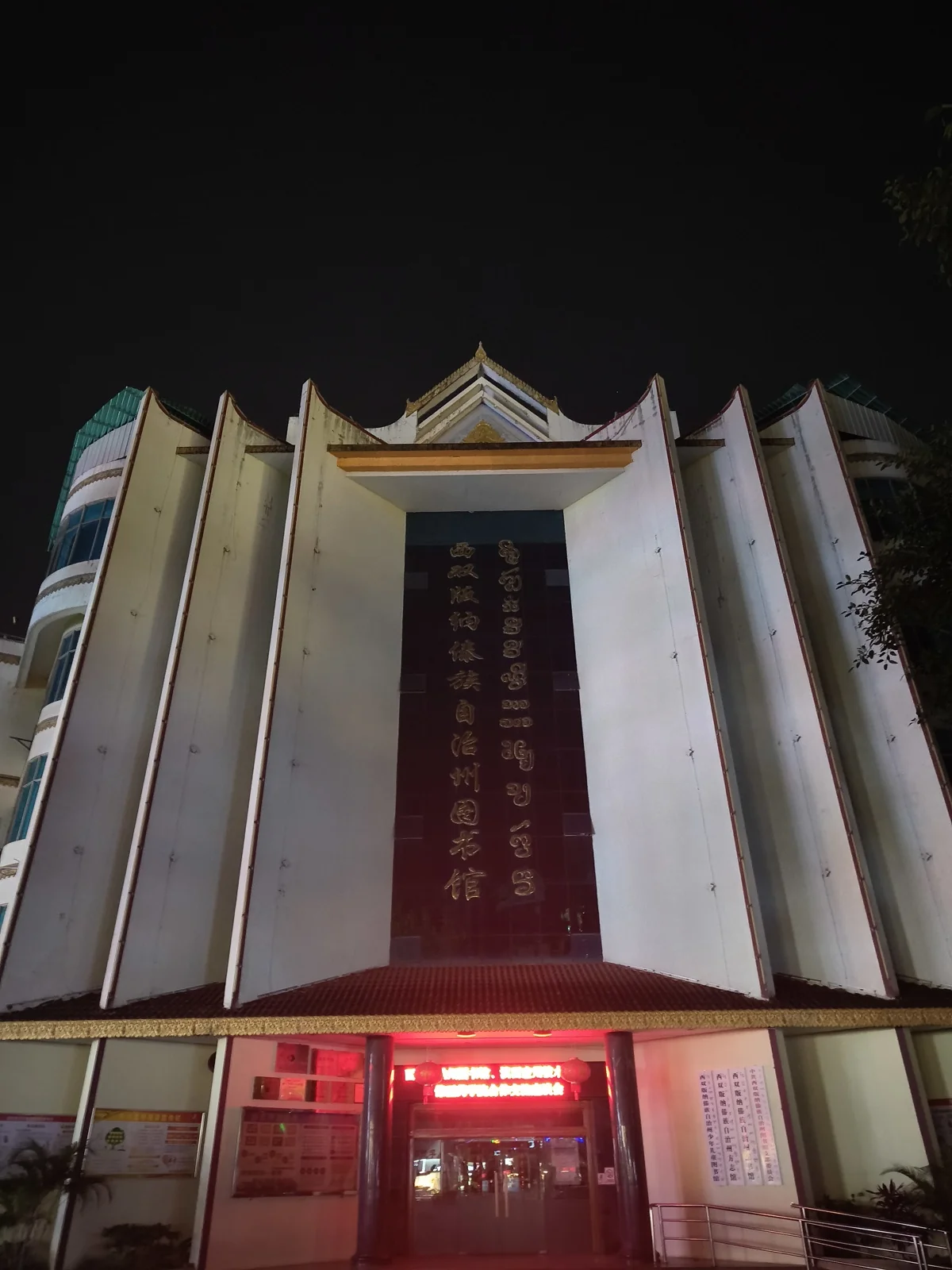
The contemporary civic library building follows suit.
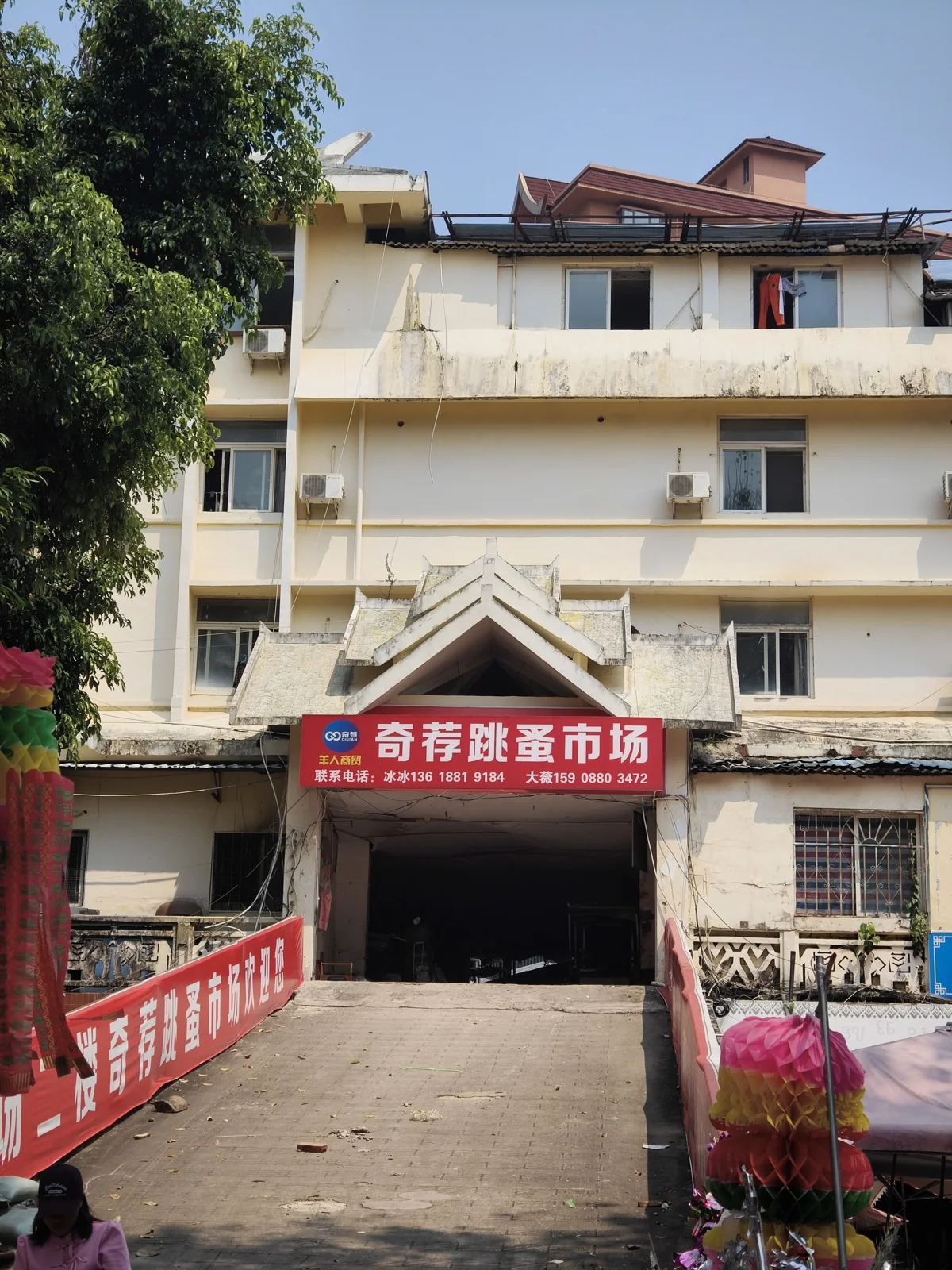
Even roadside flea markets feature signature spires. These cultural design elements saturate every facet of the cityscape; from the airplane, I even noticed temporary corrugated construction sheds topped with little decorative spires.
Linguistically, you will encounter two prominent regional accents in Jinghong. The local Dai cadence frequently concludes sentences with a warm sentence-final particle “ga” (“No problem ga!”, “You’re too kind ga!”).
The second ubiquitous accent is Northeastern Mandarin (Dongbei). Over our days of taxi rides and private charters, every single driver spoke with a fluent Dongbei drawl, as did many service staff and security personnel across tourist sites - much like the demographic migration pattern in Sanya, Hainan.
I wondered aloud whether a hybrid slang like “Ma-liu-de-ga” (Hurry up ga!) might someday emerge.
The night we exited the flower garden after eating vinegar noodles, we craved savory protein and bought braised beef from a Sichuan stall; the vendor remarked that even he found local Dai chili heat challenging.
During our stay, urban skies often had a faint haze. I initially attributed it to rainforest humidity, but our driver explained neighboring Laos still practices seasonal agricultural burning after harvesting. While Xishuangbanna strictly bans slash-and-burn clearing, transboundary smoke occasionally drifts across the border.
Our driver also described the epic scale of Jinghong’s Water Splashing Festival centered around Splash Plaza in the city center. Once the signal sounds, spontaneous water battles erupt everywhere; on-duty police officers historically caught the heaviest soakings until learning to tactically withdraw before the countdown. On festival day, car wash shops across the city halt regular operations to spray passing crowds with pressurized water hoses. While we intentionally traveled before the festival to avoid peak crowds, his vivid accounts made me eager to watch documentary footage of the event.
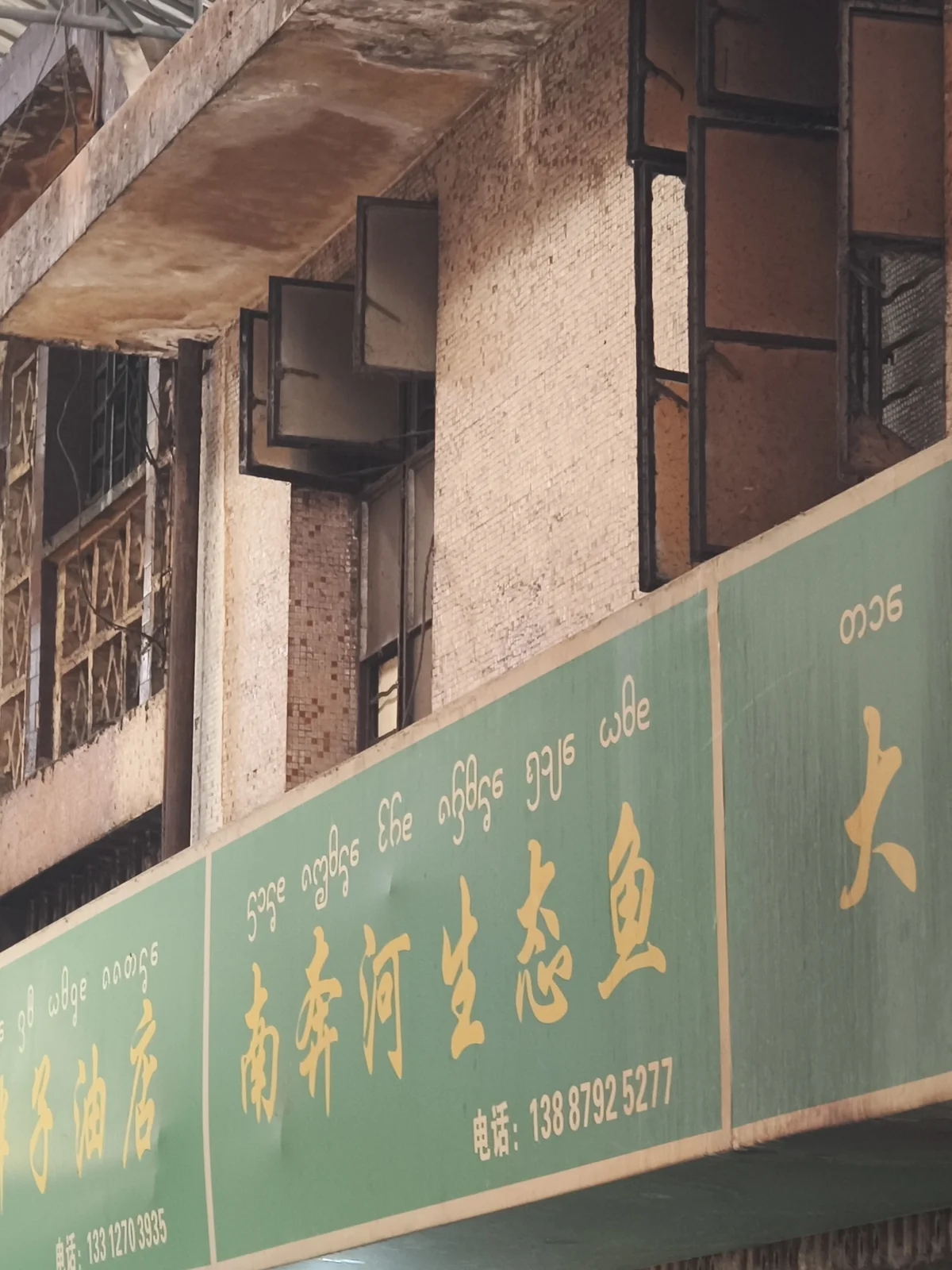
To experience authentic grassroots living, visiting local agricultural wet markets was essential:
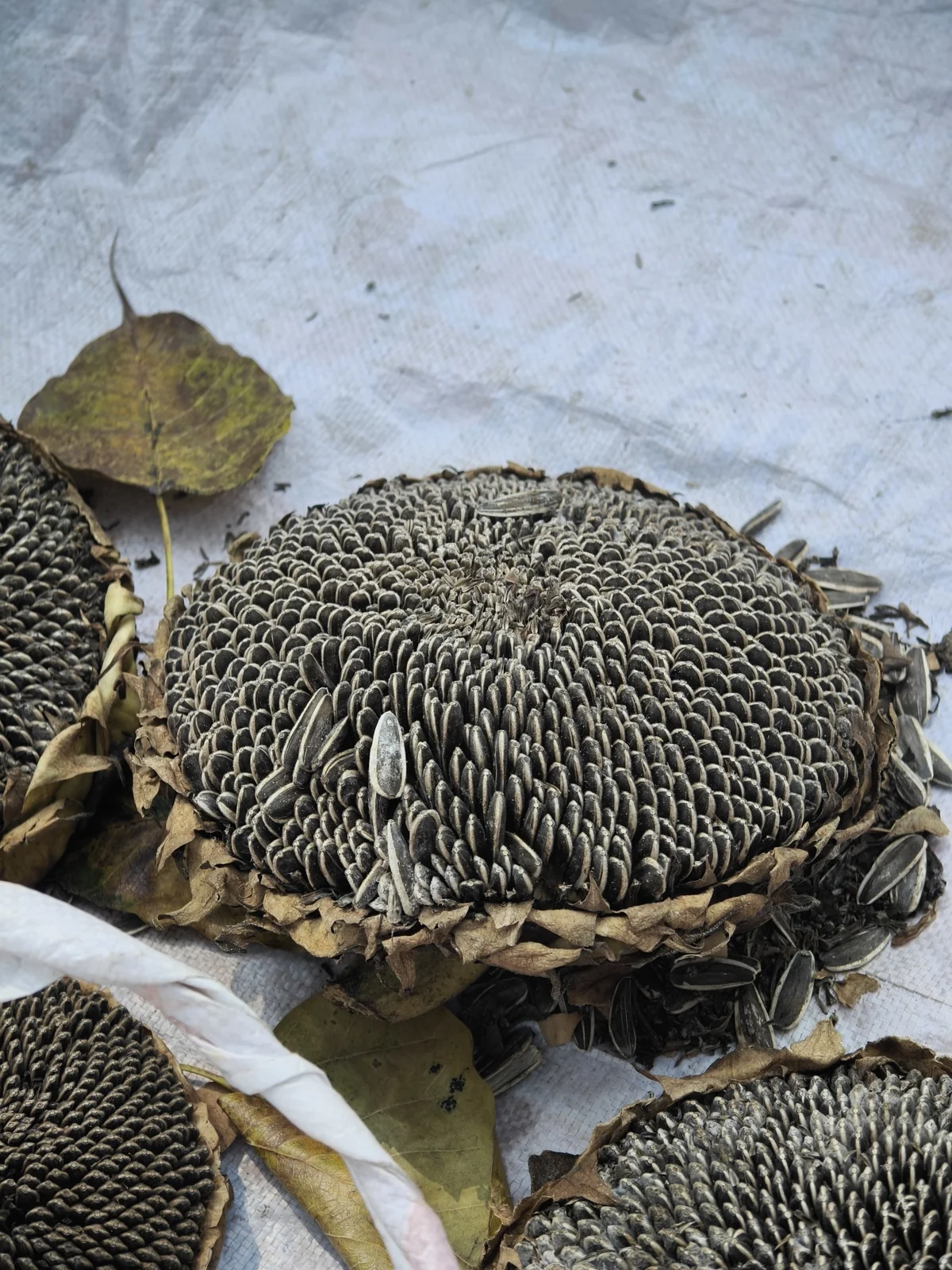
Entire sunflower heads laden with fresh seeds.
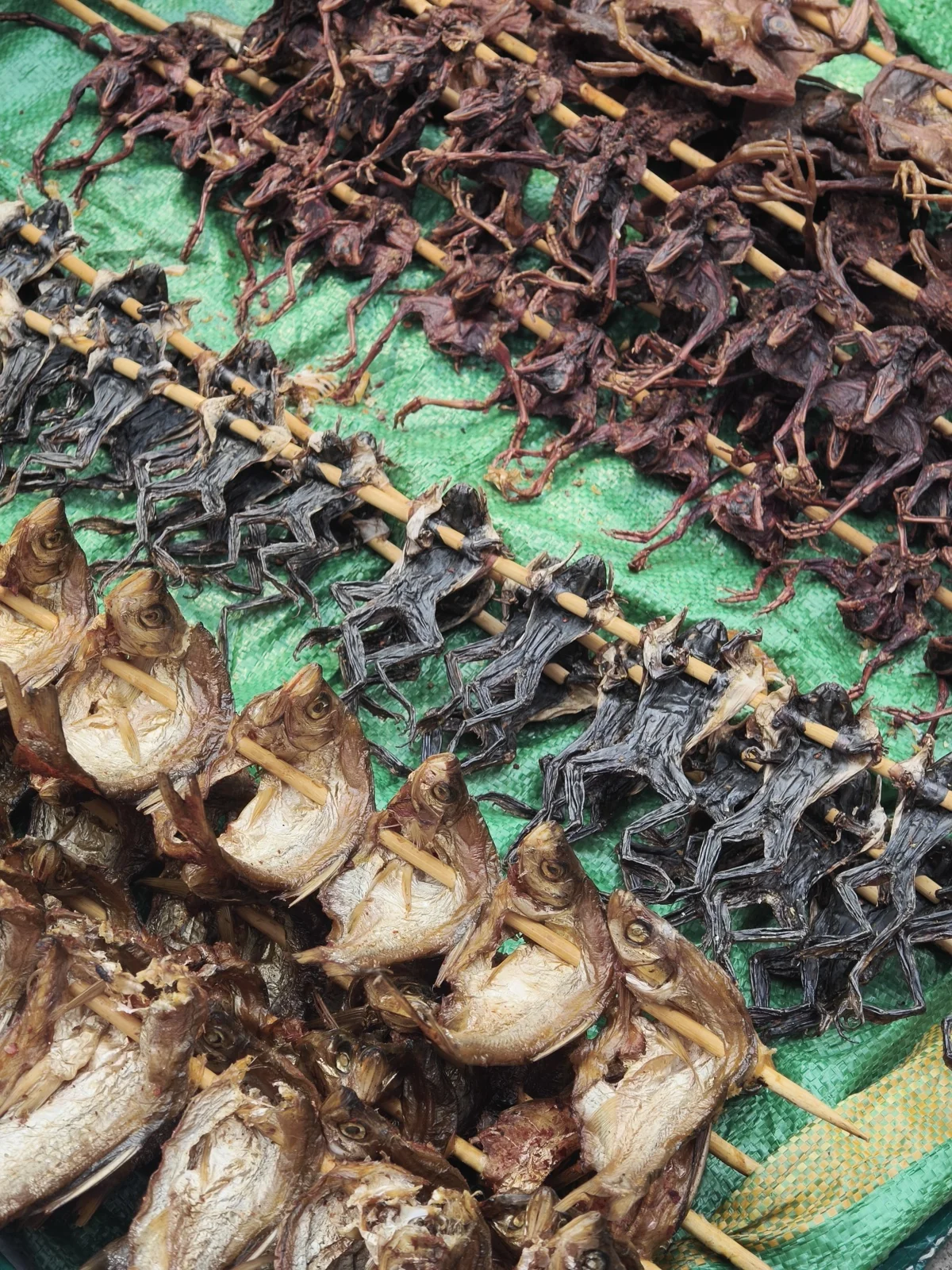
Bundles of cured dried fish and jerky.
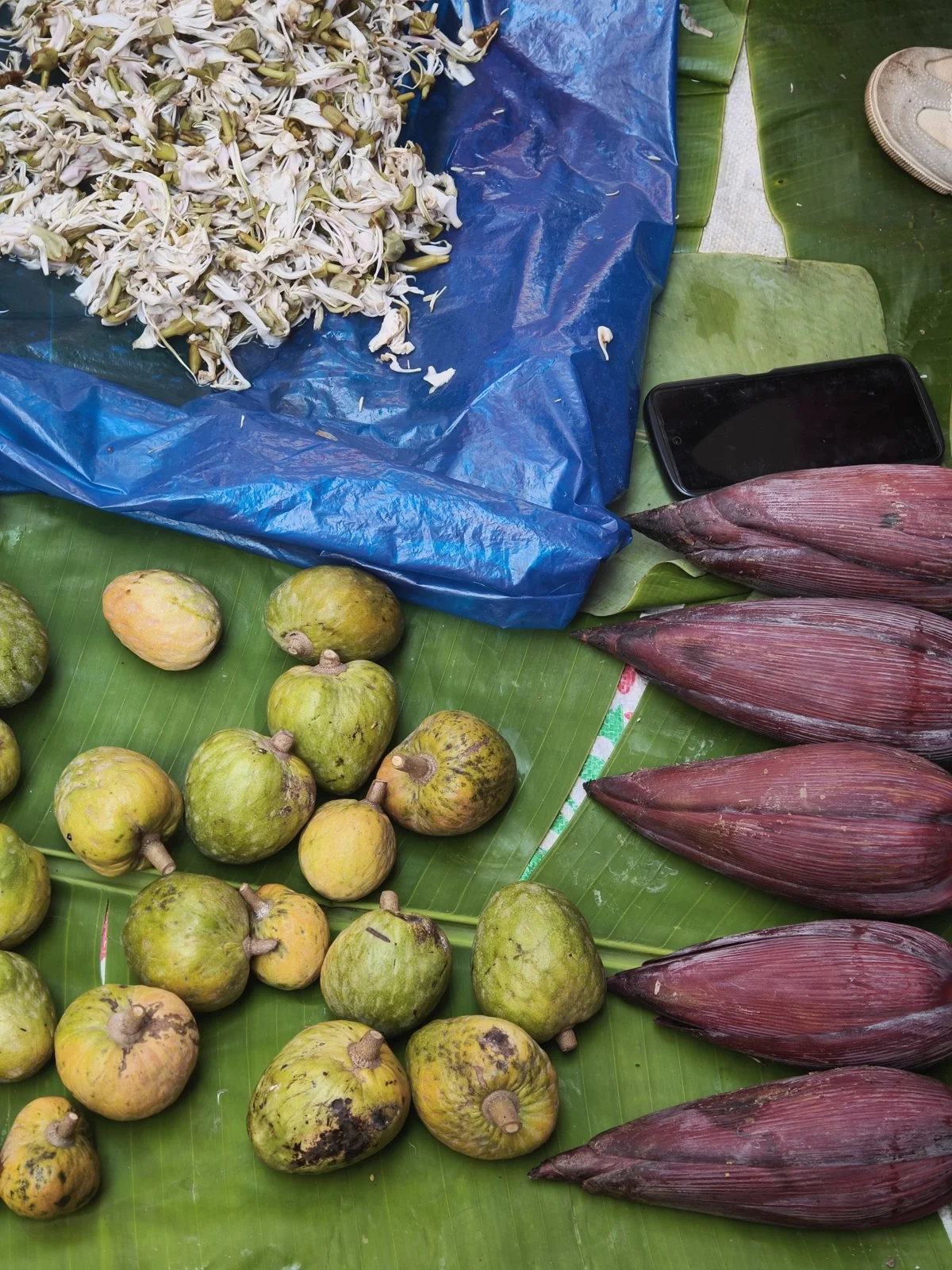
Purple banana blossoms and bullock’s heart fruits.
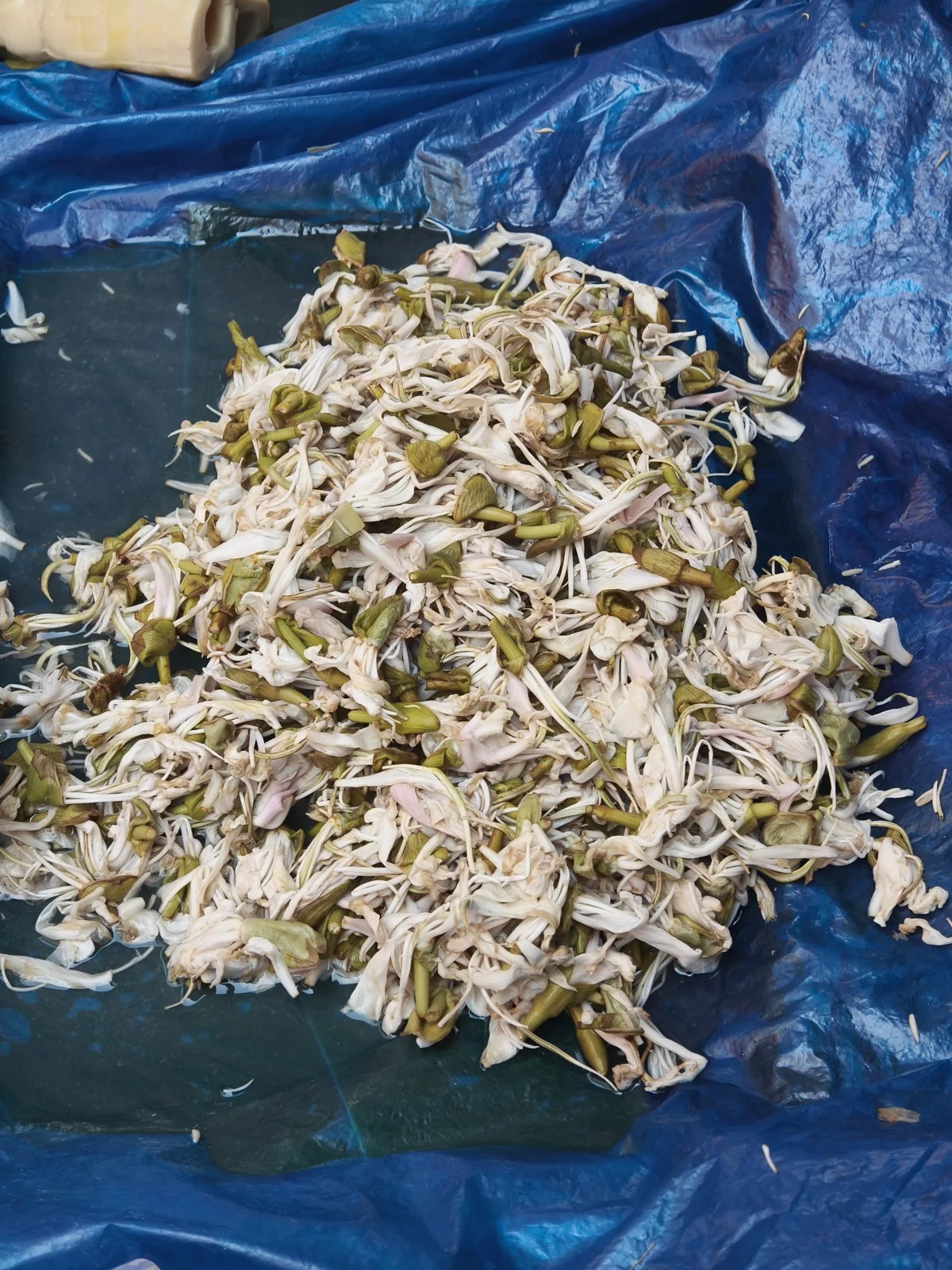
Baskets of wild white blossoms - the exact floral ingredient from our restaurant dinner, proving it is a genuine daily staple.
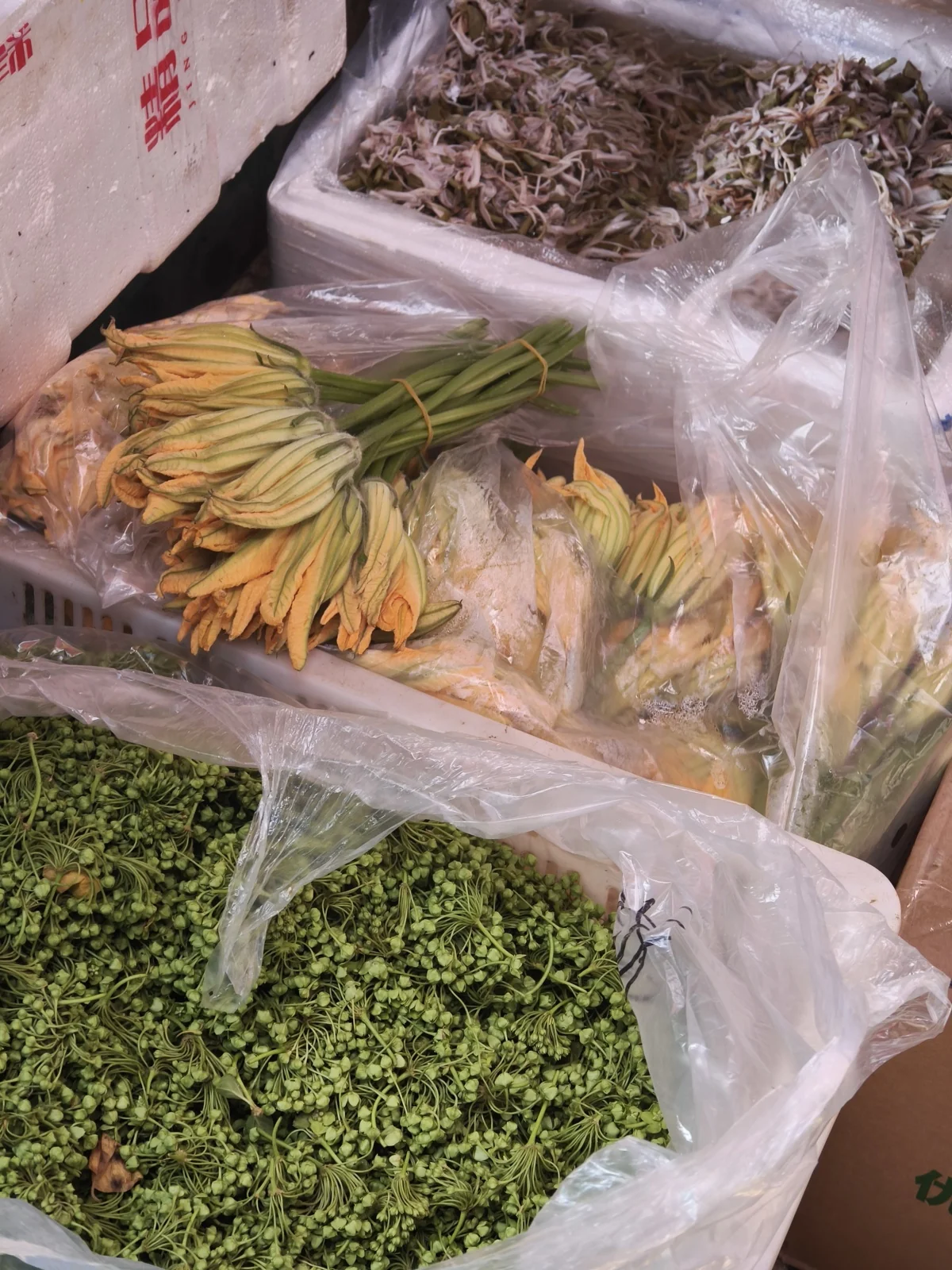
Various other unidentifiable edible blossom varieties.
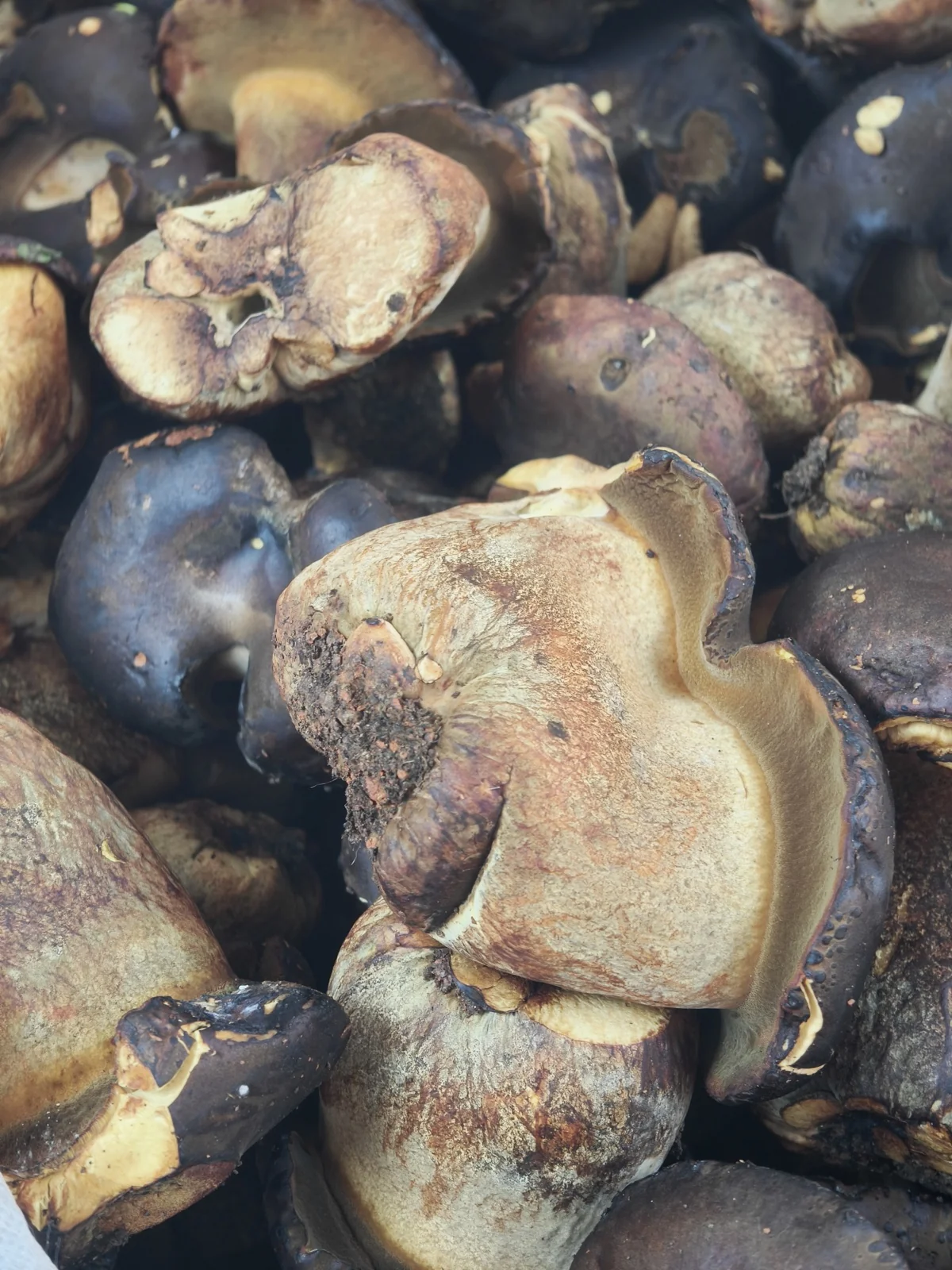
Fresh native bolete mushrooms.
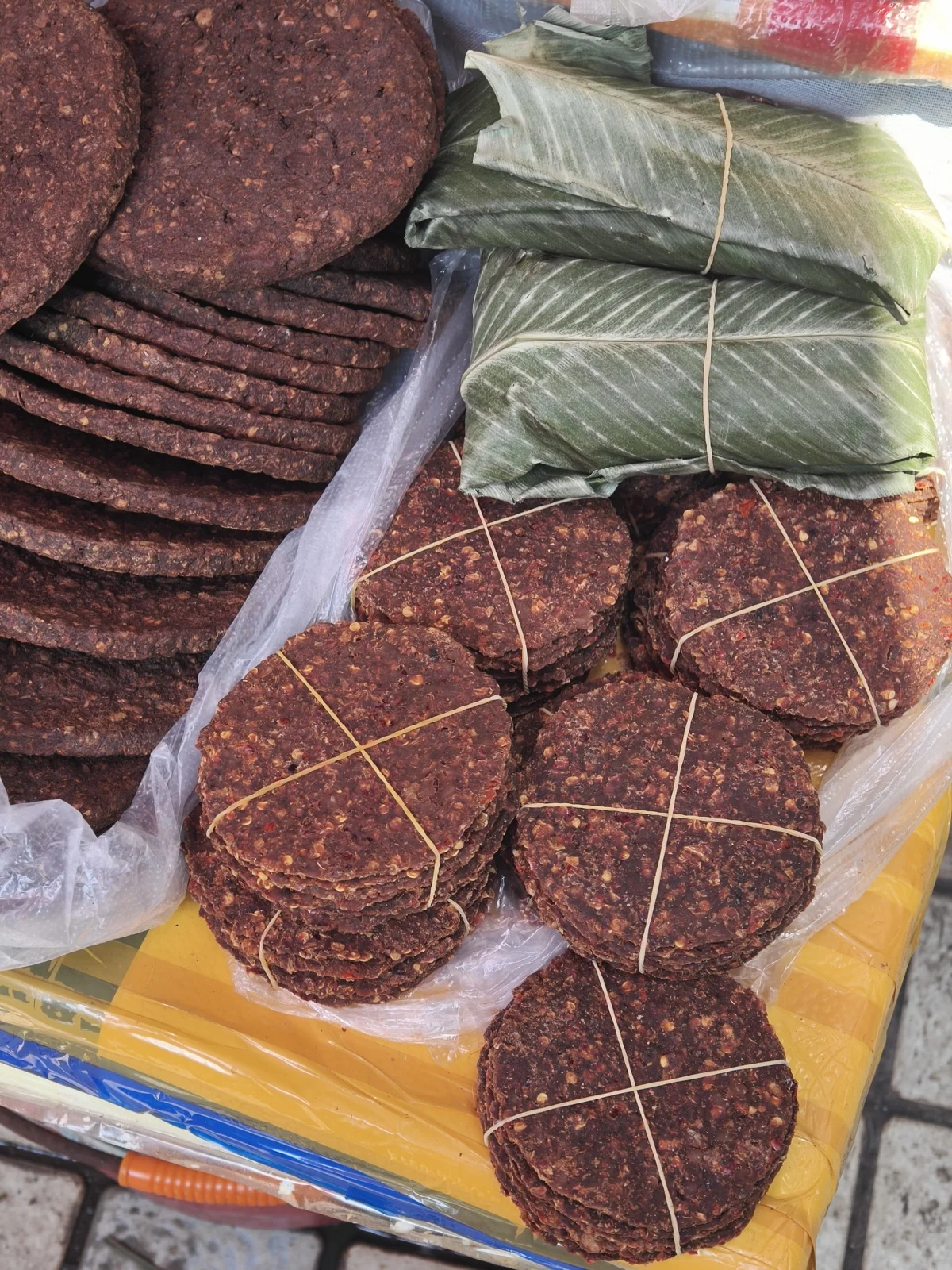
Chili paste pressed into firm round cakes.
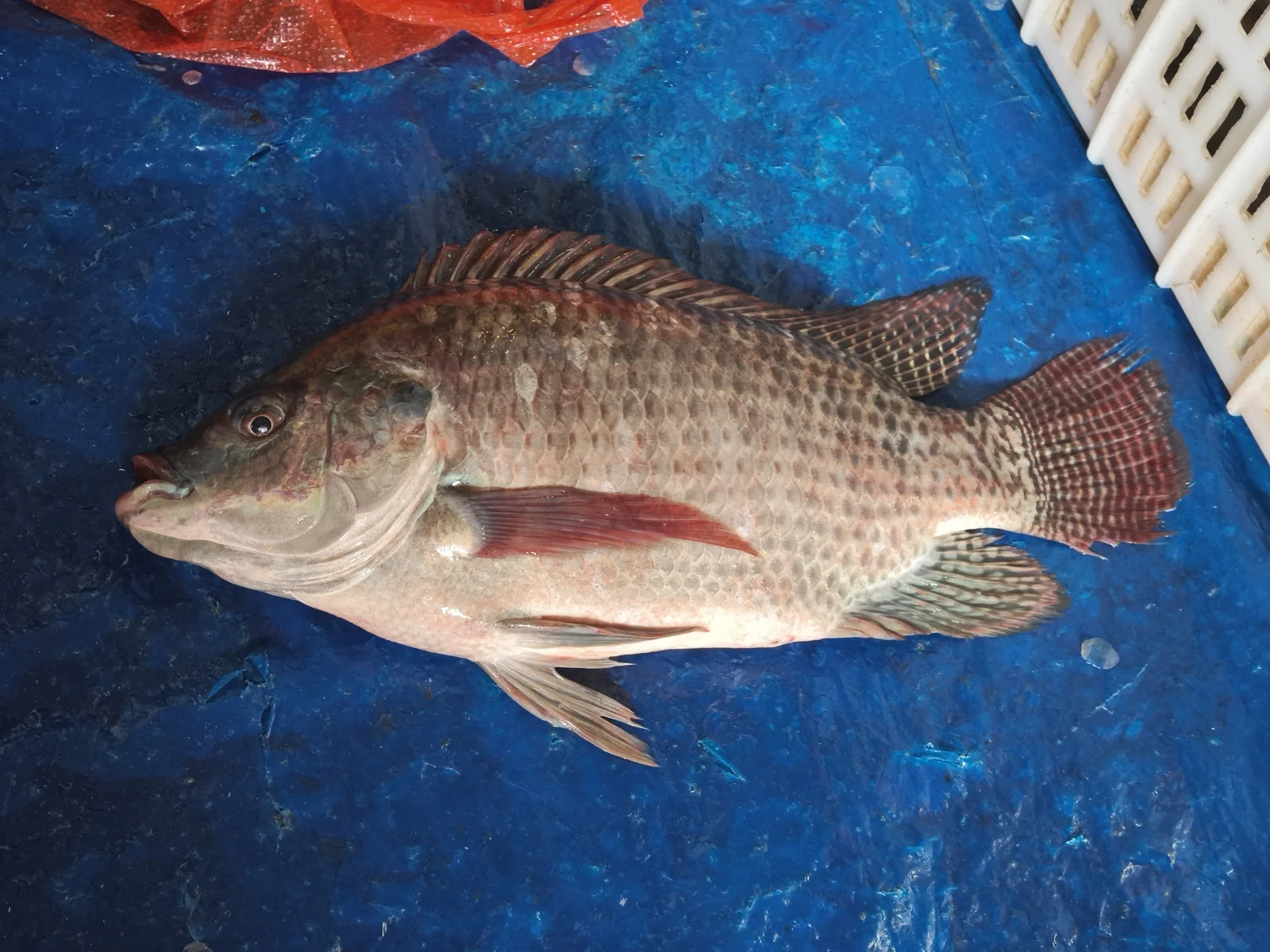
Enormous whole tilapia, which form the basis of most local fish preparations.
Travel Expenses
Finally, here is our complete travel expense breakdown, totaling roughly 13,000 RMB:
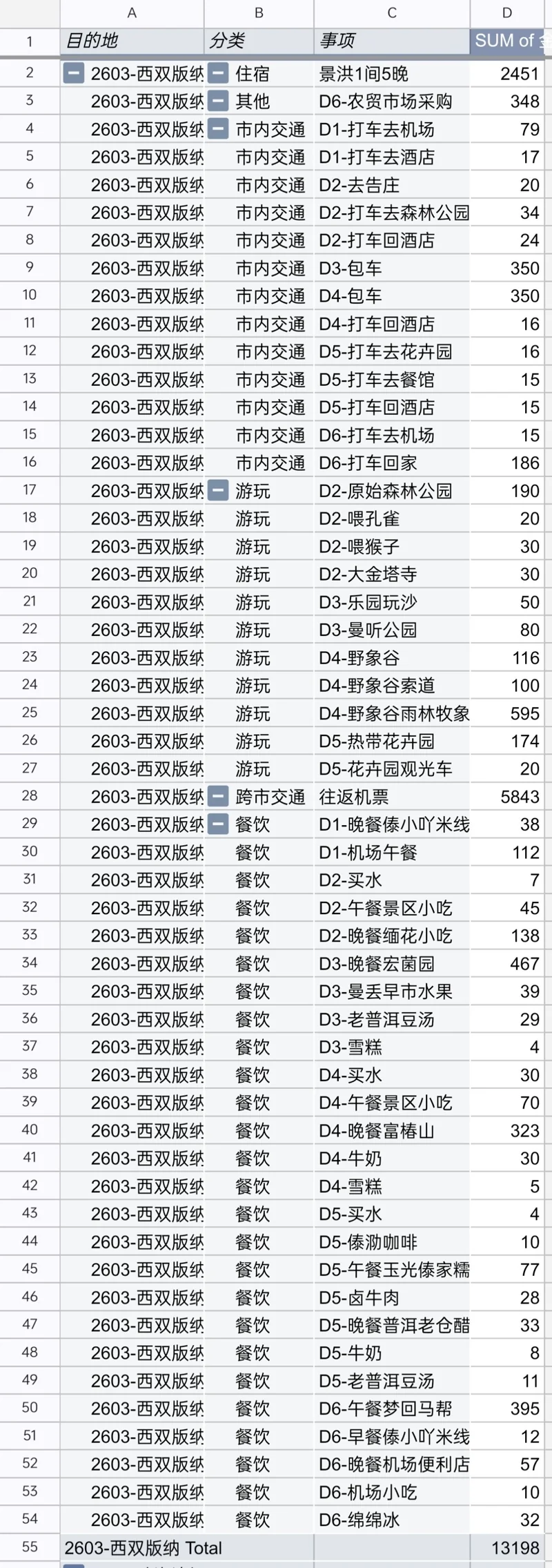
And category distribution:
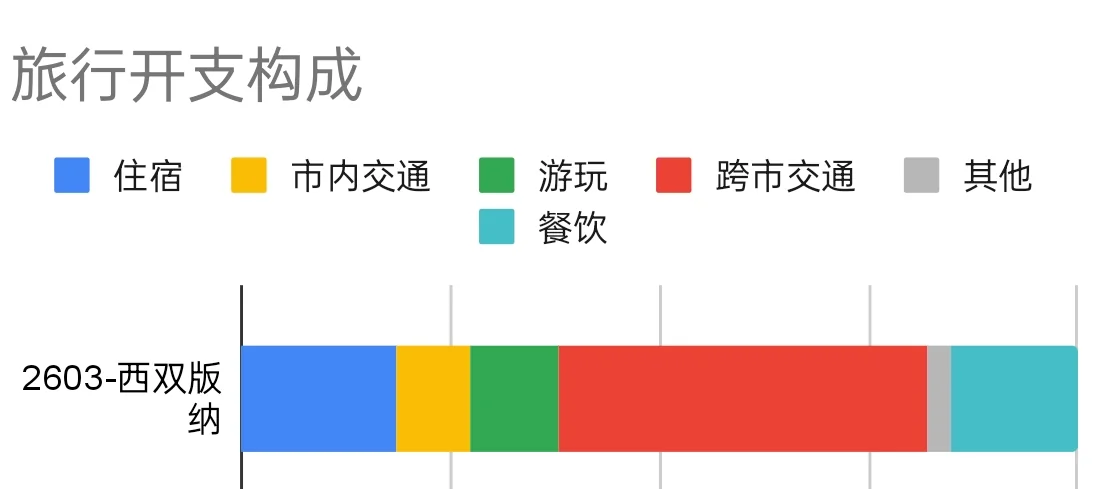
Traveling during off-peak leave is unbeatable value. Covering substantial flight mileage, airfare accounted for half the total budget, while ground categories remained well-balanced.
Travel itineraries follow consistent structural logic: chaining key decision factors in specific sequence brings a clear itinerary into focus quickly.
For detailed methodology, refer to this guide: A Step-by-Step Guide to Travel Planning.